


Key Takeaways
- Custom notebooks are not just stationery. They are repeatable niche products that work for gifts, teachers, students, small businesses, events, and fandom-style communities.
- The cover design gets the click, but the use case gets the sale. A notebook for a specific buyer beats a pretty generic journal almost every time.
- Your first goal is not one perfect notebook. It is a tight product line with 20 to 60 variations you can test quickly without drowning in manual listing work.
- Personalized journals win when the workflow is fast. If every order requires slow manual editing, the margin disappears before you notice it.
Table of Contents
- Why custom notebooks still sell when generic journals do not
- Pick the buyer before you design the cover
- Build a custom notebook product system, not a single listing
- Create listings that make the notebook feel useful
- Price custom notebooks like a business, not a craft hobby
- Scale without turning every sale into manual busywork
- Frequently Asked Questions
Custom notebooks are one of those product categories sellers underestimate because they look simple. A cover, some paper, a mockup, a listing. Done.
That is exactly why most notebook listings disappear into the pile.
If I were building a custom notebooks line today, I would not start by asking, “What design looks nice?” I would ask, “Who needs a notebook badly enough to search for one, gift one, or personalize one?” That one shift changes the entire business.
We have watched this pattern across print on demand for years. Sellers who win do not just upload art. They build small, specific product systems that let them test buyers, themes, and variants faster than everyone doing one-off designs by hand.
Why custom notebooks still sell when generic journals do not
A plain floral notebook is easy to make and easy to ignore. A custom notebook for a third-grade teacher, a dog groomer, a bridal party planner, or a new real estate agent has a reason to exist.
That reason matters.
Buyers want a reason to choose your notebook
Most sellers treat custom notebooks like blank canvases. I think that is the wrong angle. Buyers do not wake up wanting a blank canvas. They want a gift, a tool, a memory, or a little identity marker they can carry around.
That is why the phrase custom notebooks has commercial value. The buyer is already signaling that ordinary stationery is not enough. They want the thing to feel made for them.
On marketplaces like Etsy, that usually means one of four hooks:
- Name personalization: first name, monogram, initials, classroom name, business name.
- Role identity: teacher, nurse, coach, realtor, student, mom, bride, author, creator.
- Use case: lesson planning, gratitude journaling, client notes, recipe testing, travel planning.
- Gift moment: graduation, new job, bridesmaid box, back to school, corporate thank-you.
If your design does not make one of those obvious in two seconds, the buyer has to work too hard. And buyers do not work. They scroll.
Low-ticket products can still compound
I get the hesitation with notebooks. They are not usually high-ticket products. You are not going to retire on one journal sale.
But that is not the point.
The play is volume, repeatable niches, giftable variations, and faster publishing. A notebook line can sit beside mugs, tote bags, calendars, stickers, and other personalized products. It gives you more ways to serve the same buyer instead of always chasing a new market.
If you already sell teacher shirts, teacher mugs, or classroom posters, notebooks are a logical add-on. If you already sell wedding templates or bachelorette products, personalized journals can fit the same buyer journey.
That is how I want you thinking. Not “one product.” A product ladder.
Build faster
Turn one notebook idea into a product line
Use MyDesigns to create, organize, and publish product variations without rebuilding every listing manually.

Pick the buyer before you design the cover
Here is the rule I would use: if you cannot describe the buyer in one sentence, do not design the notebook yet.
“Women who like pretty notebooks” is not a buyer. “First-year teachers who want a personalized classroom notebook” is a buyer. “Realtors who need branded client meeting notes” is a buyer. “Moms planning a Disney trip” is a buyer.
Five buyer groups I would test first
I would start with buyer groups that already buy identity-based or planning-based products. These people are easier to understand, easier to write listings for, and easier to expand into related products.
- Teachers and school staff: classroom notebooks, substitute teacher notes, grade-level gifts, end-of-year gifts.
- Small business owners: branded notebooks, client call journals, appointment notes, market booth planning.
- Weddings and events: bridesmaid journals, vow notebooks, planner notebooks, guest gift bundles.
- Students and graduates: dorm planning, study notes, scholarship tracking, graduation gifts.
- Wellness and habit buyers: gratitude journals, workout logs, meal notes, therapy reflection journals.
Notice what all of these have in common. They are not just designs. They are jobs the buyer wants done.
What I would not build
I would not start with generic patterns, random quotes, or broad designs like “cute notebook.” That market is too crowded and too weak. You might get a sale, but you will not learn much from it.
I would also avoid anything that depends on protected brands, school logos, character art, celebrity names, sports teams, or copied phrases. The short-term search volume is not worth the account risk. If you are unsure, the U.S. Copyright Office has a plain-English overview of what copyright protects.
The safest, strongest path is original niche positioning. Serve the buyer better than the generic listings.
Build a custom notebook product system, not a single listing
The biggest mistake I see in print on demand is building one listing at a time with no system. That feels productive, but it creates chaos. You end up with inconsistent files, inconsistent mockups, inconsistent titles, and no clean way to scale what works.
A custom notebook line needs a system before it needs more art.
Use a variation map before you open your design tool
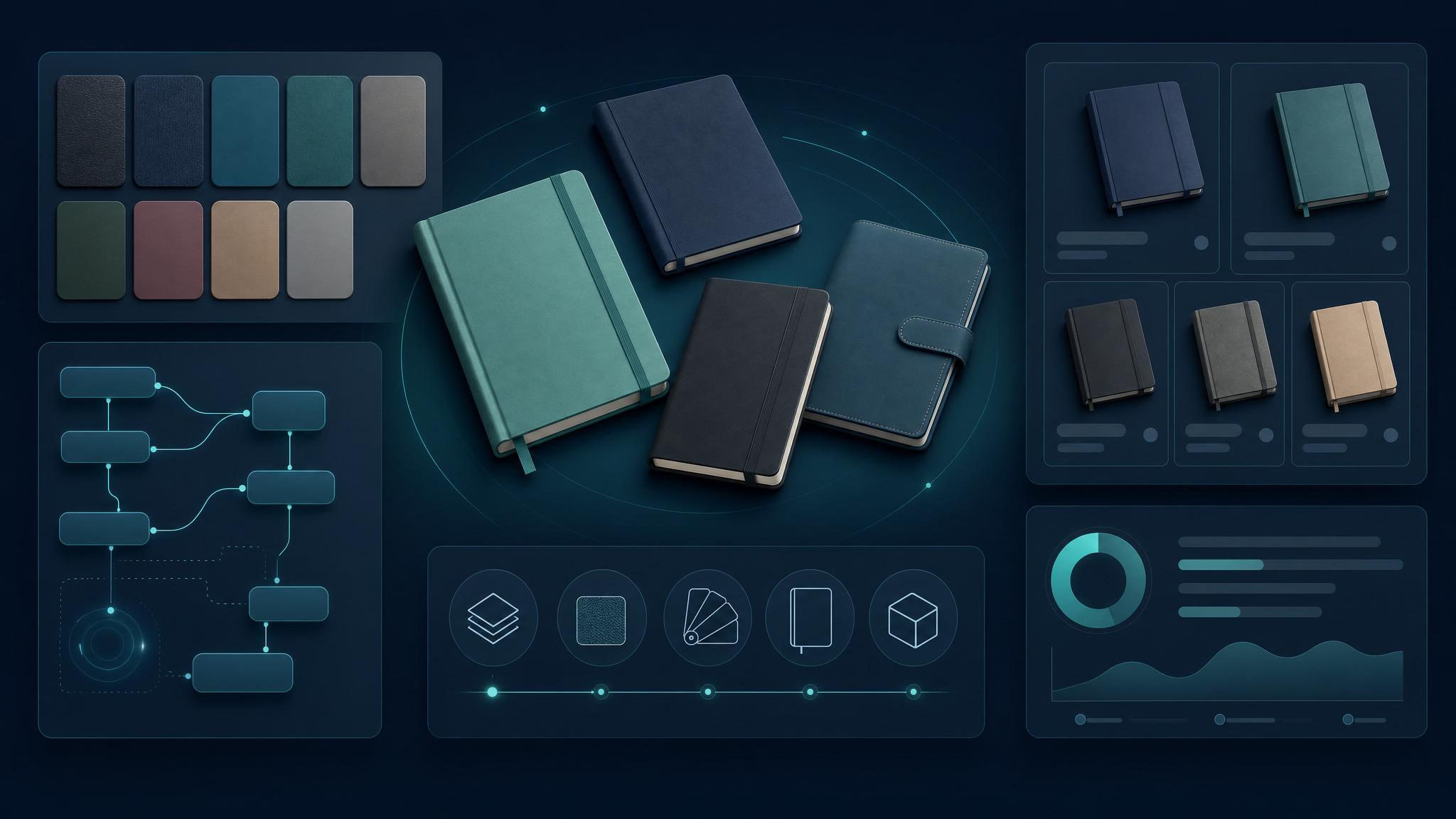
Before designing, I would map the first 30 to 50 listings on one page. Nothing fancy. Just a grid.
| Element | Example | Why it matters |
|---|---|---|
| Buyer | New teachers | Controls the title, tags, mockup context, and gift angle. |
| Design family | Minimal classroom icons | Keeps the product line visually consistent. |
| Personalization | Name or grade level | Adds perceived value without changing the entire product. |
| Occasion | Back to school | Gives the listing urgency and seasonal timing. |
| Expansion product | Mug, tote, sticker, calendar | Turns a notebook idea into a real collection. |
This is boring work. It is also where the money usually is.
One of the cleanest seller jumps I have seen came from this kind of batching. The seller stopped making random designs and instead built 40 related listings for one audience. Same design language, different names, roles, and gift moments. The shop looked more intentional within a weekend.
Set personalization rules you can fulfill
Personalized journals can sell well, but only if you control the process. If every buyer can request anything, you just created a custom design agency with stationery margins.
I would keep personalization narrow:
- First name only.
- Initials only.
- Business name with a character limit.
- Simple color choice from a fixed palette.
- Predefined role or title options.
Do not offer full custom art unless your pricing supports it. Most sellers are too generous here. They turn a simple sale into 20 minutes of unpaid production time.
Batch your notebook listings before you publish
MyDesigns is built for sellers who want organized product data, mockups, and listing workflows in one place instead of scattered files and spreadsheets.
Create listings that make the notebook feel useful
A custom notebook listing should not just show a pretty cover. It should answer the buyer’s silent question: “What would I use this for, and why is this the right one?”
That means your mockups, title, first image, and description need to work together.
Mockups matter more than most sellers admit
I have a strong opinion here. A mediocre notebook design with a clear, specific mockup can beat a better design shown badly.
Your first image should make the product instantly understandable. Show the cover clearly. Keep the background clean. If the product is personalized, show where the name goes. If it is a teacher notebook, the mockup should feel classroom-adjacent without looking cluttered.
The product mockup workflow matters because it affects the click before your description ever gets read. If you are selling on Etsy, your image has to stop the scroll in a grid full of similar products.
For custom notebooks, I would create at least these images:
- Clean front-cover mockup.
- Angled lifestyle-style mockup without relying on people.
- Personalization example.
- Size or format visual if your provider supports multiple options.
- Gift-use image for the target buyer.
Keep all text needed for the listing inside the listing itself, not baked into every product image. That makes future edits easier.
Titles, tags, and descriptions should mirror the buyer
Your keyword research should not be a pile of terms you jam into a title. It should tell you how the buyer thinks.
For a teacher notebook, a title might combine the product, buyer, use case, and personalization angle. For example: personalized teacher notebook, custom classroom journal, teacher gift notebook. The structure is simple because the buyer is simple: they want the right gift or the right tool.
I would use Google Trends for seasonality, the Etsy Seller Handbook for marketplace basics, and your own listing data for what actually converts. Research gets you moving. Sales data tells the truth.
If Etsy is your main channel, read this next: my Etsy keyword research workflow. Then apply it to one buyer group at a time.
Price custom notebooks like a business, not a craft hobby
Do not price custom notebooks by looking at the cheapest listing and trying to match it. That is how sellers end up busy and broke.
Your price has to cover product cost, marketplace fees, payment processing, shipping assumptions, ad spend, personalization time, returns, and profit. If there is no room left after all of that, you do not have a product. You have a chore.
I would use this simple pricing check:
- Base product cost: what your print provider charges.
- Marketplace cost: listing fees, transaction fees, payment fees, and optional ads.
- Labor cost: any manual personalization or customer message handling.
- Margin target: the profit you need for the product to be worth publishing.
- Bundle potential: whether the notebook can pair with mugs, totes, stickers, or planners.
I wrote a deeper breakdown here: how to price print on demand products. The short version is this: if you cannot make the math work before launch, more sales will not fix it. They will only make the problem louder.
The U.S. Small Business Administration has a useful reminder that costs need to be counted before you commit. That applies even when you are starting lean with print on demand.
Keep your product math and publishing workflow connected
Start on the Free plan, then move to Starter, Pro, or Pro Plus when your catalog needs faster scaling. Annual plans start at $18.75/mo for Starter.
Scale without turning every sale into manual busywork
The old Etsy playbook was simple: make more designs, upload more listings, hope a few hit. That still works sometimes, but it is getting weaker because everyone has access to better design tools now.
The advantage today is not just creativity. It is speed, organization, and execution.
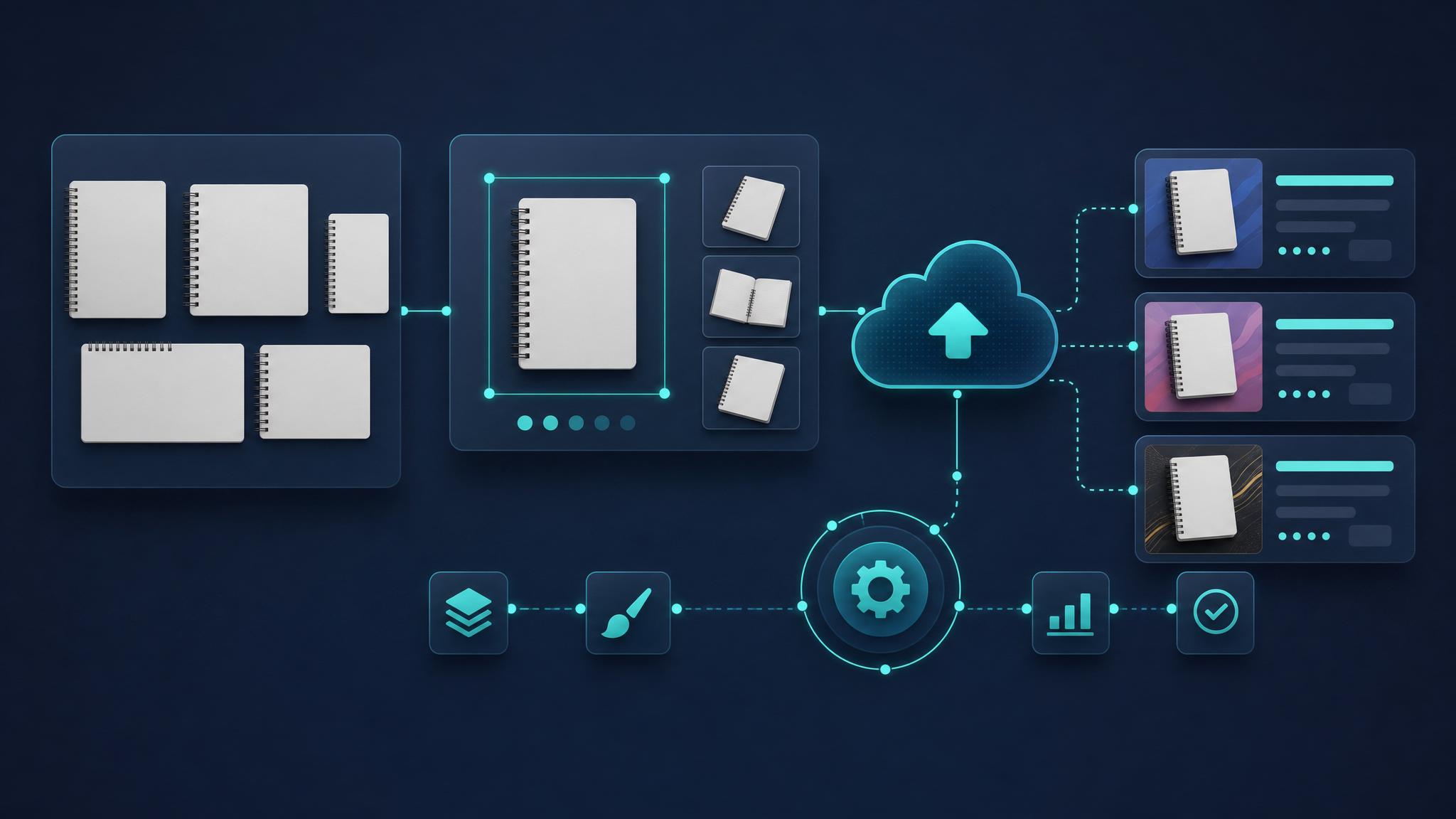
If I were launching custom notebooks now, I would build the workflow like this:
- Pick one buyer group. Do not mix teachers, brides, dog moms, and realtors in the same first batch.
- Create one design system. Same fonts, color palette, layout rules, and product style.
- Build 20 to 60 variations. Names, roles, occasions, colors, and related phrases.
- Create mockups in batches. Keep the first image consistent so the shop feels intentional.
- Publish with clean listing data. Titles, tags, descriptions, and images should be organized before upload.
- Measure what gets clicks. Kill weak angles, expand the ones with traction.
This is exactly the kind of bottleneck we built MyDesigns to remove. Manual uploads are fine when you have five products. They become a tax when you have 500 ideas and only a few hours to work.
If Etsy is part of your plan, pair this guide with my print on demand Etsy playbook and the bulk upload guide. The goal is not to publish junk faster. The goal is to test better ideas with less drag.

Launch the line
Your notebook catalog should not live in chaos
Create designs, organize product data, prepare mockups, and publish more efficiently from one MyDesigns workflow.
Custom notebooks are not magic. They are a simple product category with a lot of room for sellers who are willing to be specific, organized, and fast.
Pick the buyer. Build the system. Publish the line.
Build Your Custom Notebook Workflow in MyDesigns
Start with one buyer group, create a focused product line, and use MyDesigns to move from idea to organized listings faster.
Frequently Asked Questions
+ Are custom notebooks profitable?
Custom notebooks can be profitable when you price for product cost, fees, personalization time, and margin. They work best as part of a focused product line instead of one random listing.
+ Can I sell custom notebooks on Etsy?
Yes, you can sell custom notebooks on Etsy if your products follow Etsy policies and your designs are original or properly licensed. The strongest listings usually target a clear buyer, gift moment, or use case.
+ What designs sell best on custom notebooks?
The best custom notebook designs usually serve a specific buyer, such as teachers, students, bridesmaids, small business owners, or wellness buyers. Personalized names, roles, and gift occasions often outperform generic patterns.
+ How many notebook listings should I launch first?
I would launch 20 to 60 related notebook listings for one buyer group before judging the category. That gives you enough variation to test names, occasions, styles, and keywords without scattering your effort.
+ Do I need inventory to sell personalized journals?
No, you do not need inventory if you use a print on demand workflow with a provider that supports notebooks or journals. Your main job is building strong designs, mockups, listing data, and a fulfillment process you can repeat.


Leave a Reply