


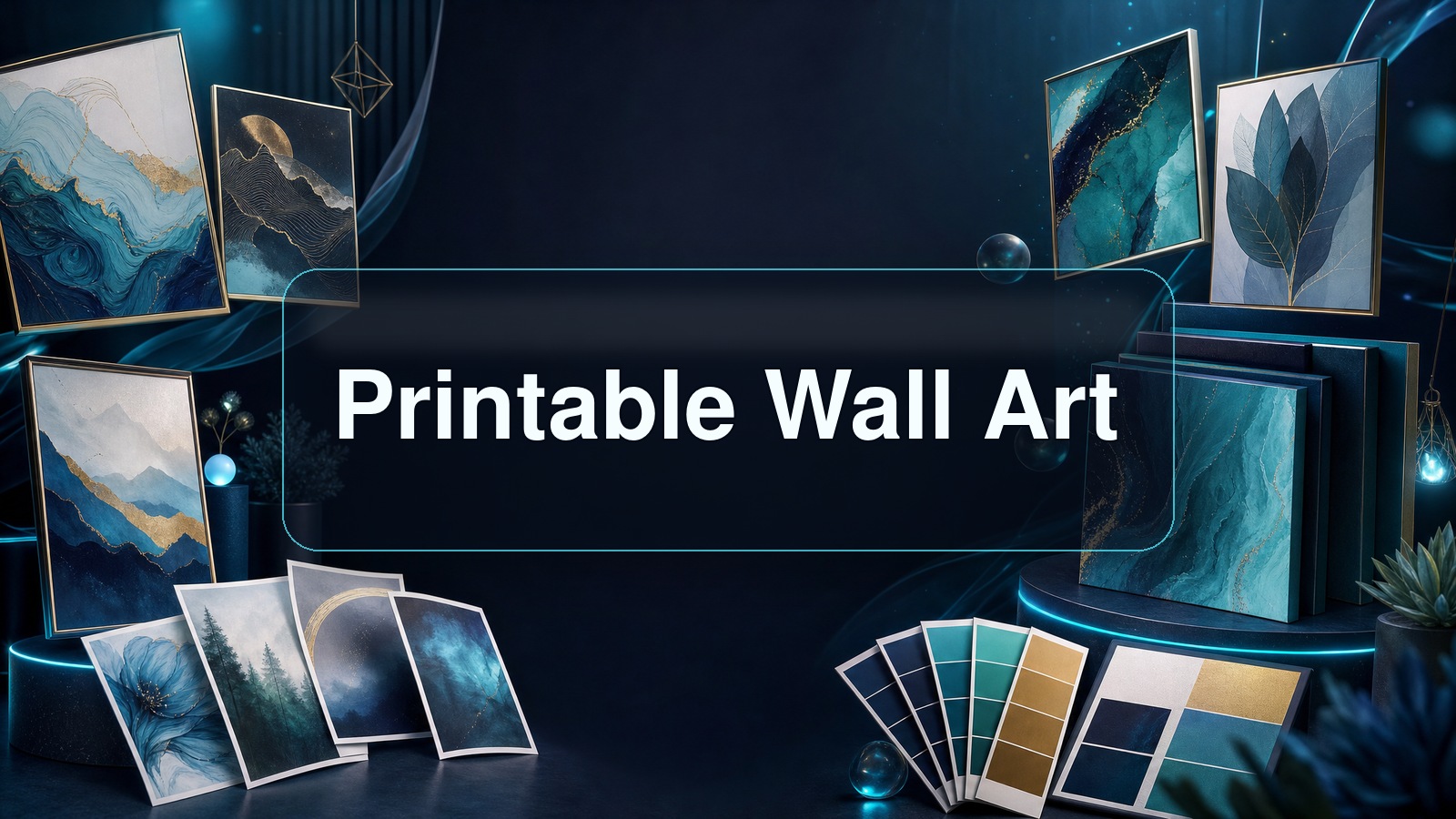
Key Takeaways
- Printable wall art works when it is a product line, not a single pretty file. Buyers search by room, mood, style, occasion, and print size.
- The file package matters as much as the art. I would include common aspect ratios, clear download instructions, and mockups that remove buyer doubt.
- The fastest path is a tight niche batch. Build 20 to 40 related listings, then use real search data to decide what deserves more variations.
- Manual listing work kills the margin. If you are creating digital download art prints, batching assets, mockups, titles, tags, and descriptions is the advantage.
Table of Contents
- Printable wall art is simple, but not easy
- Choose a printable wall art niche before you design anything
- Create a file package buyers can print without confusion
- Mockups and listings do more selling than the art file
- Price printable wall art for perceived value, not file size
- Scale the workflow without turning into a spreadsheet operator
- Frequently Asked Questions
Printable wall art is one of the easiest digital products to start and one of the easiest to do badly.
That is the part most sellers miss. The file is simple. The business is not.
I have seen sellers upload one abstract print, add a vague title, and wonder why Etsy does not magically send buyers. I get the frustration. You can make something beautiful and still have no reason for a shopper to click.
The fix is not making prettier art forever. The fix is building a real product line around buyer intent.
Printable wall art is simple, but not easy
Printable wall art is digital artwork a buyer downloads and prints themselves. No inventory, no shipping, no production delay. That is why people love the model.
But that low barrier also means there is a lot of lazy work in the category. Generic beige quotes. Random abstract blobs. One-file downloads with no size options. Mockups that look like every other seller on page one.
If I were starting from zero today, I would treat printable wall art like a small catalog business. I would not think in terms of one product. I would think in terms of collections, rooms, moods, formats, and buyer moments.
Why buyers still pay for printable files
People buy printable wall art because they want speed, control, and a specific look. They may be decorating a nursery this weekend, staging an Airbnb, refreshing a home office, or building a gallery wall without waiting for shipping.
That creates demand for very specific searches: printable abstract art, vintage poster, minimalist prints, printable wall art for bathroom, and digital download art prints. Our SEO data shows printable wall art at 2,400 monthly searches, with related terms like printable abstract art at 2,900 and wall art prints at 4,400.
Those numbers are not massive compared with broad ecommerce terms, but they are specific enough to matter. Specific beats broad when you are trying to get your first sales.
What I would not sell
I would not sell random single prints with no collection logic. I would not use copyrighted quotes, celebrity names, sports teams, brand references, or anything that depends on someone else’s intellectual property.
I would also avoid chasing every trend at once. The seller who uploads farmhouse prints, cyberpunk posters, nursery animals, astrology charts, and wedding signs in the same week usually learns nothing from the data.
Pick a lane long enough to see a pattern.

Turn one printable idea into a real product batch
MyDesigns helps you organize digital product assets, create listing content, build mockups, and move faster when you are testing collections.
Choose a printable wall art niche before you design anything
The product category is not the niche. “Printable wall art” is the shelf. Your niche is the reason a buyer wants that print today.
For example, “neutral nursery animal prints” is stronger than “wall art.” “Moody vintage kitchen prints” is stronger than “poster.” “Minimalist home office motivation set” is stronger than “quote art.”
The more specific the buyer context, the easier it is to write the title, create the mockup, choose the keywords, and build the next 20 variations.
My niche scorecard
Before designing anything, I would score each printable wall art idea against five questions:
- Is there a clear room or use case? Nursery, bathroom, office, kitchen, dorm, classroom, Airbnb, salon, or gallery wall.
- Can the buyer understand it in one thumbnail? If the value needs a paragraph, the product is probably too abstract.
- Can I create a collection? A set of 3, 6, 9, or 12 related prints usually feels more valuable than one file.
- Can I make variations without copying myself? Different palettes, crops, themes, seasons, and room contexts.
- Is the IP clean? No protected characters, brand names, song lyrics, team references, or celebrity likenesses.
Use Google Trends, Pinterest Trends, Etsy autocomplete, and your own search data to validate direction. Do not let tools replace judgment. Tools should sharpen your next test, not make you passive.
Batch before you brand
Most beginners spend too much time designing a logo for a shop that has no winning product yet. I would do the opposite.
I would build a batch first: 25 listings in one tight lane. Then I would watch which styles get impressions, saves, clicks, and questions. That is the market telling you where to build the brand.
This is why I keep pointing sellers toward systems. A one-off product is a lottery ticket. A focused batch is a test.
Create a file package buyers can print without confusion
The buyer does not care that your file looks good on your monitor. They care whether it prints cleanly at the size they want.
Printable wall art listings should reduce friction. If the buyer has to message you to ask what size is included, the product page already failed.
Ratios and formats I would include
For most printable art collections, I would package common aspect ratios instead of guessing one size:
- 2:3 ratio for sizes like 8×12, 12×18, 16×24, and 20×30.
- 3:4 ratio for sizes like 9×12, 12×16, 15×20, and 18×24.
- 4:5 ratio for sizes like 8×10, 12×15, and 16×20.
- 11×14 file because many buyers recognize that frame size.
- International paper ratio for A5, A4, A3, and A2 where relevant.
Use high-resolution JPG or PDF files and make the download instructions painfully clear. Etsy’s own help docs explain how digital items are listed and delivered, so read the platform rules before you publish.
Do the boring IP check
This is where I get blunt: do not build a digital product business on borrowed attention.
Before publishing, search obvious brand phrases in the USPTO trademark database. Read the U.S. Copyright Office’s copyright basics. If you use public domain or licensed assets, verify the license from the source, not from a random social post.
Printable wall art is tempting because files are easy to duplicate. That does not make every phrase, image, or style safe to sell.
Mockups and listings do more selling than the art file
Your mockup is the first product experience. It tells the buyer whether the print belongs in their room.
I would rather have a simple print with excellent mockups than a clever print shown in a confusing listing. Buyers do not buy files. They buy the future room in their head.
My mockup rules for printable wall art
Use mockups that show scale, mood, and use case. For printable wall art, I want a mix like this:
- One clean hero mockup that shows the strongest print or set.
- One room-context mockup for the buyer’s likely use case.
- One collection mockup showing the full set together.
- One size guide visual that explains ratios without making the buyer work.
- One close crop showing texture, detail, or color.
If you want a faster workflow, this is where product mockups inside MyDesigns save time. You can keep the visual system consistent instead of rebuilding every listing from scratch.
Title, tags, and description workflow
For the listing title, I would put the buyer’s search phrase near the front, then layer in style, room, and format. Do not stuff every synonym into one unreadable title.
A good title pattern looks like this:
- Primary keyword: printable wall art
- Style: vintage, abstract, minimalist, coastal, neutral, moody
- Use case: nursery, bathroom, kitchen, office, gallery wall
- Format: digital download, set of 3, instant download, art prints
For descriptions, answer the buyer’s practical questions first: what they receive, what sizes are included, how to print, what is not included, and whether refunds apply to digital files.
We built tools like the Etsy listing optimization workflow because this repetitive listing work is where sellers bleed hours. If you publish one product, manual work feels fine. If you publish 50, it becomes the business bottleneck.

Build the listing system before you chase more designs
Start with a free MyDesigns account, then use one workflow for assets, mockups, descriptions, tags, and product publishing.
Price printable wall art for perceived value, not file size
A buyer is not paying for megabytes. They are paying for a result: a finished wall, a styled room, a gift, a mood, or a shortcut.
That is why bundles usually beat lonely single prints. A set of 3 coordinated prints can feel more complete than one file. A 12-print gallery wall pack can feel like a decorating kit, not a download.
Here is how I would think about pricing:
| Offer type | Best use | What to test |
|---|---|---|
| Single print | Specific room, quote, or design concept | Low price, strong mockup, clear sizes |
| Set of 3 | Bathrooms, nurseries, kitchens, offices | Higher perceived value and easier room styling |
| Gallery wall bundle | Living rooms, Airbnb decor, dorm rooms | More files, stronger lifestyle positioning |
| Seasonal pack | Holiday, graduation, back-to-school, wedding | Urgency and themed collections |
I would not race to the bottom. Cheap can work, but cheap without differentiation just trains you to need more volume to survive.
If your workflow is still manual, check MyDesigns pricing before you scale. The Free plan is $0, Starter is $24.99 per month on monthly billing, Pro is $49.99 per month on monthly billing, and Pro Plus is $99.99 per month on monthly billing. On annual billing, Starter is $18.75 per month, Pro is $38 per month, and Pro Plus is $74.99 per month.
Scale the workflow without turning into a spreadsheet operator
The old digital product playbook was simple: make more designs, upload more products, wait.
That is not enough now. The advantage is not just creativity. It is throughput with taste. You need to create, package, mock up, write, publish, and improve faster than the seller who is still copying filenames between folders at midnight.
My workflow would look like this:
- Research one buyer lane. Pick the room, style, and use case before designing.
- Create a tight batch. Build 20 to 40 related printable wall art products.
- Package every file consistently. Same ratio logic, same naming structure, same instructions.
- Create mockups in batches. Keep the look consistent so the shop feels intentional.
- Write titles, tags, and descriptions in a repeatable system. Do not reinvent every listing.
- Review search behavior weekly. Double down on the prints and styles that earn attention.
For design generation, AI art workflows can help you move faster, but I would still curate hard. Do not publish every output. The market does not reward volume without taste.
For broader product strategy, pair this with our guide to digital product ideas and the step-by-step article on how to create digital products. Printable wall art is just one lane. The system behind it can apply to planners, templates, SVGs, and other downloadable products too.
Stop publishing printable wall art one listing at a time
Use MyDesigns to manage batches, speed up listing content, create mockups, and turn focused tests into product lines.
Frequently Asked Questions
+ Is printable wall art profitable?
Printable wall art can be profitable when you sell focused collections, strong mockups, and clear file packages. The margin is attractive because there is no inventory, but the category still requires niche research, listing quality, and consistent testing.
+ What sizes should I include for printable wall art?
Include common aspect ratios like 2:3, 3:4, 4:5, 11×14, and international paper sizes when relevant. This gives buyers flexible printing options and reduces support questions after purchase.
+ Can I sell printable wall art made with AI?
You can sell AI-assisted printable wall art if the platform allows it and you have the rights needed for commercial use. I would still edit, curate, and package the work carefully instead of publishing raw outputs.
+ Where should I sell printable wall art?
Etsy is the most common starting point because buyers already search for printable art there. I would also build your own audience over time so the whole business does not depend on one marketplace.
+ How many printable wall art listings should I launch first?
I would launch 20 to 40 listings in one focused niche before judging the idea. A single listing does not give you enough data to learn which style, room, keyword, or bundle angle buyers actually want.
The sellers who win with printable wall art are not the ones making random files forever. They are the ones building focused collections, clean file packages, strong mockups, and repeatable listing systems.
That is the game now.
Build Your Printable Wall Art System
Use MyDesigns to organize digital art assets, create listing content, build mockups, and publish focused product batches faster.


