

Key Takeaways
- Custom keychains are a small product with serious gift intent – buyers understand them instantly, which makes the offer easier to test than complicated merch.
- The winning angle is personalization, not another generic accessory – names, pets, couples, schools, teams, hobbies, and milestones give the product a reason to exist.
- Your listing system matters more than one perfect design – I would launch tightly related variations, read the data, then scale the pockets of demand.
- Automation gives you the unfair advantage – the seller who can create assets, mockups, descriptions, tags, and listings faster gets more shots on goal.
Table of Contents
Custom keychains are easy to underestimate. That is exactly why I like them.
They are small, giftable, low-friction, and easy for a buyer to understand in two seconds. Nobody needs a long education campaign to know what a personalized keychain is. The challenge is not explaining the product. The challenge is making your version feel specific enough to buy.
If I were building a new custom keychains line today, I would not start by making random cute designs. I would start with buyer intent, personalization rules, and a workflow that lets me publish a focused batch quickly.
Custom keychains are not a throwaway product
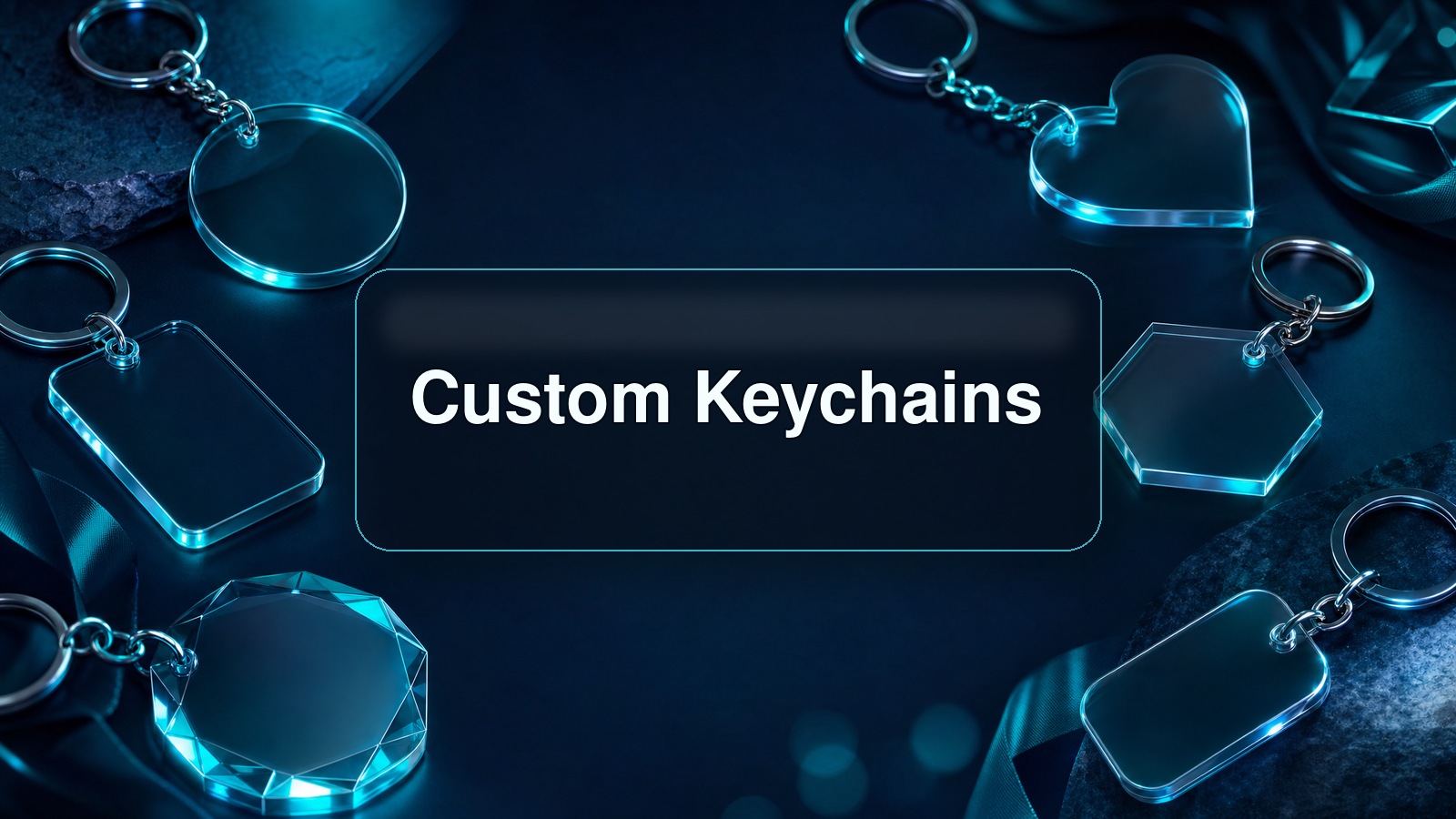
A keychain is a tiny object, but it can carry a lot of emotional weight. People buy them for new drivers, pet memorials, weddings, teams, teachers, coworkers, small business branding, best friends, couples, and travel memories.
That matters because emotional context creates purchase urgency. A buyer is not searching for an accessory. They are searching for a small gift that feels personal without costing $80.
Why buyers care about a tiny accessory
The best custom keychains do one of three jobs:
- They mark identity – names, initials, schools, sports, hobbies, jobs, and inside jokes.
- They preserve a memory – pets, anniversaries, travel, weddings, babies, graduations, and first cars.
- They make gifting easy – affordable, personal, lightweight, and simple to ship.
That is why I would treat custom keychains as a gift product first and a merch product second. Gift intent changes the way you write titles, make mockups, choose photos, and build product variations.
The generic keychain trap
The mistake is thinking the product category itself is the idea.
It is not.
“Custom keychain” is a format. The real product is “personalized pet memorial keychain for dog moms” or “new driver keychain from parents” or “custom cheer team bag charm.” The more clearly the buyer can see the occasion, the easier the purchase becomes.
I have watched sellers spend days polishing one generic product, then get frustrated when it does not move. The better move is usually launching a tight cluster of related offers, then letting search behavior tell you where to double down.
Turn one keychain idea into a real product batch
MyDesigns helps you organize designs, create listing content, manage assets, and move faster when you are testing product variations.
Choose a custom keychains niche with built-in demand
I would not chase every possible keychain idea. I would pick one buyer group, one occasion, and one personalization format at a time.
That is boring advice, but it works. Focus makes the product easier to design, the listing easier to write, and the data easier to read.
My niche scorecard
Before building a custom keychains line, I would score each niche on five questions:
- Does the buyer already search for this occasion? Use Etsy autocomplete, Google Trends, and marketplace search suggestions.
- Can the value be shown in one image? If the buyer needs a long explanation, the product may be too abstract.
- Is personalization simple? Names, dates, pet names, and short phrases are easier to fulfill than open-ended custom art.
- Can I create at least 20 variations? A product line beats a one-off.
- Can the buyer gift it? Giftability usually improves conversion for low-ticket products.
The point is not to find an idea nobody has ever seen. The point is to find a familiar buyer need and package it better.
Angles I would test first
If I were starting from zero, I would build around high-intent themes with clear recipients.
| Custom keychains angle | Buyer intent | Why it can work |
|---|---|---|
| Pet memorial keychains | Emotional gift and keepsake | Strong personalization and clear reason to buy |
| New driver keychains | Parent gift, graduation, milestone | Seasonal and occasion-based demand |
| Couple and anniversary keychains | Romantic gifting | Easy name and date personalization |
| Team and club keychains | Group orders and spirit gifts | Variation potential across colors and roles |
| Small business logo keychains | Brand merch and customer gifts | Useful for boutiques, salons, gyms, and local brands |
For adjacent product research, I would also study what is happening in custom stickers, custom mugs, and broader custom merchandise. The buyer psychology overlaps more than most sellers realize.
Design the product line before you design the artwork
This is where I see sellers lose time. They open a design tool, make something pretty, and only later ask how it becomes a profitable listing.
Reverse it. Decide the line first.
Formats that make sense for ecommerce
For custom keychains, I would keep the format simple at the start. Complexity slows testing.
- Acrylic shape keychains – good for colorful artwork, pets, cartoons, and bold graphics.
- Photo-style keychains – useful for memorial, family, and couple gifts.
- Logo keychains – strong for small business merch and local teams.
- Bag charm style keychains – good for school, sports, and hobby niches.
- Bundle sets – useful for couples, teams, bridesmaids, and groups.
Do not start with every material and option under the sun. Start with a format you can explain, mock up, and fulfill consistently.
Personalization rules that protect your margin
Personalization sells, but unlimited customization can quietly destroy the business.
I would set strict rules in the listing:
- One name or short phrase only
- Character limit stated clearly
- Approved color options only
- Clear preview policy
- No redraws or open-ended custom illustration unless priced higher
That may sound restrictive. It is not. It is how you keep a small product from becoming a custom service job.
The Etsy fees page is worth reviewing before you price anything, especially if you plan to sell low-ticket personalized products. Small products can look profitable until fees, shipping, replacement risk, and labor eat the margin.

Build the workflow before the bestseller
A product line gets easier when your assets, titles, descriptions, and publishing steps live in one repeatable system.
Build listings that make the math obvious
Custom keychains are a visual product, but the listing still has to answer practical questions fast.
What do I get? How do I personalize it? When will it arrive? Is it a gift? Can I trust this seller?
The image stack I would create
I would not rely on one hero mockup. For every keychain listing, I would build a simple image stack:
- Hero image – the strongest product view with the personalization outcome obvious.
- Variation image – colors, shapes, or style options shown clearly.
- Personalization instruction image – what the buyer needs to enter.
- Scale and material image – reduce confusion before purchase.
- Gift use image – show the occasion or recipient.
- Bundle image – if buyers can purchase sets.
Keep the order buyer-first. Do not show your cleverest design first if the buyer still does not understand what they are buying.
For title and tag work, I would use the same discipline I wrote about in my Etsy listing optimization tool workflow. The best listing is not the one stuffed with keywords. It is the one where the main buyer, occasion, and product format are obvious.
Pricing without racing to the bottom
Low-ticket products are dangerous when sellers price from emotion instead of math.
Before publishing, I would estimate:
- Base product cost
- Shipping or fulfillment cost
- Marketplace fees
- Payment processing
- Replacement and remake allowance
- Time spent handling personalization
- Ad spend or discounting, if any
For most custom keychains, I would rather sell fewer orders at a healthier margin than win the race to the cheapest listing. A $6 personalized product can become a nightmare if every order needs manual back-and-forth.
If you ship inventory yourself, review USPS package guidance early so you are not guessing on package sizes and shipping options after orders start coming in. If you use a production partner, bake their fees and timelines into the listing from day one.
Scale custom keychains with a repeatable workflow
The old playbook was to make one product, obsess over it, and hope the marketplace rewarded you.
I do not like that playbook anymore. The better advantage is controlled volume. Not spam. Not low-quality duplication. A real testing system.
My first 30 listing launch plan
If I were launching this category, I would start with 30 listings inside one focused theme.
Example: pet memorial keychains.
- 10 breed or pet-type variations
- 5 gift-recipient variations, like dog mom, cat dad, pet loss gift, friend gift, family gift
- 5 design style variations, like minimalist, floral, celestial, modern, soft watercolor
- 5 bundle or set angles
- 5 seasonal or occasion angles
That gives you enough surface area to learn. One listing tells you almost nothing. A focused batch starts to show patterns.
This is exactly the kind of bottleneck that pushed us to build bulk workflows inside MyDesigns. When you are testing product lines, manual listing work becomes the tax that slows everything down. Use the tax to your advantage by removing as much of it as possible.
The numbers I would watch
After launch, I would watch signals in this order:
- Impressions – is the marketplace testing the listing?
- Click-through rate – does the main image and title earn attention?
- Favorites or carts – does the offer feel giftable?
- Conversion rate – does the listing answer enough trust questions?
- Message volume – are personalization instructions clear?
- Profit per order – is the work worth repeating?
Do not judge the whole category from one slow listing. Fix the image, title, niche, and personalization clarity first.
For asset creation, I would pair this with AI-assisted design exploration, then clean up winners into production-ready designs. My breakdown on an AI art generator for print on demand goes deeper on that prompt-to-product workflow.
Publish more tests without turning your week into admin work
Use MyDesigns to organize your product assets and move from idea to listing faster, especially when you are testing batches.
Frequently Asked Questions
+ Are custom keychains profitable?
Custom keychains can be profitable when you control product cost, personalization time, shipping, and marketplace fees. The margin gets weak when sellers underprice the item or allow unlimited custom work.
+ What types of custom keychains sell best?
The strongest custom keychains usually connect to a recipient, occasion, or identity. Pet memorials, new driver gifts, couples, teams, small business merch, and teacher gifts are stronger than generic designs.
+ Can I sell custom keychains on Etsy?
Yes, you can sell custom keychains on Etsy if your product follows Etsy policies and your listings clearly explain personalization, production, and shipping. Use clear mockups, simple instructions, and accurate processing times.
+ Do I need inventory to sell personalized keychains?
You do not always need inventory. Some sellers use production partners, while others keep blank inventory and customize in-house. The right model depends on margin, control, turnaround time, and how custom the product needs to be.
+ How many keychain listings should I launch first?
I would launch about 20 to 30 focused listings inside one niche before judging the category. That gives you enough data to compare angles, images, titles, and personalization offers.
The opportunity is not in making one more cheap accessory. It is in building a clear, giftable, personalized product line with enough speed to test what buyers actually want.
Build Your Custom Keychains Workflow
Create, organize, and publish product ideas faster with MyDesigns, then scale the variations that prove demand.


