


If you are asking what to sell on Etsy, I think most advice online starts in the wrong place. People hand you a giant list of categories, but categories do not pay you. Good offers do. I would rather see you pick one product type with clear demand, simple production, and room to stand out than chase 40 random ideas because a trend report told you to.
I have watched sellers waste months building stores around products that look good in theory but fall apart in real marketplaces. Usually the problem is not effort. It is choosing products with weak margins, slow creative velocity, or zero repeatable workflow. The products I would bet on in 2026 are the ones that let you test demand fast, iterate visuals fast, and launch enough angles to learn before your motivation dies.
In this guide, I am breaking down the product types I would actually test right now, why they still work, where most sellers misread the opportunity, and how I would use MyDesigns to go from idea to listings faster.
Key Takeaways
- The best Etsy products are not always the trendiest. They are the ones you can validate fast, differentiate visually, and fulfill without friction.
- Digital products and personalized POD still have the cleanest path to scale. They keep startup risk low while giving you room to test multiple niches quickly.
- Generic product selection is where most new sellers get stuck. Niche angle, audience fit, and listing quality matter more than category alone.
- Speed is the real advantage in 2026. The faster you can create, mock up, optimize, and publish, the faster you find winners.
Table of Contents
How I decide what to sell on Etsy
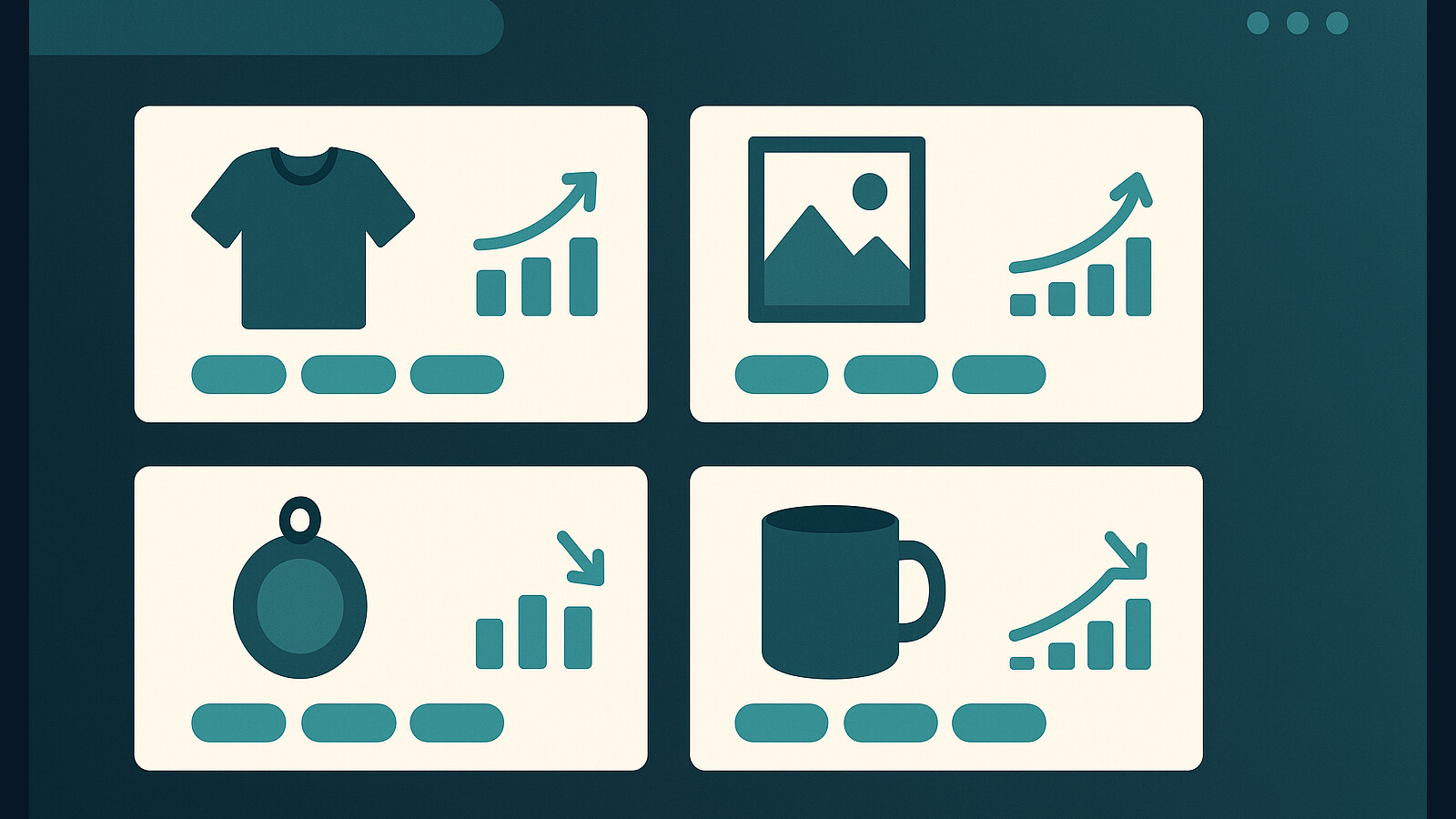
If I were starting from zero today, I would not begin with what I personally like making. I would begin with what buyers are already proving they want. That sounds obvious, but a lot of Etsy advice still romanticizes creativity over demand. That is backwards if your goal is revenue.
The three filters I use first
First, can the product support multiple angles? I want something I can spin into niche variations, seasonal variants, style variants, or personalization options.
Second, can I make the listing look better than average? On Etsy, weak visuals kill good ideas. This is why strong product mockups matter so much.
Third, can I launch enough tests without burning out? That usually pushes me toward digital products, personalized products, and print on demand offers that can be expanded quickly with tools like multi-product publishing and listing management.
Why most Etsy product research is useless
Most product research lists are too broad to help. Saying “sell jewelry” or “sell wall art” is not strategy. That is just naming a crowded aisle in a giant mall. The move is to find a buyer intent pocket inside the category. Wedding welcome signs for specific aesthetics. Editable teacher templates. Memorial photo gifts. New baby keepsakes. Not just “wall art” or “gifts.”
If your product ideas are decent but your listings look average, you will misread the market.
Use MyDesigns to create stronger mockups and launch cleaner tests before you assume the product itself is the problem.
Best digital products to sell on Etsy
Digital products are still one of my favorite answers to the question of what to sell on Etsy, especially if you need low upfront risk. You do the work once, refine the offer, and sell it over and over without touching inventory. That is hard to beat.
I like digital products even more when they solve a narrow, annoying problem. A wedding template pack. A church event flyer bundle. A bookkeeping spreadsheet for creators. A prompt pack tied to a real use case. Boring can sell extremely well if it saves time.
Templates and printables
The fastest starting point for most sellers is still templates and printables. Canva templates, planners, checklists, invitations, business resources, kids activity packs, and social media kits can all work if the niche is tight enough.
If you want more examples, read these digital product ideas and this breakdown of digital products that actually sell.
Bundles beat one-off files
This is one place where I will be blunt. A lot of sellers price themselves into irrelevance by listing tiny one-off files that look interchangeable. Bundles usually create a stronger perceived value wall. They also make your shop look more serious. If I had to choose, I would rather sell one strong bundle at $17 than a pile of lonely $3 files.
That is also where Dream AI and Vision AI become useful. Faster concept generation and stronger listing copy let you create broader test coverage without the usual content bottleneck.
Digital products win when you can test multiple niches before the market moves on.
MyDesigns helps you generate visuals, build listing assets, and organize more product variations without turning your workflow into chaos.
Personalized print on demand products worth testing
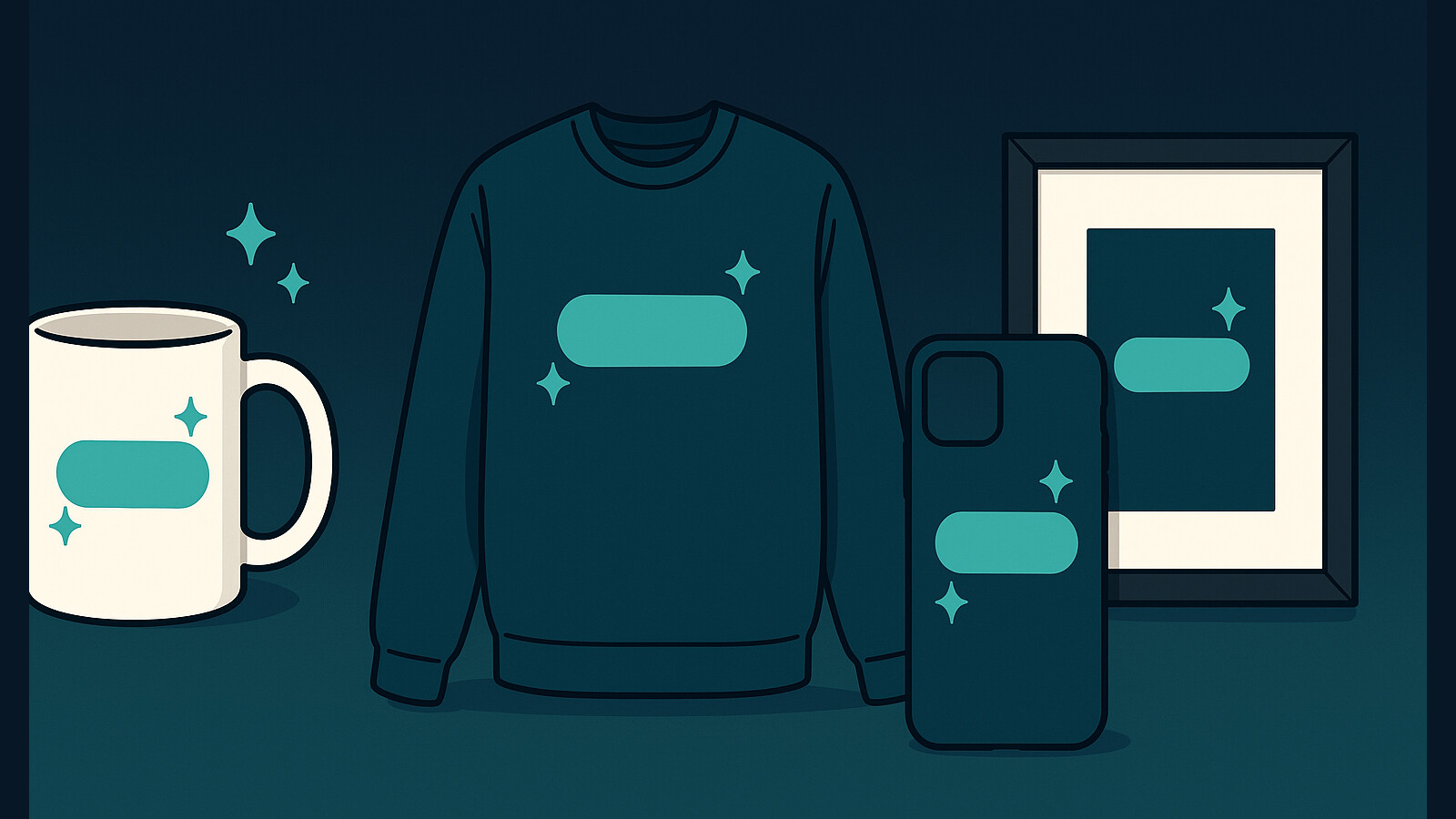
If digital products are the cleanest margin play, personalized print on demand is the best hybrid play. You keep inventory risk low, but you can still sell giftable physical products with stronger emotional value.
Products I like most
Right now, I like personalized mugs, phone cases, sweatshirts, blankets, ornaments, notebooks, and wall art. Not because those categories are new. They are not. I like them because they are easy for buyers to understand, easy to merchandise, and easy to tailor around life moments.
That matters. Buyers do not wake up wanting a random product. They want a birthday gift, a memorial keepsake, a baby announcement item, a teacher thank-you, or a matching family design. Product plus moment is where the money is.
Where sellers kill their margin
The trap is trying to compete with generic catalog products. If your mug says the same thing as 500 other mugs, the only remaining battle is price and thumbnail quality. That is a terrible place to live.
Better move: take a product like custom mugs or custom phone cases, then niche it hard. Specific hobbies. Family roles. Faith. Local pride. Profession-based humor. Buyer emotion beats product breadth every time.
The bottleneck is not product ideas. It is launching enough personalized variations without drowning in repetitive work.
MyDesigns gives you a faster path from design to mockup to published listing, which is exactly what matters when a product starts working.
Bulk Publish
Personalization
17 product types I would bet on
Here is the shortlist I would actually test if I wanted a practical answer to what to sell on Etsy in 2026.
| Product type | Why I like it | Best fit |
|---|---|---|
| Editable Canva templates | Fast to create, high margin, bundle friendly | Digital sellers and beginners |
| Printable planners | Consistent demand with strong niche angles | Productivity, wellness, teachers, moms |
| Wedding signage bundles | Clear buyer intent and premium pricing room | Event-based digital shops |
| Kids activity packs | Evergreen parent demand and easy bundling | Printable sellers |
| Business spreadsheets | Problem-solving products convert well | Creators, freelancers, side hustlers |
| Resume and career templates | Career pain stays strong in uncertain markets | Professional digital products |
| Custom mugs | Giftable, emotional, easy to personalize | POD gift shops |
| Personalized phone cases | Strong visual appeal and repeatable angles | Trend-driven POD sellers |
| Custom sweatshirts | Higher ticket potential and giftability | Family, school, event niches |
| Memorial products | Extremely intent-driven and less fad dependent | Emotion-led personalized shops |
| Baby milestone products | Strong purchase intent and gifting overlap | New parent audiences |
| Pet-themed gifts | High emotion, broad niche branching | POD and digital hybrids |
| Teacher gifts | Seasonal spikes with repeatable formats | Personalized product sellers |
| Faith-based wall art | Clear audience identity and strong gifting | Digital and POD shops |
| Niche hobby apparel | Audience specificity makes marketing easier | POD apparel |
| Photo gifts | High personal value and strong conversion potential | Personalized POD |
| Micro-niche sticker packs | Low friction product with fast testing potential | Trend-reactive sellers |
If I had to narrow that list further, I would start with three buckets: digital bundles, personalized gift products, and visual-first products that benefit from better mockups. Because those give you the fastest feedback loop.
You can also cross-reference this with our print on demand Etsy guide and our digital products resources depending on whether you want physical or downloadable offers.
Once you find a product angle that works, speed becomes the advantage.
Use bulk publishing and listing workflows in MyDesigns to expand winning niches before copycats catch up.
What I would avoid selling on Etsy
I would avoid products where you cannot explain why a buyer should choose yours in one sentence. That includes generic quote tees, generic wall art, and random novelty products with no clear audience anchor.
Low-signal me-too products
If your only differentiator is a slightly different font, you do not have a business. You have a thumbnail lottery ticket. I know that sounds harsh, but it is true.
When a trend is already dead
A trend is usually over by the time beginners start mass copying it. I have seen sellers build entire shops around stale aesthetics that peaked months earlier. The old Etsy playbook said, “Find what is already selling and copy the category.” The better 2026 playbook is, “Find what is selling, then shift sideways into a sharper angle before the category gets flattened.”
How I would validate an Etsy product idea fast
I would not spend three weeks perfecting one listing. I would launch a structured test.
My 7-day validation playbook
- Day 1: Pick one audience and one product type.
- Day 2: Create 5 to 10 listing angles, not one.
- Day 3: Build stronger mockups than the median result page.
- Day 4: Publish enough listings to see pattern signals.
- Day 5: Watch clicks, favorites, and early conversion intent.
- Day 6: Double down on the strongest style or message.
- Day 7: Cut weak angles fast and expand the winner.
This is exactly why tools matter. The more repetitive the workflow, the easier it is to talk yourself into endless planning instead of testing. A good stack removes friction between product idea, asset creation, and publishing.
If you are new, start with one product family and one audience. If you already have traction, use your existing customer patterns to choose the next adjacent niche. Do not make every decision from scratch.
Why 2026 favors fast sellers
Here is the big shift I think more Etsy sellers need to understand. The advantage is not raw creativity anymore. The advantage is creative throughput with taste. Anyone can generate ideas now. The sellers who win are the ones who turn those ideas into polished listings, clearer offers, and faster experiments without sacrificing quality.
That is why I keep coming back to the same answer when people ask what to sell on Etsy. Pick products that let you move. Pick offers you can test. Pick niches you can expand. Pick workflows that help you learn quickly. Because momentum compounds, and hesitation does not.
Frequently Asked Questions
+ What sells best on Etsy right now?
Digital bundles, personalized gifts, and niche print on demand products are still some of the strongest categories on Etsy right now. The best performers usually solve a specific need or connect to a clear buyer moment like weddings, babies, pets, holidays, or business use.
+ What is the easiest thing to sell on Etsy for beginners?
Editable templates and printable bundles are some of the easiest Etsy products for beginners because they have low startup cost and no inventory. Personalized mugs and other simple POD products can also work well if you focus on a specific niche instead of going generic.
+ Are digital products still worth selling on Etsy in 2026?
Yes, digital products are still worth selling on Etsy in 2026 if the offer is specific and the listing looks strong. Generic files are getting crushed, but targeted bundles and problem-solving templates still have excellent margin potential.
+ How do I know if an Etsy product idea is good?
A good Etsy product idea has proven demand, a clear audience, and room for differentiation. I look for products that support multiple angles, look strong in thumbnails, and can be tested quickly without huge upfront risk.
+ Is print on demand a good Etsy business model?
Print on demand is a strong Etsy business model when you use it for personalized, niche, or gift-driven products instead of generic catalog items. The model works best when your designs, mockups, and product angles are clearly better than average.


Leave a Reply