


Most articles about digital products that sell are too generic to be useful. They throw 50 ideas at you, tell you to “follow your passion,” and hope one of them sticks. That is not a strategy. It is a content farm disguised as advice.
What actually matters is whether a product has durable demand, low enough friction to launch quickly, and enough room to expand into a real catalog. The best digital products are not just creative. They are practical, repeatable, and easy for buyers to understand in one glance.
If I were building from zero today, I would not ask, “What can I make?” I would ask, “What can I create once, package cleanly, and publish fast enough to learn from real buyers?” That question leads you to much better products.
Key Takeaways
- The best digital products that sell solve obvious problems – clarity beats cleverness almost every time.
- Simple products usually beat complicated ones – templates, printables, and asset packs are easier to launch and scale.
- Durability matters – choose products that can be refreshed, bundled, and repurposed into more offers.
- Publishing speed is a major edge – the sellers who win are usually the ones who can test more good ideas faster.
Table of Contents
- What makes a digital product actually sell
- The best digital products that sell right now
- Ranked ideas you can actually launch
- Validate demand before building too much
- Why speed beats perfection in digital products
- What I would sell if I started today
- The biggest mistakes I see over and over
- Frequently Asked Questions
What makes a digital product actually sell
The best digital products that sell do three things well. They solve a real problem, they are easy for the buyer to understand, and they feel immediately usable. That last point matters more than people think. If the value feels delayed, abstract, or hard to implement, conversion drops fast.
Buyers want momentum. They want to save time, make something look better, organize their workflow, or create income faster. The more directly your product delivers that, the more likely it is to sell.
Demand beats novelty
I like creativity, but novelty is wildly overrated in ecommerce. The market does not reward originality by itself. It rewards relevance. A boring product that clearly solves a buyer problem will outperform a clever product that needs a paragraph of explanation.
That is why templates, printables, and asset packs keep winning. They are not flashy. They are useful.
The three tests I use
Before I commit to a digital product niche, I run three tests:
- Demand test – are buyers already searching for this kind of product?
- Repeatability test – can I turn one concept into multiple SKUs, bundles, or variations?
- Publishing test – can I get this live quickly enough to learn from the market?
If the answer is no on one of those, I get skeptical fast.
Digital products look simple from the outside. The sellers who grow are usually the ones who systemize creation and launch.
This is exactly where a cleaner workflow starts to matter more than another round of planning.
The best digital products that sell right now
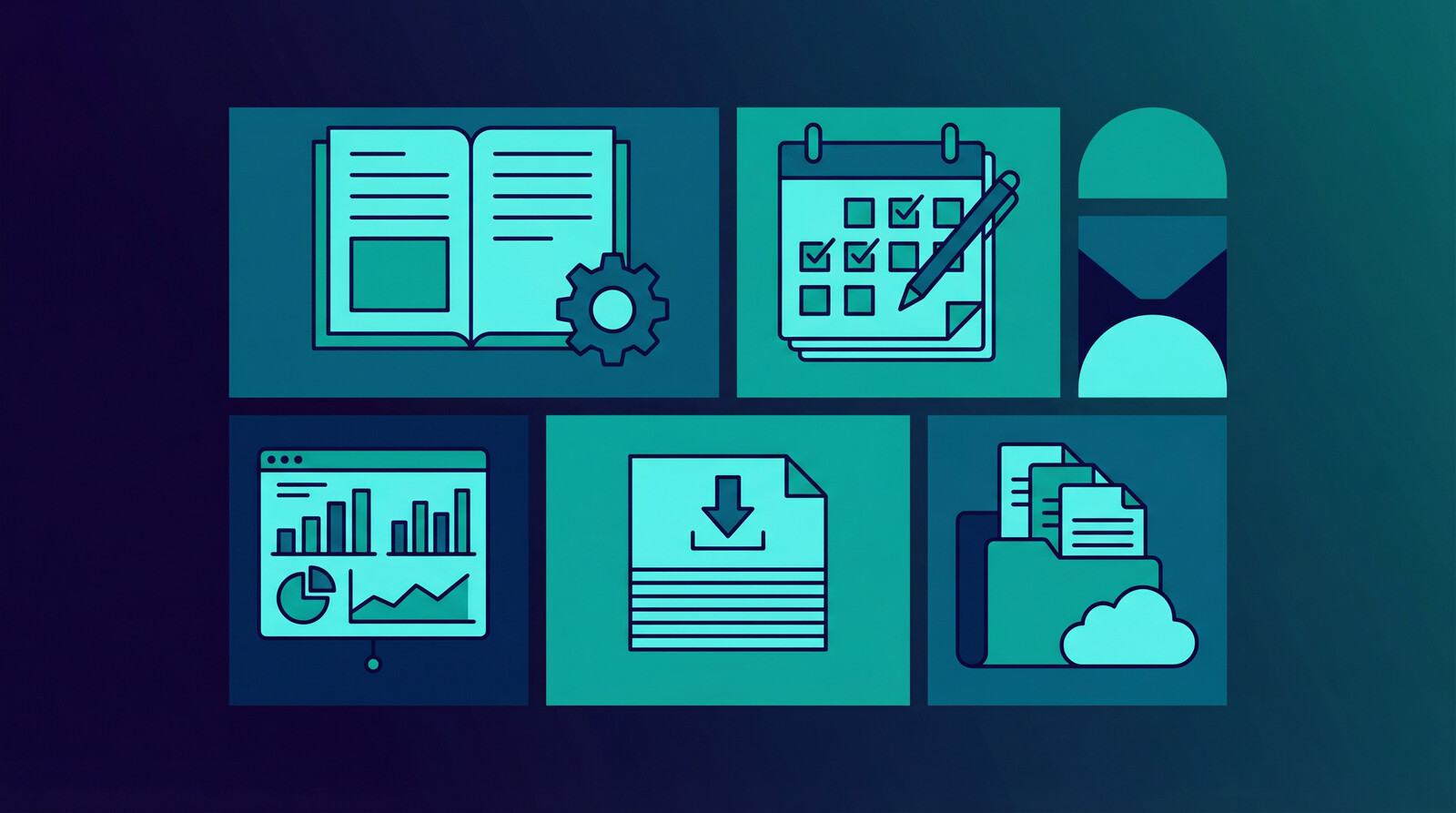
The strongest digital product categories right now are not random. They cluster around productivity, personalization, business utility, and niche-specific design assets.
Here are the categories I like most in 2026:
- Templates – resumes, pitch decks, business forms, social media packs, welcome guides, media kits.
- Printables – planners, journals, wall art, activity sheets, educational printables.
- Design assets – SVGs, clipart bundles, seamless patterns, icon packs.
- Digital business tools – spreadsheets, calculators, trackers, checklists, dashboards.
- Niche educational assets – mini courses, swipe files, guides, prompt packs, workbooks.
- Done-for-you starter kits – but only when they are packaged well and aimed at a real use case.
If you want more category inspiration tied to marketplace demand, look at our guide to digital products to sell on Etsy. It is a good example of how broad ideas become much stronger once they are tied to a real buyer and channel.
Easiest categories to start with
The easiest categories to start with are the ones that have low production complexity and low support load. That usually means printables, templates, and asset bundles. They let you launch quickly, bundle easily, and iterate without rebuilding the whole offer from scratch.
I especially like products that can be turned into multiple themed versions. A wedding template can become a baby shower template. A teacher planner can become a homeschool planner. A budget spreadsheet can become a freelancer dashboard.
Products with bigger upside
Higher-upside categories usually need more thought, but they can become stronger businesses. Think business systems, niche training assets, deep templates tied to specific professions, or product families that naturally lead to bundles and upgrades.
These are not always the fastest to start, but they often create better retention and repeat buyer behavior because the buyer gets more outcome, not just a file.
| Product Type | Why It Sells | Ease of Creation | Expansion Potential |
|---|---|---|---|
| Printable planners | Clear utility and repeat buyer demand | High | High |
| Template packs | Immediate time savings | High | High |
| SVG and clipart bundles | Useful for makers and sellers | Medium | High |
| Notion or spreadsheet systems | Strong problem-solving angle | Medium | Medium |
| Mini courses and workbooks | Higher perceived value | Medium | Medium |
| Done-for-you business kits | Fast-start appeal | Medium | High |
Ranked ideas you can actually launch

If I had to rank digital products that sell by a mix of demand, launch speed, and scalability, this is how I would think about it:
- Niche templates – because they solve clear problems fast.
- Printable bundles – because one concept can become multiple SKUs.
- Design asset packs – because they are reusable and easy to upsell.
- Business trackers and dashboards – because useful systems sell better than vague motivation.
- Low-content educational packs – because buyers want fast clarity, not always giant courses.
- Done-for-you kits – because they attract buyers who value speed, but they need strong positioning.
Fastest to launch
The fastest products to launch are usually printables, templates, swipe files, and basic digital kits. They do not require heavy delivery infrastructure, and you can test several variations quickly.
This is why I usually tell new sellers to stay away from overbuilt products at the beginning. You want to learn from the market before you commit to a giant content build.
Harder, but still worth it
Some product categories are slower to create, but still smart if you have the right angle. Think curriculum packs, profession-specific systems, brand kits for a niche market, or layered bundles for business owners. These take longer, but they can also justify stronger pricing and better repeat demand.
The mistake is not choosing a hard product. The mistake is choosing a hard product before you have any proof of demand.
If you want more output without more chaos, you need a workflow that keeps design, listing creation, and publishing moving together.
The advantage usually goes to the sellers who can create, organize, and publish without getting buried in manual work.
Validate demand before building too much
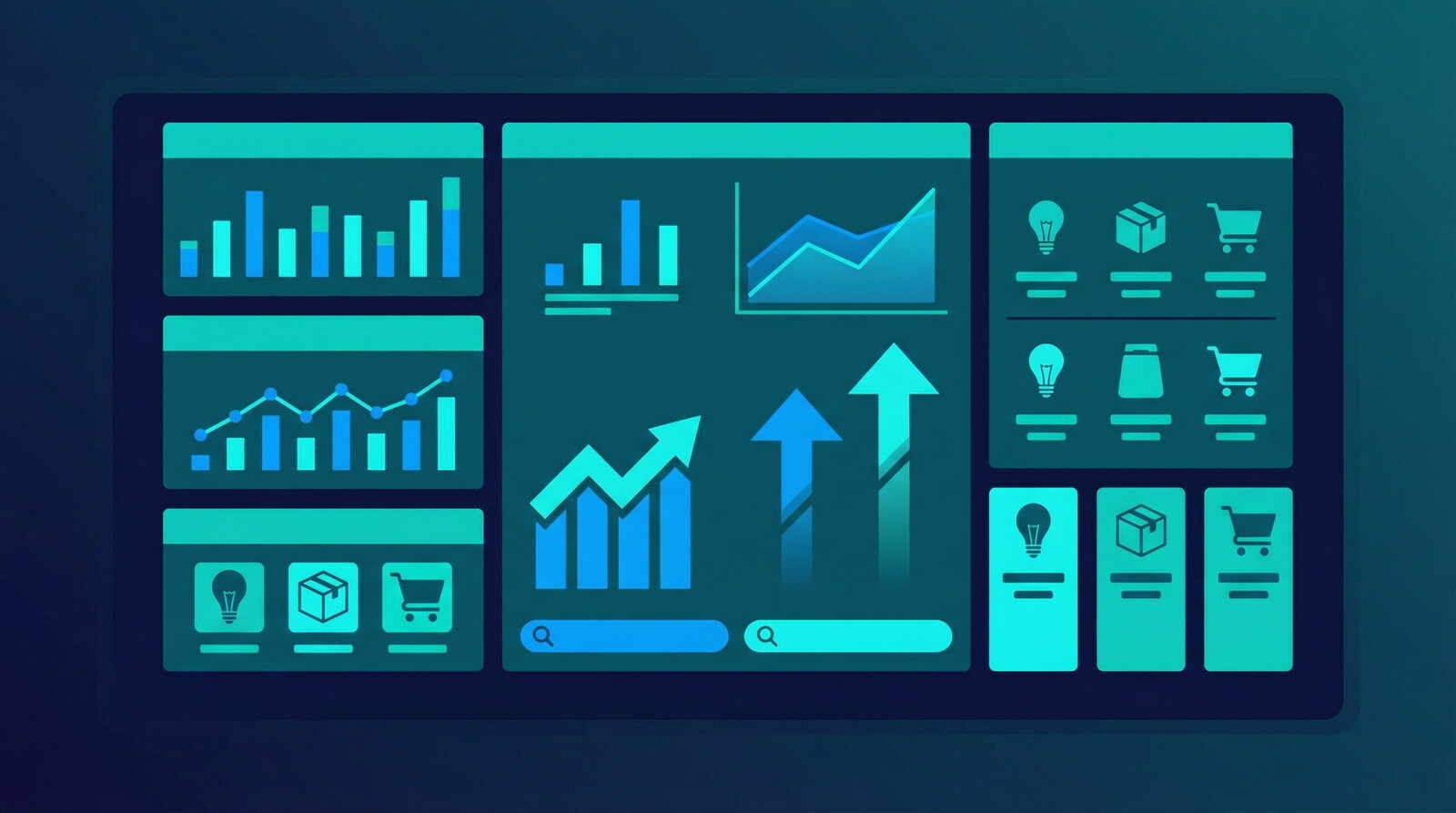
One of the fastest ways to kill momentum is to build a huge catalog before you know whether the niche is alive. I have watched sellers create 40 listings in a category that barely gets searched, then wonder why the business feels dead. That is not a motivation problem. That is a validation problem.
What I look for first
Before going deep, I want to see signs that buyers already understand the category:
- search demand for the product type
- active listings and recent competition
- clear buyer language I can mirror in titles and thumbnails
- enough room to create multiple variations without sounding repetitive
That is why I prefer products with obvious search intent over products that need heavy education. If the buyer already knows what they want, selling gets easier.
How to avoid dead-end ideas
Dead-end ideas usually fail one of two ways. Either the category is too broad, or the product is too one-off to scale. If every sale requires custom work, or every listing has to be invented from scratch, the business gets slow fast.
That is also why I like product families more than isolated products. A good niche should let you create a core offer, spin off variations, and package bundles without reinventing the workflow every time.
If you are still working out your publishing process, our guide on how to sell digital products online covers the step-by-step side of choosing a channel, packaging the offer, and launching fast.
Why speed beats perfection in digital products
The old playbook says spend more time crafting the perfect offer. I disagree. You need quality, obviously. But once the product is useful and presentable, speed becomes the bigger edge.
Why? Because digital product businesses improve through publishing and feedback. Not through endless private tinkering.
One asset, many offers
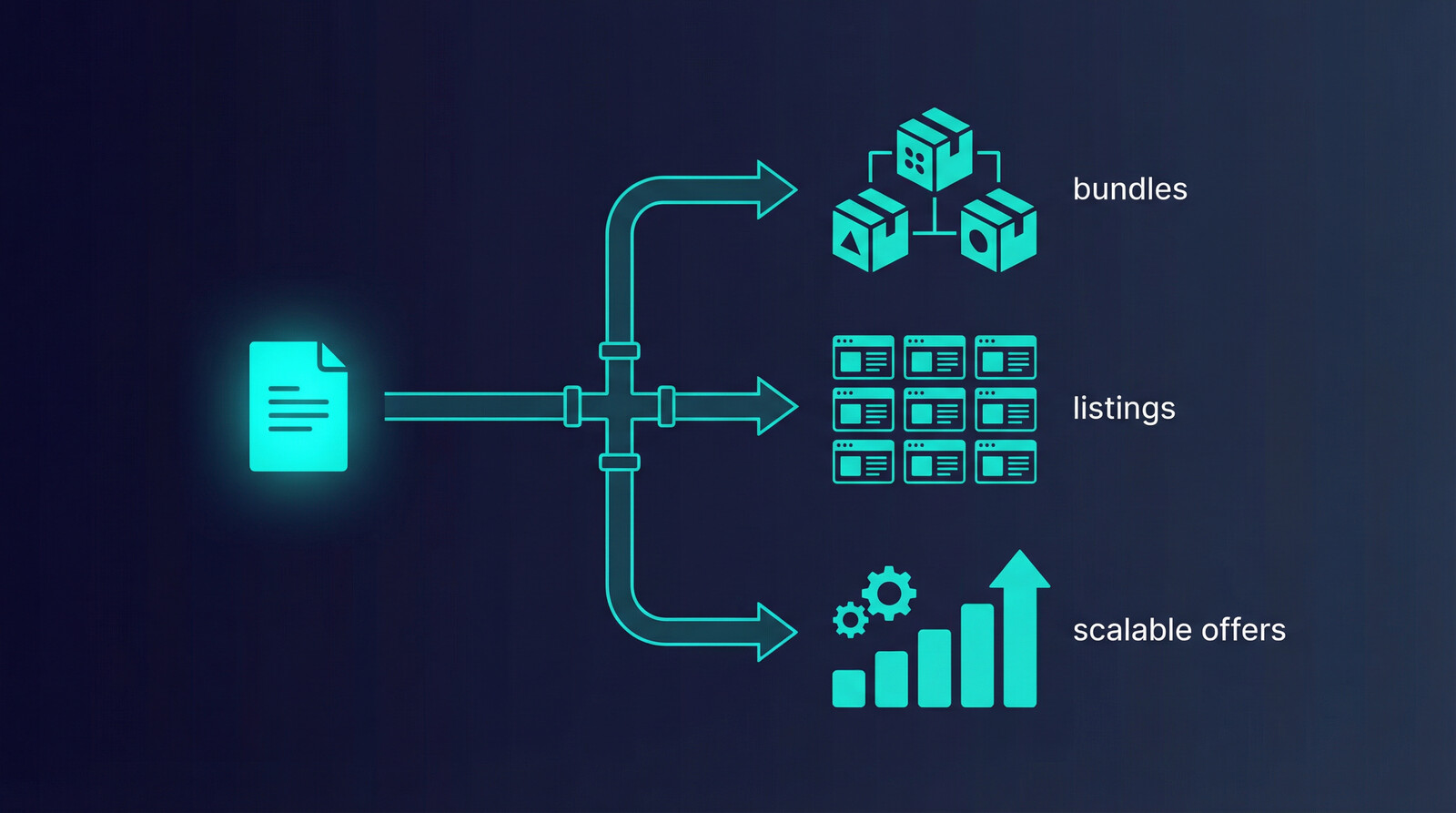
This is where the math gets interesting. One concept can become a starter product, a premium bundle, a niche-specific version, a themed seasonal pack, and an upsell. That is how sellers turn a decent idea into an actual catalog.
Most people think they need more ideas. Usually they need better packaging. A smart seller can take one well-built asset and turn it into five revenue opportunities.
How MyDesigns fits the workflow
This exact bottleneck is why we built Multi-Product Publishing, Import & Sync, and Image Utilities into MyDesigns. Once you start creating digital products at any real volume, the enemy is not inspiration. It is friction.
When you can turn one strong idea into multiple assets, mockups, and live listings quickly, your whole business moves differently. Because that is where leverage comes from.
The gap between planning and publishing is where a lot of digital product momentum dies.
If you want this strategy to actually turn into output, the workflow after the idea matters just as much as the idea itself.
What I would sell if I started today
If I had to start from zero right now and wanted the cleanest path to early traction, I would pick one of these:
- Business templates for a specific profession – photographers, coaches, real estate agents, wedding vendors.
- Printable educational packs – homeschool, preschool, language learning, therapy support.
- Design bundles for makers and POD sellers – SVGs, clipart, seamless patterns, editable art packs.
- Utility-driven trackers and dashboards – budgeting, content planning, client onboarding, side hustle management.
Why those? Because they combine real buyer problems with repeatable publishing. That matters a lot more than whether the niche feels trendy.
If I wanted a second layer, I would then expand into bundles, themed variations, and supporting assets. Not because more products automatically means more money, but because the right adjacent offers usually lift conversion and order value.
The biggest mistakes I see over and over
The first mistake is chasing product ideas with no demand signal. The second is building too much before launch. The third is treating digital products like a one-shot creative project instead of a system.
The sellers who win tend to do the opposite. They pick clearer niches, launch sooner, study what buyers actually click, and expand only after they see proof. That is why the digital product space still has so much room. Most people are still playing it like a hobby.
For broader context, look at the U.S. Census Bureau ecommerce data, creator business analysis from Forbes, and the Etsy Seller Handbook to see how digital commerce behavior keeps compounding. The details vary, but the pattern is consistent. Utility wins.
Frequently Asked Questions
+ What digital products sell the most?
Templates, printables, design assets, and practical business tools tend to sell best because buyers immediately understand the value. Products tied to specific use cases usually outperform broad generic files.
+ Are digital products still profitable in 2026?
Yes, digital products are still profitable in 2026, but generic products are much harder to sell. The money is in clarity, positioning, and speed to market, not just making another file and hoping for passive income.
+ What is the easiest digital product to start with?
Templates and printables are usually the easiest digital products to start with because they are fast to create, simple to deliver, and easy to turn into bundles and variations.
+ How do I know if a digital product idea is worth building?
A digital product idea is worth building if buyers are already searching for it, the use case is obvious, and you can turn the core concept into multiple offers. If it fails those tests, I would be careful.
+ Can you make passive income with digital products?
You can make semi-passive income with digital products, but only after the work of research, creation, publishing, and optimization is done. Passive income is usually the result of systems, not the starting point.
The best digital products that sell are not the prettiest ideas on a brainstorming board. They are the ones buyers understand immediately, want right now, and can use without friction.


Leave a Reply