


The new amazon merch on demand royalty changes are one of the clearest signals Amazon has sent to sellers in years. Starting June 1, 2026, sellers who drive external traffic to their Amazon listings can earn better royalty treatment, while sellers who depend mostly on Amazon organic traffic can see lower royalty outcomes.
That is frustrating for Amazon-only sellers, especially those who built solid businesses inside Amazon’s ecosystem. But it also makes the next smart move obvious. If Amazon is rewarding sellers who bring their own demand, then the winners will be the ones who diversify, build more sales channels, and stop relying on one marketplace to control both visibility and margins.
Amazon published the policy details on its official resource page here: Amazon Merch on Demand royalty incentive groups. Below, we will break down what changed, why it matters, and how sellers can use MyDesigns to turn this shift into an advantage instead of a setback.
Key Takeaways
- Amazon is changing royalty incentives – non-organic traffic-driven sales now matter more.
- Amazon-only sellers face more risk – relying only on platform discovery can squeeze margins.
- Diversification is now a growth and margin strategy – more channels means more control.
- MyDesigns helps sellers move fast – publish across platforms, use AI tools, and prepare for Storefronts launching in May 2026.
Table of Contents
What changed with Amazon Merch royalties
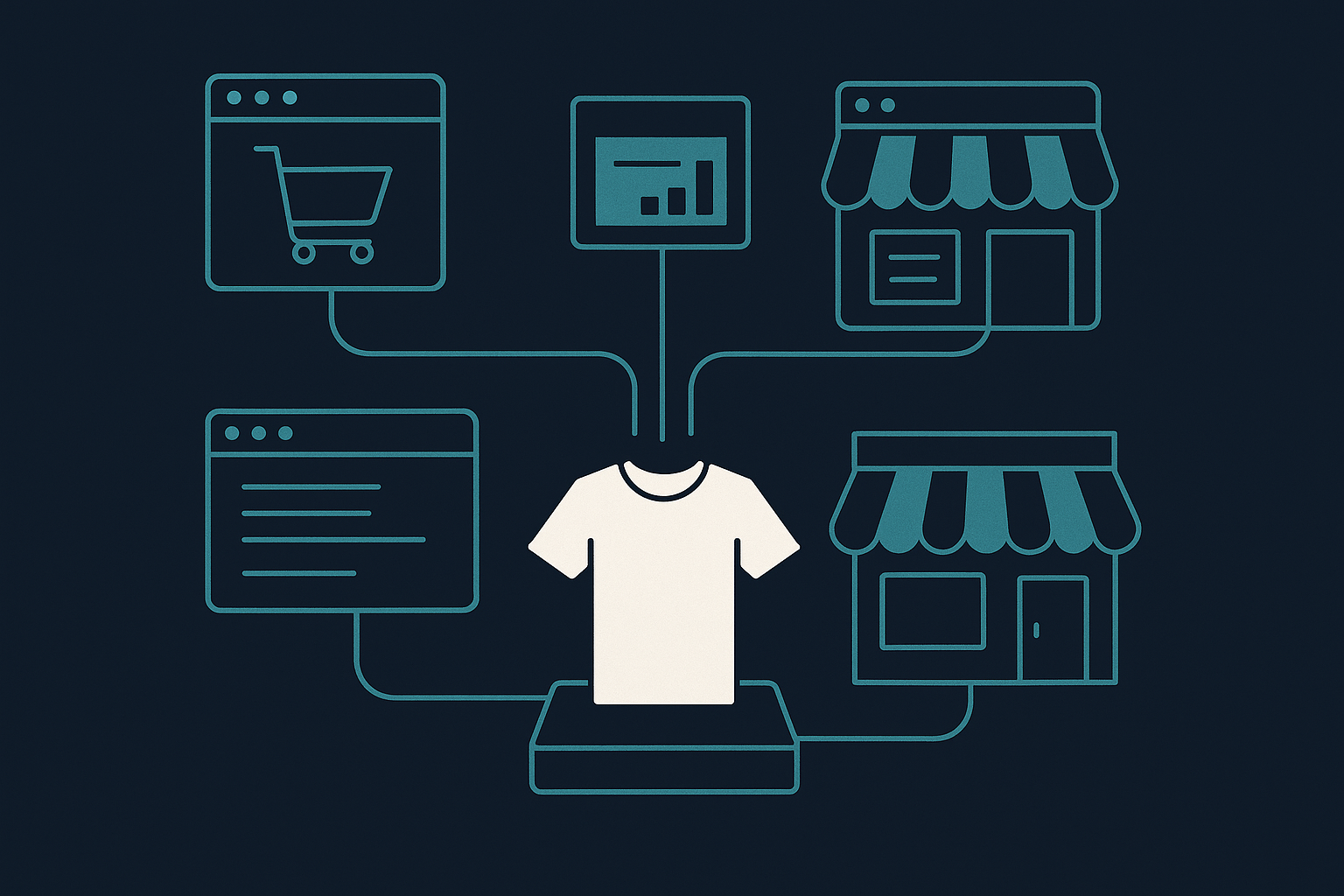
Amazon Merch on Demand is introducing royalty incentive groups that take effect on June 1, 2026. These groups are based on your trailing two-month average of non-organic traffic-driven sales. In simple terms, sellers who bring in external traffic that converts into Amazon sales can qualify for higher royalties, while sellers who rely mostly on Amazon’s own organic traffic can land in lower royalty groups.
This is not a one-time score. Amazon says groups are updated monthly, so your traffic performance becomes an ongoing part of your business model. That makes marketing, audience building, and traffic generation much more important than they used to be for Merch sellers.
How royalty incentive groups work
Amazon’s model ties royalty outcomes to a trailing two-month average of non-organic traffic-driven sales. That means the platform is looking for proof that you can bring shoppers from outside Amazon and turn that demand into sales. If you can, your royalty position can improve. If you cannot, your royalty position can weaken.
For sellers, this changes the conversation. External traffic is no longer just a nice extra. It now connects directly to the economics of your listings. If you run social campaigns, build an email list, work with influencers, or create your own traffic channels, those efforts can now affect your royalty results too.
Why this hits Amazon-only sellers harder
Sellers who only publish on Amazon are the most exposed. They already depend on Amazon for search visibility, discovery, and conversion. Now they may also depend on Amazon’s royalty grouping system for margin performance. That is a lot of concentration risk in one place.
This does not mean Amazon is no longer worth using. It means Amazon should not be the whole strategy. If your catalog only lives inside one ecosystem, a policy change like this has an outsized impact on your business.
Start selling on Etsy, Shopify, and your own storefront, not just Amazon
MyDesigns helps you publish across multiple channels in minutes so one platform policy change does not control your whole business.
Why these changes matter
These changes matter because they push sellers to think differently about traffic and business ownership. If you are going to invest time in content, paid ads, social media, or audience building, you should not have those efforts benefit only one marketplace. You want those traffic assets to help a broader business, not just one platform’s listings.
That is why tools like shops and integrations, bulk publishing, and listing management are becoming more important. They are not just workflow tools anymore. They are strategic infrastructure for sellers who want more control.
The biggest takeaway is not fear. It is leverage. If Amazon is rewarding sellers who act more like marketers and brand builders, then the smartest response is to build a business that can benefit from those efforts across multiple revenue streams.
The smart move is diversification
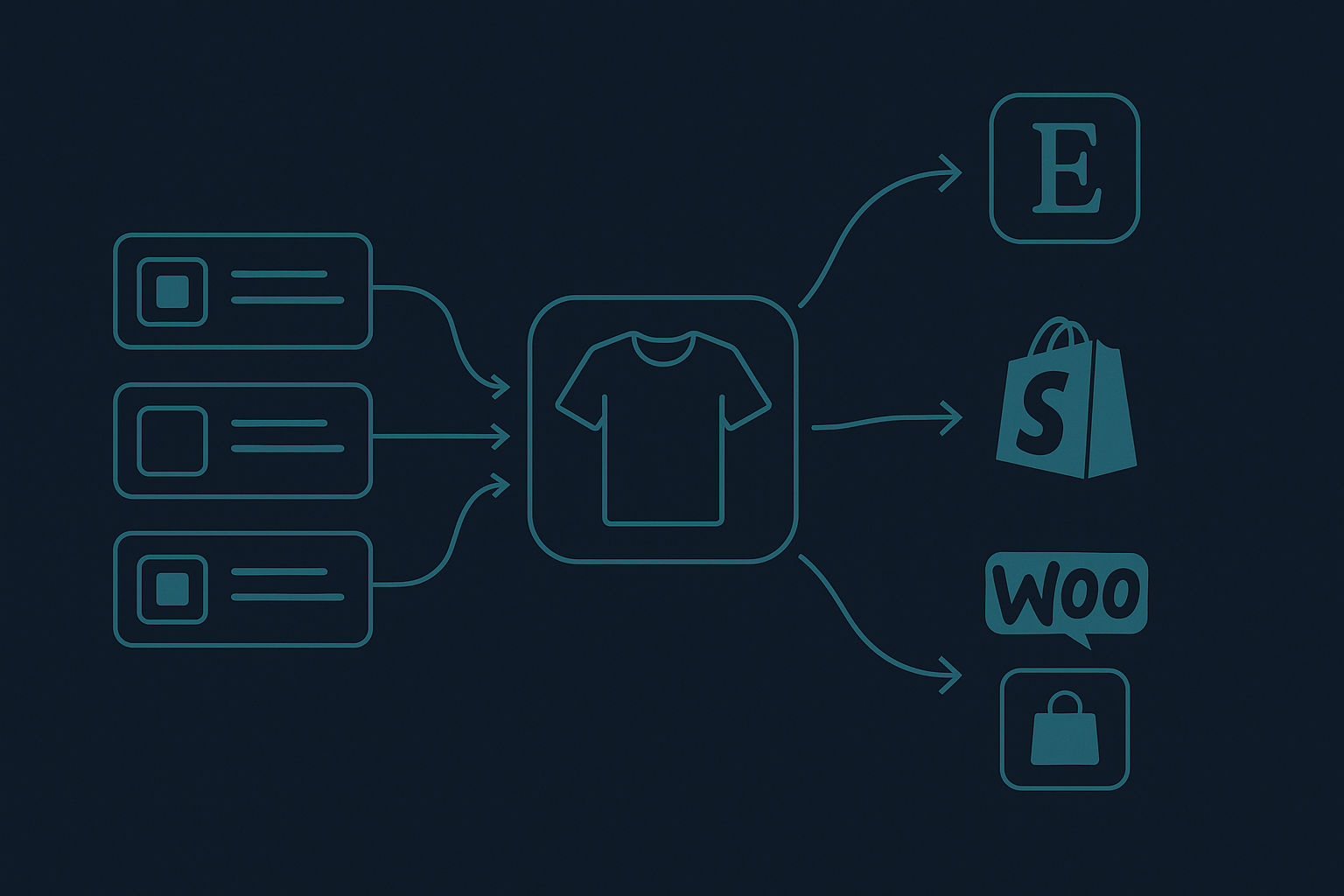
Diversification has always been smart. Now it is becoming urgent. Selling on Etsy, Shopify, WooCommerce, TikTok Shop, and eventually your own storefront gives you more ways to monetize the same design work and traffic effort. It also means one algorithm or royalty update does not control your whole future.
Owning more of your customer journey matters too. When shoppers buy through your own ecosystem, you gain more brand control, more room to improve margins, and a stronger long-term business asset. Even if Amazon stays in your mix, it should be one channel, not the only channel.
For print on demand sellers, diversification is not about abandoning marketplaces. It is about building a business with more stability, more optionality, and more upside.
Turn one design into listings across multiple marketplaces
Use MyDesigns to create mockups, manage listings, and publish to more channels without rebuilding your workflow from scratch.
How MyDesigns helps sellers adapt
Most sellers do not fail to diversify because they disagree with the idea. They fail because doing it manually is slow. Creating designs, generating mockups, publishing listings, handling fulfillment workflows, and managing multiple marketplaces becomes a real operational burden.
MyDesigns solves that with one workflow built for print on demand sellers. You can publish across Etsy, Shopify, WooCommerce, TikTok Shop, and other channels much faster. If you already have a design catalog, tools like multi-product publishing and import and sync help you turn that catalog into more opportunities without starting from scratch.
Speed matters even more when policies change quickly. MyDesigns includes bulk workflows for design creation, mockups, publishing, and fulfillment, plus AI tools like Dream AI to help you create and test new concepts faster.
Then there is the next big opportunity: MyDesigns Storefronts, launching in May 2026. Sellers get their own branded storefront where MyDesigns acts as the marketplace facilitator, helping handle tax and nexus complexity behind the scenes. That removes a huge amount of friction for sellers who want more control, better margins, a larger product catalog, and more personalization options.
Be first in line for MyDesigns Storefronts
Launch your own branded storefront, keep more control over traffic and margins, and let MyDesigns handle marketplace facilitator tax and nexus complexity.
Marketplace facilitator model
Better margin potential
Amazon-only vs diversified seller comparison
| Area | Amazon-only seller | Diversified seller |
|---|---|---|
| Royalty sensitivity | High exposure to Amazon policy updates | More insulated because revenue comes from multiple channels |
| Traffic leverage | External traffic mainly benefits Amazon listings | Traffic can support Amazon, Etsy, Shopify, and owned storefronts |
| Brand control | Limited control over customer experience | Stronger control over storefront and positioning |
| Growth ceiling | Capped by one platform’s rules | Higher because growth can compound across channels |
The point is not that every seller should leave Amazon. It is that sellers now have even more reason to build options. If you are doing the work to create products and drive traffic, you want those efforts to compound across channels you control more directly.
Create a business that keeps growing when marketplace rules change
MyDesigns gives you one place to manage design creation, mockups, publishing, and expansion into channels you control more directly.
What sellers should do next
If you sell on Amazon Merch on Demand today, the practical response is not panic. It is to reduce dependence before dependence becomes expensive.
Start by auditing how much of your current revenue depends on Amazon organic traffic. Then identify one or two external traffic sources you can build more deliberately, whether that is social content, email, Pinterest, influencer partnerships, or paid traffic. From there, choose one or two additional channels to expand into and use systems that let you publish quickly and learn fast.
The deeper lesson from these amazon merch on demand royalty changes is simple. If Amazon is rewarding sellers for driving their own traffic, then you should make sure you also have your own places to send that traffic. That is how you turn a platform policy change into a smarter, more durable business model.
Frequently Asked Questions
+ What are Amazon Merch on Demand royalty incentive groups?
Amazon Merch on Demand royalty incentive groups are Amazon’s new royalty tiers based on your trailing two-month average of non-organic traffic-driven sales. Sellers who drive more external traffic that converts into sales can receive better royalty treatment than sellers who rely mostly on Amazon organic traffic.
+ When do the Amazon Merch on Demand royalty changes start?
The new royalty incentive groups take effect on June 1, 2026. Amazon says groups are updated monthly using the trailing two-month average of non-organic traffic-driven sales.
+ Are Amazon-only sellers at a disadvantage now?
Amazon-only sellers are more exposed because they depend on one platform for both discovery and payout structure. If they do not bring in meaningful non-organic traffic, they have fewer ways to improve royalty outcomes.
+ Why is diversification important for print on demand sellers?
Diversification reduces dependence on a single marketplace’s fees, rules, algorithms, and royalty policies. Selling across more channels gives you better control over margins, branding, and customer acquisition.
+ How can MyDesigns help sellers respond to these royalty changes?
MyDesigns helps sellers create designs, generate mockups, publish across multiple marketplaces, and prepare for branded Storefronts launching in May 2026. Storefronts are designed so MyDesigns acts as the marketplace facilitator, helping handle tax and nexus complexity while giving sellers a stronger owned-sales channel.
Amazon changed the incentive, so sellers should change the strategy
Amazon’s new royalty incentive groups are a direct reminder that marketplace dependence carries real risk. For Amazon-only sellers, this is bad news. For sellers willing to diversify, it is also a major opportunity to build something stronger.
The smart response is to keep Amazon in the mix, but stop making it the whole game. Build more channels. Create a faster publishing workflow. And get ready for owned storefront opportunities that give you more control over traffic, margins, and growth.
Use MyDesigns to expand beyond Amazon, and get ready for your own storefront
Start selling on Etsy, Shopify, and your own storefront, not just Amazon. MyDesigns helps you move faster now, and puts you in position for Storefronts launching in May 2026.
AI design tools
Storefronts coming May 2026
A smarter response to policy changes is building more channels you control.


Leave a Reply