


I think most artists stay on Society6 too long for one reason: it feels easier than building a real business. You upload a design, hope the marketplace sends traffic, and tell yourself passive income is right around the corner. Then the payout lands and reality hits.
If you want more control, better margins, and an actual chance to grow, you need to look at Society6 alternatives differently. The goal is not finding another site that looks almost the same. The goal is finding a model that gives you more upside than fixed royalties and borrowed traffic.
I’ve watched too many sellers waste a year optimizing for platforms that never let them own the customer. That’s the trap. A good alternative should either give you better margins, better traffic, or better ownership. Ideally all three.
Key Takeaways
- The best Society6 alternatives solve different problems – some give you higher margins, others give you stronger marketplace traffic, and others help you build a real brand you control.
- Society6 is weakest when you care about ownership – you do not control pricing, customer data, or long-term brand equity the way serious sellers need to.
- Etsy plus a scalable POD workflow is the strongest move for most sellers – because you get intent-driven buyers and far more room to improve conversion, SEO, and product output.
- Speed matters more than perfection – the artists who win usually test more designs, more products, and more listing angles faster than everyone else.
Table of Contents
Why artists are looking beyond Society6
Most sellers do not start researching Society6 alternatives because they are bored. They do it because the math stops making sense.
That usually shows up in one of three ways. Your royalties feel tiny. Your sales are inconsistent. Or you realize you are building on land you do not own.
The royalty problem is bigger than it looks
Small royalties do more damage than people think. They do not just lower profit. They reduce your ability to reinvest in better visuals, test more products, or buy back your time.
I have seen sellers obsess over getting one more design approved while ignoring the real issue: they are stuck in a model where volume has to do all the work. If your margin is thin, every mistake hurts more and every test takes longer to pay off.
The U.S. Copyright Office makes it clear that owning your creative work matters. But ownership on paper is not the same as ownership in distribution. If a platform controls pricing, merchandising, and customer access, your leverage is still weak.
Borrowed traffic is not a business
Here is the part most creators do not want to hear: marketplace traffic is nice, but it is not the same as business stability. You do not control how products are ranked. You do not control the customer relationship. You usually do not even control how your art is framed against other listings.
That is why I push sellers toward systems where they can improve their click-through rate, publish faster, and test ideas on purpose. A marketplace can be part of the machine. It should not be the whole machine.
If you are leaving Society6, speed matters more than overthinking.
The fastest way to recover momentum is to launch more products and test more listing angles without rebuilding everything by hand.
What to look for in Society6 alternatives
I would not judge alternatives by who has the prettiest homepage. I would judge them by what happens after your first ten uploads.
- Margin control – Can you set pricing or influence profit meaningfully?
- Traffic model – Are you relying on marketplace discovery, your own SEO, social traffic, or email?
- Product depth – Can you sell the formats your audience actually buys?
- Brand control – Do customers remember you or just the platform?
- Operational speed – Can you create, mock up, and publish enough offers to find winners?
Choose your primary growth model
This is where most comparison articles get lazy. They throw ten platforms in a list and pretend they are interchangeable. They are not.
You are choosing a growth model. Etsy is search-driven. Redbubble is marketplace-driven. Shopify is brand-driven. INPRNT is quality-and-curation-driven. Those are different games with different advantages.
If you want a broader print on demand foundation, read my guide on the best print on demand sites. If you are comparing marketplace economics more directly, my breakdown of Redbubble alternatives is worth reading too.
Best Society6 alternatives I would actually consider
I would keep this list tight. More options do not help if they send you in circles.
Etsy: best for demand you can shape
Etsy is my favorite move for most Society6 sellers who want upside. Not because it is perfect. Because it gives you room to improve outcomes through better listings, stronger mockups, better keyword targeting, and more product testing.
I like Etsy because intent is visible. Buyers search with purpose. If you learn what converts, you can compound that. That is much harder on closed marketplaces where the platform owns most of the discovery logic.
If you want the tactical side, my guides on how to sell on Etsy, Etsy SEO, and Etsy mockups will help.
Redbubble: best for marketplace volume
Redbubble is still one of the cleaner answers if you want a pure marketplace alternative. It has buyer traffic and broad product demand. But I would only choose it if you understand the tradeoff: you are still renting traffic.
That can work. Especially if your strategy is trend-responsive design volume. But if your real frustration with Society6 is lack of control, moving to a similar marketplace only solves part of the problem.
The problem is not picking the platform. It is publishing enough winning products once you do.
MyDesigns helps you generate product visuals, prep listings, and push more variations live without getting trapped in one-at-a-time workflows.
INPRNT: best for artists who care about print quality
If your identity is rooted in fine art prints more than broad POD catalogs, INPRNT deserves real attention. It is narrower, more curated, and better aligned with artists who care deeply about presentation.
That said, narrow can become limiting fast. If your plan is to expand into multiple product types, bundles, or volume testing, you may outgrow that model.
Shopify plus POD: best for real brand ownership
If I wanted to build a serious art business, this is where my head would go. A Shopify store connected to the right print providers gives you the biggest long-term upside because you own the storefront, the email capture, the merchandising, and the customer journey.
It is also harder. I get why that scares people. A marketplace feels safer because traffic is built in. But safer is not always better. Sometimes safer is just slower.
Google Trends, shipping cost references, and basic expense tracking guidance matter more once you move into a business model you actually control. That is when margin discipline starts paying off.
The contrarian take: most artists do not need another marketplace
Here is my honest take. Most artists leaving Society6 do not actually need another marketplace. They need a better operating system.
I have seen sellers go from stuck to dangerous once they stop asking, “Which platform is easiest?” and start asking, “Which workflow lets me ship the most good offers per week?”
This exact bottleneck is why we built tools like Product Mockups, Listing Management, and Bulk Publish. The advantage today is not just talent. It is speed paired with taste.
If your brand matters, do not build it inside someone else’s ceiling.
Use MyDesigns to create better mockups, manage listings, and scale product output across the channels you actually control.
My ideal transition plan if I were leaving Society6 today
If I were starting this move right now, I would not migrate everything blindly. I would build a smarter second act.
First 30 days
- Pull your top 20 designs, not your full archive.
- Match each design to a better-fit product and platform.
- Create stronger mockups than what you used on Society6.
- Write tighter titles and descriptions based on actual buyer intent.
- Publish enough variations to learn, not just enough to feel busy.
That last point matters. I once watched a seller spend an entire weekend polishing three listings while another seller published 120 solid listings and found two winners by Tuesday. Guess who learned faster.
Days 31 to 90
- Double down on the top themes that get clicks.
- Build bundles, collections, and seasonal variations.
- Start capturing email if you have your own storefront.
- Use data to kill weak products quickly.
- Standardize the workflow so publishing is boring and repeatable.
If you are leaning digital instead of physical products, my articles on how to sell digital products online and digital products that sell can help you widen the offer mix.
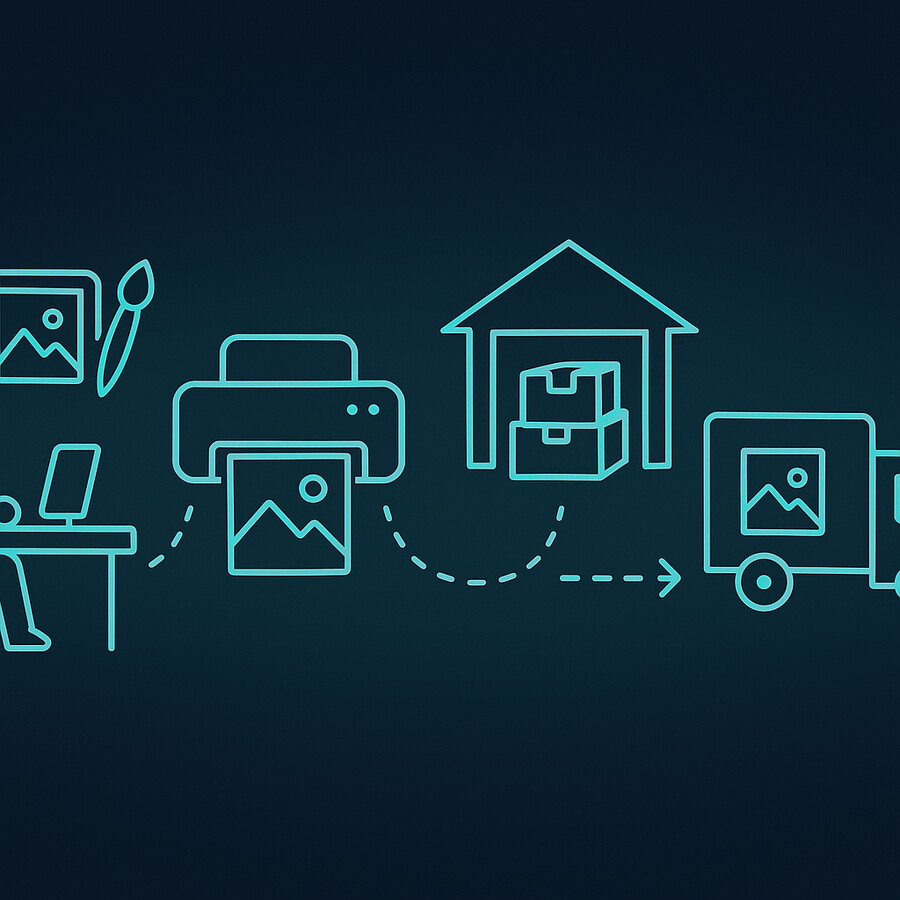
The old artist playbook was simple: upload to a marketplace, wait, and hope. That playbook is weaker every year. The better move now is to combine demand channels with systems that let you test, publish, and improve faster than everyone else.
Frequently Asked Questions
+ What is the best alternative to Society6?
For most sellers, Etsy is the best alternative to Society6 because it gives you stronger buyer intent and more room to improve listings, pricing, mockups, and conversion. If brand ownership matters most, Shopify plus a POD workflow has the highest upside.
+ Why are artists leaving Society6?
Artists usually leave Society6 because royalties are limited, pricing control is weak, and the platform owns most of the customer relationship. That makes it hard to build predictable growth or brand equity.
+ Is Redbubble better than Society6?
Redbubble can be better than Society6 if you want marketplace traffic and broader product demand. It is not automatically better for ownership, though, because you are still relying on a platform-controlled marketplace model.
+ Should I move from Society6 to Etsy?
If you want more control over listings, better search-driven demand, and more upside through optimization, moving from Society6 to Etsy is usually a smart move. Just do not copy your old listings over unchanged. Rebuild them to fit Etsy buyer intent.
+ Can I use MyDesigns if I want to leave Society6?
Yes. MyDesigns is useful when you need to generate product visuals, improve listing quality, and publish at a pace that makes testing possible across Etsy, Shopify, and other channels.


Leave a Reply