


Most people leave Redbubble for the wrong reason.
They think the problem is traffic. It usually is not. The bigger problem is that Redbubble puts a ceiling on control, margins, brand building, and workflow speed. You can make some sales there. Plenty of people do. But if you want a real business instead of random marketplace income, you eventually start looking for better Redbubble alternatives.
That is exactly what this guide is about. I am going to break down the best Redbubble alternatives in 2026, who each one is actually for, and when you should stop chasing marketplace exposure and build a system you control. If you are serious about print on demand, this decision matters more than your next design pack.
Key Takeaways
- The best Redbubble alternatives depend on your goal – hobby artists, creator brands, and scale-focused sellers should not choose the same platform.
- Marketplaces are easier to start on but harder to scale – you get convenience up front, then give it back in lower control, weaker branding, and thinner margins.
- The best long-term move is usually a workflow stack, not a single marketplace – that means better product control, faster publishing, and more room to grow.
- MyDesigns is strongest for sellers who want leverage – especially if you plan to publish across Etsy, Shopify, and multiple product lines instead of relying on one platform.
Table of Contents
- Why Sellers Start Looking for Redbubble Alternatives
- What to Look for in the Best Redbubble Alternatives
- Best Redbubble Alternatives in 2026
- The Best Redbubble Alternative by Seller Type
- Why the Marketplace Model Caps Your Upside
- Where MyDesigns Fits in This Decision
- How to Switch from Redbubble Without Killing Momentum
- Frequently Asked Questions
Why Sellers Start Looking for Redbubble Alternatives

Redbubble is attractive because it is simple. Upload design. Pick products. Wait for sales. I get the appeal.
But simple at the beginning often becomes limiting later. I have watched this happen over and over with sellers who get a little traction, then realize they cannot build the kind of business they actually want inside a marketplace-first model.
Low control means low ownership
The first issue is control. On Redbubble, you are operating inside someone else’s store, someone else’s audience, and someone else’s rules.
You do not control the checkout experience. You do not control the customer relationship. You do not control the platform roadmap. If your visibility drops, your income can drop with it. That is not a business moat. That is rented land.
This is why so many sellers start comparing Redbubble alternatives after they get their first taste of success. Once money is involved, dependence feels a lot less charming.
Manual work adds up fast
The second issue is workflow. Redbubble can be fine if you are uploading casually. It is rough if you are trying to operate at scale.
If you want to test niches quickly, publish dozens of SKUs, optimize titles and tags, build seasonal campaigns, and reuse design assets across channels, manual systems become a tax on growth. That is exactly why I push sellers toward stronger tools like bulk publishing, listing management, and multi-channel integrations once they get serious.
Because the old playbook of uploading one design at a time and hoping for marketplace traffic is not a strategy. It is a stall.
What to Look for in the Best Redbubble Alternatives
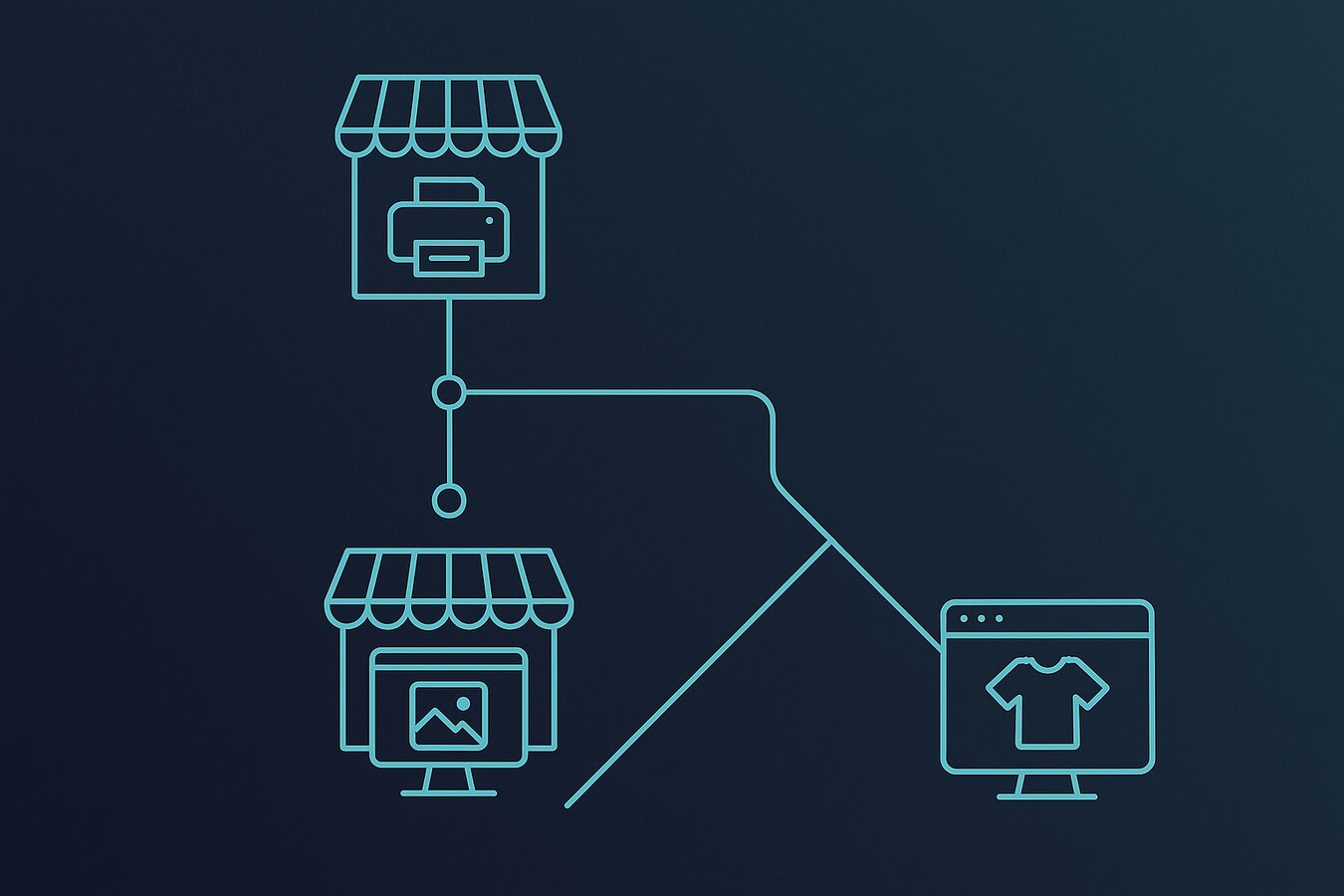
Not all Redbubble alternatives solve the same problem. Some are better if you want another marketplace. Some are better if you want your own store. Some are better if you already know you want to scale across Etsy, Shopify, and multiple print providers.
Marketplace versus your own stack
Here is the fork in the road.
If you want convenience, built-in browsing traffic, and the least setup possible, a marketplace-style alternative like Zazzle or Society6 might fit better.
If you want control, margin flexibility, repeatable branding, and a business that can survive algorithm changes, your own store plus a strong POD workflow stack is usually the smarter move. That can mean Shopify plus fulfillment. It can mean Etsy plus automation. It can mean a multi-channel setup that gives you more than one growth lever.
I strongly prefer the second path for anyone who wants more than side income.
Margins, automation, and brand control
When evaluating Redbubble alternatives, I care about five things:
- Product range – can you actually build the catalog you want?
- Margin control – can you price for profit instead of accepting thin default economics?
- Brand ownership – can you create an experience customers remember?
- Automation – can you move fast without doing everything manually?
- Channel flexibility – can you sell in more than one place?
Most blog posts ranking for this keyword just list platforms. That is lazy. The better question is this: which platform gets you closer to a real asset you own?
The right alternative is not just easier to use. It gives you more control over growth.
If you are ready to stop renting your whole business from a marketplace, start with a platform that lets you build a real catalog and move faster.
Best Redbubble Alternatives in 2026
Quick comparison table
| Platform | Best For | Model | Main Tradeoff |
|---|---|---|---|
| MyDesigns | Serious POD sellers scaling across channels | Workflow and publishing platform | You still need a sales channel strategy |
| Zazzle | Sellers wanting a marketplace similar to Redbubble | Marketplace | Limited control compared to owning your own stack |
| Fourthwall | Creators building a branded storefront | Storefront plus merch | More creator-brand focused than operator focused |
| Sellfy | Creators selling physical and digital products together | Storefront platform | Not built around deep POD operations |
| Printify | Sellers wanting provider flexibility | Fulfillment network | You still need your own front-end sales channel |
| Gelato | Global fulfillment and easier logistics | Fulfillment network | Less of an all-in-one workflow play |
| Spring | Audience-driven merch sales | Creator commerce | Less attractive for broad catalog sellers |
| Society6 | Artists wanting marketplace discovery | Marketplace | Still the same dependency problem |
My shortlist and real take
Zazzle is one of the closest marketplace-style Redbubble alternatives. If your goal is to stay in a browse-and-buy ecosystem and keep setup light, it makes sense.
Fourthwall is interesting for creator-led brands. If you have an audience and want to sell merch inside your own branded experience, it is a much better fit than Redbubble.
Sellfy is a good bridge if you want to sell both digital products and POD products from one storefront. That flexibility matters more than most people realize.
Printify and Gelato are strong if you are building your own stack and care about provider choice, cost control, and fulfillment reach. If you specifically want to explore Printify, use this link: Printify.
MyDesigns is where I would look if your bottleneck is not just fulfillment but production speed, listing volume, image creation, mockups, SEO, and publishing across channels. That is a different category of problem, and it is the one most growth-minded sellers eventually hit.
If you are comparing Redbubble alternatives only on surface-level features, you will miss the real point. The best option is the one that removes your next constraint, not the one with the prettiest homepage.
For sellers who need faster asset creation and product presentation, this is also where a stronger mockup workflow and better multi-product publishing start to matter a lot.
The Best Redbubble Alternative by Seller Type

This is the part most comparison posts skip. The right answer changes based on what kind of seller you are.
For hobby artists
If you mostly want a low-maintenance place to list art and collect occasional sales, a marketplace alternative like Zazzle or Society6 is totally reasonable. I would not overcomplicate it.
You do not need a massive tech stack if your goal is light passive income and creative exposure.
For creator brands
If you have an audience on YouTube, TikTok, Instagram, or email, I would lean harder toward Fourthwall or Sellfy. In that situation, the biggest upside is branding and customer experience.
You already have attention. You do not need a marketplace to lend you discovery. You need a storefront that converts your audience into buyers.
For operators and serious POD sellers
If your goal is to build a catalog, test products aggressively, sell across Etsy and Shopify, and turn POD into a serious income stream, I would not build my business around another marketplace.
I would build a system.
That means better design throughput, stronger SEO listing workflows, faster mockup creation, and cleaner publishing processes. We built MyDesigns for that exact bottleneck. Tools like Vision AI, Canvas, and import and sync tools exist because serious sellers do not win by clicking around slower. They win by shipping more high-quality listings with less drag.
If I were starting from zero today and wanted real growth, I would rather own my workflow than depend on marketplace mercy.
Why the Marketplace Model Caps Your Upside

Here is the contrarian point I want to make clear: the goal is not to find a better Redbubble clone. The goal is to stop thinking like a marketplace tenant.
You do not own the customer
This is the core problem. On marketplace platforms, you rarely control the relationship after the sale. You do not build the same customer file. You do not shape the same brand memory. You do not get the same repeat purchase engine.
That matters a lot. Especially if you care about lifetime value and not just one-off orders.
It is one reason I keep telling sellers to think beyond a single channel. If you can combine marketplace demand with stronger systems and owned channels, you stop gambling on one algorithm.
Scale comes from systems, not luck
I have seen sellers waste months obsessing over which marketplace is better while ignoring the thing that actually compounds: operational leverage.
The old Etsy and POD playbook was about finding one decent niche and riding it. That is not enough anymore. The real advantage today is speed, testing volume, creative iteration, SEO coverage, and cross-channel publishing. That is why articles like How to Bulk Upload Products to Etsy, Etsy SEO Guide 2026, and Best Print on Demand Sites in 2026 matter more than another recycled “top 10” list.
Because once you understand the system, platform choice gets easier.
If you want long-term upside, the answer is usually more ownership, not more dependency.
This is where a workflow built for creating, organizing, and publishing at scale starts to matter a lot more than another upload destination.
Where MyDesigns Fits in This Decision
I want to be careful here. MyDesigns is not a like-for-like Redbubble clone, and I do not think pretending otherwise helps anyone.
Built for multi-channel growth
We built MyDesigns for sellers who want to create, optimize, mock up, and publish products faster across real selling channels. That includes Etsy, Shopify, WooCommerce, TikTok Shop, digital products, and more.
If your pain is slow production, repetitive listing work, weak mockups, inconsistent publishing, or bottlenecks moving products across channels, MyDesigns is the stronger answer. You can explore the broader print on demand workflow here or see how our Dream AI and product tools fit into the stack.
This exact bottleneck is why we built MyDesigns in the first place. Once you have experienced publishing at scale instead of one listing at a time, it is very hard to go back.
My honest recommendation
If you just want a casual marketplace replacement, pick a marketplace replacement.
If you want to build a real POD business, stop asking which Redbubble alternative is most similar to Redbubble and start asking which setup gives you the most control over growth.
That is the better question. And it leads to better decisions.
The best time to start the transition is before your marketplace plateau gets worse.
Set up the next system, start publishing, and learn while your old revenue still exists. That is the cleaner move than waiting for a panic moment.
How to Switch from Redbubble Without Killing Momentum
You do not need to rip everything apart overnight. Most sellers overcorrect here and create chaos for themselves.
Move your winners first
Start with your best-performing designs and your clearest niches. Move proven products first. Do not migrate your whole catalog blindly.
Look at what already gets clicks, favorites, or sales. Then rebuild those listings inside a stronger system with better titles, better mockups, and better pricing control.
Set up a real publishing engine
From there, build the engine. Create reusable templates. Improve your mockups. Standardize your title structure. Expand to additional products. Publish into more than one channel when it makes sense.
This is also where sellers get a huge lift from tools that centralize product creation instead of making them repeat the same work in five places. If you are serious about that side of the game, take a look at pricing and start with the workflow that actually matches your ambition.
That is how you move from platform dependency to business ownership.
Frequently Asked Questions
+ What is the best Redbubble alternative?
The best Redbubble alternative depends on your business model. Zazzle is a strong like-for-like marketplace option, Fourthwall works well for creator brands, and MyDesigns is a better fit for sellers who want to scale across multiple channels with more control.
+ Is Zazzle better than Redbubble?
Zazzle can be better than Redbubble if you want a similar marketplace experience with different products and audience dynamics. It is not automatically better for scaling a brand, but it can be a stronger marketplace alternative for some sellers.
+ Can you make more money on Redbubble alternatives?
Yes, you can make more money on Redbubble alternatives if they give you better margins, pricing control, and access to owned channels. In most cases, the biggest upside comes from moving beyond marketplace dependence rather than switching to another marketplace alone.
+ Is MyDesigns a good Redbubble alternative?
MyDesigns is a strong Redbubble alternative for sellers who want to create and publish products at scale across channels like Etsy and Shopify. It is less about replacing a marketplace one-for-one and more about giving serious sellers the workflow infrastructure to grow faster.
+ Should I leave Redbubble completely?
You do not need to leave Redbubble completely right away. A smarter move is to keep what is working, migrate your winners first, and build a more durable system outside the platform so your growth is not tied to one marketplace.
You do not build a serious business by asking which marketplace feels most comfortable. You build it by choosing the setup that gives you more control, more speed, and more room to compound.


Leave a Reply