


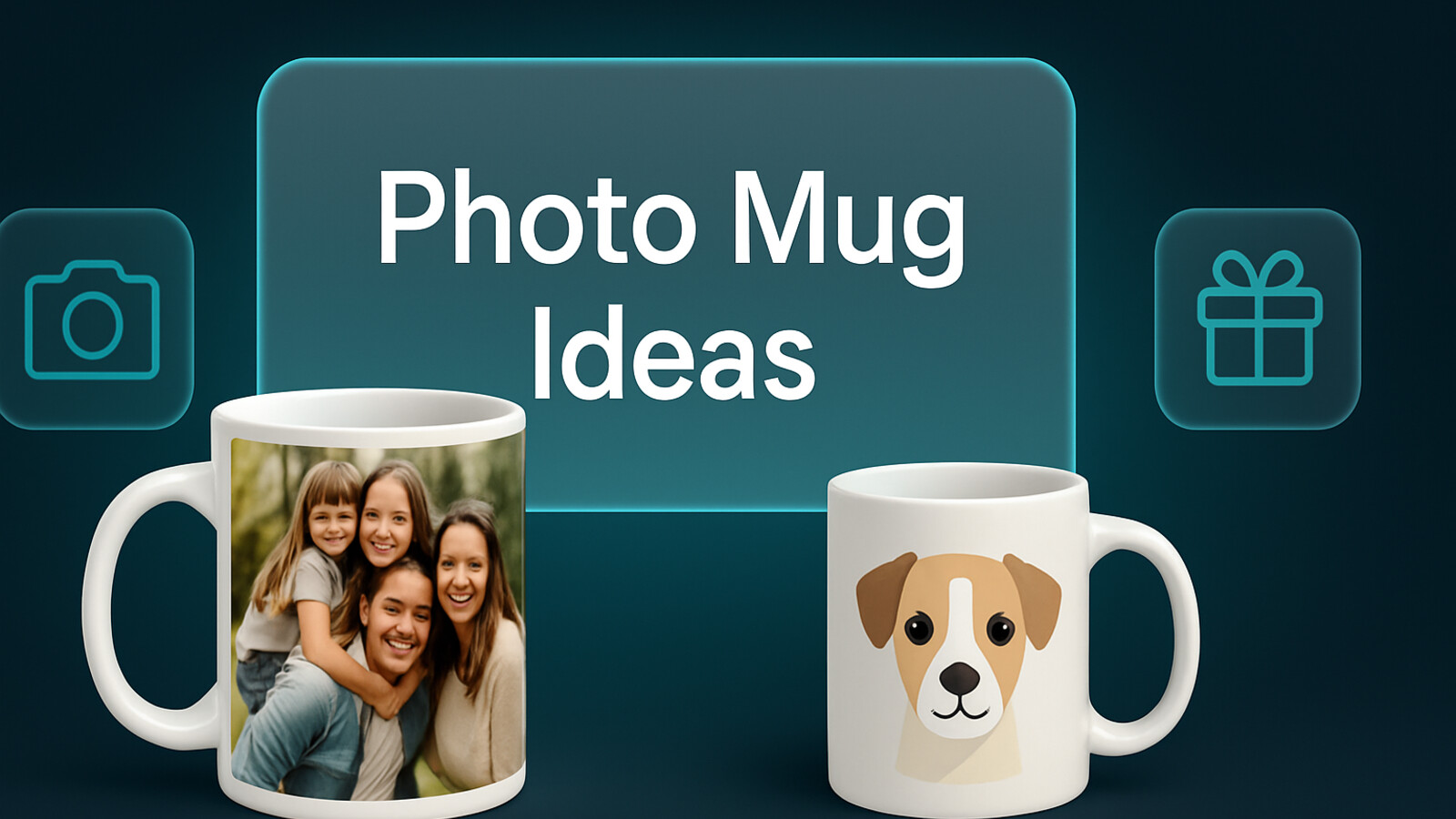
Custom photo mugs look easy from the outside. Upload a picture, slap it on a mug, done. That is exactly why most sellers end up with forgettable listings, weak margins, and a catalog full of products nobody feels urgent enough to buy.
I do not think mugs are saturated. I think generic mugs are saturated. There is a big difference.
If I were building a mug offer today, I would not start with random quote mugs or clip art. I would start with custom photo mugs because the buyer intent is stronger, the personalization is obvious, and the product naturally fits gift moments where people are willing to pay more.
Key Takeaways
- Custom photo mugs convert best when the emotional use case is obvious – gifts, memorials, pet mugs, family moments, and niche identity mugs all outperform generic designs.
- Your listing image does most of the selling – if the buyer cannot instantly imagine their own photo on the mug, your click-through rate usually dies before price even matters.
- Simple personalization beats over-designed layouts – clean wraps, readable placement, and strong cropping win more often than cramming too much onto the mug.
- Speed matters once a product starts working – the sellers who scale custom mug offers fast are the ones who can create, mock up, and publish variations without rebuilding every listing by hand.
Table of Contents
- Why custom photo mugs still sell when generic mugs stall out
- The best custom photo mug niches are obvious in hindsight
- How I would design custom photo mugs that do not look cheap
- Pricing custom photo mugs is where margin discipline starts
- Your listing strategy matters more than your mug blank
- How to scale custom photo mugs without creating operational chaos
- Frequently Asked Questions
Why custom photo mugs still sell when generic mugs stall out
There are a lot of product types I would avoid if you are brand new. This is not one of them.
Custom photo mugs still work because they sit at the intersection of low-friction gifting and personal identity. A buyer does not have to be talked into what the product is for. They already know who they want it for, what photo they want to use, and when they want it delivered.
Buyers are not shopping for ceramic, they are shopping for meaning
That sounds simple, but it changes your whole strategy. You are not selling an 11-ounce mug. You are selling a dog memorial gift, a first Father’s Day surprise, a new baby reveal, a travel memory, or a funny office keepsake.
I have seen sellers burn weeks obsessing over the mug blank while ignoring the actual buying trigger. The buying trigger is almost always emotional relevance.
The gift-intent advantage is what makes mugs worth testing
That is also why this keyword has real commercial value. Searchers looking for custom photo mugs are already close to a transaction. They are not casually browsing inspiration. They are trying to solve a gift problem fast.
If you can help them imagine the final result in seconds, you are in a strong position.
Shopify’s overview of print on demand mugs and product pages from major providers make the same point indirectly: the category works because it is easy to personalize and easy to purchase. That does not mean easy to win. It means worth entering with a sharper offer.
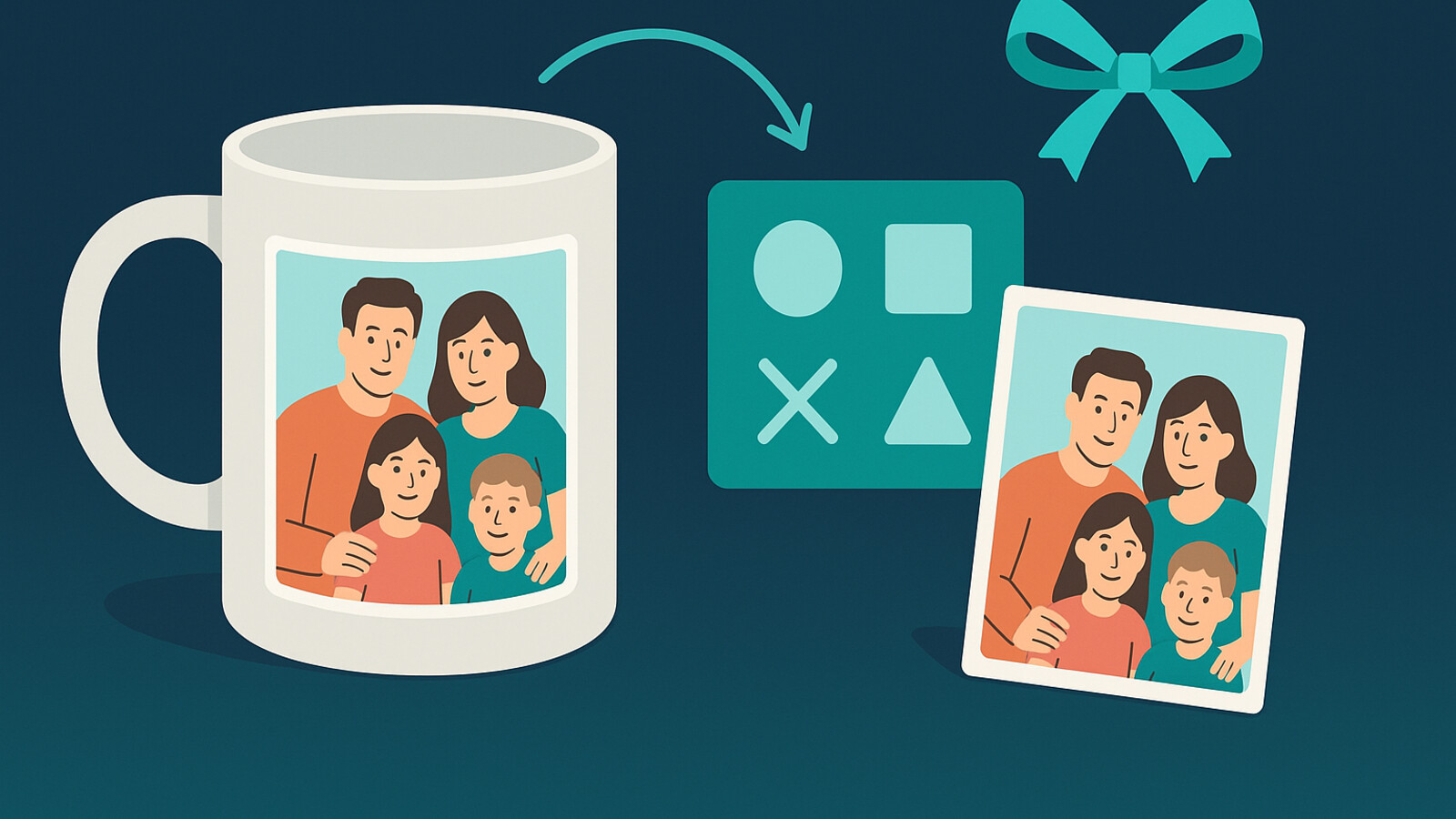
If testing one mug concept takes an hour, you will never test enough angles.
MyDesigns helps you generate product visuals, build cleaner listing assets, and get offers live without rebuilding every mug mockup from scratch.
The best custom photo mug niches are obvious in hindsight
Most sellers make this harder than it needs to be. They try to invent a mug niche. I would rather attach the product to demand that already exists.
Pet, family, and milestone mugs are the cleanest starting point
If I were starting from zero, I would test these first:
- Pet photo mugs for dog moms, cat dads, rainbow bridge memorials, and new puppy gifts
- Family photo mugs for grandparents, long-distance families, and reunion keepsakes
- Milestone mugs for first Mother’s Day, first Father’s Day, weddings, graduations, and anniversaries
- Workplace mugs for team gifts, office humor, retirement, and coworker birthdays
These are all easy to understand. That matters because clear products get better clicks.
Where most sellers pick the wrong angle
The mistake is building around the mug instead of the moment.
“Cute coffee mug” is weak. “Upload your dog photo for a personalized pet mug gift” is specific. Specific offers create better thumbnails, better copy, and better conversion.
I also would not start with ten mug styles. I would start with one or two strong visual directions and multiple audience angles. That gives you better read on demand without turning your shop into a mess.
For inspiration on how gift-led positioning affects merchandising, large photo-gift brands like Shutterfly and Snapfish organize their messaging around memories and occasions, not manufacturing specs. That is the right instinct.
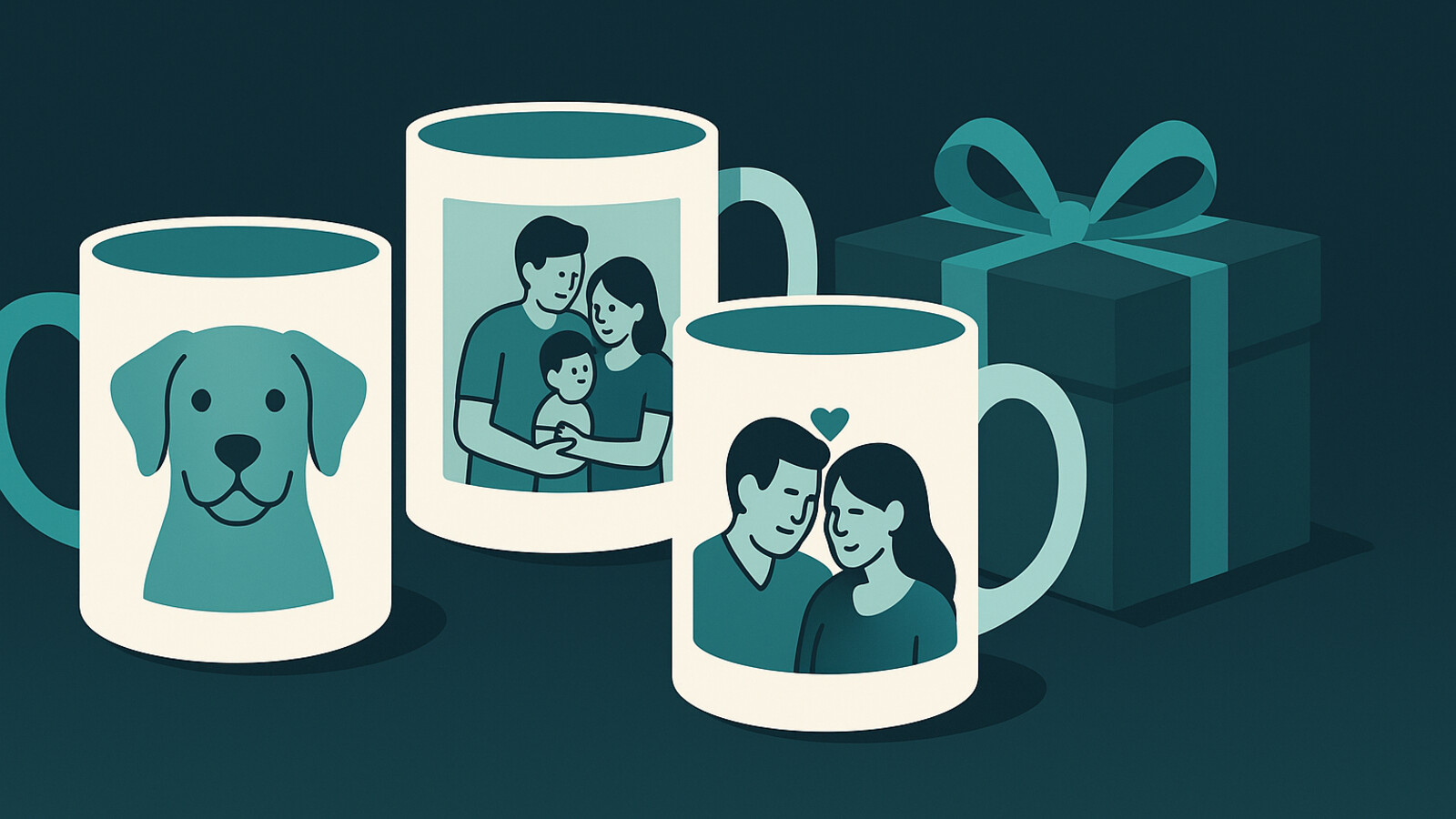
Your mug offer usually loses before anyone reads the title.
This is why I push sellers to improve the visual presentation first. Clean mockups and clearer personalization previews usually do more than another round of keyword tweaking.
How I would design custom photo mugs that do not look cheap
This is where a lot of promising products fall apart. Sellers over-design the wrap, use weak source photos, or forget the mug is curved. Then they wonder why the mockup looked fine but the delivered product felt disappointing.
Keep the wrap simple enough to survive real-world printing
My rule is simple: one focal photo, one supporting text treatment at most, one accent style. That is usually enough.
Trying to cram five photos, a quote, floral decorations, and a badge onto one mug almost always cheapens it. Clean wins. Especially on gifts.
- Use high-resolution photos and crop for the wrap area intentionally
- Leave breathing room near the handle zone
- Do not put critical faces where the curvature will distort them
- Design with a dark-on-light or light-on-dark contrast that reads instantly in thumbnails
One practical benchmark worth remembering: many mug printers recommend artwork sized for the final wrap area at high resolution, often around 300 DPI for the intended print zone. If your source image is weak, the product will show it.
Mockups have to sell the finished result before the buyer zooms in
I am opinionated on this. A flat mug mockup on a blank background is rarely enough anymore.
You need at least one clean hero image, one closer crop showing the photo detail, and one context shot that helps the buyer feel the gift scenario. Because the buyer is not just judging the mug. They are judging whether this feels gift-worthy.
This exact bottleneck is why we built faster mockup workflows into MyDesigns. Once you can swap designs, scenes, and product angles quickly, it becomes much easier to test what actually earns the click.
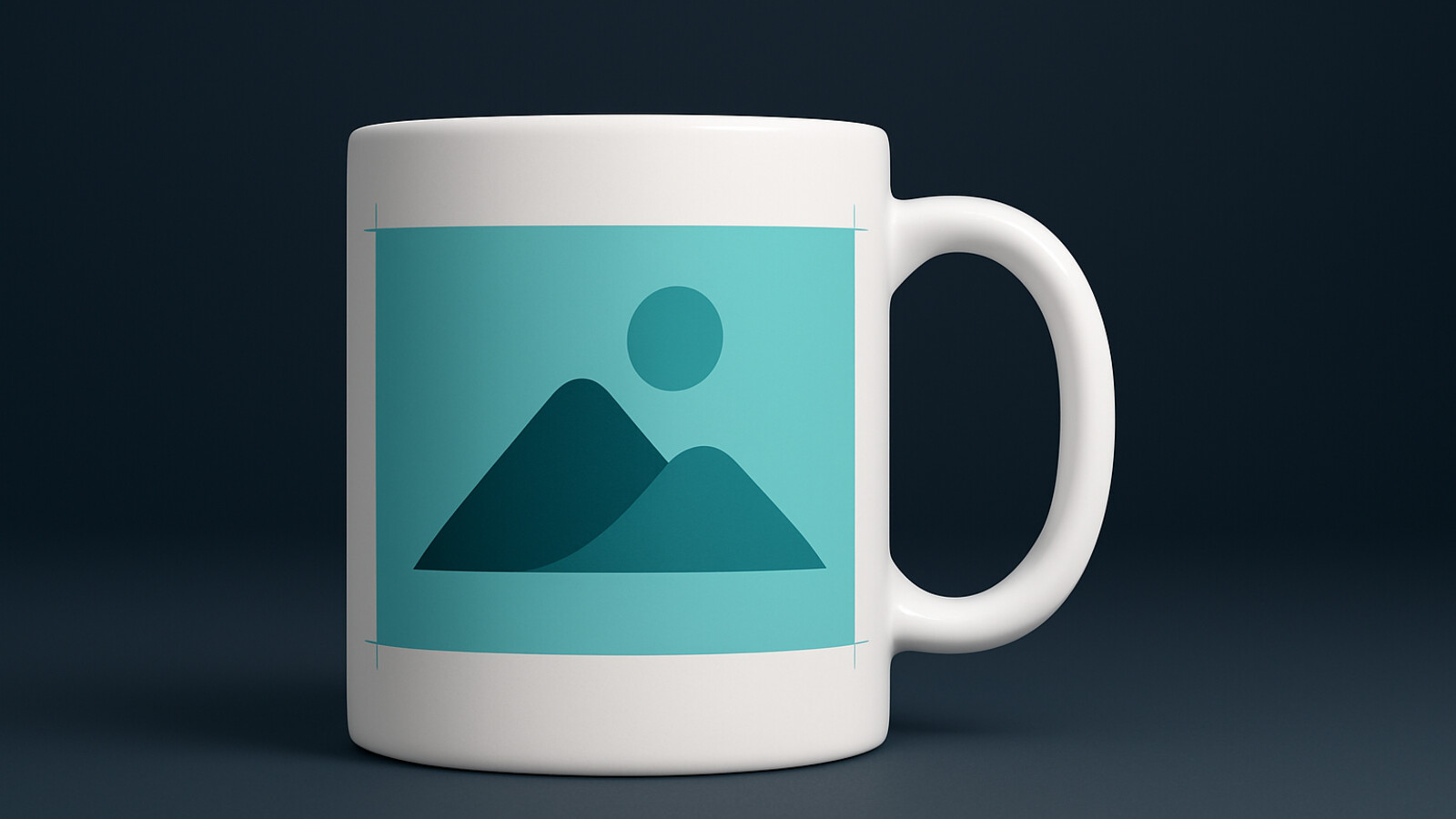
The real win is not one mug listing. It is a reusable mug system.
Use MyDesigns to turn one proven photo-mug angle into multiple product visuals and listing-ready assets faster than a manual workflow can keep up.
Pricing custom photo mugs is where margin discipline starts
I understand why newer sellers underprice. They are scared of losing the sale. But underpricing personalized products is one of the fastest ways to trap yourself in a low-quality business.
What I would price first
Before I set a public price, I would calculate:
- Product and print cost
- Shipping cost or free-shipping blend
- Marketplace fees
- Customer acquisition cost if you are using ads
- Time cost for personalization and customer service
Then I would position the listing based on gift value, not commodity pricing.
| Pricing Layer | What it covers | Why it matters |
|---|---|---|
| Base product cost | Mug blank, print, fulfillment | Protects gross margin from the start |
| Personalization premium | Custom image setup and perceived uniqueness | Reminds you this is not a commodity mug |
| Gift-ready presentation | Better mockups, clearer copy, upgraded offer | Lets you justify a stronger selling price |
Why race-to-the-bottom sellers stay stuck
The old POD playbook said more listings and lower prices would eventually brute-force sales. I think that is outdated.
The real advantage now is better positioning plus faster iteration. If your custom mug feels more giftable and looks more polished, you can protect margin instead of begging for clicks with discounts.
That is a healthier business.
Manual listing work gets expensive long before software does.
If your team is spending hours per product just to create visuals and listings, the hidden cost is already bigger than the tool bill. That is usually the moment to systemize.
Your listing strategy matters more than your mug blank
Here is the blunt truth. A lot of sellers do enough work to create the product and not enough work to merchandize it.
What your images need to show
Your image stack should answer the buyer’s objections without making them hunt for details.
- Hero image: what the final mug looks like with a strong sample photo
- Personalization preview: exactly where the buyer’s image will appear
- Gift context: desk, kitchen, office, or wrapped gift scenario
- Proof image: close-up crop to show print quality and handle placement
This is also where internal linking matters. If you are selling on Etsy, you should study how better visuals and better search optimization work together. Our guides on Etsy mockups, Etsy SEO, and starting a print on demand Etsy shop all reinforce the same thing: discovery and conversion are one system.
SEO and conversion have to work together
Do not write titles like a robot. But do not ignore the keyword either.
For a primary term like custom photo mugs, I would naturally work in secondary angles such as personalized photo mugs, photo coffee mugs, pet photo mugs, and family photo gift mugs where relevant. Then I would make sure the copy still sounds like a founder talking, not a keyword spreadsheet pretending to be a person.
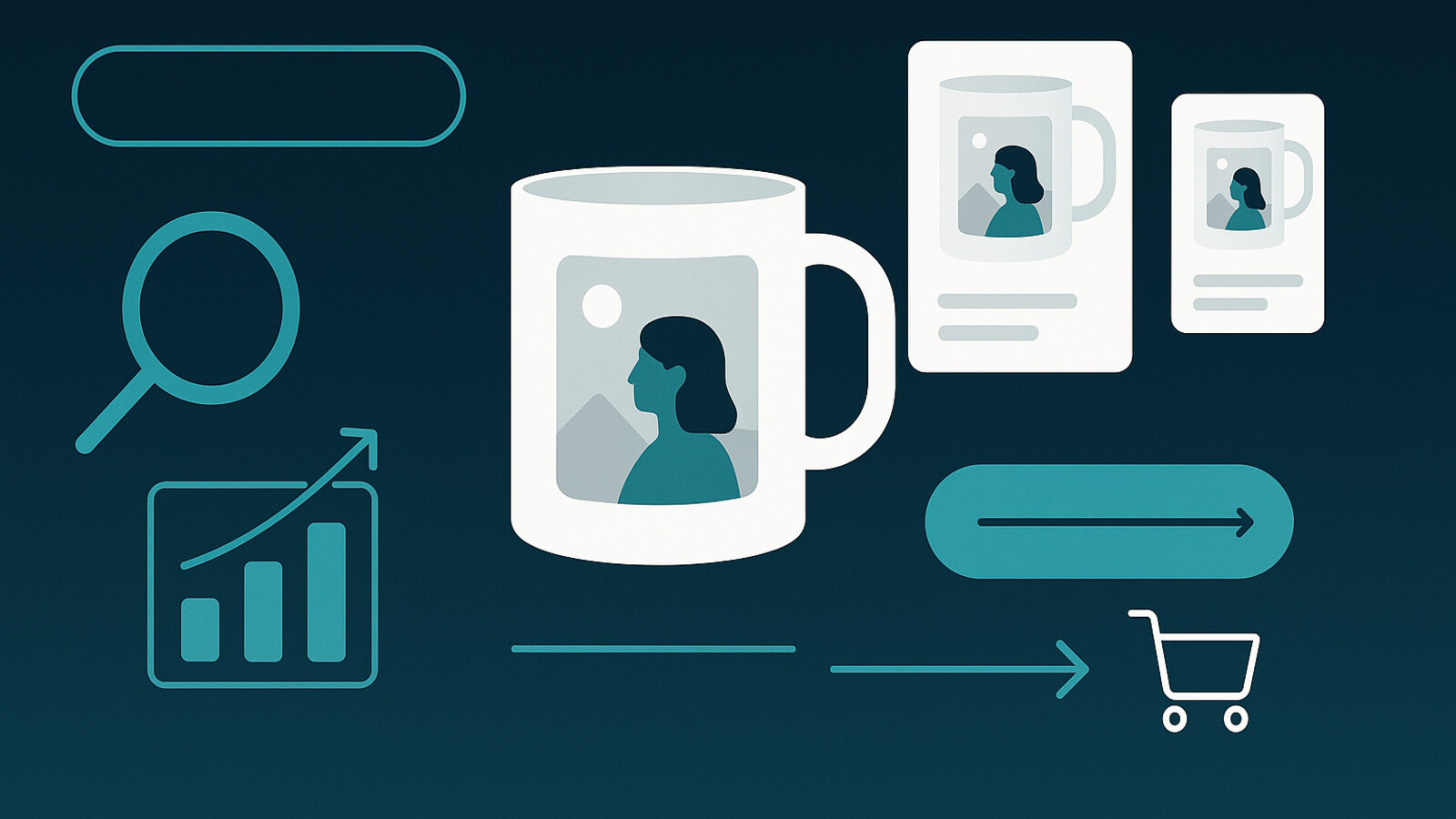
The goal is simple. Rank for the query, then win the click, then close the sale.
How to scale custom photo mugs without creating operational chaos
Once a personalized mug concept starts selling, the temptation is to launch twenty variations overnight. I get it. But if your workflow is sloppy, scale makes the cracks worse.
Build a repeatable template system
I would build around templates for:
- photo placement
- text treatment
- holiday or milestone theme
- mockup angle stack
- listing copy framework
That way you are not reinventing the product every time. You are just swapping the angle and the audience.
The old POD playbook is too slow now
This is the bigger shift I think sellers need to understand. The advantage today is not just creativity. It is operational leverage. The seller who can spot a winning angle, generate better visuals, and publish polished variants fast has a real edge.
That is why I still like custom photo mugs as a category. They are simple enough to launch, emotional enough to sell, and flexible enough to turn into a real system if you take the merchandising seriously.
Frequently Asked Questions
+ Are custom photo mugs still profitable to sell?
Yes, custom photo mugs can still be profitable if you position them as personalized gifts instead of generic drinkware. The margin usually improves when the design, mockups, and listing angle make the product feel gift-worthy.
+ What photos work best on custom mugs?
High-resolution photos with clear subjects and strong contrast work best on custom mugs. Pet photos, family portraits, and milestone images usually convert well because buyers can instantly connect the product to a real moment.
+ How many images should a custom photo mug listing have?
A strong custom photo mug listing should have multiple images that show the hero shot, personalization area, close-up detail, and gift context. Buyers need to see both the product and the finished emotional use case before they commit.
+ Can I sell custom photo mugs on Etsy with print on demand?
Yes, you can sell custom photo mugs on Etsy using print on demand as long as you clearly handle personalization, production expectations, and listing presentation. The shops that win usually combine clean product design with faster publishing and stronger mockups.
+ What is the best way to scale personalized mug listings?
The best way to scale personalized mug listings is to use repeatable templates for design, mockups, and publishing. Once one angle proves demand, you want a system that lets you launch related variants without rebuilding the entire workflow each time.


Leave a Reply