


I think most sellers approach custom iPhone cases backwards. They obsess over the design first, then realize too late that the real game is model coverage, mockup quality, margin control, and launch speed.
That is why so many phone case shops look promising for two weeks, then stall.
If I were starting a fresh POD offer around custom iPhone cases in 2026, I would not treat it like a cute side product. I would treat it like a repeatable catalog machine. Because once you dial the workflow in, one winning concept can turn into dozens of SKUs fast.
Key Takeaways
- Custom iPhone cases sell best when the offer is niche-first, not design-first and broad “pretty case” ideas are weak compared to audience-specific concepts.
- Mockups and variant coverage decide whether your product gets clicks, not just the artwork itself.
- Margins disappear when you launch too slowly, the faster you test, the faster you find your profitable winners.
- MyDesigns fits this category well because phone case catalogs reward bulk workflows, more models, more listings, more chances to win.
Table of Contents
- Why Custom iPhone Cases Are Still a Real Opportunity
- What Actually Sells in Custom iPhone Cases
- The Custom iPhone Case Workflow I Would Use
- Why Most Sellers Kill Their Margins on Phone Cases
- How I Would Use MyDesigns to Launch Faster
- How to Price Custom iPhone Cases Without Getting Burned
- Frequently Asked Questions
Why Custom iPhone Cases Are Still a Real Opportunity
Custom iPhone cases are not saturated in the way people think. They are crowded, yes. But crowded and saturated are not the same thing.
I looked at what is ranking and what is selling, and the pattern is obvious. Big players dominate generic “upload your photo” offers. But the moment you move into a stronger niche angle, better merchandising, or a faster launch cadence, the market opens back up.
The Market Is Crowded, But Not Smart
Most shops list a few bland phone case designs, use weak mockups, and hope personalization alone will save the offer. It usually does not.
I have seen sellers do better when they treat the case like a statement product, not just a printable surface. Think bridal parties, pet memorials, sports moms, monograms, faith niches, gamer aesthetics, or aesthetic collages tied to a subculture that already buys accessories.
That is the move. Specific buyer, specific vibe, specific reason to purchase.
Why iPhone Focus Beats Generic Phone Case Strategy
If you try to write for every phone type, the message gets soft. If you focus on iPhone buyers, your positioning gets sharper, your keyword targeting gets cleaner, and your merch story gets stronger.
That matters for SEO and conversion. Someone searching for custom iPhone cases usually wants reassurance on fit, style, gift appeal, and device compatibility. Give them that fast.
Phone case catalogs reward sellers who can move fast.
That is exactly where MyDesigns helps. You can create better visuals, organize more SKUs, and push winning ideas live before slower sellers catch up.
What Actually Sells in Custom iPhone Cases
I would not start with random art. I would start with one of three proven angles and build from there.
Winning Angle 1: Identity-Based Designs
People buy accessories that reinforce identity. Nurse-themed cases. Western cowgirl aesthetics. Christian affirmation designs. Soft neutral mom-life looks. Those convert because they feel personal before the personalization even starts.
This is also where you can scale. One design system can branch into dozens of sub-niches without reinventing your workflow.
Winning Angle 2: Photo and Memory Products
Photo-based custom iPhone cases still work because they are emotional. Gifts, anniversaries, pets, travel memories, kids, memorial moments. That demand is not going away.
But here is the catch. The presentation has to feel premium. Cheap mockups make sentimental products feel cheap too.
Winning Angle 3: Minimal Personalized Looks
I like this angle because it is durable. Initials, names, small icon systems, clean pattern layouts, classy typography. Not loud. Not messy. Just polished.
These designs usually travel well across marketplaces because they appeal to gift buyers and self-purchasers at the same time.
The design matters, but the mockup often decides the click.
If your phone case thumbnails look flat, your conversion rate usually follows. MyDesigns helps you build cleaner product visuals without burning hours per listing.
The Custom iPhone Case Workflow I Would Use
If I were building a custom iPhone case business from scratch today, this would be my exact move.
Step 1: Pick One Niche and One Offer
Do not launch ten unrelated ideas. Pick one audience and one product promise.
- Pet lovers with photo collage cases
- Bridesmaid gift buyers with personalized names and dates
- Faith-based buyers with minimal verse-inspired layouts
- Coquette, western, cottagecore, or sports-mom aesthetics with strong visual consistency
The tighter the niche, the easier the merchandising.
Step 2: Build Variants Before You Need Them
This is where most people get lazy. They build one iPhone 15 design and call it a day.
Bad move.
You want coverage across multiple iPhone generations because buyers do not care that your workflow is inconvenient. They care whether their model is available.
So I would build the template once, then generate the full variant set right away.
Step 3: Make the Mockups Do the Selling
I strongly believe most POD sellers undervalue merch presentation. Especially in accessories.
On phone cases, you need at least:
- A clean straight-on product mockup
- An angled lifestyle-style visual
- A close-up detail shot
- A personalization preview if the product supports names or photos
Because the buyer is not just buying a case. They are buying how that case will look in their hand, in their mirror selfie, on their desk, or as a gift.
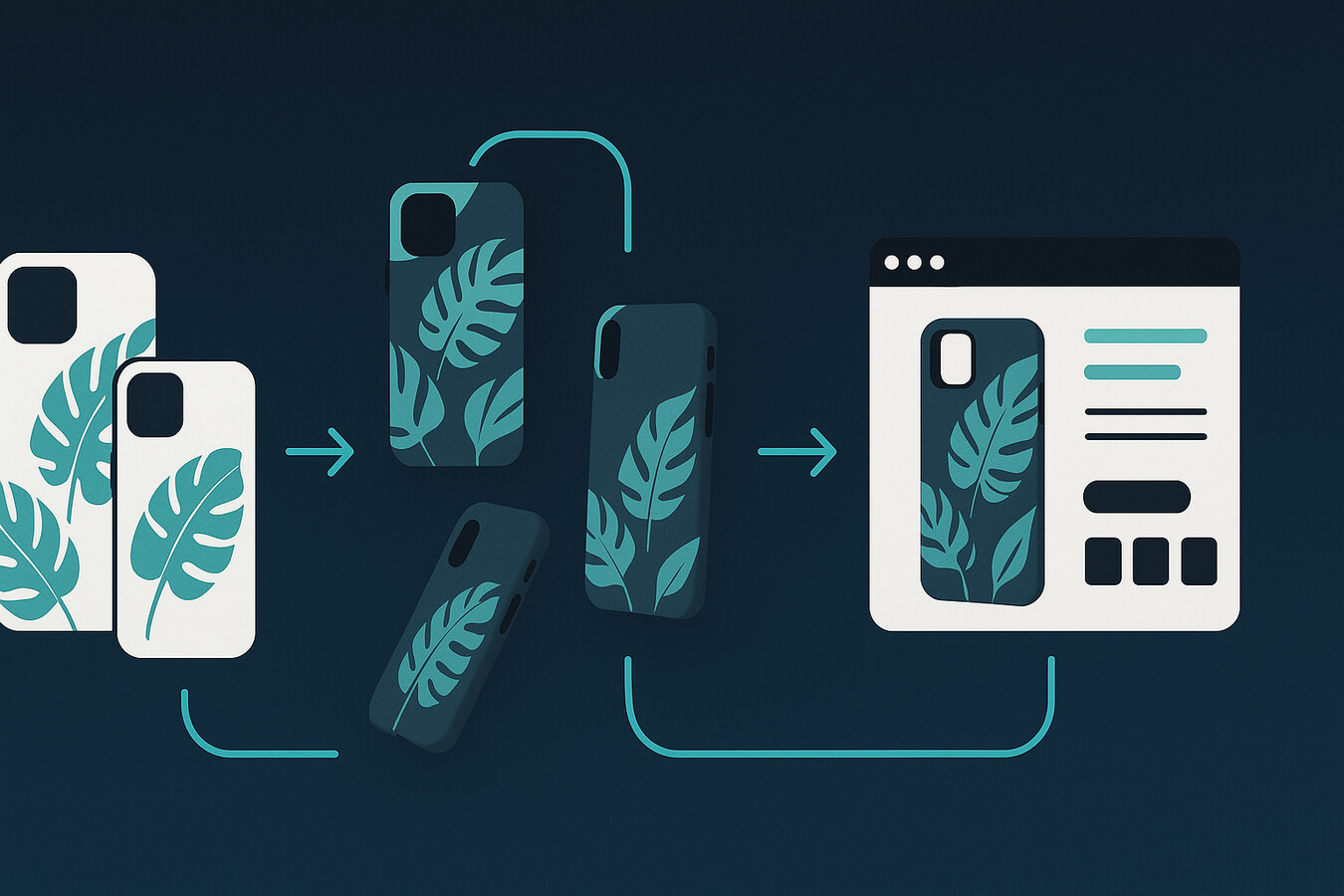
The goal is not one polished listing. The goal is a repeatable system.
MyDesigns gives you the kind of workflow advantage that matters in phone case catalogs: better organization, faster content creation, and less repetitive listing work.
Why Most Sellers Kill Their Margins on Phone Cases
Phone cases can absolutely make money. But only if you stop lying to yourself about margin.
I see three common mistakes:
| Mistake | What It Causes | What I Would Do Instead |
|---|---|---|
| Underpricing to look competitive | Thin margins and no room for ads or discounts | Price for design value, not just commodity comparison |
| Too few model variants | Lost demand from ready buyers | Launch broad iPhone coverage from day one |
| Weak mockups | Low click-through and poor conversion | Use stronger visual merchandising and test multiple scenes |
The old ecommerce playbook said you win by being cheaper. I think that is outdated. You win by looking more premium and moving faster than the sellers still doing everything by hand.
Because once the product itself becomes easy to create, execution becomes the moat.
How I Would Use MyDesigns to Launch Faster
This category is a perfect fit for the kind of workflow we built MyDesigns for.
If I were building a custom iPhone case offer, I would use MyDesigns to speed up the pieces that usually slow sellers down:
- Creating multiple listing assets faster
- Organizing catalog variations more cleanly
- Generating stronger listing content and SEO support
- Keeping momentum when I need to test multiple concepts in parallel
I built MyDesigns because I got tired of watching sellers waste their best hours on repetitive tasks. That problem gets even worse in products like phone cases where one winning idea can multiply across tons of SKUs.
If you want to scale custom iPhone cases, speed matters more than perfection.
You do not need a bloated workflow. You need a stack that helps you create, optimize, and publish without losing momentum every time a product starts working.
How to Price Custom iPhone Cases Without Getting Burned
I would rather sell fewer cases at healthier margins than chase volume with weak pricing. Especially when personalization is involved.
Here is the basic rule. If the product feels personal, giftable, or premium, price like it.
- Use bundles or matching styles to lift average order value
- Reserve discounting for promotional moments, not everyday positioning
- Account for your time, mockup creation, revision friction, and marketplace fees
- Do not train buyers to expect cheap just because the product is printed on demand
I would also test pricing based on design angle. A generic pattern case is one thing. A personalized bridal gift case or pet memorial case is another. Those are emotionally-driven purchases, and that gives you room.
The sellers who win this category are usually not the cheapest. They are the clearest, fastest, and most visually convincing.
Frequently Asked Questions
+ Are custom iPhone cases profitable to sell?
Yes, custom iPhone cases can be profitable if you position them around a clear niche, use premium-looking mockups, and avoid racing to the bottom on price. The margin gets stronger when you treat the offer like a branded product instead of a generic accessory.
+ What designs work best for custom iPhone cases?
Identity-based styles, photo gifts, and clean personalized layouts usually perform best. Buyers respond to designs that feel specific, giftable, or emotionally relevant.
+ How many iPhone models should I offer?
Offer as many current and recent iPhone models as your workflow can support cleanly. More coverage usually means more conversions, especially for gift buyers who are shopping with a specific device in mind.
+ Where should I sell custom iPhone cases?
Etsy, Shopify, and other ecommerce channels can all work. I would choose based on how quickly you can test offers, publish variations, and control your merchandising.
+ How can MyDesigns help with custom iPhone cases?
MyDesigns helps sellers move faster by improving the workflow around visuals, listing creation, catalog management, and publishing. That matters a lot in categories like custom iPhone cases where speed and scale create the edge.


Leave a Reply