



Most sellers are still approaching trending t-shirt designs 2026 the wrong way. They think the win comes from one clever phrase or one pretty graphic. It does not. The real win comes from spotting a signal early, packaging it fast, and launching enough variations before the market gets crowded.
I have watched sellers waste weeks polishing one shirt while faster operators publish twenty versions, test mockups, and learn from the market in real time. Speed matters more now. Not sloppy speed. Tight, informed speed.
If I were starting a shirt shop today, I would not begin with random inspiration. I would start with trend patterns, buyer identity, and a workflow that lets me turn one valid concept into a batch of listings. That is where the money is. This guide breaks down the trend categories already showing up in search, how I validate them, and how I would use MyDesigns to launch them faster.
Key Takeaways
- Trending t-shirt designs 2026 are identity-driven. Buyers are reacting to aesthetics, communities, and moods more than generic slogans.
- Fast validation beats perfect design. I would test mockups, titles, and niche angles before sinking time into a huge catalog.
- The winners are built in batches. One trend can become multiple listings when you vary niche, phrase length, style, and mockup angle.
- Manual workflows kill momentum. If you cannot go from concept to published listings quickly, you will miss the trend window.
Table of Contents
- Why Trending T-Shirt Designs 2026 Are About Signal, Not Art
- The Trending T-Shirt Designs 2026 I Would Bet On
- How I Validate a T-Shirt Trend Before I Design Anything
- Best Products and Niches to Pair With These Trends
- How I Turn One Trend Into a Batch of Listings
- Mistakes I See Sellers Make With Trending T-Shirt Designs 2026
- My 7-Day Launch Plan for Trending T-Shirt Designs 2026
- Frequently Asked Questions
Why Trending T-Shirt Designs 2026 Are About Signal, Not Art
The old playbook said you needed to be a brilliant designer. I do not buy that anymore. In most categories, buyers are not rewarding artistic complexity. They are rewarding fast recognition. They want to see a shirt and instantly know, that is for me.
That is why trend signals matter more than isolated creativity. Search behavior, marketplace phrasing, meme cycles, niche identity, and visual style shifts all matter more than whether the artwork is technically impressive. A simple shirt with the right angle can outsell a beautifully illustrated one that says nothing specific.
Why generic quote tees are getting filtered out
Generic motivation shirts, random cute phrases, and broad lifestyle slogans are getting squeezed from both sides. Shoppers have seen them a thousand times, and platforms like Etsy are full of near-identical listings. If your design could belong to every niche, it usually belongs to none.
I have seen sellers panic when a listing gets no traction after they spent an hour tweaking fonts. The problem was never the font. The problem was the idea had no edge. If the design does not attach itself to a micro-identity, a current aesthetic, or a strong use case, it is probably dead on arrival.
Buyers want self-expression they can recognize fast
The best performing shirts right now are short on explanation and heavy on identity. Think nostalgic aesthetics, hyper-specific hobbies, ironic sincerity, regional pride, feminine maximalism, retro sport energy, clean faith-based messaging, and niche family roles. The common thread is not style alone. It is instant belonging.
That is also why print on demand t-shirts still work. The demand never disappeared. The lazy middle disappeared.
You need a workflow that lets you test the trend before everyone else copies it.
If you can go from concept to publish fast, you learn faster. That is why I push sellers toward speed on mockups, titles, and launch volume instead of perfectionism.
The Trending T-Shirt Designs 2026 I Would Bet On
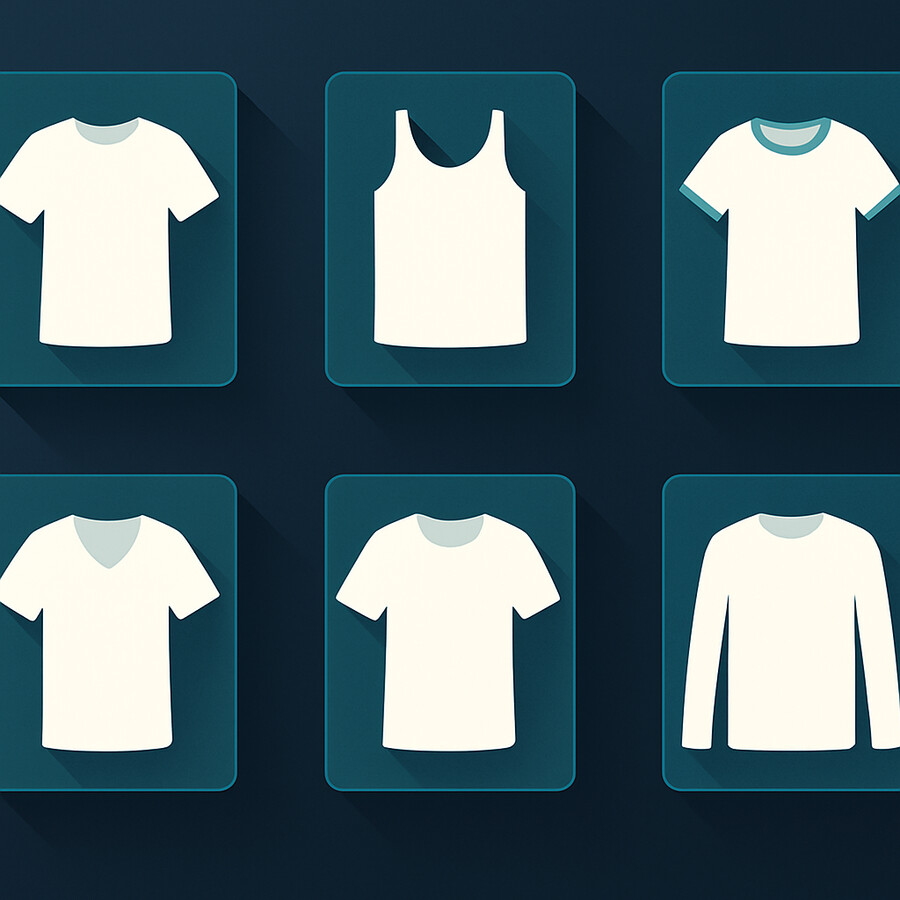
When I look at trending t-shirt designs 2026, I am not just looking for what looks cool. I am looking for what is easy to understand, easy to niche down, and easy to remix into multiple listings.
What is actually moving right now
These are the trend buckets I would pay attention to first:
| Trend bucket | Why it is working | Best angle for sellers |
|---|---|---|
| Nostalgic retro revivals | People still buy memory and familiarity faster than originality | Era-inspired color palettes, old-school textures, local culture tie-ins |
| Soft maximalism and playful typography | Shoppers want cheerful visual energy without looking childish | Feminine hobby niches, gifting, teacher and mom sub-niches |
| Faith-forward minimal designs | Clear emotional identity, wearable in more settings | Short phrases, subtle graphics, neutral color mockups |
| Niche hobby uniforms | Belonging sells better than broad humor | Gardening, fishing, pickleball, book clubs, side hustles, pet communities |
| Internet irony with cleaner design | Meme energy still works when it is wearable | Short phrases, deadpan layouts, understated visuals |
| Regional pride and local identity | Easy gift intent and built-in audience targeting | State, city, hometown, local phrase, local culture references |
Which trends are best for POD sellers
My favorite trend categories are the ones that compound. If one aesthetic works for teachers, it probably works for nurses, dance moms, softball moms, and church volunteers too. That matters. One trend is good. One trend that branches into five buyer groups is much better.
That is where most sellers leave money on the table. They spot a trend, then stop after one listing. I would rather take one validated theme and turn it into a product family.
For more broad inspiration, I would pair this with my guide to t-shirt design ideas that already sell and then narrow down into what feels current now.
How I Validate a T-Shirt Trend Before I Design Anything

This is where people either save themselves a month of wasted work or burn it. I do not start designing until I can see proof from multiple places.
I look for marketplace proof first
I usually check a few sources in this order: Etsy search results, Pinterest idea saturation, Google Trends, and buyer language. Not because each source is perfect. Because together they tell me if the market is actually moving.
If I see a style trend on Etsy trend searches, related breakout behavior in Google Trends, inspiration patterns from Pinterest Predicts, and short-form creative signals spreading through TikTok Creative Center, that is enough to justify testing. If I only see one source, I stay cautious.
I also want phrasing proof. The words shoppers use matter as much as the image style. That is why Etsy search suggestions and actual listing language are gold. Not glamorous. Very profitable.
Then I build three angles, not one
Once I believe the trend is real, I build three listing angles:
- Identity angle – who the shirt is for
- Aesthetic angle – how the shirt looks and feels
- Occasion angle – when or why someone buys it
Example: if retro sport typography is working, I would not launch one generic tee. I would test a mom version, a teacher version, and a hometown version. Same trend. Different buyer trigger.
The problem is not finding one trend. It is turning that trend into testable listings fast.
MyDesigns helps you move from idea to mockup to publish without rebuilding the same listing stack over and over. That is the part that keeps momentum alive.
Best Products and Niches to Pair With These Trends
Not every trend belongs on every shirt style. That is another common mistake. Sellers see a design trend and slap it onto every blank they can find. I would be more selective.
For trend-heavy aesthetics, relaxed fit tees and comfort-color-style mockups usually win because they make the design feel current. For giftable identity shirts, standard unisex tees and clean flat-lay mockups often convert better because the message is the product. If you are exploring Amazon too, study the workflow constraints inside Amazon Merch on Demand before you assume the same design stack will fit every marketplace.
Niche selection matters too. I like niches that have repeat language and built-in gift occasions: teachers, nurses, church groups, softball moms, dads of daughters, gardeners, readers, and state pride niches. Those markets give you faster title writing, cleaner SEO, and more ways to branch once you have a winner.
And if you are still figuring out product economics, read my breakdown on print on demand profit margin before you chase cheap volume. Some trendy shirts get lots of clicks and still make terrible businesses.
A strong trend can still flop if the mockup makes it look dated.
This is exactly why I care so much about mockup variation. Different scenes, model types, and shirt colors change how modern the same design feels.
How I Turn One Trend Into a Batch of Listings
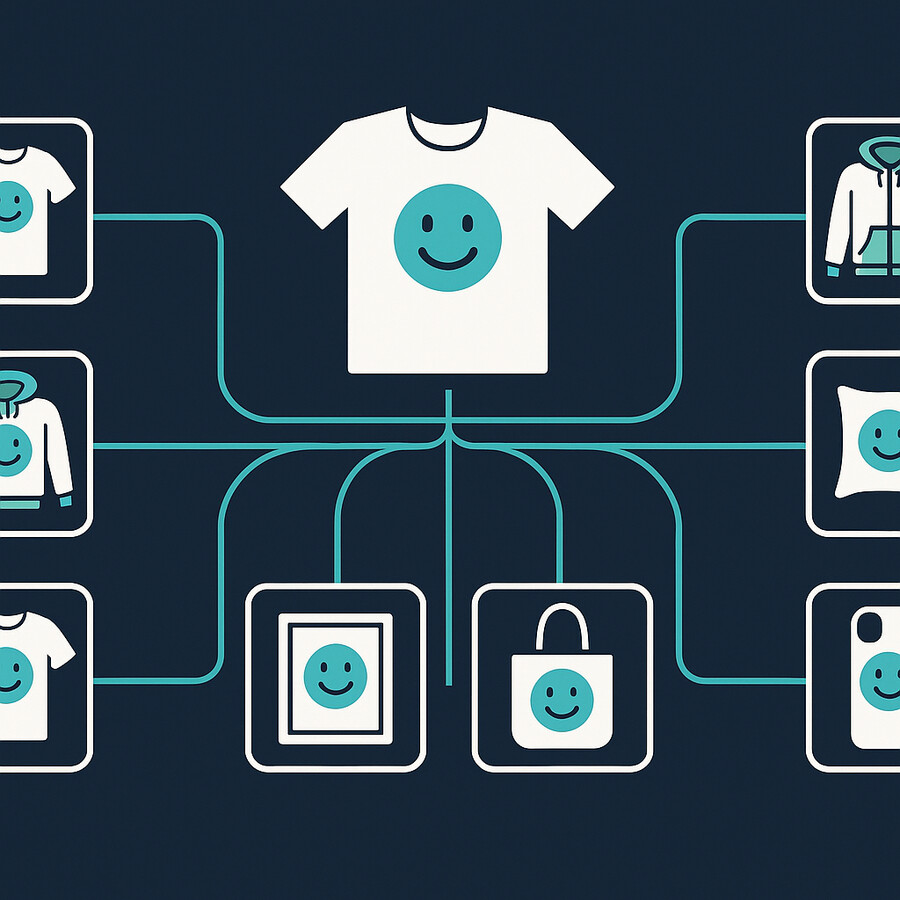
This is where the real leverage shows up. One valid trend should become multiple listings, not one precious masterpiece.
Dream AI helps me expand faster
If I want to test visual directions quickly, I use Dream AI to expand style options faster than I could manually. Not to outsource judgment. To speed up exploration. Big difference.
Maybe the core concept is a retro summer camp look. Fine. Now I want to see a washed-out vintage version, a cleaner collegiate version, and a more playful feminine version. That is where AI becomes useful. It gives you more swings while the trend is still warm.
Mockups and publishing are where most sellers slow down
Most people think design creation is the bottleneck. I rarely find that to be true anymore. The bottleneck is what happens after. Mockups. Titles. Variants. Publishing. Repeating the same busywork until you lose the will to keep testing.
This exact bottleneck is why we built tools like Listing Management, Bulk Publish, and Multi-Product Publishing. Once you can push a whole cluster of listings live from one validated idea, your testing cadence changes completely.
I watched sellers go from obsessing over one listing to running actual launch systems. That shift matters more than any single design trend.
Mistakes I See Sellers Make With Trending T-Shirt Designs 2026

There are a few mistakes that keep repeating.
- They chase trends that are too broad. “Funny shirt” is not a niche. It is a traffic graveyard.
- They follow visuals but ignore buyer language. A great-looking shirt with a weak title still disappears.
- They over-design. The shirt ends up looking impressive in Canva and unwearable in real life.
- They only test one mockup. Sometimes the idea is fine and the presentation is what fails.
- They launch too slowly. By the time the store is ready, the wave already moved.
Here is my contrarian take: most sellers do not need more originality. They need more disciplined packaging. Originality without demand is a hobby. Trend awareness plus execution is a business.
If you want the SEO layer to work too, pair this process with a strong keyword structure using guides like my Etsy SEO guide and product-specific content such as AI t-shirt design generator.
If you find a trend this week, can you actually get ten listings live before next week?
That is the question that matters. A trend report is useful. A trend-to-launch machine is better.
My 7-Day Launch Plan for Trending T-Shirt Designs 2026
If I were trying to turn this into revenue quickly, this is the exact rhythm I would use:
- Day 1: Research three trend buckets and collect buyer language from marketplace searches.
- Day 2: Build 10-15 design concepts across three buyer angles.
- Day 3: Generate multiple mockup styles and shortlist the strongest combinations.
- Day 4: Write SEO-aware titles, tags, and descriptions around the buyer phrasing.
- Day 5: Publish the first wave across the best products and colorways.
- Day 6: Review click behavior, favorites, and early engagement signals.
- Day 7: Expand winners, cut losers, and push the next batch.
That is how you build around trending t-shirt designs 2026 without guessing all month. Short cycle. Fast feedback. More volume around what proves itself.
And if you are still doing all of that by hand, I would change that before I change the design style. Because the market punishes slow operators much harder than it punishes imperfect ones.
Frequently Asked Questions
+ What are the trending t-shirt designs in 2026?
The trending t-shirt designs in 2026 are centered around nostalgic aesthetics, niche identity shirts, clean faith-based designs, playful maximalism, and understated internet humor. The best sellers are easy to recognize and easy to tie to a specific buyer group.
+ How do I find t-shirt trends before they get saturated?
Look for overlap across Etsy search behavior, Google Trends, Pinterest idea patterns, and short-form social creative. I also pay close attention to buyer phrasing because rising search language usually shows up before a niche feels fully crowded.
+ Do trendy t-shirt designs sell better than evergreen designs?
They can sell faster, but not always longer. I like using trend-based listings to capture attention and then using evergreen niches as the foundation of the store so revenue is not tied to one short-lived wave.
+ What is the best niche for t-shirt trends in 2026?
The best niche is usually one with a strong identity and repeat language, like teachers, moms, faith communities, hobby groups, or regional pride. Those niches make trend adaptation easier because the buyer signal is already clear.
+ How many designs should I test from one trend?
I would test at least 6 to 12 listings from one validated trend, not one. The point is to vary buyer angle, phrasing, and mockup presentation so you can learn what the market actually responds to.
The sellers who win this year will not be the ones with the most ideas. They will be the ones who can turn a good signal into live listings before the crowd shows up.


Leave a Reply