


If you want a print on demand product that people actually keep in their hand all day, custom phone cases to sell should be high on your list. I like this category because the value is easy to understand, the gift angle is strong, and you do not need to touch inventory to start testing demand.
But most sellers approach phone cases the wrong way. They upload one cute design, slap it on every device model, and hope the market does the rest. It rarely works. Phone cases are not a lazy catalog play. They are a positioning, margin, and workflow game. If you get those three right, phone cases can become a repeatable SKU family for Etsy and Shopify. If you get them wrong, you burn time managing variants and fighting for scraps.
I have watched sellers overcomplicate this category for weeks, then a more disciplined shop comes in with cleaner niche targeting, better mockups, and stronger pricing and wins anyway. That is the real opportunity here. In this guide, I will show you how to design and sell custom phone cases without inventory, how I would pick niches today, what case types are worth listing first, and how to launch in a way that gives you a real shot at profit.
Key Takeaways
- Phone cases work best when you niche down fast – broad “cute case” shops usually get crushed, while targeted audiences buy for identity, gifts, and lifestyle fit.
- Margins are won before the listing goes live – your case type, pricing, mockups, and fee math matter more than minor design tweaks.
- The winning workflow is speed plus coverage – create one strong concept, adapt it across top device families, and publish across Etsy and Shopify without touching inventory.
- Automation is the moat – sellers who can build, mock up, optimize, and push listings in batches have a huge advantage over manual shops.
Table of Contents
- Why custom phone cases are still worth selling
- Pick a niche that buys, not just a theme that looks cool
- Case type decisions will make or break your margins
- Your design workflow needs to be fast, boring, and repeatable
- How to price custom phone cases to sell for real profit
- Your launch playbook for Etsy and Shopify
- How to scale without inventory headaches
- Frequently Asked Questions
Why custom phone cases are still worth selling
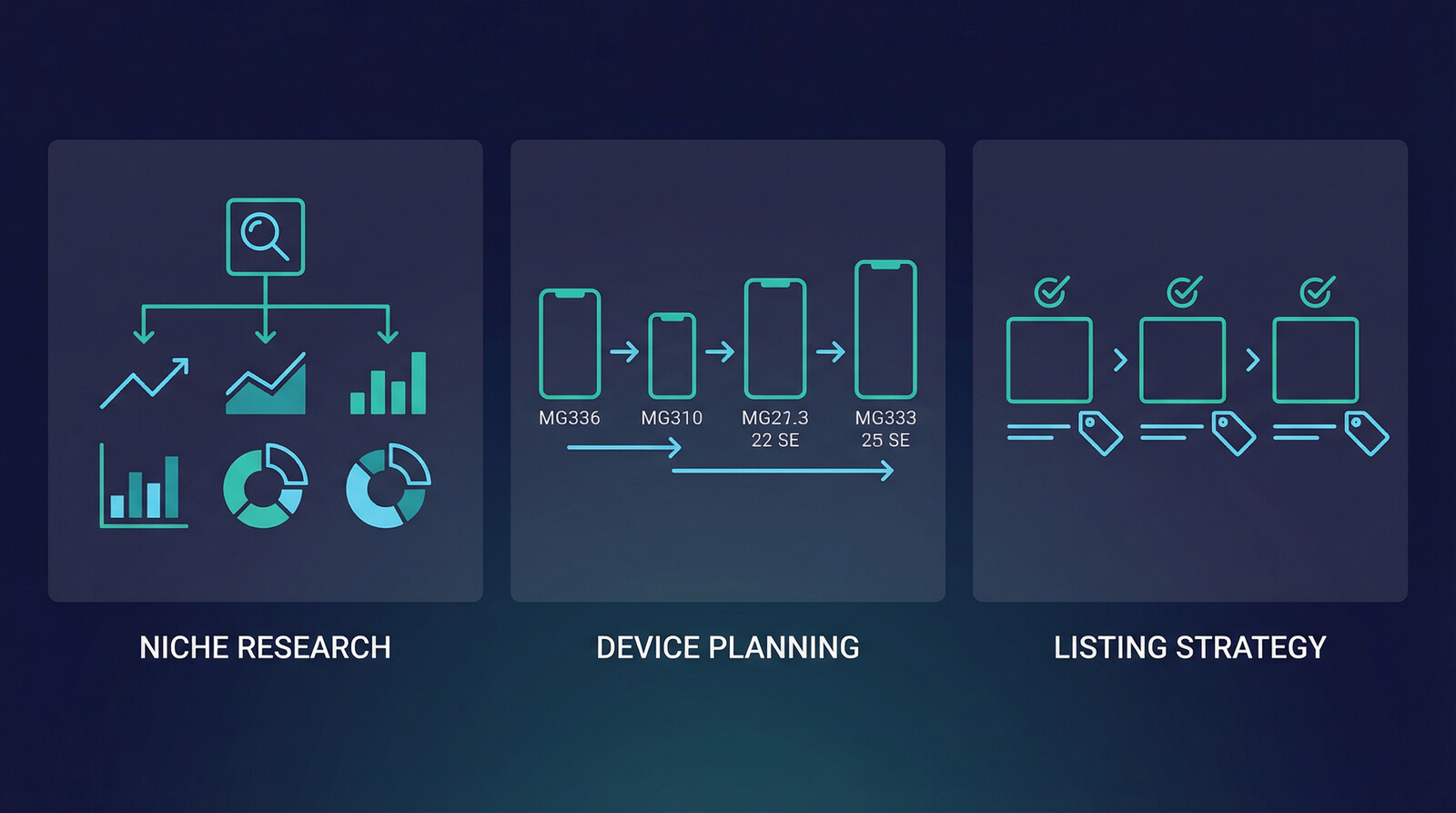
Some print on demand categories get crowded and stale fast. Phone cases are different. People replace phones, upgrade devices, buy gifts, match aesthetics, and want accessories that feel personal. That demand does not disappear because another seller uploaded floral art last week.
There is also a practical reason I like the category. A phone case sits in that sweet spot between functional and emotional. It solves a real problem, but buyers still justify paying more for design, identity, and style. That combination usually produces better buying intent than generic wall art or copy-paste quote products.
If you want more context on which categories can carry solid margins, read our breakdown of the most profitable print on demand products. Phone cases belong in the conversation when you execute them well.
Why this category stays relevant
Smartphone adoption is not a niche trend. It is the base layer. Data from Statcounter shows how concentrated mobile device usage is around major vendors, which matters because it gives you predictable model families to support. That predictability is gold for sellers who want repeatable product ops.
Custom cases also have built-in gifting power. Birthdays, graduations, Mother’s Day, Father’s Day, bridesmaids, team gifts, pet memorials, fandoms, faith, and inside jokes all translate well to this product. You are not just selling plastic. You are selling a small identity object people carry constantly.
Where most sellers go wrong
Most shops treat custom phone cases to sell like a volume lottery. They upload generic patterns, publish too few listings, ignore device-specific buyer intent, and underprice from day one. Then they decide the category is dead.
I do not buy that. I think the category punishes lazy execution. Because it works. Period.
If you are selling on Etsy, you also need to understand the fee math instead of guessing. Etsy publishes its fee rules at its fees policy page. Read it once. Your pricing strategy should be built on actual costs, not vibes.
Pick a niche that buys, not just a theme that looks cool
This is where the whole thing starts. If your niche is weak, better mockups will not save you. I would much rather sell a decent design into a hungry niche than an amazing design into a vague audience.
The best phone case niches have clear buying motives
When I evaluate custom phone cases to sell, I want niches with one or more of these traits:
- Identity-driven buyers – teachers, nurses, Christians, gym lovers, moms, dog owners, gamers.
- Gift behavior – birthdays, weddings, Mother’s Day, graduation, bridesmaid sets.
- Visual language that translates fast – retro florals, western motifs, coquette looks, faith phrases, sports themes.
- Room for personalization – names, initials, birth flowers, monograms, pet photos, family roles.
If you need more demand ideas for Etsy specifically, our guide to the best things to sell on Etsy is a useful starting point.
Here is the contrarian take: do not start with “phone cases” as the niche. Start with the audience. Phone cases are just the product vehicle. The old playbook was to chase product-first trends. The better play today is audience-first catalogs that can expand into matching accessories later.
Use breadth inside one niche, not chaos across twenty
I would rather see you launch 24 variations for one clear niche than 24 unrelated designs across random aesthetics. One seller I studied had almost no traction until she went all-in on one buyer type, pet moms, then built sub-angles around breed, color palette, and personalization. The catalog suddenly made sense. Conversions followed.
That is the mindset I would use for custom phone cases to sell today:
- Choose one niche
- Build 6 to 10 core design concepts
- Create 3 to 5 variations from each concept
- Test personalization and non-personalization separately
The goal is not artistic expression. The goal is signal density. Your shop should tell the buyer, “this is for people like me.”
Phone cases get easier to sell when your workflow is faster than your competitors.
The sellers who win this category are not manually rebuilding every listing. They move quickly, test variations, and publish while the idea is still hot.
Case type decisions will make or break your margins
Product selection matters more than beginners think. If you pick the wrong case types, you create support headaches, weaker perceived value, and thinner margins before the first sale lands.
Start with the case types buyers already understand
For most Etsy and Shopify sellers, I would start with a tight lineup:
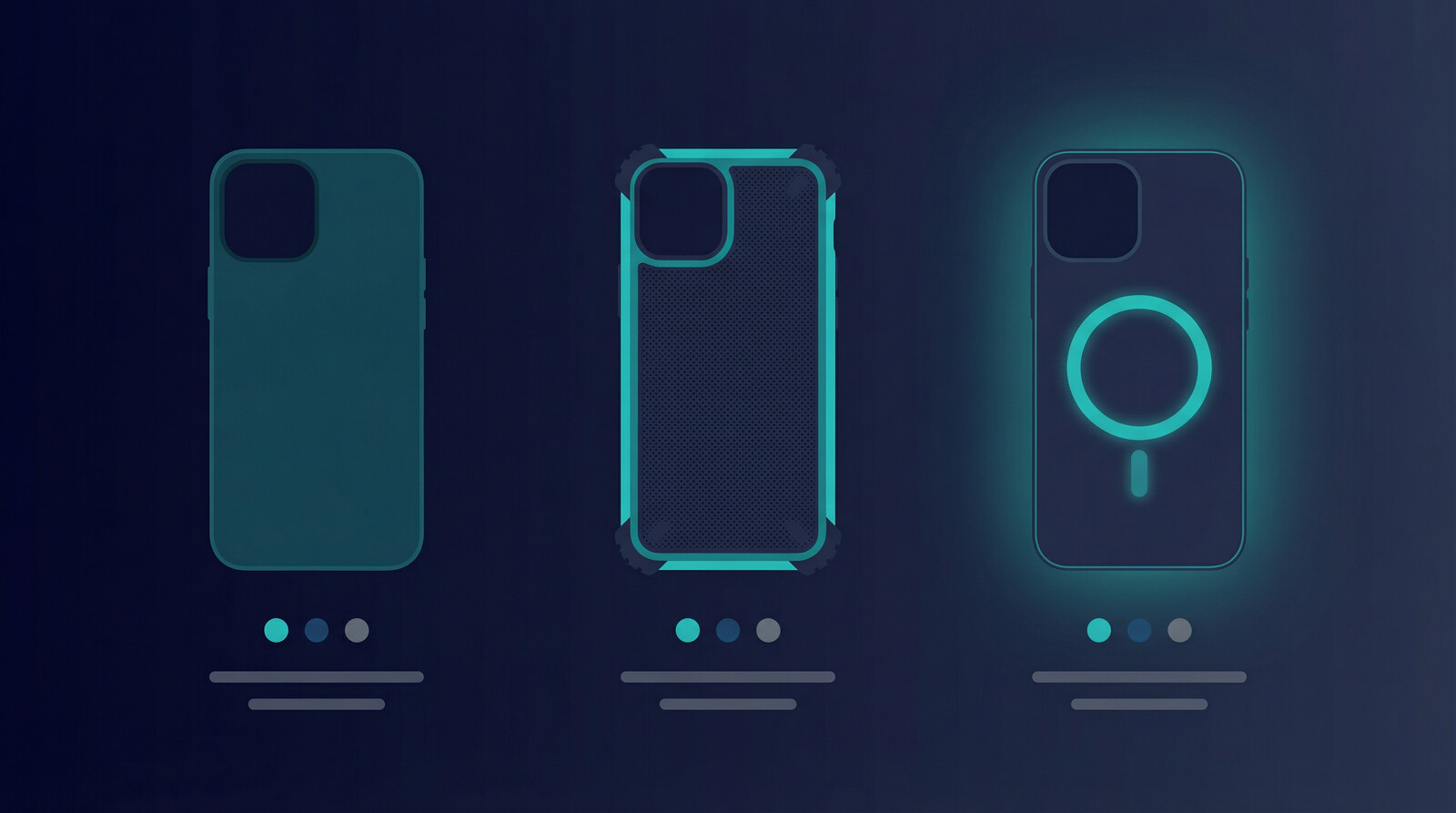
- Slim cases for lower-priced, design-led buyers
- Tough cases for buyers who care about protection and will usually pay more
- Magnetic or MagSafe-compatible styles if your provider supports them reliably
You do not need twelve formats on day one. Three clean options is enough to learn what your market values. Apple’s own support docs around MagSafe accessories are worth understanding if you plan to market magnetic styles. Buyers care about that compatibility language.
This is also where a strong catalog matters. If you are evaluating what your provider stack can actually support, your best friend is a clean product view like the MyDesigns product catalog, not a spreadsheet mess.
Do not support every device on day one
I strongly advise you not to list every device model under the sun immediately. Start with the highest-demand families first:
- Recent iPhone models
- Top Samsung Galaxy models
- Maybe select Google Pixel models if your provider quality is solid
Broad coverage feels smart, but it can wreck your workflow. Every extra model adds variant complexity, mockup needs, and customer service risk. Earn the right to expand once a concept proves it deserves more device support.
Your design workflow needs to be fast, boring, and repeatable
If your design process depends on feeling inspired, your store will move too slowly. That is one of the biggest mistakes I see. Winning shops do not rely on random creativity spurts. They rely on systems.
Build one core system, then iterate variations
My favorite workflow for custom phone cases to sell looks like this:
- Pick one niche and one design direction
- Create a base template in your editor
- Swap colors, phrases, names, icons, or patterns
- Export print-ready files in batches
- Map the same artwork across your supported case types and devices
This exact bottleneck is why we built features like multi-product publishing into MyDesigns in the first place. Once you stop rebuilding listings one by one, the economics of the category improve fast.
[Insert screenshot of multi-product publishing workflow here]
Mockups are doing half the selling
On Etsy especially, mockups are not decoration. They are conversion assets. A weak flat mockup can make a good design feel cheap. A clean, premium mockup can make the same art feel giftable and worth an extra $6 to $10.
That is why I would put serious attention into product images early. Use clear front views, close-up detail, and a lifestyle angle that matches the niche. If you are handling this at scale, use a workflow built for speed like product mockups in MyDesigns. It saves a stupid amount of manual work.
For Shopify sellers, your product organization also matters. Shopify’s own product management documentation is useful here, especially once you start organizing collections, product types, and variants more seriously.
Better margins come from better workflow, not just higher prices.
When you can create, test, and launch faster, you give yourself more room to find the offers and price points that actually work.
How to price custom phone cases to sell for real profit
Most sellers underprice because they are scared no one will buy. That fear makes sense. I get it. But low pricing is not a safety strategy. It is usually an exhaustion strategy.
A simple margin framework I would use
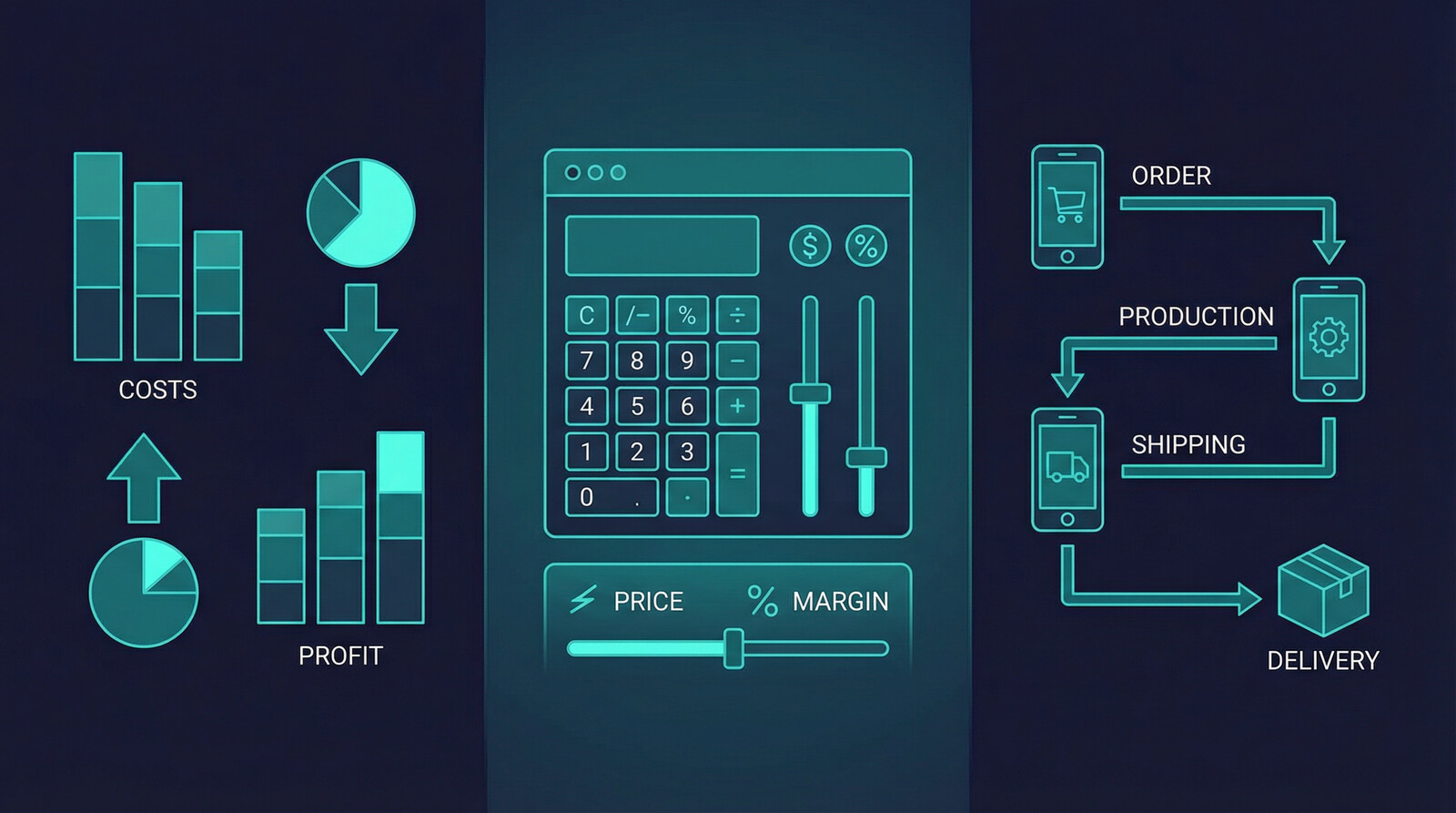
Before you publish, map the full landed math:
| Cost Area | What to Include | Why It Matters |
|---|---|---|
| Base product cost | Case blank + print cost | Sets your floor immediately |
| Shipping impact | Provider shipping or baked-in free shipping math | Can erase margin fast |
| Marketplace fees | Etsy or payment fees | Often underestimated by beginners |
| Promo buffer | Coupons, sales, bundle offers | Lets you discount without panic |
| Ad or testing budget | Especially for Shopify | Protects against fake profitability |
If you want a benchmark for how I think about POD economics generally, use the same principle here: do not confuse revenue with a real business.
Stop racing to the bottom on Etsy
Etsy has trained a lot of sellers to believe the cheapest offer wins. I think that is outdated. The winner is usually the listing that looks safer to buy. Better photos, stronger reviews, clearer personalization, and more convincing value often beat a slightly lower price.
Custom phone cases to sell can support healthier pricing when you do one of three things:
- Target a buyer identity with emotional relevance
- Add personalization that feels gift-worthy
- Present the product like a premium accessory, not a commodity
And yes, software cost matters too. If you are calculating tooling into your workflow, keep the current MyDesigns pricing page in mind. Annual plans are discounted, which matters when you are building a long-term listing engine instead of testing for one weekend.
Your launch playbook for Etsy and Shopify
You do not need 500 listings to validate the category. You need enough listings to test angles properly and enough operational discipline to learn from the data.
How I would launch on Etsy
If I were starting from zero today, this would be my exact move on Etsy:
- Choose one niche
- Build 12 to 24 listings around that niche
- Use distinct titles for personalization, gift intent, and style angles
- Create image sets that show the design clearly on-device
- Offer a small but intentional set of supported models
- Watch favorites, clicks, and conversion signals before expanding
If you need the broader foundation, our broader Etsy content covers the platform basics. For this category specifically, the key is not just launching. It is launching with enough variation to learn what phrasing, niche angle, and design treatment buyers respond to.
How I would use Shopify differently
Shopify is a different game. You have more control, but you also need your own traffic and merchandising discipline. I would not launch a single-product phone case store unless you already have an audience. I would build collections around audiences or aesthetics, then use phone cases as one piece of a broader accessory offer.
That is where organized listing ops matter. A strong system for listing management becomes really valuable once you are syncing product data, titles, tags, and images across channels.
Also, if you plan to use creators or customer photos in your marketing, make sure you understand the FTC’s rules on endorsements and reviews. A lot of sellers ignore this until it becomes a problem.
If you want to grow this category, you need a workflow that stays simple as volume climbs.
Build the product, publish the listing, and keep moving. That is how you scale custom phone cases without turning operations into a mess.
How to scale without inventory headaches
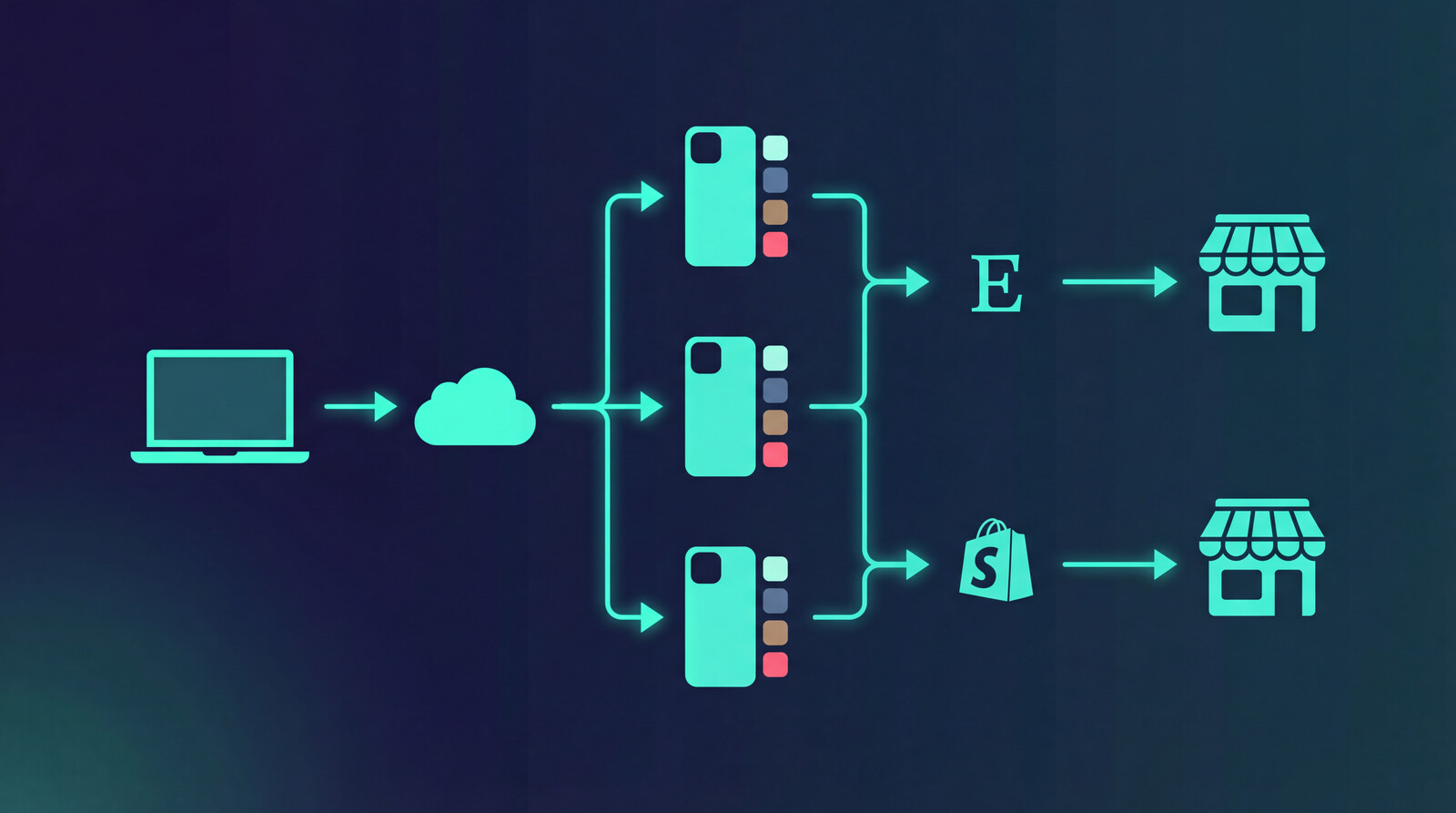
The reason people are drawn to print on demand is obvious. No inventory. No shelves. No packing table in the garage. But if your backend is chaotic, you can still create an inventory-style headache without actually owning inventory.
Build a batch publishing machine
The sellers who scale custom phone cases to sell do not just make more designs. They get better at turning one design system into many sellable listings. That means:
- One artwork set adapted across top device models
- One listing framework reused across Etsy and Shopify
- One keyword and tag strategy per niche cluster
- One image system that keeps quality consistent
This is also where automation compounds. If your workflow lets you move from concept to published listings in batches, you can test more ideas with less operational drag. Features like listing management and multi-product publishing exist for exactly this reason.
The real edge is automation, not art-school talent
The old Etsy playbook does not work anymore. The real advantage today is not just creativity. It is speed, consistency, and systemized execution. AI, better tooling, and faster publishing have changed the market. That sounds scary if your whole business depends on being the only person who can design a floral case. It looks exciting if you know how to use automation to test ten better offers before slower sellers finish one.
I built MyDesigns for operators who want that kind of leverage. Not as a shortcut fantasy. As a practical way to get more shots on goal with less manual nonsense. If your plan is to grow beyond a handful of listings, that matters a lot.
Frequently Asked Questions
+ Are custom phone cases profitable to sell?
Yes, custom phone cases can be profitable to sell if you pick the right niche, price for real margin, and avoid weak generic designs. The shops that struggle usually underprice, support too many device variants too early, or fail to present the product well with strong mockups.
+ What kind of phone cases sell best on Etsy?
Personalized phone cases, gift-oriented designs, and niche identity styles tend to sell best on Etsy. Buyers want something that feels specific to them, not a generic pattern they could find anywhere.
+ Do I need inventory to sell custom phone cases?
No, you do not need inventory if you use a print on demand fulfillment model. Your provider prints and ships after the customer orders, which lets you test designs and niches without buying stock upfront.
+ Which phone models should I support first?
Start with recent iPhone and top Samsung Galaxy models first. That gives you broad demand coverage without creating a variant mess before you know which designs deserve expansion.
+ How many phone case listings should I launch with?
I would launch with 12 to 24 listings built around one niche, not one lonely product page. That gives you enough variation to learn what buyers respond to without drowning in manual setup.
If you want this category to work, stop thinking like a hobby seller and start thinking like an operator. Pick a real niche. Choose case types intentionally. Build a repeatable design system. Then publish enough good offers to learn from the market.


Leave a Reply