



Most people start looking for Zazzle alternatives after a frustrating month, not after a strategic one.
A listing slows down. Sales flatten. A design that looked promising never gets enough visibility. So the instinct is to hunt for another marketplace and hope the next one fixes everything. I think that is usually the wrong frame. The real issue is not just traffic. It is control, margin, customer ownership, and how exposed your income is to a platform you do not control.
That is what I want to unpack here. If you are comparing Zazzle alternatives, I am going to show you the 10 better platforms I would actually consider in 2026, who each one is best for, and when you should stop chasing one more marketplace and build a system that gives you real upside. If you want to build a serious print on demand business, this choice matters more than your next design upload.
Key Takeaways
- The best Zazzle alternatives depend on your business model – a hobby seller, creator brand, and scale-focused operator should not pick the same platform.
- Marketplaces are easy to enter but hard to outgrow – they give you convenience up front, then charge you back in weaker margins, less ownership, and more platform risk.
- Your best move is often a stack, not a single site – storefront control, fulfillment flexibility, and publishing speed beat passive dependence every time.
- MyDesigns makes the most sense when your bottleneck is execution – especially if you want to publish faster, test more products, and sell across multiple channels.
Table of Contents
Why sellers start looking for Zazzle alternatives

Zazzle is attractive for the same reason a lot of marketplaces are attractive. You can get started fast. You do not have to build your own store. You do not have to think much about operations on day one.
That simplicity is real. I get why sellers like it.
But I have seen this pattern too many times to ignore it. A seller gets some traction, uploads more designs, starts thinking bigger, and suddenly the platform that felt easy starts feeling tight. That is usually when the search for better Zazzle alternatives begins.
Zazzle is easy until you want growth
The beginner experience is fine. The scaling experience is where things get messy.
Once you want faster testing, stronger branding, better pricing control, or more than one sales channel, you start running into structural limits. You are not really building an asset. You are plugging your products into someone else’s machine and hoping the machine keeps feeding you views.
I watched one seller go from casually uploading wedding templates to managing hundreds of seasonal products in a few months. The turning point was not design quality. It was workflow friction. The manual repetition got so expensive in time that growth slowed before demand did. That is why I care so much about systems like bulk publishing and multi-channel integrations. Bottlenecks rarely show up as a dramatic crash. They show up as wasted weeks.
The real problem is platform risk
Most listicles frame this like a shopping decision. Pick a site. Compare features. Done.
That misses the main issue. Platform dependence is business risk. If your visibility, customer relationship, and margin structure all live inside one marketplace, you are exposed on three fronts at once. You do not control the demand source, the checkout experience, or the long-term customer value.
That is why I would rather build around owned assets, diversified channels, and a workflow that can move with you. The U.S. Census keeps showing how large ecommerce has become overall, but that growth does not magically protect sellers who are overexposed to one channel. The market can grow while your slice shrinks. See the broader trend data here: U.S. Census retail ecommerce reports.
If you are serious about building a business, marketplace dependency gets expensive fast.
The upside in 2026 is owning more of the customer journey. Start with a setup that gives you room to grow instead of capping your business at the platform layer.
What actually makes a better Zazzle alternative
If you are comparing Zazzle alternatives seriously, you need a sharper filter than product count or homepage polish.
I care about whether a platform moves you closer to a business you own.
Ownership beats convenience
Convenience is great at the beginning. Ownership wins later.
A better Zazzle alternative should improve at least one of these things:
- Customer ownership – can you build repeat buyers, email capture, and brand memory?
- Store control – can you shape the buying experience instead of accepting a generic marketplace layout?
- Catalog flexibility – can you expand product lines without rebuilding your entire process?
- Risk distribution – can you sell in more than one place if one channel slows down?
This is also where trend validation matters. Before you build a whole product line around a niche, I would check whether demand is stable or just a short-term spike. Google Trends is still one of the fastest sanity checks available.
Margins, speed, and channel flexibility
Here is my blunt take. If a platform makes you slower, thinner on margins, and more dependent on one traffic source, it is not really a better Zazzle alternative. It is just a different flavor of the same ceiling.
When we built MyDesigns, this was the exact bottleneck we wanted to solve. Sellers did not need more theory. They needed faster product creation, easier mockup generation, better listing throughput, and one place to manage a growing catalog. That is also why our print on demand workflow matters more for operators than a pure marketplace ever will.
I would score every option on these five criteria:
- Margin control
- Brand ownership
- Built-in traffic versus owned traffic
- Operational speed
- Ability to expand across channels
The 10 best Zazzle alternatives in 2026
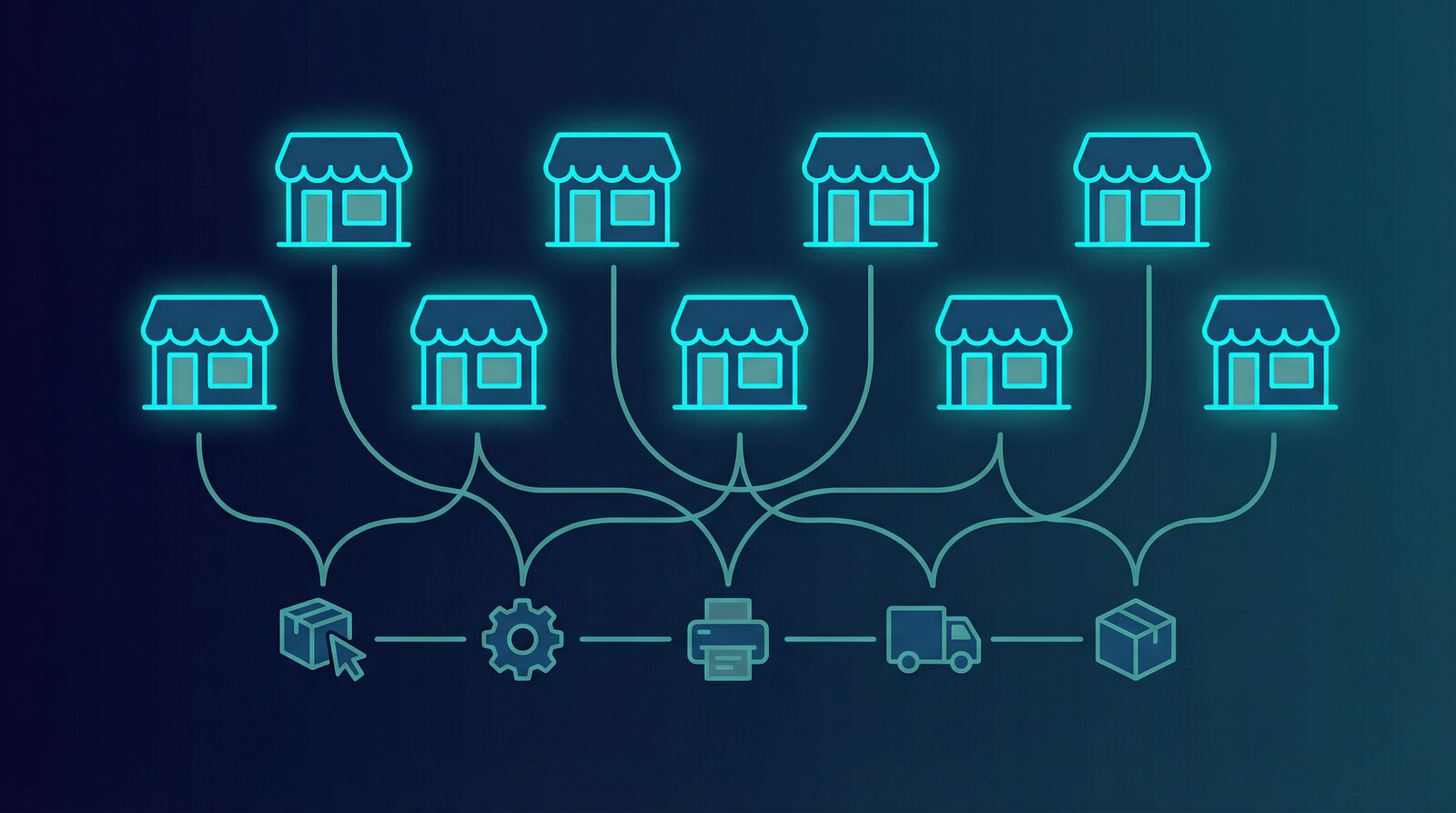
Not all of these are marketplaces. That is intentional.
If you only compare Zazzle to other browse-and-buy marketplaces, you miss the better strategic options. Some of the best alternatives are storefront platforms and workflow stacks that help you stop relying on marketplace traffic in the first place.
Quick comparison table
| Platform | Best For | Model | Main Tradeoff |
|---|---|---|---|
| MyDesigns | Serious POD sellers scaling catalogs | Workflow and publishing platform | You still need a channel strategy |
| Etsy | Sellers who want marketplace demand with stronger search intent | Marketplace | Fees and competition add up |
| Shopify | Brand builders who want full control | Storefront | You have to drive your own traffic |
| Fourthwall | Creators with an audience | Creator storefront | Less operator-focused for large catalogs |
| Sellfy | Hybrid digital and physical sellers | Storefront | Less depth for big POD operations |
| Spring | Audience-led merch sales | Creator commerce | Weak fit for broader ecommerce brands |
| WooCommerce | Sellers who want control on WordPress | Storefront infrastructure | More setup and maintenance |
| Big Cartel | Smaller artists and niche brands | Storefront | Can feel limiting as you scale |
| BigCommerce | Growing brands needing ecommerce structure | Storefront | Heavier setup than simple marketplaces |
| Gelato | Sellers who care about fulfillment reach | Fulfillment network | Not a full growth workflow on its own |
My real take on the list
If you want the closest experience to Zazzle, Etsy is usually the strongest alternative because buyers often arrive with clearer purchase intent. If you want actual brand control, Shopify is the cleaner long-term move. If you already have attention from YouTube, TikTok, or email, Fourthwall makes more sense than another marketplace.
Sellfy is underrated if you want to combine physical products with digital products. I have seen that hybrid model work well because digital offers can lift average order value without creating shipping complexity.
WooCommerce and BigCommerce are more infrastructure-heavy, but that is not a bad thing if you actually want ownership. People often confuse convenience with quality. They are not the same.
And if your problem is execution speed, not just storefront choice, MyDesigns belongs near the top of the list. We built it for sellers who want to publish faster, organize listings better, and turn a messy catalog into a real operating system. The old playbook of manually pushing one item at a time is dead. If you have ever stared at a spreadsheet full of titles, mockups, and tags and thought, there has to be a better way, that is exactly why we built tools like Bulk Publish and Product Mockups.
The best Zazzle alternative by seller type
The right answer changes based on what game you are actually trying to win.
This is where most generic posts fail. They treat every seller like they have the same goals. They do not.
For hobby and side-income sellers
If you want low maintenance and simple setup, Etsy or Big Cartel are usually easier paths than building a full custom stack. You can keep things lean and focus on product-market fit first.
I would not overbuild too early. That part matters. If your goal is side income, you do not need enterprise infrastructure on week one.
For creators with an audience
If people already follow you, I would lean toward Fourthwall, Shopify, or Spring. In that case, your real asset is attention. You do not need to rent discovery from a marketplace as heavily because you already have a distribution source.
Your job becomes conversion, offer quality, and fulfillment reliability. A branded storefront usually beats a generic marketplace page in that scenario. The Small Business Administration has a solid overview on why owned ecommerce channels matter for small brands: launch your online business.
For operators who want a real business
If your goal is catalog depth, faster testing, channel diversification, and higher output, I would not anchor the business on another marketplace. I would build a stack.
That usually means one or more sales channels, a fulfillment layer, and a workflow engine that can handle design creation, listing management, mockups, SEO, and bulk publishing. That is the world MyDesigns is built for. If you are trying to scale beyond one storefront, this is also where Shops & Integrations starts to matter a lot.
If you want a broader view of which channels deserve your attention, our breakdown of the best print on demand sites pairs well with this article.
Easy traffic feels good until you realize you do not own the customer.
That is why more sellers are moving toward platforms that help them build a repeatable catalog and a real business instead of chasing borrowed demand forever.
Why marketplace traffic is a dangerous drug
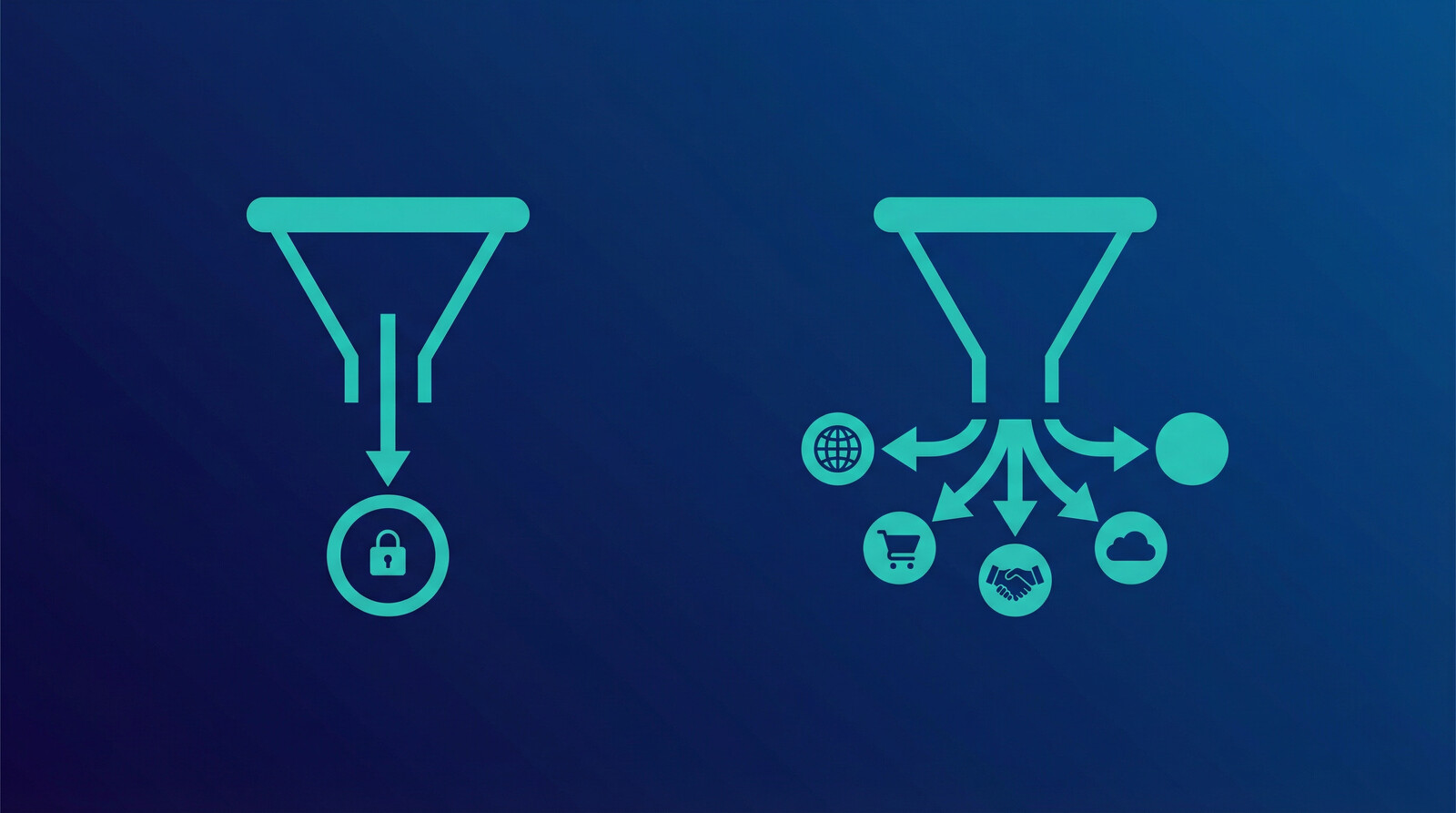
Here is the contrarian point I want to make clear. A lot of sellers do not need a better Zazzle clone. They need to stop thinking like a marketplace tenant.
Marketplace traffic feels good because it removes pressure. You can tell yourself the platform will eventually surface your products if you just keep uploading. Sometimes that happens. A lot of times it does not.
You do not own the buyer
This is the biggest weakness in the marketplace model. You do not own the customer relationship. You usually do not get the same email capture, repeat purchase visibility, or brand recall that you get in a more controlled environment.
That matters because the real value in ecommerce is not just the first sale. It is what happens after it. If you want to build a business with repeat revenue, product launches, and a defensible brand, you need more than anonymous marketplace traffic.
You also need to avoid legal headaches as you scale. If your business involves original art, phrases, or branded collections, it is worth understanding the basics from the USPTO trademark guide and the U.S. Copyright Office FAQ. Most sellers think about this too late.
Algorithm dependence kills planning
I hate business models that make planning impossible.
If your revenue can swing because a marketplace changed how it ranks products, promotes categories, or surfaces search results, your growth plan is fragile by default. You are not forecasting. You are hoping.
This is why I push sellers to care about margins and operational efficiency as much as traffic. Better economics give you room to reinvest. Better workflow gives you speed. Both matter more than chasing a temporary bump in discovery.
If you want to tighten the financial side of the business, read our guide to print on demand profit margin and compare it with your current setup.
The best migration plan is the one you can actually execute this week.
If you are ready to move faster, get your next catalog live with a workflow built for bulk creation, cleaner listing output, and less manual friction.
How I would switch off Zazzle today

If I were moving off Zazzle today, I would not do a dramatic full migration in one weekend. That is how people create chaos, not leverage.
I would move in phases.
Move winners first, not everything
Start with your proven products.
- Pull your top sellers and near-miss designs
- Rebuild those listings on the new channel first
- Upgrade titles, tags, mockups, and pricing instead of copy-pasting blindly
- Measure conversion before migrating the long tail
This is the same logic I would use with any catalog expansion. Winners deserve better infrastructure first. The rest can follow after the system works.
If you need help deciding what products deserve that attention, start by comparing your best sellers against actual margin potential instead of guessing.
Build a system before you need one
Once the first set of listings is live, build the machine that supports the next hundred.
That means organizing source files, standardizing your mockup workflow, structuring titles and tags, and setting up publishing processes that do not depend on memory. This exact bottleneck is why we built MyDesigns in the first place. Once you have used one place to manage designs, mockups, and listing output, going back to scattered tabs feels ridiculous.
You can also pair this with stronger visual production using better mockups and a cleaner operational layer for scaling product lines. Because the sellers who win long term are usually not the most artistic. They are the most consistent and the most systemized.
Frequently Asked Questions
+ What is the best alternative to Zazzle?
The best alternative to Zazzle depends on your goal. Etsy is strong for marketplace demand, Shopify is better for brand control, and MyDesigns is best when you need faster workflow, publishing, and multi-channel scale.
+ Is Zazzle still worth selling on in 2026?
Zazzle can still be worth using if you want a simple way to test designs without building your own store. It becomes less attractive once you care about stronger margins, customer ownership, and scaling beyond one marketplace.
+ Is Etsy better than Zazzle for print on demand?
Etsy is often better than Zazzle if you want stronger buyer intent and more room to optimize listings. You still deal with fees and competition, but many sellers prefer the search behavior and the ability to build a more repeatable shop strategy.
+ Should I leave Zazzle for Shopify?
You should leave Zazzle for Shopify if you want full control over your brand, customer experience, and pricing. Just remember that Shopify gives you ownership, not automatic traffic, so you need a real acquisition plan and efficient operations.
+ Can you make good money with Zazzle alternatives?
Yes, but the money usually gets better when your alternative improves ownership, margins, and workflow. The sellers who earn the most over time are rarely the ones relying on one marketplace alone. They build systems that let them test faster and sell in more than one place.
The real move is not finding a prettier version of Zazzle. It is choosing the setup that gives you more control, better economics, and less dependence on rented traffic.


Leave a Reply