



If you are looking into Gelato print on demand, you are probably asking the same question I see a lot of sellers wrestle with: is this actually a smart fulfillment partner, or just another platform that looks great until you try to scale?
Here is my take. Gelato is interesting because it sells the dream that every POD seller wants: local production, global delivery, less shipping drag, and a cleaner customer experience. That matters. But the old playbook of choosing a print partner based on a pretty homepage is dead. In 2026, the winner is the seller who builds the fastest, most repeatable launch system, not the seller who spends three weeks comparing mugs.
I have seen too many shops stall because they obsess over the provider before they fix the workflow. So in this guide, I am going to break down where Gelato print on demand is strong, where it can slow you down, who it actually fits, and what I would do if I were trying to launch faster with less operational friction.
Key Takeaways
- Gelato print on demand is strongest when shipping geography matters – its local production angle can help sellers serving multiple countries.
- Provider choice is only half the game – the real bottleneck for most shops is design, listing, mockup, and publishing speed.
- Gelato is not automatically the best fit for every POD seller – product mix, margins, and workflow complexity matter more than marketing claims.
- If you want scale, you need a launch system – faster product creation, better listing assets, and bulk publishing usually move revenue sooner than endless provider testing.
Table of Contents
- What Gelato Print on Demand Actually Is
- Gelato Print on Demand Pros and Cons
- Why Provider Choice Is Not Your Biggest Growth Lever
- Best Products to Test With Gelato Print on Demand
- Gelato Pricing, Margins, and the Mistake Most Sellers Make
- How I Would Launch With Gelato in 2026
- Who Should Use Gelato Print on Demand
- Frequently Asked Questions
What Gelato Print on Demand Actually Is

Gelato print on demand is a fulfillment model built around a distributed production network. Instead of relying on one central facility, the pitch is that products can be produced closer to the customer and shipped with less distance involved. You can see that positioning directly on Gelato’s print on demand page and in its Shopify app listing.
That local production story is attractive for a reason. If you sell internationally, shipping speed and landed cost can wreck your conversion rate fast. Customers do not care how elegant your backend is if the delivery window looks sketchy at checkout.
Why sellers look at Gelato first
Most sellers checking out Gelato want one of three things: better international reach, fewer shipping complaints, or a way to diversify beyond the same few heavily talked-about POD providers. That is rational.
I also get why newer sellers like the idea of a provider that sounds modern, global, and simple. The problem is that simplicity at the provider layer does not automatically create simplicity in your business.
What Gelato is not
Gelato is not a shortcut to product-market fit. It is not a guarantee of healthy margins. And it definitely is not a substitute for strong listings, better mockups, or consistent product testing.
I have watched sellers switch providers thinking that would fix everything, when the real issue was ugly thumbnails, weak keyword targeting, and a launch process so slow they could only test two products a week. That is not a provider problem. That is a systems problem.
If you can only test a few listings a month, the provider is not your main problem.
MyDesigns helps you create better product visuals, write stronger listings, and publish faster, so you can actually learn what sells instead of getting stuck in setup mode.
Gelato Print on Demand Pros and Cons
Let me save you some time. Every POD platform has tradeoffs. The mistake is pretending one tool wins every category.
Where Gelato has an edge
International fulfillment narrative: Gelato’s biggest advantage is the global production positioning. If your customer base is split across regions, that can be meaningful.
Localized shipping logic: In some cases, producing closer to the buyer can help with delivery speed and make your storefront feel less risky to international shoppers.
Good fit for sellers who care about geographic reach: If your strategy is broader than just one market, Gelato deserves a serious look.
Where sellers get burned
Catalog overwhelm: More options do not automatically mean more profit. Too many sellers turn provider catalogs into a distraction machine.
Margin illusion: Lower base cost on one item can be canceled out by weak pricing discipline, inconsistent bundles, or poor conversion from bad mockups.
Workflow fragmentation: This is the killer. If your product design, mockup generation, listing writing, and publishing flow are still manual, you will feel slow no matter which print partner you choose.
| Decision Area | Where Gelato Can Help | Where You Still Need a System |
|---|---|---|
| Shipping reach | Local production model can improve international customer experience | You still need clear pricing and delivery messaging in your listings |
| Product expansion | Lets you explore a broader sellable catalog | You need a repeatable way to design, mock up, and publish products fast |
| Operations | Can simplify fulfillment routing | You still need one workflow for assets, SEO, and multi-product launches |
Why Provider Choice Is Not Your Biggest Growth Lever

This is the contrarian section, because most people need to hear it. For the average seller, provider choice is not the main growth lever. Listing velocity is.
The old POD advice says to spend forever comparing providers, reading reviews, and trying to find the perfect fulfillment partner. I think that advice is backward. If your process for generating designs, creating mockups, writing titles, optimizing keywords, and publishing products is clunky, you will lose before provider differences have a chance to matter.
If I were starting from zero today, I would pick a viable provider quickly, then obsess over launch throughput. Because the seller who tests 50 good listings learns faster than the seller who debates three providers for a month.
This exact bottleneck is why we built tools like Product Mockups, Vision AI, and Bulk Publish into MyDesigns in the first place. Sellers were not losing because they lacked ideas. They were losing because the path from idea to live listing was too slow.
The real problem is not choosing Gelato. It is building enough winning listings fast enough.
Use MyDesigns to turn designs into optimized products, mockups, and publish-ready listings without rebuilding the same workflow by hand every time.
Best Products to Test With Gelato Print on Demand
If you want to use Gelato print on demand well, start with products that are easy to evaluate, easy to merchandise, and easy to test across multiple audiences.
Start with repeatable winners
- T-shirts and apparel because demand is easy to understand and creative testing is straightforward.
- Wall art and posters because shipping experience matters more when customers are buying decor across markets.
- Giftable products where localized fulfillment can reduce friction during seasonal buying windows.
Those categories give you a clean signal. You can compare click-through rate, conversion rate, and refund pressure without getting buried in edge cases.
Avoid complex catalog chaos
I would not start by trying to launch everything. That is how new sellers create a big catalog with no learning.
Pick one niche. Build 10 to 20 strong offers. Improve the creative. Tighten the title structure. Watch which visuals and hooks actually earn attention. Then expand.
If you need niche inspiration, I would also look at our guides on print on demand t-shirts, how to start a print on demand business, and best things to sell on Etsy.
Gelato Pricing, Margins, and the Mistake Most Sellers Make

Most POD sellers do not have a fulfillment problem. They have a margin discipline problem.
They see a base cost, add a little profit, and call it done. That is lazy math. You need to think in terms of total acquisition and delivery economics: production cost, platform fees, payment processing, discounting pressure, refund risk, and the quality of the product page itself.
That is why I tell people to stop treating provider pricing in isolation. Two sellers can use the same provider and end up with completely different outcomes because one has stronger positioning, better bundles, cleaner mockups, and more persuasive listing copy.
If you want a reality check on margins, read our breakdown of print on demand profit margin. It is one of the fastest ways to stop fooling yourself.
Sharper mockups and stronger listing copy can change the math faster than shaving a few cents off fulfillment.
MyDesigns gives you the creative and listing workflow to improve conversion before you start squeezing your provider stack for tiny gains.
How I Would Launch With Gelato in 2026
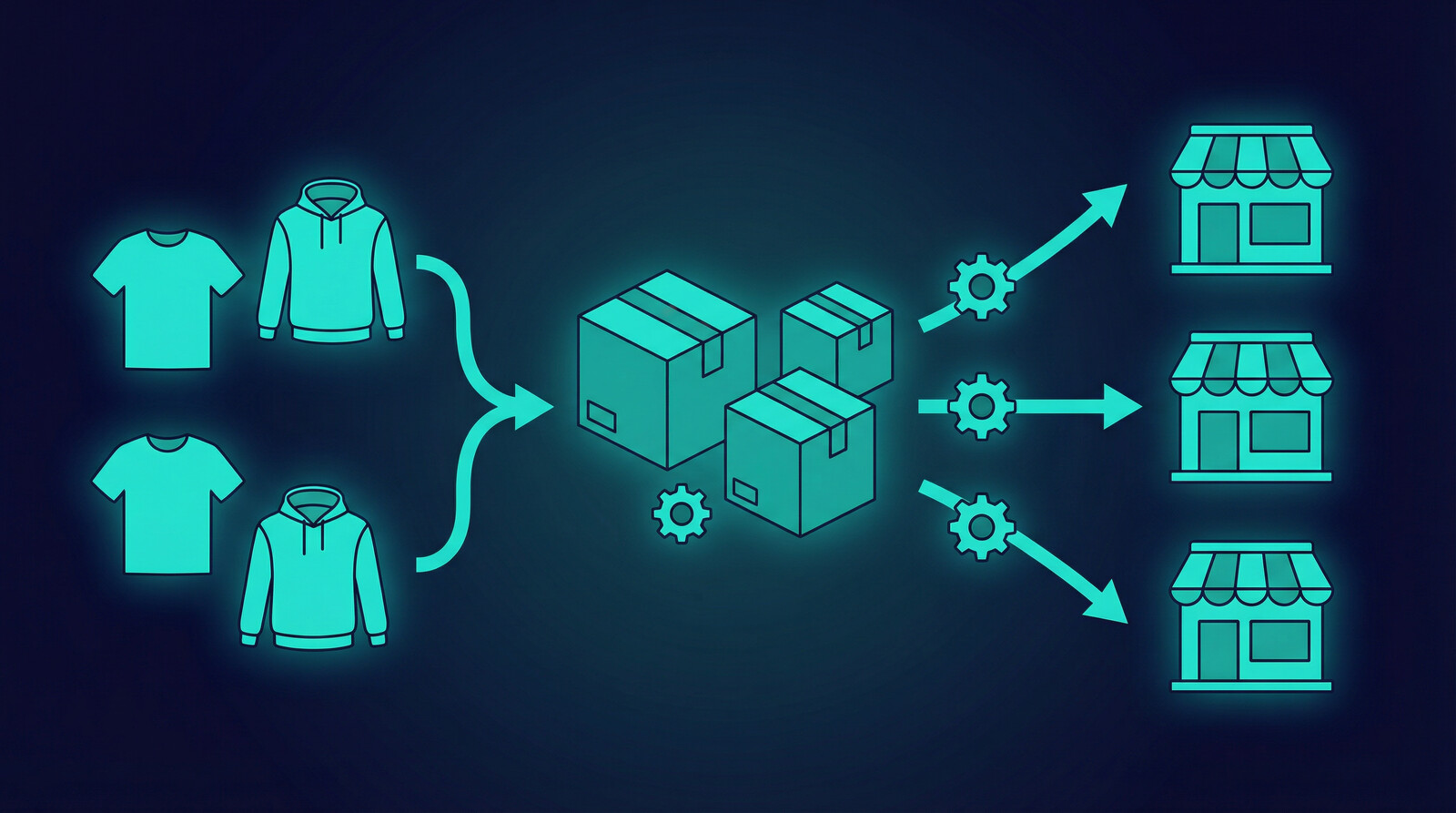
If I were launching with Gelato print on demand today, I would keep the plan simple and aggressive.
Step 1: build the creative pipeline
Use one niche, one product family, and one visual system. This is where tools like Dream AI and Canvas can save a ridiculous amount of time. You do not need more ideas. You need more usable variations.
Step 2: build listing velocity
Once the designs are ready, turn them into clean mockups, optimized titles, and publish-ready listings quickly. This is where sellers either gain momentum or stall out completely.
I once watched a seller go from a handful of scattered drafts to a real catalog in one weekend just by standardizing their mockups and title structure. Same niche. Same ideas. Different system. That is the difference.
Step 3: test before you sprawl
Do not add new product types just because the catalog lets you. Add them because your first set of listings produced signal. That means clicks, favorites, add-to-carts, or at least meaningful traffic.
The goal is not to look busy. The goal is to find a repeatable winner and scale it without turning your workflow into a mess.
For sellers who want tighter control over that workflow, MyDesigns also gives you Multi-Product Publishing, Listing Management, and Shops & Integrations so your production partner is not the only part of the machine that works.
If Gelato is your fulfillment layer, MyDesigns can be your launch layer.
Build designs, produce better mockups, optimize listings, and publish faster so your catalog grows without turning into operational spaghetti.
Who Should Use Gelato Print on Demand
Here is the simple answer.
- Use Gelato if international fulfillment is central to your offer and you want a provider built around local production logic.
- Use Gelato carefully if you are still figuring out your niche, your product mix, and your margin model.
- Do not expect Gelato to rescue a weak business if your listings are poor, your mockups are bland, and your publishing cadence is inconsistent.
I understand why sellers want the perfect provider. That feels safer than launching. But safe does not pay. Progress does.
My honest opinion: Gelato print on demand can absolutely be part of a winning setup. Just do not confuse the fulfillment layer with the business itself. The businesses that win are the ones that ship more smart tests, learn faster, and improve the storefront every week.
Frequently Asked Questions
+ Is Gelato good for print on demand?
Yes, Gelato can be a good print on demand option, especially for sellers who care about international reach and local production. The bigger question is whether your product mix, pricing, and workflow are strong enough to take advantage of it.
+ Is Gelato better than Printful?
It depends on what you value most. Gelato often appeals to sellers focused on localized fulfillment, while Printful is usually evaluated on brand familiarity, product range, and operational consistency. Your workflow matters more than the headline comparison.
+ What products sell best with Gelato print on demand?
Start with repeatable categories like apparel, wall art, and giftable products. They are easier to merchandise, easier to test, and easier to improve based on actual shopper behavior.
+ Can beginners use Gelato print on demand?
Yes, beginners can use Gelato, but beginners should stay focused. Pick one niche, one product family, and one repeatable listing process instead of trying to launch everything at once.
+ What is the best way to scale a Gelato-based POD shop?
The best way to scale is to improve launch velocity. Better creative, better mockups, stronger listing SEO, and faster publishing usually create more growth than endlessly switching fulfillment providers.


Leave a Reply