


Most people looking for digital product ideas are asking the wrong question.
They ask, What can I make? I think the better question is What can I sell repeatedly without building myself a fragile little job? That difference matters. A lot. I have watched sellers waste months making beautiful products nobody was already searching for, while simpler offers like templates, planners, and niche bundles quietly print money because the demand is obvious and the fulfillment is instant.
If you want digital product ideas that can actually turn into registrations, customers, and recurring revenue, this is where I would start in 2026. I am going to break down the best categories, show you which ones are easiest to launch, and explain how I would validate an idea before spending a week building it.
Key Takeaways
- The best digital product ideas solve one painful problem fast – broad creative ambition loses to obvious utility almost every time.
- Templates, printables, mini-courses, and bundles are still the easiest place to start – they are fast to produce, easy to test, and simple to improve.
- Validation matters more than polish – I would rather test three rough ideas than spend a month perfecting one weak offer.
- Distribution is the real moat – the sellers who win pair strong product ideas with better listing velocity, stronger visuals, and faster publishing.
Table of Contents
- What makes a digital product idea worth pursuing
- Best digital product ideas for beginners
- 25 digital product ideas I’d test first
- The best digital product ideas for real margin
- How I’d validate digital product ideas before building
- How to package your idea so it actually sells
- Why most digital product ideas fail
- Frequently Asked Questions
What makes a digital product idea worth pursuing
A good digital product idea is not just interesting. It has to do one of three things really well: save time, make money, or reduce confusion.
That is why generic inspiration lists are usually weak. They dump 100 ideas on you with zero filter. You do not need more random ideas. You need a sharper standard for which ideas deserve your time.
At MyDesigns, we see this same pattern across print on demand and digital products. The sellers who move fastest usually pick products with clear intent, then use better systems to create visuals, optimize listings, and publish faster. Tools help, but only after the offer makes sense.
Start with buyer pain, not creativity
If a buyer can instantly say, “Yes, I need that,” you are in business. Budget spreadsheets, social media templates, wedding checklists, teacher planners, editable invitations, Notion dashboards, and printable wall art all work for the same reason. The use case is immediate.
I would rather launch a boring but obvious product than a clever one people need explained. Because obvious sells.
Pick products you can improve fast
Your first version does not need to be elite. It needs to be shippable. Products like planners, templates, checklists, prompt packs, and design bundles are great because customer feedback turns into easy iterations. You can add pages, improve formatting, bundle variants, or reposition the product without rebuilding everything.
That is a big reason I still like digital products as a business model. Once the core asset exists, the upside compounds.
A weak idea does not become a strong business because you spent more time polishing it.
If you want to test more digital product ideas in less time, start with a workflow that helps you create visuals, write listings, and publish without bottlenecks.
Best digital product ideas for beginners
If I were starting from zero today, I would not begin with a massive course, a membership, or some sprawling app concept. That is the kind of advice that sounds ambitious and kills momentum.
I would start with simple digital product ideas that have low creation time, clear search demand, and room to expand into bundles later.
Templates are still the lowest-friction win
Templates are ridiculously strong because the buyer wants a shortcut, not an education. Resume templates, Canva templates, email templates, social media content calendars, media kits, lead magnet templates, and pricing sheet templates all sell when the outcome is obvious.
This is also where design tooling and image utilities matter. Cleaner previews and faster variation testing usually beat prettier theory.
Printables work when the end use is obvious
Printables still work. The mistake is selling generic ones. A generic planner is weak. A wedding budget tracker, homeschool daily routine pack, church event planner, or ADHD cleaning checklist is stronger because the buyer already knows where it fits in their life.
If you sell on Etsy, this is the exact kind of niche-specific product stack that pairs well with an article like How to Sell Digital Downloads on Etsy and a faster listing workflow through Listing Management.
25 digital product ideas I’d test first
Here are the 25 digital product ideas I would put at the top of the board right now.
- Canva template bundles for coaches, real estate agents, and local businesses
- Printable planners for weddings, school, budgeting, or fitness
- Notion dashboards for solopreneurs, students, and content teams
- Etsy listing templates for new sellers
- Prompt packs for niche use cases like resumes, product descriptions, and lead magnets
- Digital journals for gratitude, anxiety tracking, or habit building
- Kids activity packs for parents and teachers
- Classroom worksheets aligned to specific grade levels or topics
- Editable invitation sets for birthdays, showers, and graduations
- Brand kits with logos, palettes, and starter social graphics
- Spreadsheet calculators for pricing, budgeting, debt payoff, and inventory
- Small business forms like client onboarding packets and proposal templates
- Photography presets for niche aesthetics
- Digital wall art bundles around strong style themes
- Font pairings and design asset packs for creators
- Mini-courses tied to one outcome, not a giant curriculum
- Paid workshops with replay access
- Membership resource vaults with monthly drops
- Stock photo packs for specific industries
- Podcast intro kits and media launch assets
- Printable party game packs for seasonal moments
- Digital product bundles that combine planners, templates, and checklists
- Lead magnet kits for service businesses
- Course workbook add-ons sold separately
- Licensable design elements like icons, textures, and clipart packs
Notice what is missing. I am not telling you to build the next big platform. I am telling you to create a simple asset with clear demand, then use velocity as your edge.
The advantage is not having one perfect digital product idea. It is testing ten before your competitor tests three.
MyDesigns helps you create assets, prep listings, and publish faster so you can learn from the market sooner instead of guessing in private.
The best digital product ideas for real margin
Not all digital product ideas are equal. Some are easier to sell at volume. Others are better at producing high average order value.
If you want margin, think in two lanes.
High-volume, low-complexity ideas
This lane includes printables, templates, invitations, trackers, and simple design bundles. These are great for Etsy, Gumroad, Shopify, and other platforms where discovery matters. They also work well when you can create multiple variations quickly.
That is why I like combining idea validation with Digital Products That Actually Sell in 2026 and stronger visual packaging through Product Mockups. Better previews raise click-through. Cleaner bundles raise perceived value.
Higher-ticket digital products
This lane includes mini-courses, specialized workshops, memberships, premium spreadsheets, and niche systems. Higher-ticket offers usually sell best when you already know the exact pain point and can speak to a defined audience.
For example, a general budgeting spreadsheet is fine. A cash flow dashboard for wedding photographers or a content planning system for podcast producers is stronger. Specificity creates pricing power.
That is also where external validation helps. Search behavior from Google Trends, marketplace demand on Etsy, and category proof from platforms like Etsy, Shopify, and creator commerce data from Statista give you better signal than pure instinct.
How I’d validate digital product ideas before building
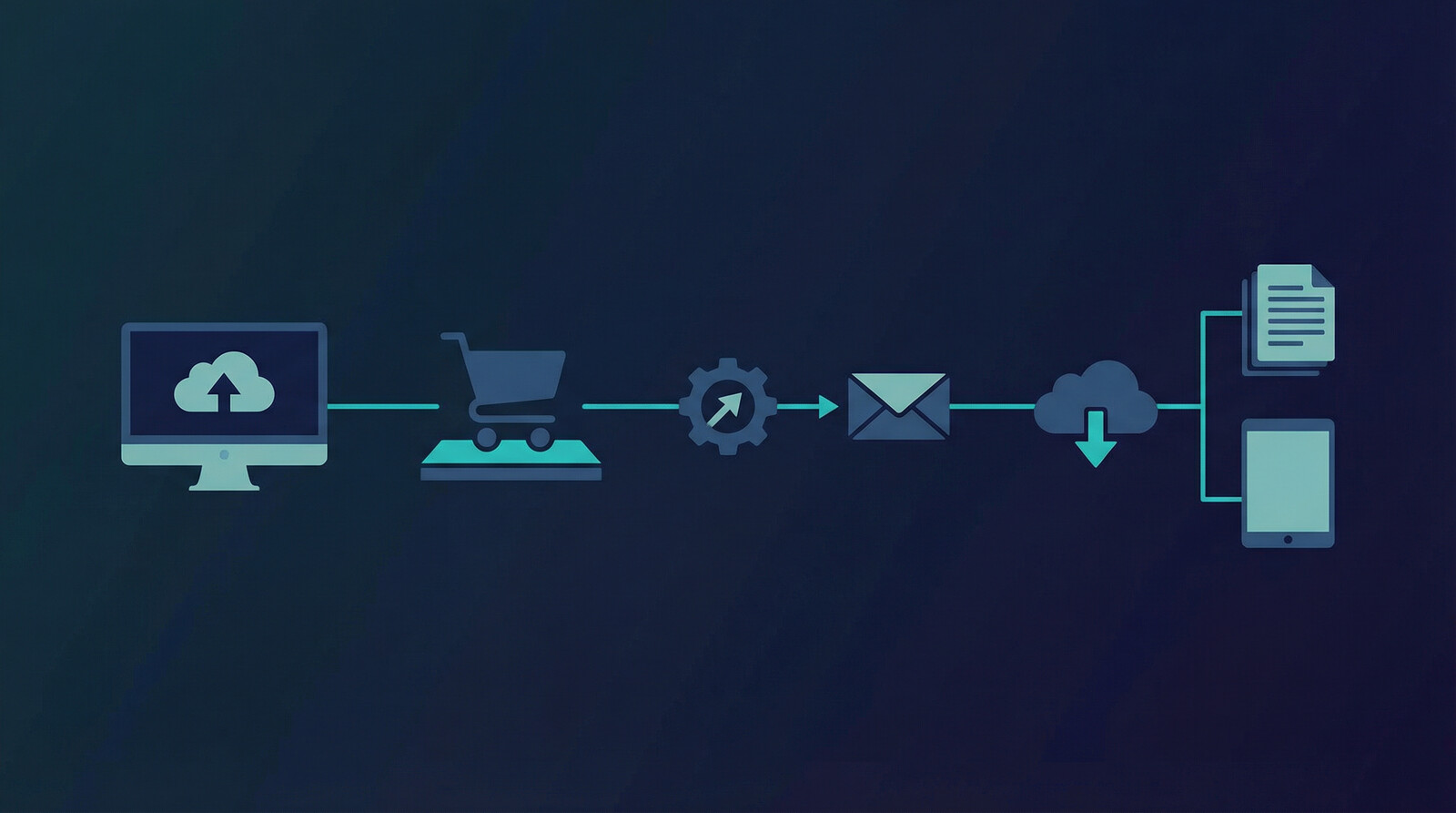
Here is the playbook I would use before building almost anything.
- Check demand. Look for search volume, marketplace saturation, and proof people already buy adjacent products.
- Study the offer framing. Do the top results win because of the product itself or because they packaged the result better?
- Pick one audience. A planner for everyone is weak. A planner for therapists, teachers, or brides-to-be is stronger.
- Create the minimum lovable version. Enough quality to sell. Not so much that you disappear into endless revisions.
- Launch fast and watch behavior. Clicks, saves, conversion, and customer questions tell you what to improve.
I also like validating with outside signal sources like Google Trends and platform demand education from the Etsy Seller Handbook. Neither source makes the decision for you, but both help you avoid building in a vacuum.
I strongly prefer launch-and-learn over private perfection. That is the contrarian part a lot of people do not want to hear. The market is kinder to quick iteration than to long hidden craftsmanship.
If your workflow is slow, fix the workflow. That is exactly why tools like Vision AI and Multi-Product Publishing matter. They let you test more market angles without turning every launch into a one-week project.
Validation gets easier when your product creation, visuals, and publishing live in one workflow.
Use MyDesigns to create design variations, package listings, and push more offers live without drowning in repetitive tasks.
How to package your idea so it actually sells
Most digital product ideas do not fail because the asset is useless. They fail because the product page makes the buyer work too hard.
Your title should say what it is, who it is for, and what result it helps create. Your previews should reduce doubt. Your bullets should answer the buyer’s next question before they ask it. I would also bundle aggressively once I saw any traction at all. Bundles increase average order value without forcing you to find new customers.
This is where good publishing systems matter more than people admit. A seller with average ideas and excellent packaging can outperform a more talented creator with weak execution. That is why I keep pushing people toward sharper previews, cleaner copy, and faster listing iteration.
If you are in the Etsy world specifically, read Why Etsy Sellers Fail and How to Create Digital Products to Sell in 2026. Both pair well with a more disciplined product packaging process.
Why most digital product ideas fail
Here is my blunt take. Most digital product ideas fail because the creator falls in love with making, not selling.
They build too much before validating. They choose categories with weak buyer urgency. They write vague titles. They create flat visuals. They launch one product and expect that to be enough. Then they conclude the niche is dead when the real issue was execution.
The old playbook was to upload a few products and hope the algorithm was generous. I do not think that works anymore. The real advantage in 2026 is leverage. Better systems. Faster testing. Stronger packaging. More output per hour.
That is why I like digital products so much right now. Once you find a winning angle, you can expand into bundles, upsells, subscriptions, and even physical complements through print on demand. One good idea can become an entire catalog if you build it the right way.
The sellers who win this market are usually not the most artistic. They are the most consistent.
If you are ready to turn more digital product ideas into live offers, build the workflow once and let output compound.
Frequently Asked Questions
+ What digital product ideas are best for beginners?
Templates, printables, simple spreadsheets, and niche planners are usually the best digital product ideas for beginners. They are faster to create, easier to test, and much simpler to improve after launch.
+ What digital products are most profitable?
The most profitable digital products usually combine obvious demand with low delivery cost, such as template bundles, niche mini-courses, premium calculators, memberships, and reusable design assets. Specificity usually raises pricing power.
+ How do I know if a digital product idea will sell?
You validate a digital product idea by checking search demand, reviewing marketplace proof, narrowing the audience, and launching a minimum lovable version quickly. Real buyer behavior is a better signal than private brainstorming.
+ Where can I sell digital products?
You can sell digital products on Etsy, Shopify, your own site, creator platforms, and specialized marketplaces. The best channel depends on whether you want built-in discovery, more control, or higher lifetime value.
+ Can I use AI to create digital products faster?
Yes, AI can help you brainstorm, draft, design, and package digital products faster, but speed only matters when the offer solves a real problem. AI is a multiplier, not a substitute for product-market fit.
You do not need 100 digital product ideas. You need one that solves a real problem, a workflow that lets you test fast, and enough consistency to compound the wins.


Leave a Reply