


- DTF (Direct to Film) printing lets you transfer full-color designs onto virtually any fabric — cotton, polyester, blends — with no minimum order and no weeding.
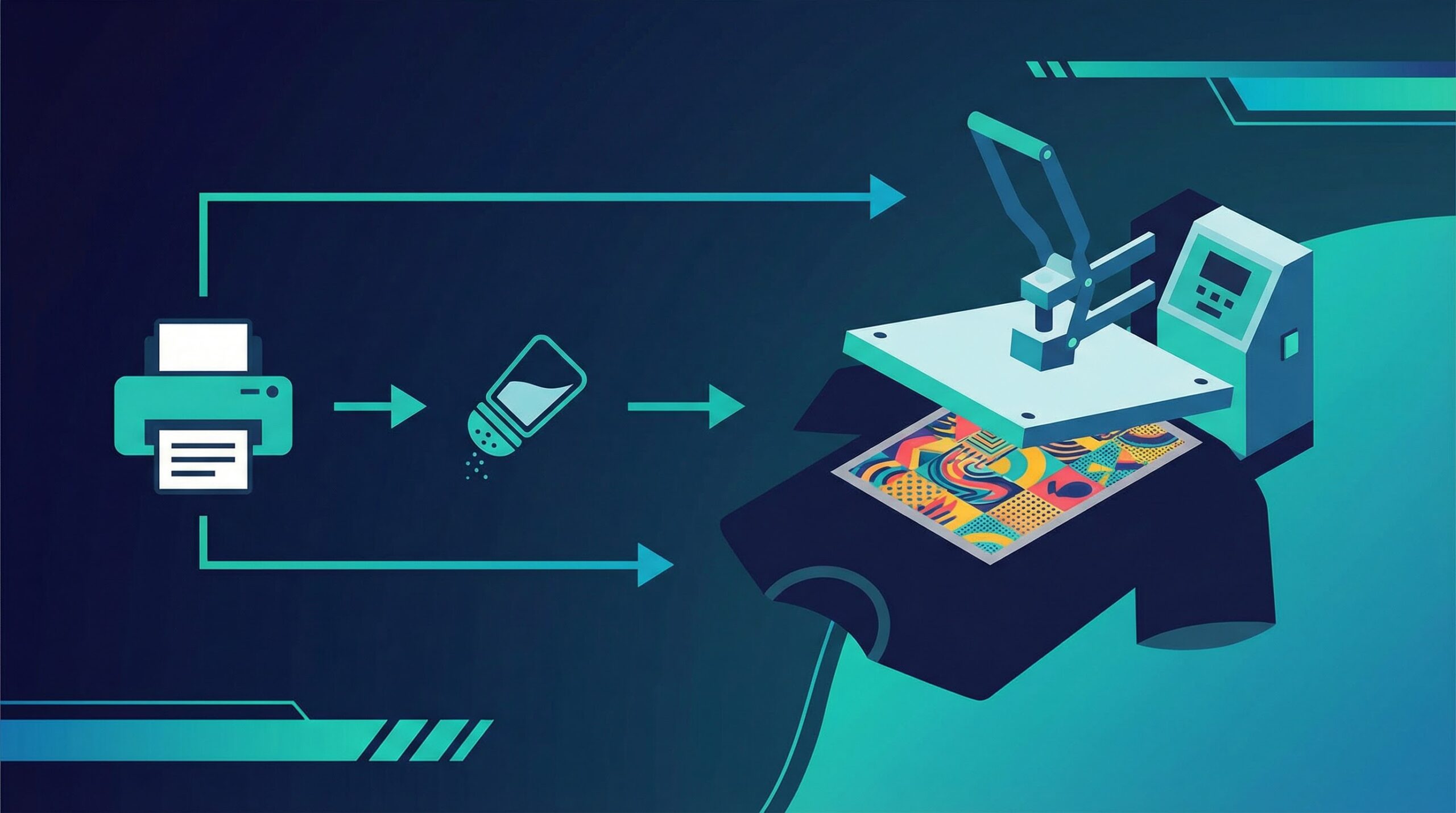
- The process: print on PET film → apply hot-melt powder → cure → heat press onto garment. Total time per transfer: under 60 seconds.
- DTF beats DTG on polyester and dark fabrics, beats screen printing on small runs, and beats sublimation on cotton — making it one of the most versatile decoration methods available.
- For POD sellers, DTF opens up local fulfillment, faster samples, and higher margins when you’re doing 10–100 units per design.
What Is DTF Printing?
DTF stands for Direct to Film. It’s a garment decoration method where you print a design onto a special PET (polyethylene terephthalate) transfer film, coat it with hot-melt adhesive powder, cure it, and then press the finished transfer onto fabric using a heat press.
That’s it. No screens, no weeding, no color limits, no fabric restrictions.
I first saw DTF hit the radar around 2020–2021 when shops printing on polyester blends started complaining that DTG couldn’t hold up. By 2023 it had gone from “niche workaround” to the default choice for small custom apparel shops worldwide. The search volume tells the same story: “dtf printer” now pulls 110,000 searches per month with essentially zero keyword difficulty.
DTF Meaning & Full Form
Direct to Film. The “film” part is what separates it from Direct to Garment (DTG), where ink goes straight onto the fabric. With DTF, the design lives on the film first, gets dressed in adhesive powder, and then migrates to the garment under heat and pressure.
The key practical difference: because you’re not printing directly onto the fabric, DTF doesn’t care what fiber the fabric is made from. Cotton, polyester, nylon, leather, canvas — the transfer bonds to almost anything.
How DTF Became the Go-To for Small Shops
Screen printing has been the industry standard for bulk T-shirt production for decades. But it breaks down fast for short runs — you’re paying for screen setup per color whether you’re printing 10 shirts or 10,000.
DTG solved the short-run problem but introduced a new one: polyester fabrics and dark garments required pre-treatment, and ink adhesion was finicky. DTF took both problems off the table simultaneously.
Starter DTF setups now run $3,000–$8,000. A year ago that was $15,000+. The cost barrier is nearly gone.
AI only becomes an advantage when it helps you publish faster, not when it gives you more tabs to stare at.
This is exactly where a cleaner workflow starts to matter more than another round of planning.
How DTF Printing Works: Step by Step
The DTF process is straightforward once you see it laid out. Here’s exactly what happens from design file to finished garment.
Equipment You Need
At minimum, you need three things:
- DTF printer — a modified inkjet printer loaded with CMYK + white ink
- Powder shaker / curing oven — applies and melts the hot-melt adhesive
- Heat press — transfers the finished film onto the garment at 300–320°F
Most entry-level bundles include all three. Higher-volume operations add roll-to-roll film feeders and automatic powder applicators to increase throughput.
The 5-Step DTF Process
- Design prep: Create or import your artwork. DTF handles unlimited colors and photographic detail equally well. Export as a high-res PNG with a transparent background.
- Print on PET film: The printer lays down CMYK ink first, then floods white ink underneath as the “base layer.” This white layer is what gives DTF its opacity on dark fabrics.
- Apply hot-melt powder: While the ink is still wet, adhesive powder is spread over the printed side. Excess powder shakes off (and can be reused).
- Cure the transfer: The film goes through a curing oven (or sits under a heat press at low temp) for 90–120 seconds to melt the powder into a smooth adhesive layer.
- Heat press transfer: Position the cured film on your garment, press at 300–320°F for 10–15 seconds, peel the film (hot or cold depending on your transfer type), done.
Total active time per garment: about 60–90 seconds at the heat press. You can pre-cure a batch of transfers and keep them for weeks before pressing.
DTF vs DTG vs Screen Printing vs Sublimation
This is where most guides wave their hands and say “it depends.” I’ll be more specific. Here’s how DTF actually stacks up in the situations that matter to a POD seller or small print shop.
DTF vs DTG
DTG (Direct to Garment) prints ink directly into fabric fibers, which gives you a soft hand-feel — almost like the print is part of the shirt. DTF sits on top of the fabric, which creates a slightly more noticeable texture.
Where DTF wins: polyester content above 50%, dark fabric without pre-treatment, small print quantities (no wasting ink on maintenance prints), and multi-fabric operations. A single DTF setup can decorate cotton tees, polyester jerseys, nylon bags, and leather patches in the same session.
Where DTG wins: very large print runs on 100% cotton where hand-feel is a selling point, and when you need sub-5-second print cycles on a high-end production machine.
DTF vs Screen Printing
Screen printing is still unbeatable above 200 units with a simple design. The per-unit cost drops below $2 at scale, and the ink sits on the fabric in a way that lasts 5–10 years with proper care.
Below 50 units, DTF wins on price almost every time. Zero setup cost per design, full color at no extra charge, turnaround in hours instead of days.
The one area where screen printing can’t be beaten on quality is specialty inks: metallics, puff ink, glow-in-the-dark, discharge prints. DTF doesn’t do those.
DTF vs Sublimation
Sublimation dyes the fibers themselves, which means zero texture and permanent color that won’t crack. But it only works on white or very light polyester fabric. Dark shirts, cotton blends, mixed-material products: sublimation falls apart completely.
DTF handles dark cotton. That’s the decisive difference. If your product catalog includes anything other than white or light-colored polyester, DTF is the more practical choice by a wide margin.
| Method | Min. Run | Dark Fabrics | Polyester | Setup Cost | Hand Feel |
|---|---|---|---|---|---|
| DTF | 1 | ✅ | ✅ | $3K–$8K | Slight texture |
| DTG | 1 | ⚠️ Pre-treat | ❌ | $15K–$30K | Very soft |
| Screen Print | 24–48 | ✅ | ✅ | $500–$5K/color | Varies |
| Sublimation | 1 | ❌ | ✅ (white only) | $500–$3K | Invisible |
Best DTF Printers for 2026
The DTF printer market has moved fast. Two years ago your choices were “buy an Epson and mod it yourself” or spend $20K on a commercial unit. Now there are purpose-built DTF printers at every price point.
Here’s what I’d actually recommend depending on where you are in your business:
Side-by-Side Comparison Table
| Printer | Price | Print Width | Speed | Best For |
|---|---|---|---|---|
| Epson L1800 (Modified) | $1,500–$2,500 | 13″ | ~30 shirts/hr | Beginners, side hustlers |
| xTool F1 Ultra (DTF Kit) | $2,800–$3,500 | 11.8″ | ~50 shirts/hr | Hobbyists scaling up |
| ColDesi DTF Starter Bundle | $4,500–$6,000 | 13″ | ~40 shirts/hr | Small print shops |
| Prestige A3+ DTF System | $6,500–$9,000 | 13″ | ~60 shirts/hr | Growing shops, POD hybrids |
| Polyprint DTF Pro (Commercial) | $15,000+ | 24″ | 200+ shirts/hr | High-volume production |
My Picks by Use Case
Just starting out: A modified Epson L1800 bundle from a reputable supplier gets you printing for under $3K all-in. Yes, it requires more maintenance than purpose-built units. But it prints well and costs less than a month’s salary to get off the ground. If you want something purpose-built and well-supported, look at the Printify partner network for providers already running professional DTF equipment — skip buying hardware entirely until volume justifies it.
Doing 50–200 units/week: The ColDesi or Prestige A3+ bundles are worth the step up. Better white ink circulation, more reliable powder shakers, and actual support if something breaks.
Scaling past 500 units/week: At this point you’re looking at commercial roll-to-roll systems. Budget $15K–$30K and treat it as capital equipment. Alternatively, negotiate wholesale pricing with a local DTF supplier who runs Polyprint or Kornit-class equipment.
The sellers getting value from AI are not just generating ideas. They are turning those ideas into products and listings quickly.
The advantage usually goes to the sellers who can create, organize, and publish without getting buried in manual work.
DTF Printing Pros and Cons
I’m not going to sugarcoat this. DTF is genuinely great at certain things and genuinely annoying at others. Here’s the honest list:
Pros:
- No minimum order quantity. Print 1 transfer or 1,000 — setup is the same.
- Works on almost any fabric. Cotton, poly, blends, leather, canvas, nylon. No pre-treatment required.
- Full color, no extra cost. A 12-color design costs the same as a 1-color design to print.
- Pre-production flexibility. Cured transfers store well for weeks. Print in batches, press on demand.
- Lower equipment cost than DTG. A complete DTF setup costs 3–5× less than an entry-level Epson F2100 DTG machine.
- Fast learning curve. Most people producing saleable prints within their first day.
Cons:
- Texture is noticeable. The transfer sits on top of the fabric. Some customers notice it, especially on soft-hand garments.
- White ink maintenance. White DTF ink settles and clogs if the printer sits unused for more than 2–3 days without a maintenance print or circulation.
- Wash durability debates. DTF holds up well when applied correctly (300°F, proper press time, quality adhesive powder). Cut corners and you’ll see peeling after 10 washes. Quality matters more than the technology itself.
- Ink and consumables cost. Budget $0.50–$1.50 per A4-sized transfer in consumables depending on ink brand and coverage.
- Not great for very large prints. A-size printers max out around 11″–13″ wide. Gang-printing helps, but massive all-over prints need a commercial wide-format DTF setup.
Turn Your DTF Designs Into Live Listings in Minutes
Upload your DTF artwork to MyDesigns and push optimized listings to Etsy and Shopify — without the manual grind.
The Uncomfortable Truth About DTF (That Nobody Talks About)
Every DTF article you’ll read tells you some version of the same story: “DTF is amazing, versatile, and the future of garment decoration.” And they’re right. But there’s a part of the story they skip.
DTF doesn’t fix your business — it just gives you more ways to lose money faster.
I’ve watched dozens of Etsy sellers buy a DTF setup expecting it to transform their revenue. Some succeed. Most discover that the real bottleneck was never the printing method — it was product selection, listings quality, and marketing. A $5,000 DTF machine won’t fix a shop with 12 listings and no keyword strategy.
The sellers who win with DTF in-house are the ones who already have steady demand from their POD platform sales. They’ve validated the designs, proven the market, and now they’re vertically integrating to capture higher margins on products they know sell.
That sequence matters. Validate with print on demand first. Buy hardware second.
The other thing nobody mentions: DTF transfer quality degrades fast if you’re not rigorous about ink storage and maintenance. I’ve seen sellers produce beautiful samples for their listing photos, then have repeat buyers complaining that their order looked different. That’s a white ink clog issue that showed up after 2 weeks of not running maintenance prints. The machine didn’t fail them — their process did.
None of this means DTF is a bad investment. It means it’s a tool that rewards discipline and punishes sloppiness, exactly like every other piece of production equipment.
If the workflow after the AI step is still slow, the advantage disappears fast.
If you want this strategy to actually turn into output, the workflow after the idea matters just as much as the idea itself.
DTF for Print on Demand Sellers
If you’re running a POD store on Etsy, Shopify, or Amazon — and doing any real volume — DTF is worth understanding even if you never buy a printer.
Hybrid POD: DTF + Platform Fulfillment
The model that actually works: use a POD platform like Printify for standard orders, and a local DTF supplier for samples, custom orders, and wholesale runs.
Here’s why this hybrid approach makes sense:
- Samples for photography: DTF transfers through a local shop cost $2–$5 per shirt. Getting actual product photos of your designs lifts conversion rates by 20–40% versus mockup-only listings.
- Custom/rush orders: A customer wants 25 shirts for an event next week. POD can’t do it. A local DTF shop often can.
- Margin expansion at volume: At 30+ units of the same design per month, local DTF fulfillment beats POD platform pricing. Your breakeven depends on your platform margins and local supplier rates.
Building a DTF Workflow With MyDesigns
This is where the operational side of DTF gets interesting for sellers who are already using listing tools.
The typical friction point: you have a DTF design (probably a high-res PNG), and you need to get it onto product mockups, write optimized descriptions, and push live listings across Etsy and Shopify — without spending three hours per design doing it manually.
That’s exactly what the MyDesigns mockup generator handles. Upload your DTF artwork, select your products (T-shirts, hoodies, tote bags, hats), and generate clean lifestyle and flat-lay mockups in under a minute.
[Insert screenshot of MyDesigns mockup generator with DTF product]
From there, the bulk publishing tool lets you push all your DTF products to Etsy and Shopify simultaneously — with titles, tags, and descriptions pre-populated. If you’re using Dream AI, you can generate the entire design from a text prompt before you ever touch a heat press.
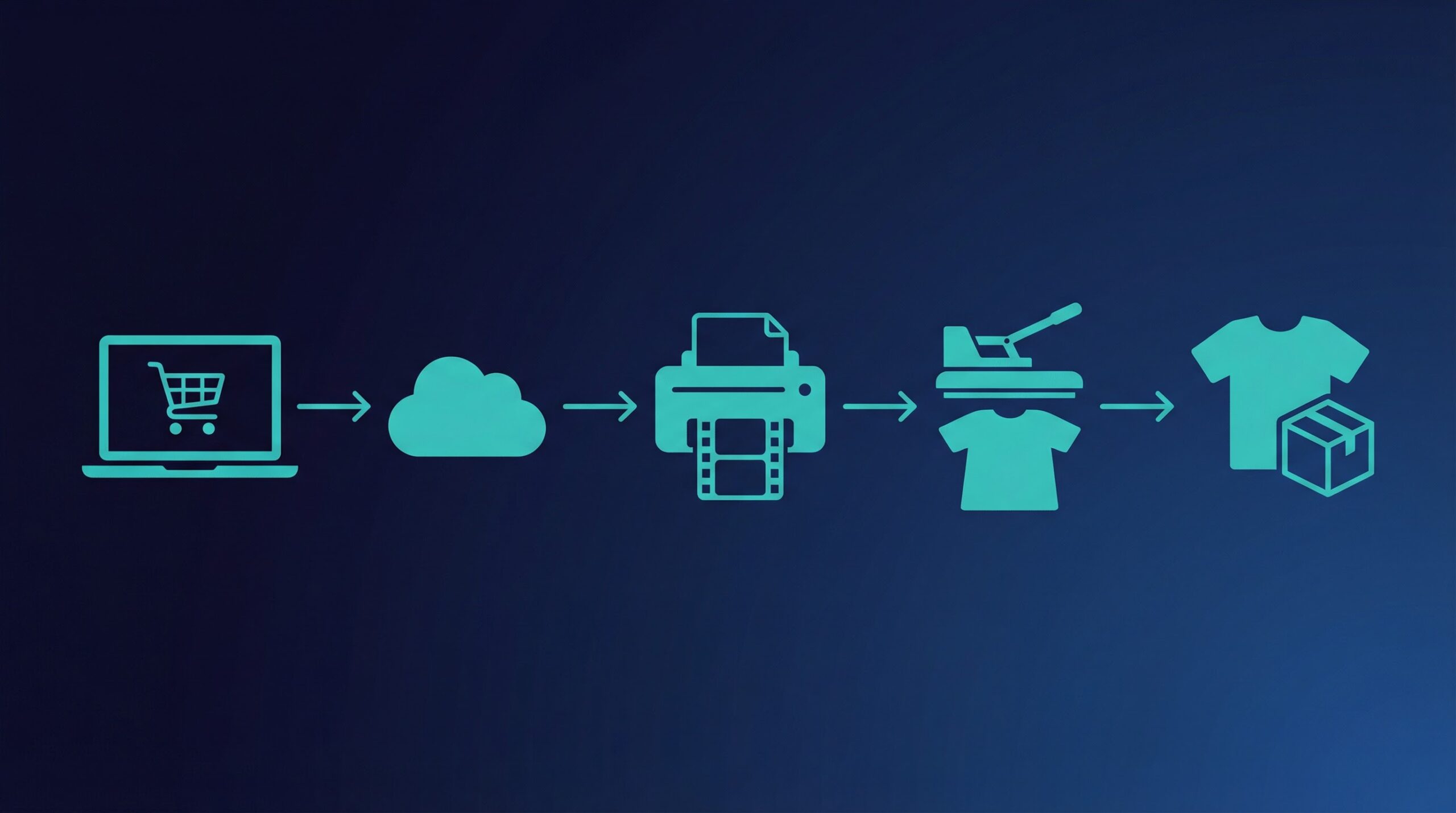
The workflow looks like this: design in Dream AI → mockups in MyDesigns → bulk publish to Etsy/Shopify → send order to DTF supplier for physical fulfillment. You don’t need a printer in your garage to build a DTF product line.
The sellers I see doing this well treat their POD platform as the demand engine and DTF as the production option they pull in when margins or speed justify it.
Frequently Asked Questions
How long does DTF printing last? ▾
DTF transfers applied correctly — at 300–320°F for 10–15 seconds with quality hot-melt powder — hold up for 50+ wash cycles without significant fading or peeling. The key variable is application quality, not the technology itself. Transfers applied at the wrong temperature or press time will peel at 10–15 washes. Using a cold-peel transfer film (vs hot-peel) also improves durability on most garment types.
Can DTF printing be done on any fabric? ▾
DTF works on virtually every fabric: 100% cotton, 100% polyester, cotton-poly blends, nylon, canvas, leather, and even some synthetic performance fabrics. It doesn’t work well on highly textured or waterproof technical fabrics where the adhesive can’t bond properly. For standard apparel — T-shirts, hoodies, sweatshirts, tote bags — DTF is essentially fabric-agnostic.
What is the difference between DTF and DTG printing? ▾
DTG (Direct to Garment) prints ink directly into the fabric fibers, producing a soft hand-feel but requiring pre-treatment on dark garments and struggling on polyester. DTF prints onto a PET film first, adds adhesive powder, and transfers to the garment via heat press. DTF is more versatile across fabric types, costs less to get started, but leaves a slight surface texture versus the softer DTG feel. For most small shops starting out, DTF is the better choice — lower equipment cost, no pre-treatment, works on all fabrics.
How much does DTF printing cost per shirt? ▾
The consumable cost for a standard A4-sized DTF transfer (roughly a full chest print) runs $0.50–$1.50 depending on your ink brand, coverage density, and adhesive powder quality. Add $3–$8 for the blank garment, $0.20–$0.50 in equipment depreciation per print, and you’re looking at a total cost of $4–$10 per finished shirt — leaving strong margins at retail prices of $25–$45. Buying transfers wholesale from a local shop (instead of producing in-house) typically runs $2–$5 per transfer including material and printing.
Is DTF better than screen printing? ▾
Depends entirely on quantity. Screen printing is superior for orders above 100–200 units of the same design — lower per-unit cost and exceptional durability on simple designs. DTF is superior for small runs, multi-color designs, and one-offs: no setup fees, full color, print-on-demand flexibility. Most small custom shops and Etsy sellers will find DTF more practical and profitable at their scale. High-volume operations printing hundreds of the same shirt weekly often use both methods for different order types.


Leave a Reply