


Most custom merchandise fails because the seller starts with products instead of demand. They upload a logo to a shirt, add the same design to a mug, toss a tote bag into the catalog, and call it a merch line. That is not a line. That is a pile of products.
If I were building custom merchandise from zero today, I would not start with 50 random items. I would start with one buyer, one reason to buy, and a small product system that can expand fast once the first signals come in.
This guide breaks down how I would plan, design, price, mock up, and publish custom merchandise in 2026 without sitting on inventory or burning weeks on manual listing work.
Key Takeaways
- Custom merchandise is a system, not a single product – the best sellers build repeatable design families across apparel, accessories, drinkware, paper goods, and gifts.
- Demand comes before decoration – a clever design only matters if it connects to a buyer identity, event, inside joke, profession, hobby, or community.
- Print on demand keeps testing lean – you can validate custom merch before buying inventory, which is a massive advantage for new shops and creators.
- Speed is the real edge – the seller who can test 30 polished listings while everyone else is editing one mockup usually learns faster.
Table of Contents
- What Custom Merchandise Really Means in 2026
- Pick a Buyer Before You Pick Products
- The Best Custom Merchandise Products to Test First
- Design a Merch System, Not One-Off Artwork
- Custom Merchandise Pricing Has to Protect Your Time
- Mockups and Listings Decide Whether Your Merch Gets Clicked
- Launch Small, Then Scale What the Market Proves
- Frequently Asked Questions
What Custom Merchandise Really Means in 2026
Custom merchandise is any physical product that carries a brand, design, message, artwork, inside joke, community identity, or personalized element. That includes shirts, hoodies, mugs, stickers, notebooks, tote bags, posters, hats, labels, ornaments, and plenty of other products.
But the simple definition misses the important part. Good custom merchandise gives a buyer a way to signal something about themselves. Their job. Their taste. Their fandom. Their small business. Their team. Their pet. Their wedding. Their niche sense of humor.
That is why generic merch struggles. A shirt that says nothing specific has to compete on price and design taste. A product tied to a specific identity has a reason to exist.
Custom merch is buyer identity made physical
I have seen sellers overthink the product and underthink the buyer. They obsess over whether a premium hoodie is better than a classic tee, but they have not answered the real question: who is proud to buy this?
A teacher tote, a pickleball club shirt, a dog rescue sticker, a local contractor mug, and a bridesmaid notebook are not just products. They are tiny identity signals.
Why random products do not work
The old playbook was simple: make a design, place it on every product, publish everything, hope something sells. That approach wastes attention. It also creates messy stores where every listing feels disconnected.
The better move is to build a tight collection. One buyer. One visual direction. A few product types that make sense together. Then expand based on the data.
Build your custom merchandise catalog before the idea cools off.
MyDesigns helps you turn one product idea into a structured set of designs, mockups, listings, and publishing workflows without doing every repetitive step by hand.
Pick a Buyer Before You Pick Products
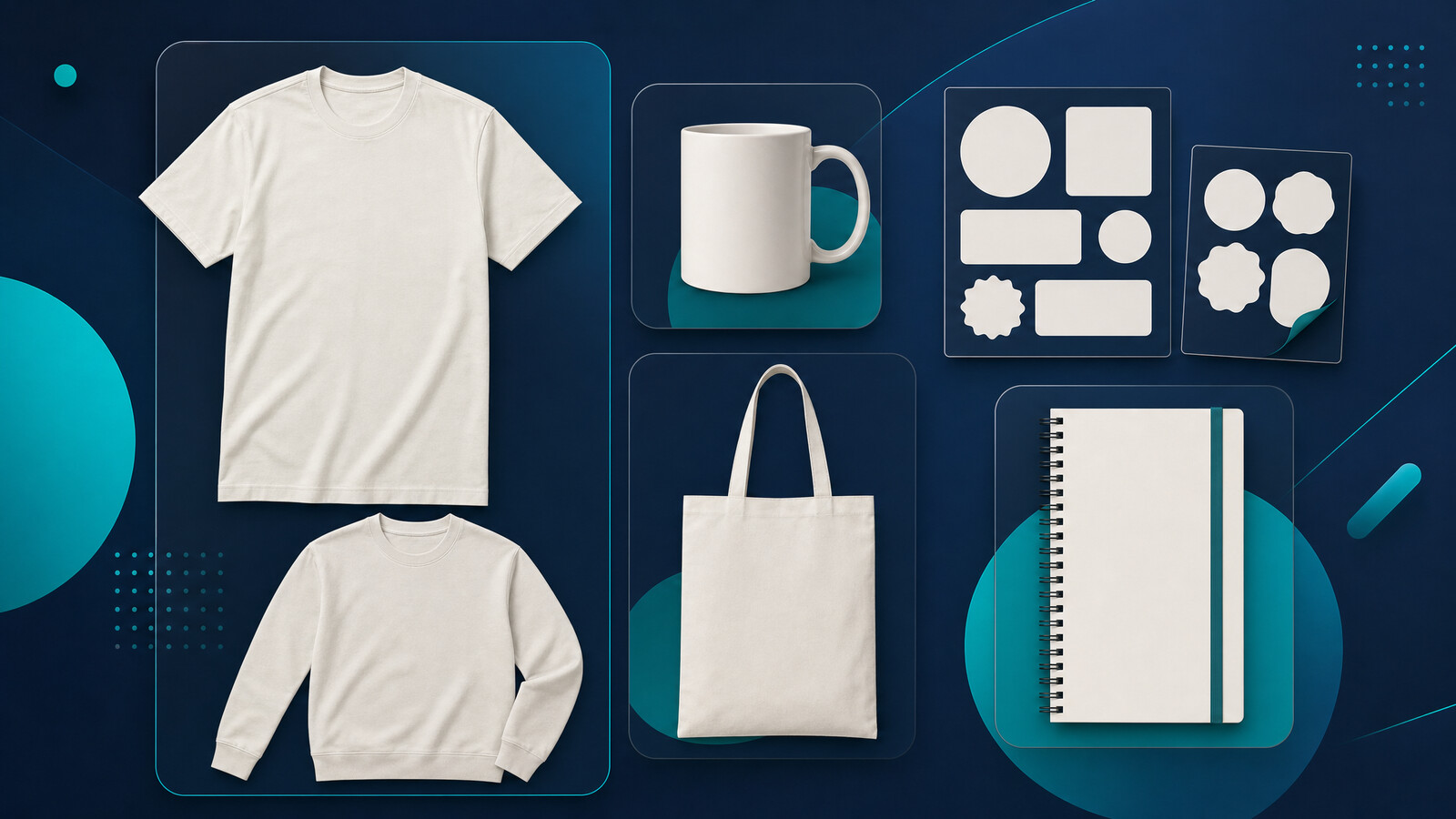
If you want custom merchandise that sells, do not start with the catalog. Start with the customer.
Here is the question I ask first: what would this buyer be excited to wear, gift, display, or use in public? If the answer is weak, the product probably is too.
For a creator, that might be a phrase the audience already repeats in comments. For a local business, it might be a badge of belonging. For an Etsy seller, it might be a niche design tied to a hobby, profession, season, or life event.
The three buyer filters I use
- Identity: does the product say something specific about the buyer?
- Use case: will the buyer wear it, gift it, decorate with it, or use it often?
- Timing: is there an event, season, trend, launch, or community moment driving urgency?
When all three filters line up, custom merchandise becomes much easier to market. You are not just selling a mug. You are selling the perfect thank-you gift for a client, the inside joke for a team, or the shirt someone wants before a big event.
Use tools like Google Trends, marketplace search suggestions, and social comment patterns to find those demand signals before you build.
The Best Custom Merchandise Products to Test First
The best first products are not always the highest-margin products. They are the products that give you fast feedback, clear mockups, and easy buyer understanding.
For most new custom merchandise sellers, I would avoid starting with a complicated catalog. I would test a product stack that lets the same design language travel across different buying moments.
My starter merch stack
| Product Type | Why It Works | Best Use Case |
|---|---|---|
| T-shirts | Easy to understand, giftable, and useful for niche identity designs | Communities, events, hobbies, teams |
| Hoodies or sweatshirts | Higher perceived value and stronger seasonal buying intent | Creator drops, school spirit, local brands |
| Mugs | Simple gift product with broad appeal | Workplace humor, teachers, pet owners, small businesses |
| Stickers | Low commitment purchase and great for testing design concepts | Fandom, laptops, water bottles, community badges |
| Tote bags | Practical, visual, and strong for lifestyle niches | Book lovers, teachers, markets, boutiques |
| Notebooks or journals | Great for personalization and bundled gift sets | Weddings, coaches, students, planners |
You can explore product directions through the MyDesigns product catalog, then keep the first launch focused. I would rather publish 24 strong listings in one tight niche than 200 scattered listings nobody can understand.
Your merch only gets one first impression in search.
Use MyDesigns Product Mockups to create cleaner listing visuals for apparel, gifts, accessories, and product bundles before buyers ever read the description.
Design a Merch System, Not One-Off Artwork
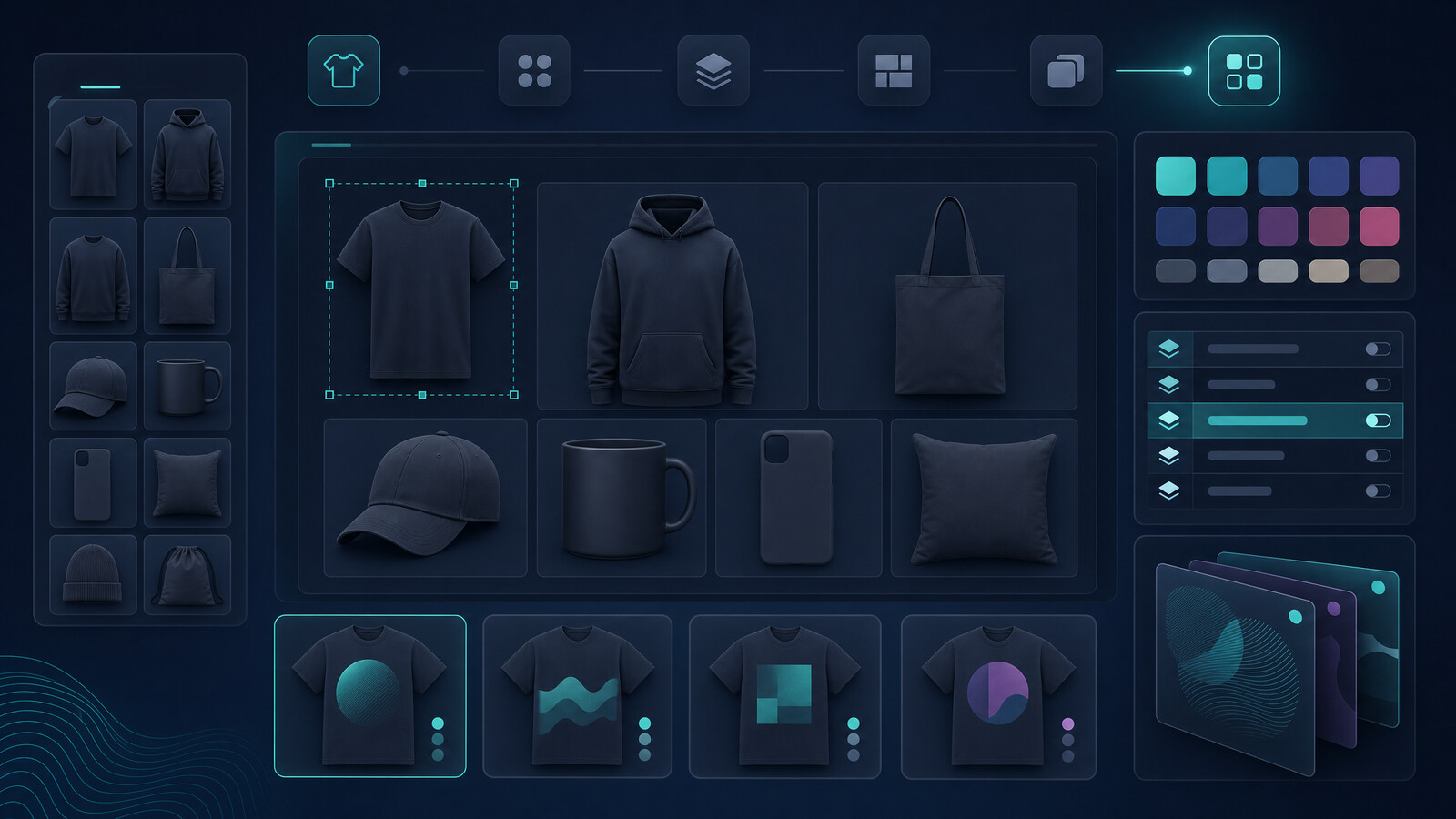
This is where most sellers leak time. They create one design from scratch, then another, then another. Every product becomes a separate creative project.
I would rather build a small design system. Same typography rules. Same color range. Same layout logic. Same set of motifs. Then I would create controlled variations for different sub-niches, seasons, and personalization angles.
The repeatable design rules that save time
- Use one layout family: badge, stacked type, arched type, mascot, pattern, or minimal icon set.
- Limit the color palette: too many colors make the line feel chaotic and complicate product mockups.
- Build modular phrases: swap profession, city, pet breed, team name, year, or occasion without redesigning from scratch.
- Plan product fit: a design that works on a shirt may need a different crop for stickers, mugs, or notebooks.
This is also where AI can help, if you use it like a production assistant instead of a magic button. We built Dream AI and other creative tools around this reality: sellers need more good variations, faster, but still need taste and direction.
If you sell digital files too, the same system can become templates, printable art, SVG bundles, or planners. MyDesigns has a full digital products workflow for that angle.
Custom Merchandise Pricing Has to Protect Your Time
Custom merchandise pricing is not just product cost plus markup. You also have to price for design time, personalization time, revision risk, customer support, platform fees, returns, and the mental drag of messy one-off requests.
That is why I do not love underpriced personalization offers. They look smart because they create perceived value. Then the seller spends 12 minutes editing every order and realizes the profit was fake.
Use a simple pricing check before publishing:
- Base cost: product, printing, fulfillment, and shipping assumptions.
- Platform costs: selling fees, payment fees, ad fees, and marketplace charges.
- Production time: any manual design edits or personalization steps.
- Margin target: enough room to discount, advertise, or bundle without panicking.
For marketplace sellers, read the relevant fee pages before setting prices. Etsy maintains official information in the Etsy Seller Handbook, and Shopify covers product and sales setup in its product documentation.
My rule is blunt: if a custom product cannot survive a small discount and still pay you for the workflow, the price is too fragile.
Price your merch like you plan to keep selling it.
Compare MyDesigns plans and choose the workflow that matches how many products, stores, and listings you want to manage without adding more manual work.
Mockups and Listings Decide Whether Your Merch Gets Clicked
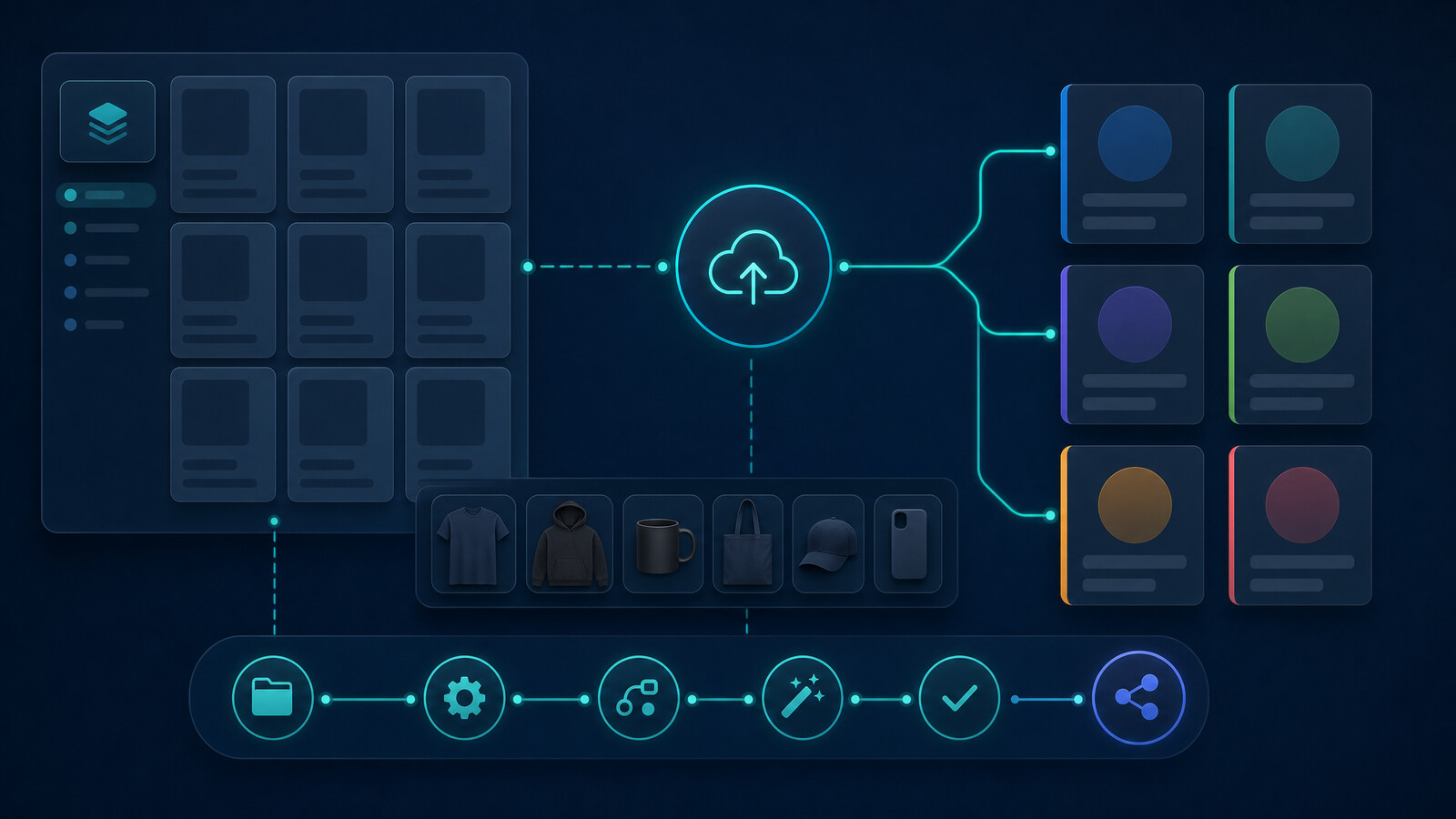
Here is a truth sellers do not like hearing: the buyer usually judges your custom merchandise before they read the title.
The mockup creates the first click. The title confirms relevance. The description removes doubt. The personalization fields prevent confusion. The images make the product feel real.
The listing stack I would publish first
- Main image: clean product mockup with strong contrast and no clutter.
- Close-up image: show design detail, texture, or placement.
- Scale image: help the buyer understand product size and use.
- Variation image: show colors, product options, or bundle combinations.
- Personalization note: explain exactly what the buyer can customize.
This is where Listing Management, Product Mockups, and Bulk Publish matter. The hard part is not making one good listing. It is making enough good listings to learn what the market wants.
For SEO, keep the title clear. Use the buyer language first, then the product. A phrase like “custom dog mom sweatshirt” usually communicates intent faster than a clever brand name nobody knows yet.
If you want structured product data for your own store, Google publishes official product data specifications that are worth understanding before you scale a catalog.
Launch Small, Then Scale What the Market Proves
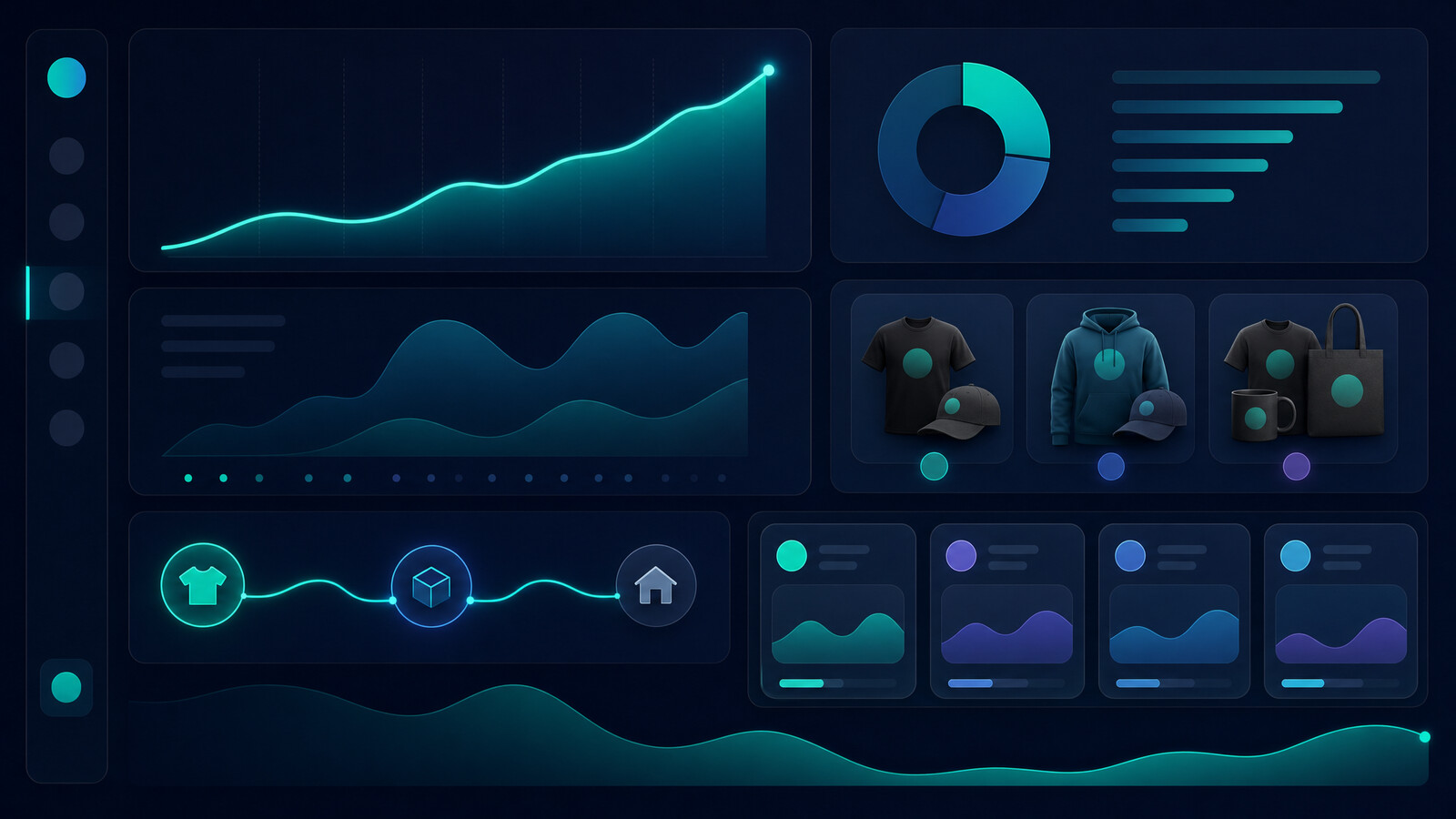
The fastest way to learn is to launch a tight test and measure what happens. I would start with one niche, 4 to 6 design concepts, and 4 to 6 product types. That gives you enough coverage to spot patterns without turning the launch into a giant production project.
Watch these signals:
- Search impressions: are people seeing the listings?
- Click-through rate: are your images and titles earning attention?
- Favorites or carts: is there buyer interest even before sales stack up?
- Conversion rate: are the offer, price, and product page strong enough?
- Support questions: are buyers confused about size, personalization, shipping, or design placement?
Do not treat the first launch like a final exam. Treat it like a market test. The point is to find the two or three angles worth doubling down on.
I watched this pattern over and over: the seller who launches one perfect product waits too long for proof. The seller who launches a focused batch gets feedback, cuts the weak ideas, and compounds the winners.
Turn one winning merch idea into a real catalog.
Create variations, organize listings, and prepare products for publishing in MyDesigns so your next launch is a batch, not a bottleneck.
The macro shift is obvious to me. Custom merchandise is getting easier to create, which means the advantage is no longer access to a design tool. The advantage is your workflow. How fast can you identify demand, create a focused line, publish it cleanly, read the data, and improve?
That is the game now.
Frequently Asked Questions
+ What is custom merchandise?
Custom merchandise is any product that uses a custom design, brand, artwork, phrase, logo, or personalized element. Common examples include shirts, hoodies, mugs, stickers, tote bags, notebooks, posters, and gifts.
+ Can I sell custom merchandise without inventory?
Yes, print on demand lets you sell custom merchandise without holding inventory. Products are produced after an order is placed, which makes it easier to test ideas before committing money to stock.
+ What custom merchandise sells best?
The best custom merchandise usually connects to a clear buyer identity or occasion. T-shirts, hoodies, mugs, stickers, tote bags, journals, and posters can all work when the design speaks to a specific community, hobby, profession, event, or gift need.
+ How do I price custom merchandise?
Price custom merchandise by accounting for product cost, fulfillment, shipping, platform fees, ad costs, personalization time, and your target margin. If personalization takes extra manual time, build that into the price instead of treating it as free labor.
+ How many custom merch products should I launch first?
Start with a focused batch, not a massive catalog. A practical first test is 4 to 6 design concepts across 4 to 6 product types, then scale the winners based on search, click, favorite, cart, and sales data.
Your first custom merchandise launch does not need to be huge. It needs to be clear. Clear buyer. Clear product stack. Clear mockups. Clear workflow. Once that foundation is working, scaling becomes a production problem instead of a guessing game.


Leave a Reply