


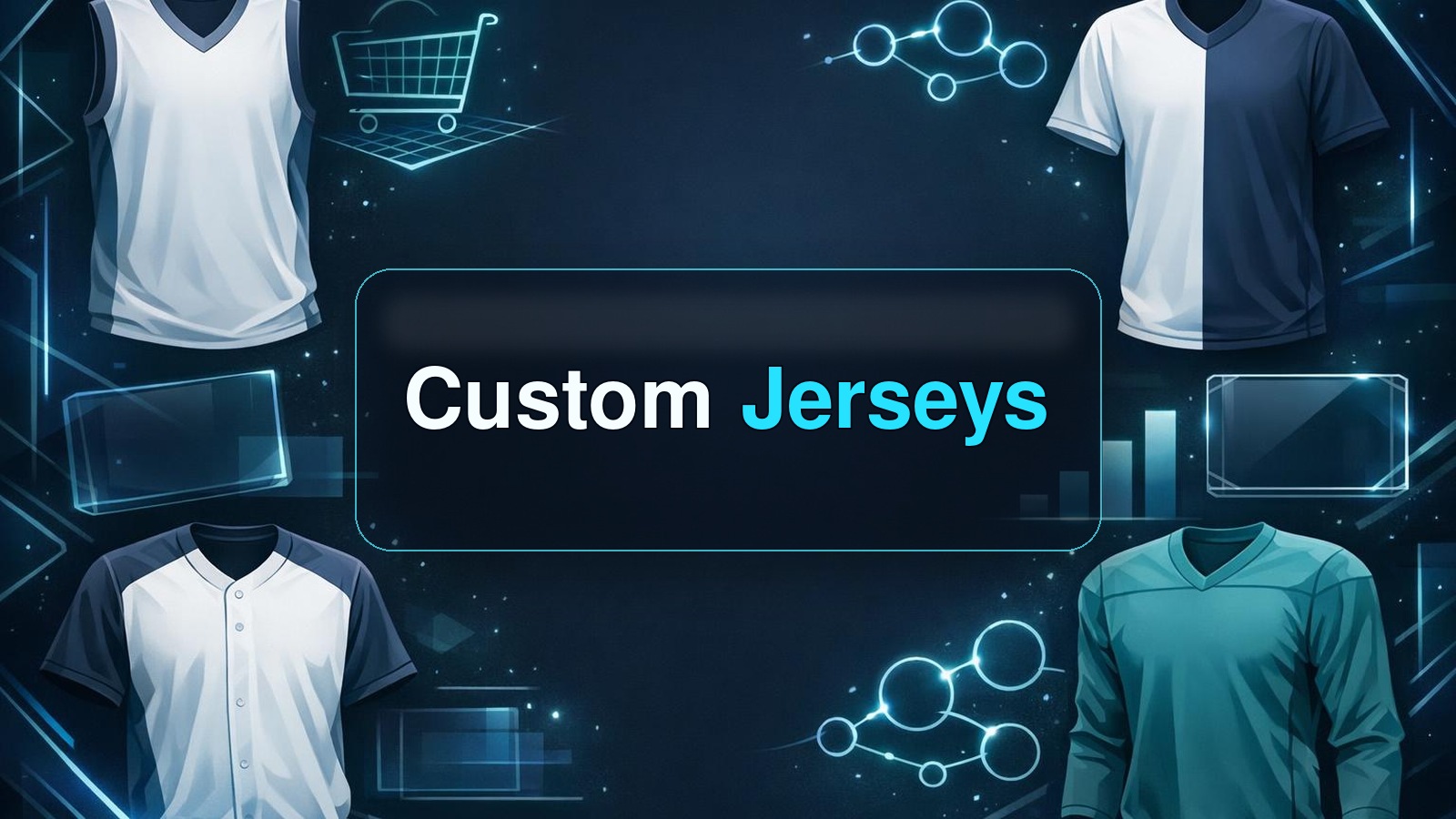
Custom jerseys are not just for teams anymore.
That is the opportunity most print on demand sellers miss. They think jerseys mean bulk sports uniforms, sponsor logos, school colors, and a pile of customer service headaches. I get why that feels like a product category to avoid.
But if I were building a fresh POD line today, I would look hard at custom jerseys. The buyer intent is strong, the designs feel giftable, and the product gives you room to build collections instead of one-off shirts.
The catch is simple. You cannot treat jerseys like another flat t-shirt. The product has panels, seams, sizing concerns, sport-specific expectations, and personalization angles. If you ignore those, the listing looks cheap. If you build around them, jerseys can become a premium product line.
Key Takeaways
- Custom jerseys work best when you sell a use case – fan groups, rec teams, creators, events, fantasy leagues, and hobby communities all buy for different reasons.
- The design system matters more than the single design – repeatable colors, placements, and personalization rules make the line easier to scale.
- Mockups carry the sale – buyers need to understand fit, front/back details, color options, and customization before they trust the order.
- Batch workflow is the real edge – product research, image generation, mockups, SEO fields, and publishing must move together if you want real volume.
Table of Contents
- Why custom jerseys deserve a serious look
- Pick the buyer before the jersey style
- Build a jersey design system, not random artwork
- Use personalization without creating chaos
- Mockups and listings decide whether buyers trust you
- Pricing custom jerseys like a premium product
- How I would scale a custom jersey line in MyDesigns
- Mistakes that make jersey listings fail
- Frequently Asked Questions
Why custom jerseys deserve a serious look
Most sellers chase the same obvious products. T-shirts. Hoodies. Mugs. Stickers. Those products still work, but the bar is higher because buyers have seen every lazy design angle already.
Custom jerseys give you a different kind of shelf space. They feel more specific. A buyer usually has a reason to order one: a team trip, a birthday, a rec league, a bachelor party, a gaming crew, a family reunion, a dance team, a bowling night, or a fantasy football punishment.
That reason matters. Products attached to an occasion are easier to position than generic apparel. You are not just selling fabric. You are selling identity for a group.
I have watched sellers overbuild shirt shops with hundreds of scattered graphics and still struggle to explain who the shop is for. Then a focused product line with 40 tight listings can feel more credible because every listing serves the same buyer.
That is why I like jerseys. They push you toward a line, not a pile.
The commercial intent is stronger than it looks
Someone searching for custom jerseys, design custom jerseys, or make custom jerseys is usually closer to action than someone browsing funny shirt ideas. They already know the product format. Your job is to make the buying decision feel safe and exciting.
That means the article, listing, and product page need to answer practical questions fast:
- Can I add a name?
- Can I add a number?
- Can I order one?
- Will it look good on the front and back?
- Is this for sports, fans, creators, or events?
Do not bury those answers. Jersey buyers do not want mystery.
Build the line
Turn jersey ideas into product batches faster.
Use MyDesigns to create, organize, optimize, and publish POD listings without doing every step by hand.
Pick the buyer before the jersey style
This is where most sellers go wrong. They start with the blank product and ask, “What design can I put on this?” That question leads to generic products.
I would start with the buyer. The jersey is just the container.
Here are jersey angles I would test before trying to build a giant store:
- Rec league teams – softball, volleyball, pickleball, bowling, kickball, darts, and local leagues.
- Fan group apparel – not using protected team marks, but using legal original themes for watch parties and local pride.
- Gaming and creator communities – gamer tags, squad names, stream teams, and esports-style drops.
- Events and trips – bachelor parties, family reunions, cruise groups, birthdays, and charity runs.
- Pet and hobby crews – dog dads, fishing groups, racing fans, car clubs, and gym communities.
Notice what I am not doing. I am not saying, “Make a cool jersey.” Cool is too vague. A product line needs a buyer with a reason to click.
If you need broader category thinking before you pick the jersey angle, start with my guide on print on demand niches. The same niche discipline applies here.
Build a jersey design system, not random artwork
Custom jerseys punish randomness. A random graphic on the front may work on a shirt, but a jersey needs structure.
I would create a design system before publishing the first listing. That system would define the parts of the product that stay consistent and the parts buyers can change.
My basic jersey system would include:
- Base palette – 6 to 10 color combinations that match the buyer segment.
- Layout rules – where the main graphic, name, number, sleeve accent, and back detail go.
- Style family – retro varsity, clean modern, bold streetwear, minimal club, or playful event.
- Personalization options – name, number, year, role, location, or group title.
- Listing templates – title, description, tags, and image order that repeat across the collection.
This is how you avoid the trap of making 30 jerseys that look like they came from 30 different shops.
Collection thinking beats one-off product thinking
A good jersey line should make the buyer want to browse more than one listing. If someone clicks a retro bowling jersey, the shop should immediately show them adjacent options: captain jersey, birthday jersey, league night jersey, championship jersey, and matching fan jersey.
That is how you build order value and trust. The buyer sees that you understand the occasion, not just the product.
One-off designs can still sell. But collections teach the marketplace what your store is about.
Move in batches
Stop building jersey listings one at a time.
MyDesigns helps you manage bulk creative, mockups, listing fields, and publishing from one workflow.
Use personalization without creating chaos
Personalization is one of the strongest reasons to sell custom jerseys, but it can also wreck your workflow if you let every buyer invent a brand new product.
You need boundaries.
I would offer a small set of controlled customization fields:
- Name or nickname.
- Number.
- Optional team or group name.
- Color choice from approved palettes.
- Optional year or short event phrase.
That is enough to make the buyer feel ownership without turning every order into custom design work.
Here is my rule: if personalization cannot be explained in one product image and one short paragraph, it is too complicated for a scalable POD listing.
Do not build on protected teams or leagues
This part is not optional. Do not use protected team names, league names, player names, mascots, logos, or recognizable marks. Do not make a jersey that looks like an official product for a team you do not own.
There is plenty of room for original ideas. Rec league humor, hobby crews, original club names, family events, gamer tags, and made-up teams all give you room to create without building on someone else’s rights.
If a listing needs another brand’s reputation to sell, I would skip it.
Mockups and listings decide whether buyers trust you
With jerseys, buyers are not just asking, “Do I like the design?” They are asking, “Will this look cheap when it arrives?”
Your mockups need to answer that before the buyer hesitates.
I would build every custom jersey listing with a tight image sequence:
- Clean hero mockup showing the main style.
- Front and back view.
- Close crop of the personalization area.
- Color option image.
- Size and ordering guidance.
- Use case image, such as team night, event group, or gift angle, shown as an illustration or mockup without fake lifestyle claims.
Do not make the buyer guess where the name goes. Do not make them message you to understand the back print. Every unanswered question creates friction.
Titles, descriptions, and tags need buyer language
A jersey listing title should not read like an internal product SKU. It should mirror how the buyer thinks.
For example:
- Custom Bowling Team Jersey with Name and Number
- Personalized Gamer Jersey for Stream Team or Squad
- Custom Family Reunion Jersey for Group Trip
- Personalized Softball Jersey for Rec League Team
The structure is simple: product format, personalization promise, buyer or occasion. That is usually stronger than trying to be clever.
The same applies to your descriptions. Lead with who it is for, what can be customized, and how ordering works. Then cover materials, production notes, and care instructions.
If you want a broader listing checklist, pair this with our guide to Etsy SEO. Search still rewards clarity.
Listing speed matters
Create stronger listings without copy-paste work.
Use MyDesigns to generate and manage SEO fields across product batches before you publish.
Pricing custom jerseys like a premium product
Do not price jerseys like bargain shirts. A buyer expects a custom jersey to cost more because it feels more specialized and often includes personalization.
Your pricing needs to cover:
- Base product cost.
- Production and shipping variance.
- Marketplace fees.
- Design and personalization labor.
- Ad testing budget if you plan to promote the line.
- Margin for customer service and occasional reprints.
I would rather sell fewer jerseys with healthy margin than create a fragile product line that only works when nothing goes wrong.
Bundles are worth testing too. A rec league captain may need 8 shirts. A family reunion buyer may need 12. A streamer may want one creator jersey and a cheaper fan version. Build offer paths for those buyers instead of forcing everyone through a single product page.
How I would scale a custom jersey line in MyDesigns
The real advantage today is not having one clever design. It is how quickly you can move from idea to tested listings without dropping quality.
The old POD playbook was simple: make a design, upload it, write a title, repeat until tired. That is too slow now. The sellers who win are building systems.
Here is the workflow I would use:
- Research the buyer segment – pick one community or occasion.
- Create the jersey design system – palette, placement, personalization, style rules.
- Generate or prepare design assets – keep everything consistent across the collection.
- Create mockups in batches – front, back, detail, color, and ordering guidance.
- Write listing fields in a structured set – title, tags, description, personalization instructions, and FAQs.
- Publish a controlled batch – enough listings to get signal, not so many that you cannot learn.
- Measure clicks, favorites, conversion, and custom requests – then cut weak angles quickly.
This is exactly the type of bottleneck we built MyDesigns to solve. When the workflow is scattered across folders, spreadsheets, mockup tools, and marketplaces, sellers slow down right when they should be testing more ideas.
MyDesigns gives you a central place to build, edit, optimize, and publish product content in bulk. That matters when you are not creating one jersey. You are testing a product line.
Mistakes that make jersey listings fail
I would avoid these from day one.
Offering too many options
More choices can lower conversion. If the buyer has to choose from 28 colors, 9 fonts, 4 layouts, and custom notes, you have created homework.
Give them strong defaults. Then offer a few clean personalization fields.
Ignoring the back view
For jerseys, the back often matters as much as the front. If your listing only shows the front, buyers will worry about the name and number placement.
Show both. Every time.
Selling to no one in particular
“Custom sports jersey” is not a line. It is a product type. A better angle is “personalized pickleball team jerseys for weekend leagues” or “custom gamer jerseys for streamer squads.” Specific sells.
Getting too close to official teams
If your design looks like a protected team jersey, you are asking for trouble. Build original designs for original communities.
Doing every listing by hand
Manual work feels safe at first because you can control every detail. Then you realize it took six hours to publish eight listings.
That is not a business system. That is a weekend project with a login.
Build with leverage
Create your next POD product line in MyDesigns.
Organize designs, produce mockups, write SEO content, and publish custom jersey listings faster from one place.
Frequently Asked Questions
Are custom jerseys good for print on demand?
Yes, custom jerseys can be strong POD products when they are tied to a specific buyer or occasion. They work best for teams, events, fan groups, creators, hobbies, and personalized gifts.
What should I put on a custom jersey listing?
Show the front, back, personalization area, color options, sizing guidance, and clear ordering instructions. Buyers need to know exactly how the name, number, and other details will appear.
Can I sell custom jerseys with team names or logos?
Do not use protected team names, league names, player names, logos, mascots, or designs that look official unless you have the rights. Build original concepts for original buyers.
How many jersey designs should I launch first?
I would start with a focused batch of 20 to 40 listings around one buyer segment. That is enough to test titles, mockups, and style angles without creating a messy catalog.


Leave a Reply