


If you want to learn how to start a print on demand business, ignore the fantasy version you see all over YouTube. You do not need 300 products, a perfect brand kit, or some genius niche nobody else has noticed. You need a tight offer, a small catalog, fast testing, and a workflow that does not collapse the second you try to scale.
I have watched new sellers burn three weeks designing logos, building a homepage, and uploading random mugs, shirts, and posters before they ever validated one product angle. Then they conclude print on demand is saturated. It is not. Their process is broken.
If I were starting from zero today, this is exactly how I would start a print on demand business in 2026, with the least wasted motion and the highest odds of getting to first sales fast.
Key Takeaways
- Start narrower than feels comfortable – the fastest print on demand stores usually win by serving one buyer clearly, not everyone vaguely.
- Build a small launch catalog first – one hero product plus 3-5 supporting products beats a bloated store with no signal.
- Traffic comes before scale – your first goal is learning what earns clicks and conversions, not looking like a giant brand on day one.
- Automation matters once you have signal – the winners remove repetitive design, mockup, SEO, and publishing work as soon as a niche proves itself.
Table of Contents
Why Most POD Stores Stall Before the First Sale
The old print on demand advice was simple: upload a lot, wait, and let the algorithm do the rest. That playbook is stale. Platforms are crowded, buyers are more selective, and generic designs disappear fast. Your edge now is not just creativity. It is speed, positioning, and operational discipline.
Most beginners fail because they act like catalog managers before they act like merchants. They obsess over fonts, store names, and polished branding while skipping the harder question: why would a buyer stop on this product instead of the other 50 options in the search results?
Choose the model first, not the logo
Print on demand is not one business. It is a fulfillment model attached to different go-to-market strategies. You can build around Etsy search, Shopify brand traffic, TikTok content, Pinterest intent, or a niche audience you already understand. Those are very different games.
If you are not sure where to start, I usually recommend learning the fundamentals in a marketplace environment first. Print on demand for beginners is easier when you can plug into existing demand instead of trying to invent demand from scratch.
Pick the sales channel early
Choose one primary channel before you build the catalog. Etsy is usually the fastest route to early signal because buyer intent already exists. Shopify can become more valuable later when you understand your audience and have a repeatable offer. If you try to launch everywhere on day one, you usually end up mediocre everywhere.
Read the Etsy Seller Handbook and Shopify’s print on demand guide if you want the platform basics, but do not get trapped in endless prep.
You do not need a giant software stack to validate a POD idea.
Start with a simple workflow, then add tools when they actually save time. MyDesigns becomes most valuable the moment you need to create, optimize, and publish faster than manual work allows.
Pick a Niche You Can Actually Win
The biggest beginner mistake is picking a market that is technically huge but emotionally vague. “Dog lovers” is not a niche. “Rescue pit bull moms who foster” is closer. The more clearly you can picture the buyer, the easier it is to create products that feel made for them.
Broad niches kill momentum
I get why new sellers go broad. It feels safer. More people should mean more buyers, right? Usually the opposite. Broad niches force you into weak messaging, weak imagery, and weak search relevance. You end up competing with stores that have years of reviews and thousands of listings.
Start with a niche where you can answer these questions fast:
- What specific identity or interest are they proud of?
- What product format already matches that behavior?
- What kind of humor, language, or style feels native to them?
- Where do they already shop or browse for products like this?
Validate buyer intent before you design
Before I would design anything, I would spend an hour looking at search results, Pinterest boards, Etsy autocomplete, and trend demand. Use Google Trends for seasonality, check marketplace search suggestions, and study how winning products frame the same buyer problem.
One thing I strongly advise: do not copy the current bestseller. Read the pattern underneath it. Is the buyer responding to personalization, identity, humor, urgency, giftability, or clean aesthetics? That pattern matters more than the exact phrase on the shirt.
If you are torn between physical POD and instant-download offers, compare it against the economics of digital products to sell on Etsy. Sometimes the better move is to run both.
Build a Small Launch Catalog First
You do not need a full store. You need a controlled test. My favorite early-stage setup is one hero product, one secondary product, and a few clean variations built around the same audience.
Start with one hero product
Pick the product type that best matches the buying behavior. Shirts work when identity is central. Mugs work when gifting is central. Wall art works when aesthetic style is central. Tote bags, journals, and sweatshirts can work great, but only if the niche naturally fits them.
I watched one seller waste an entire weekend spreading the same design across 18 product types. Nothing sold. We cut the catalog back to one shirt style, one sweatshirt, and two colorways tied to a clearer audience. Sales came within two weeks because the offer finally made sense.
Price for margin, not ego
Too many beginners price to feel competitive, not to stay alive. You need room for platform fees, discounts, shipping expectations, and the occasional refund or reprint. Check your provider economics, shipping times, and product quality before you lock pricing. Your margin is your oxygen.
| Stage | What to launch | Why it works |
|---|---|---|
| Week 1 | 1 hero product + 3-5 variations | Cleaner signal on what buyers actually want |
| Week 2 | 1 supporting product + best design carryover | Extends the winner without adding chaos |
| Week 3+ | Bundles, colorways, seasonal angles | Scale after data, not before data |
The real job is not making one product. It is making consistent variations fast.
This is exactly why we built MyDesigns for bulk workflows. Once a niche shows promise, you can expand designs, mockups, and listings without rebuilding every asset manually.
Create Designs and Mockups That Click
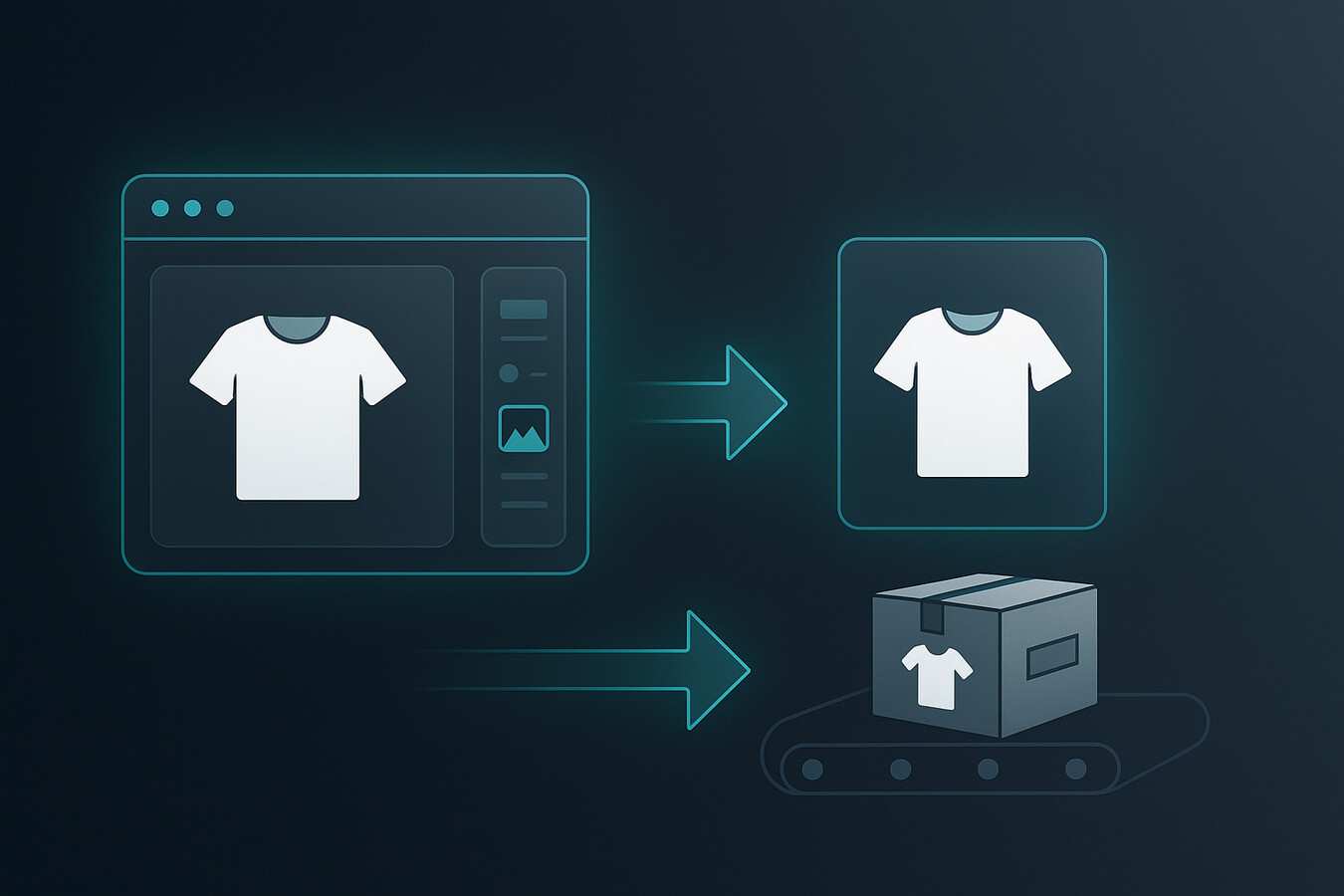
A print on demand business lives or dies on click behavior. Before anyone reads your title or checks your reviews, they react to the image. That means your mockups are not decoration. They are conversion assets.
Good creative is clear, not clever
Beginners often over-design. Too many fonts. Too many textures. Too much going on in the mockup. The best-performing visuals usually communicate one thing instantly: who the product is for. Clean contrast, readable design hierarchy, and context that feels native to the buyer beat complexity almost every time.
If your product photo would blend into a page full of similar listings, it is not good enough yet. Use better scenes, tighter crops, and more intentional design placement. This matters on Etsy. It matters on Shopify. It matters in paid traffic. Because it works. Period.
Speed beats perfection in the early phase
The old advice says perfect the listing before you publish. I disagree. Publish a strong version fast, learn from real behavior, then improve your winners. The market gives better feedback than your internal debate.
That is one reason I like pairing design iteration with fast listing production. If you need more help on the research side, read best print on demand sites compared so you can choose providers and platforms that fit your margin and speed goals.
For operations, remember the boring stuff too. Shipping expectations and tracking reliability shape reviews. Check the latest USPS shipping guidance and your provider’s production timelines before you promise anything aggressive.
If your mockup does not earn the click, the rest of the listing never gets a chance.
Use MyDesigns to generate cleaner visuals, test product scenes faster, and keep your listing creative consistent when you expand a winning design across multiple products.
Set Up Your Store and Fulfillment Stack
Once the product angle is clear, now build the operational stack. Not before.
Marketplace vs your own store
If you want speed to signal, marketplaces usually win. If you want stronger brand control and higher long-term retention, your own store becomes more attractive. There is no universal best answer. There is only the answer that fits your traffic source and stage.
My rule is simple: if you do not already have an audience, start where buyers already are. Then use your own store once you know what message, product, and audience actually convert.
Connect your fulfillment stack correctly
Your print provider is not just a supplier. It is part of your customer experience. Check product quality, print consistency, routing options, and average production times. Bad fulfillment can destroy a promising business faster than weak design.
If you want to scale beyond manual uploads, your stack also needs publishing efficiency. That means faster mockups, better listing management, and fewer repetitive steps between design creation and store launch. Multi-Product Publishing and Bulk Publish are built for exactly that bottleneck.
Launch With a Traffic Plan, Not Hope

Uploading products is not a launch. It is inventory creation. The launch starts when qualified people see the offer.
Get the first 30 qualified visitors
Your first job is not viral growth. It is getting a small amount of relevant traffic that tells you whether your offer has potential. On Etsy, that means keyword alignment, thumbnail quality, and buyer intent. On Shopify, that may mean short-form content, Pinterest pins, creator seeding, or email traffic from an audience you already control.
Do not chase broad vanity traffic. I would rather have 30 visitors who are exactly right than 1,000 random clicks that teach me nothing.
Watch the right metrics first
Early on, the key metrics are brutal and simple:
- Impressions or reach
- Click-through rate from search or content
- Favorites, saves, or add-to-carts
- Conversion rate on the listing
- Refund and complaint signals after the sale
If people are seeing the product but not clicking, fix the visual. If they click but do not buy, fix the product-market fit, pricing, or listing promise. If they buy but refunds pile up, fix fulfillment. Different bottleneck, different solution.
For Etsy-specific scale, this guide on how to bulk upload products to Etsy matters once you have a proven offer and want to multiply coverage without multiplying manual work.
The sellers who scale are usually the ones who learn faster, not the ones who design forever.
MyDesigns helps you move from research to listings to publishing without getting trapped in repetitive setup work. That speed compounds once a niche starts showing real demand.
Scale What Already Sold
Once something sells, your job changes. You are no longer guessing what might work. You are building around proof.
Expand from proofs, not guesses
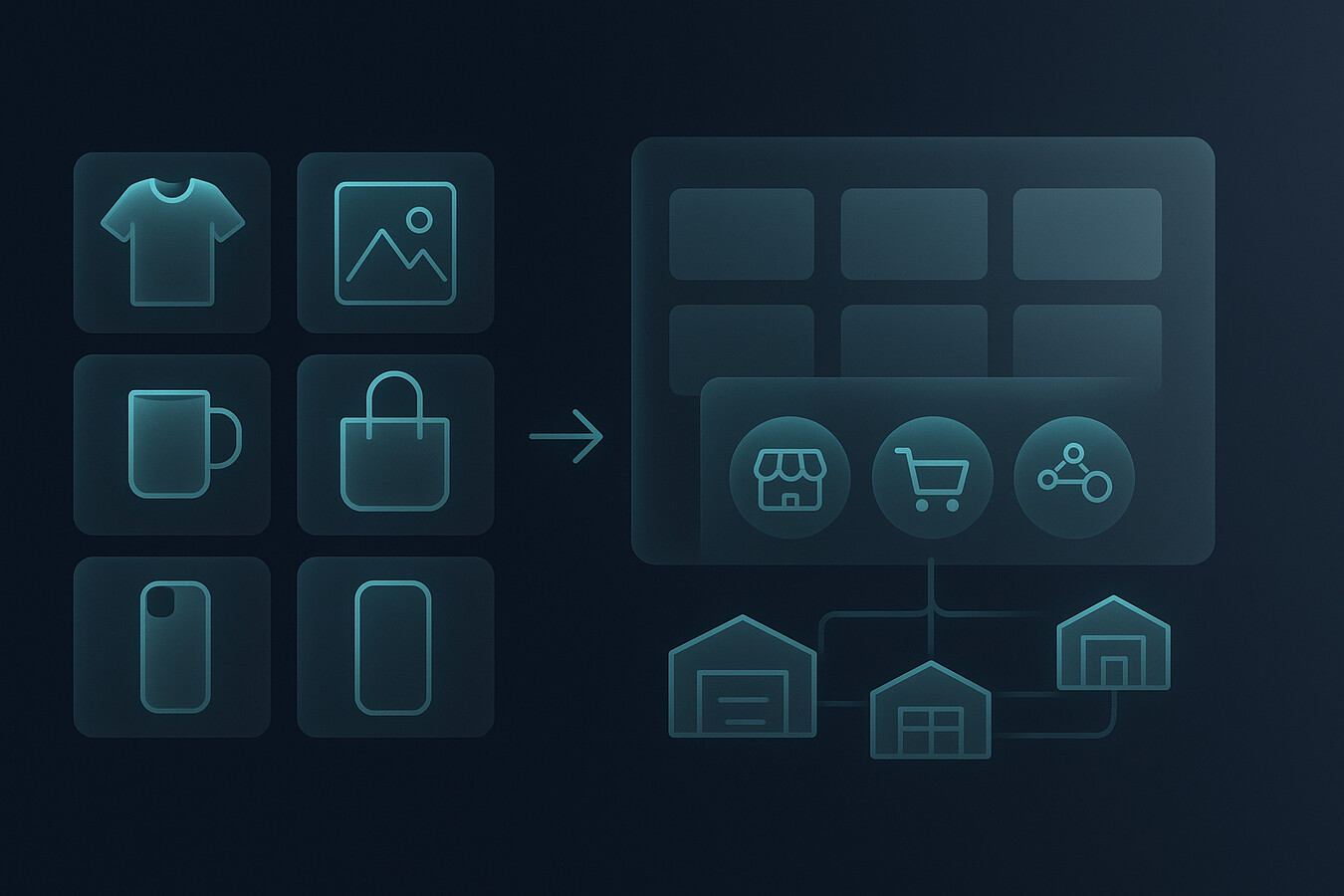
If one design sells, expand it carefully. Create adjacent versions for the same buyer. Add a matching secondary product. Test seasonal spins. Push related keywords. This is where real catalog depth starts paying off.
The best stores often look specialized from the outside but operationally they are built on systems. Winning concepts get turned into families of products quickly. Losers get cut fast. That discipline is what protects your time and your margin.
Remove bottlenecks before they slow growth
The real reason sellers stall after early traction is not lack of ideas. It is manual overhead. They are still editing titles one at a time, rebuilding mockups one by one, and publishing listings like it is 2019. That is a losing game now.
This exact bottleneck is why we built MyDesigns the way we did. Once you have a concept worth pushing, you should be able to create assets, optimize listings, and publish across a wider catalog without living inside repetitive admin work all day.
If you want the simplest version of the whole strategy, here it is: start small, find signal, then scale the winners with systems. That is how I would start a print on demand business today.
Frequently Asked Questions
+ How much money do you need to start a print on demand business?
You can start a print on demand business with a relatively small budget because you are not buying inventory upfront. The real starting costs are usually design tools, samples, marketplace fees, domain or store setup, and enough budget to test traffic or creative if needed.
+ Is print on demand still profitable in 2026?
Yes, print on demand is still profitable in 2026 if your niche, pricing, and creative are strong. The lazy version is crowded, but stores with clear positioning, better mockups, and efficient operations still have plenty of room to win.
+ What is the best platform to start a print on demand business?
For most beginners, Etsy is the fastest place to validate a print on demand product because demand already exists. Shopify becomes more attractive once you have a clearer brand, stronger traffic plan, and enough data to know what your audience actually buys.
+ How many products should I launch with?
I would start with one hero product and a few intentional variations, not a giant catalog. That gives you cleaner feedback on what buyers want and makes it much easier to improve the offer quickly.
+ Do I need design experience to start print on demand?
No, but you do need taste, research discipline, and a willingness to test. Many successful sellers are not elite designers. They are better at reading audiences, choosing winning concepts, and improving based on market feedback.


Leave a Reply