


 Many new sellers try to appeal to everyone. They create generic designs for broad categories like “funny t-shirts.” This approach feels safe, but it is one of the fastest routes to failure. The market for general products is incredibly saturated. You end up competing with thousands of other stores, which makes it nearly impossible to stand out and build a loyal audience.
On a single platform like Etsy, you are competing with nearly 8 million other sellers for the attention of buyers. Without a unique angle, your products are simply drowned out.
Imagine a shop selling random quotes versus one dedicated to minimalist designs for rock climbers. The first competes with everyone; the second becomes a trusted destination for a passionate community. This is a battle you are unlikely to win. True success begins with a narrow focus.
The Solution: Find and Validate Your Niche
A profitable niche is the foundation of a strong print-on-demand business. It is a specific corner of the market you can dominate. Think smaller and more specific.
Instead of “greeting cards,” consider “wedding cards”. This focus allows you to create highly relevant products. It also makes your marketing much easier and more effective.
First, research trends and perform thorough keyword research. This helps you understand what customers are actively searching for. Look for niches with passionate communities but less saturation from major sellers.
Next, test your best concepts with minimal investment. Before building a huge catalog, create a small batch of designs for your target niche. Publish them and monitor their performance. This data-driven approach confirms if a market exists for your idea. A well-chosen niche reduces competition and helps you build a dedicated customer base.
How to Pick a Profitable Niche for Your Etsy Shop offers a great framework for this process.
The second major mistake is underestimating the importance of design quality. Too many sellers upload low-resolution images, overused stock graphics, or clipart that immediately looks dated. Others fall back on plain, text-only designs that may have worked years ago but now feel repetitive and uninspired.
In a highly competitive and visual industry like print-on-demand, this is not a minor oversight, it’s a critical error. Customers scrolling through marketplaces like Etsy, Shopify, or Amazon have thousands of choices at their fingertips. They will not pause on, let alone purchase, designs that look cheap, pixelated, or unoriginal. A weak design can make your entire brand look amateurish in just a glance.
This issue often stems from a lack of professional tools, design education, or both. Many entrepreneurs entering the print-on-demand world are not trained graphic designers. They may have great ideas in their heads but struggle to translate those ideas into polished, market-ready designs.
Pro Tip: Check out MyDesigns Dream AI, a library of AI generated designs shared by MyDesigns users.
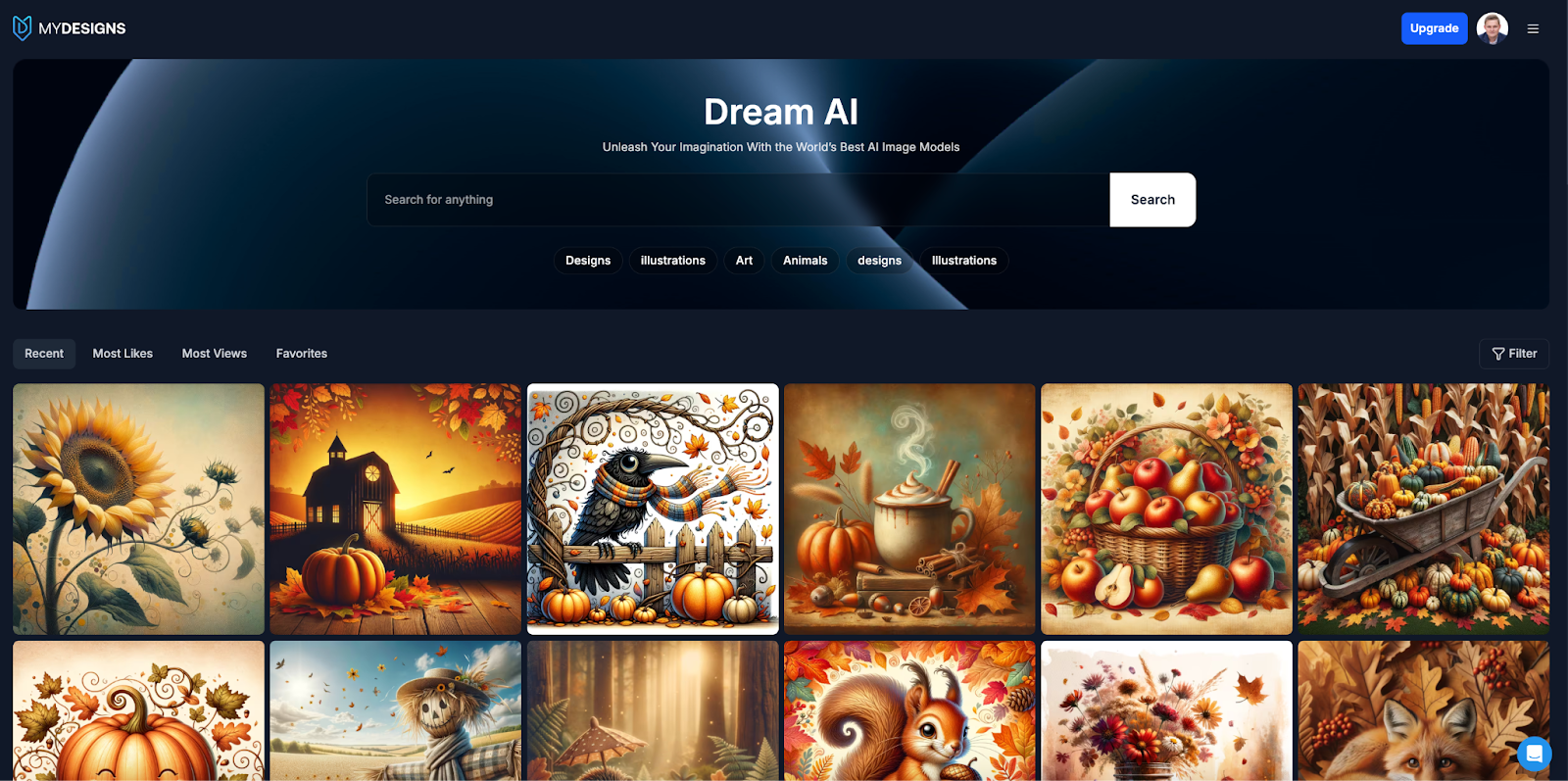
Without access to the right resources, these sellers get frustrated, producing a catalog that looks inconsistent or uninspired. The result? Dozens of uploaded products that sit idle for months with little or no sales. That wasted time and effort can kill motivation and make it hard to scale a business.
A great idea on its own is never enough. Execution, or the ability to present your idea in a visually compelling way, is what captures a shopper’s attention, earns their trust, and ultimately convinces them to click “buy.”
Remember that in the online world, your design is your storefront window. It’s the first impression a customer has of your brand, and often the deciding factor in whether they choose you over a competitor. By prioritizing design quality, you’re not just making your products look better—you’re building credibility, signaling professionalism, and laying the foundation for long-term sales growth.
The Solution: Leverage AI and Quality Tools for Unique Designs
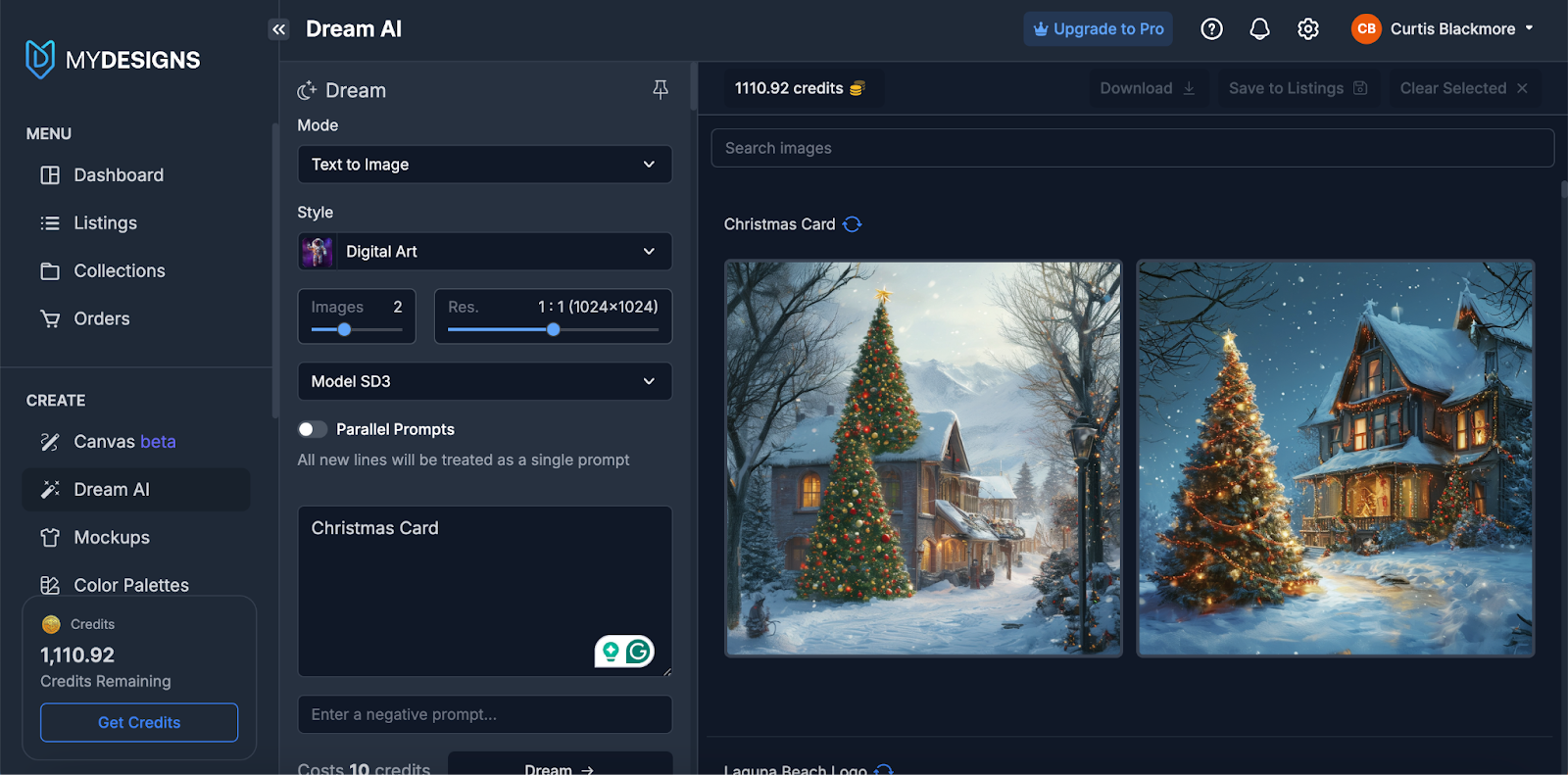
You no longer need to be a professional artist to create stunning designs. AI tools have democratized the design process. You can use an AI image generator to turn a simple text prompt into a beautiful piece of artwork. This is the perfect starting point for your next bestseller. Explore different AI models to find styles that fit your brand’s aesthetic. You can leverage AI for digital product design to accelerate your creative workflow.
Once you have an AI-generated image, make it your own. Use a powerful editor like MyDesigns’ Canvas to add text, tweak colors, or combine elements. This is how you add a unique touch that sets your products apart.
For inspiration, our Dream AI tool can help you visualize concepts instantly. It lets you access the latest AI image generation models all within the MyDesigns interface.
 Focus on creating a consistent style across your products. This builds a recognizable and memorable brand identity.
 You could have the best design in the world. You could have something original, eye-catching, and perfectly suited for your audience, but if no one can actually find it, that design will never generate sales.
This is one of the most common mistakes new and even experienced sellers make. They invest hours, sometimes days, into perfecting the artwork, obsessing over colors, typography, and placement. But when it comes time to create the product listing, they rush through it in a matter of minutes. The title is often generic, the tags are obvious and limited, and the description is short, vague, and uninspiring. What they don’t realize is that this shortcut essentially makes their product invisible.
In today’s online marketplace, visibility is everything. Search engines like Google and marketplace algorithms on platforms such as Etsy, Amazon, or Shopify do not automatically understand your product. They rely on structured data (titles, tags, categories, keywords, and descriptions) to decide how and where to display your listing. If these signals are unclear, incomplete, or poorly optimized, the algorithm has no reason to rank your product ahead of competitors. That means even if your design is vastly superior, customers may never see it in the first place.
This missed opportunity is huge. Every day, thousands of potential customers are actively searching for products just like yours, using very specific keywords and phrases. If your listing fails to match those search terms, you’re handing that traffic and those sales over to competitors who may have weaker designs but better-optimized listings. It’s not just about being present in search results; it’s about showing up at the exact moment when buyers are ready to purchase.
That’s why effective selling in print-on-demand requires you to wear two hats: the designer and the marketer. The design brings customers in emotionally, but the marketing makes sure those customers ever find you in the first place.
A well-optimized listing is like a bridge that connects your creativity with real-world demand. Without it, your best ideas remain hidden, gathering dust in a marketplace overflowing with competition. Your product’s success doesn’t just depend on design quality, it depends on your ability to make it discoverable, clickable, and ultimately irresistible.
The Solution: Master Your Product Listings from Keywords to Mockups
Optimizing your listings is not optional. It is essential for visibility and sales. Start with thorough keyword research. Understand the exact phrases your target customers are using. Include these keywords naturally in your titles, descriptions, and tags. This helps your products rank higher in search results.
For a deeper dive, check out these tips to improve your Etsy shop SEO.
Use AI to streamline this process. Tools like MyDesigns’ Vision and Phraser AI can analyze your designs and generate optimized text in seconds.
Finally, create stunning visuals. High-quality mockups are crucial for conversion, as roughly 75% of shoppers base purchase decisions on photos. Use a mockup generator to create realistic product images that help customers visualize themselves using your item. Use a mix of simple product shots and lifestyle mockups for the best results.
 The final mistake is getting trapped in manual, repetitive tasks. A solopreneur might create one design, make one mockup, write one listing, and publish it. Then they repeat the process. This workflow is manageable when you have ten products. But it is impossible to sustain when you want to have a thousand. It leads to burnout and stagnant growth.
Without systems, your business cannot scale. You spend all your time on low-impact activities instead of focusing on growth. You cannot quickly react to new trends or expand your product catalog. Your business becomes a job that consumes all your time and energy.
As noted by Entrepreneur magazine, scalable systems are fundamental to growth. The key to long-term success is to build systems that work for you. Automation is not a luxury. It is a necessity for any serious e-commerce entrepreneur.
The Solution: Build Workflows That Automate and Scale
Treat your print-on-demand venture like a real business. This means creating efficient, repeatable workflows. The standout feature of a platform like MyDesigns is its focus on bulk functionality. Instead of doing tasks one by one, you can perform them on hundreds of listings at once. This is how you reclaim your time and scale your operations effectively.
Imagine generating unique mockups for your entire catalog in just a few clicks. Or imagine updating the tags on 500 listings simultaneously. This is possible with the right systems.
Use tools for bulk publishing to push new products to all your stores at once. Centralize your orders so you can manage them from one place.
Generate multiple image and video mockups with a single click using advanced mockups tools. If you have the right AI and automation tools, the possibilities are endless!


Leave a Reply