


Key Takeaways
- Etsy gives you built-in traffic and a low barrier to entry — but at 6.5% per sale plus listing fees, the margins get painful fast once you start scaling.
- Shopify gives you full control and better margins — but you’re entirely responsible for driving your own traffic. No built-in audience means no passive discovery.
- The real winning strategy in 2026 is using both platforms simultaneously — not picking one and hoping for the best. The sellers making serious money aren’t choosing sides.
- MyDesigns lets you publish digital products to Etsy and Shopify at once — with automated delivery, AI-optimized listings, and bulk publishing that makes the “both platforms” strategy actually achievable without doubling your workload.
Table of Contents
- What Are Digital Products (and Why They’re Different to Sell)
- Selling Digital Products on Etsy — The Pros and Cons
- Selling Digital Products on Shopify — The Pros and Cons
- Shopify vs Etsy for Digital Products — Head-to-Head Comparison
- The Real Answer: Why the Best Sellers Use Both
- How MyDesigns Makes Selling Digital Products on Both Platforms Easy
- Which Platform Should You Start With?
- Frequently Asked Questions
The Shopify vs Etsy debate misses the point entirely. Every week I see sellers tie themselves in knots trying to pick the “right” platform — when the actual question they should be asking is: how do I eventually use both, and what does my starting point look like?
I’ve watched sellers stuck on Etsy for years — capping out on revenue, watching fees eat their margins — finally break through the moment they added a Shopify store alongside it. I’ve also watched brand-new sellers burn months building a Shopify store with zero traffic before they made a single sale.
The platform you start with matters. But the goal is always to reach both. Here’s how to think about selling digital products on Shopify vs Etsy — and what the smartest sellers are doing in 2026.
What Are Digital Products (and Why They’re Different to Sell)
Digital products are files — delivered digitally, no shipping required. Templates, printables, SVG cut files, courses, fonts, Lightroom presets, digital art, planners, patterns, spreadsheets. The list of digital products to sell is enormous and growing.
What makes them special as a business model: you make them once and sell them forever. No inventory. No manufacturing cost. No fulfillment headaches. Every sale is nearly pure margin — and that margin compounds as your catalog grows.
The global digital products market was valued at over $331 billion in 2022 and is projected to keep growing at double digits annually. More sellers are catching on. Which is exactly why your platform strategy matters more than ever.
The sellers who win on Etsy usually move faster than the ones still polishing drafts.
This is exactly where a cleaner workflow starts to matter more than another round of planning.
Selling Digital Products on Etsy — The Pros and Cons
Why Etsy Works for Digital Products
Etsy has 96 million active buyers. That’s not a small number. When you list a digital product on Etsy, you’re placing it in front of a marketplace already filled with people in buying mode — searching for exactly the kinds of things you’re selling.
Discovery is built in. New sellers can make sales on day one without a social following, an email list, or a paid ads budget. That’s genuinely rare. For anyone learning how to sell digital products on Etsy, the traffic is the biggest advantage — and it’s real.
Etsy’s search algorithm also favors relevance and conversion history, which means good listings with strong titles and tags can climb the rankings over time. It’s not instant, but it works. I’ve seen sellers go from zero to consistent $3k months on Etsy digital products alone, just by optimizing their listings and expanding their catalog.
Digital products specifically perform well on Etsy because buyers expect immediate delivery. There’s no shipping wait. The experience is clean, and Etsy handles the file delivery automatically when a purchase is made.
Etsy Fees for Digital Downloads
Here’s where sellers need to do the math carefully. Selling digital products on Etsy isn’t free:
- Listing fee: $0.20 per listing (auto-renews every time a product sells)
- Transaction fee: 6.5% of the sale price
- Payment processing: 3% + $0.25 per transaction (US; varies by country)
- Offsite Ads fee: 12–15% on sales from Etsy’s off-platform ads (if applicable)
On a $10 digital product, you’re looking at roughly $1.20 in fees before anything else. On a $5 product, the math gets even worse. The lower your price point, the harder Etsy fees hit your margins.
According to Etsy’s seller handbook, these fees apply to every transaction — including digital downloads. There’s no exemption for files vs physical goods.
The Downsides of Etsy for Scaling Digital Sellers
Etsy owns the relationship with your customer. You can’t email your buyers directly (outside of transactional messages). You can’t build a list. You can’t retarget. Every sale that happens on Etsy is Etsy’s sale first — you just happen to be the seller.
At scale, that’s a serious problem. If Etsy changes its algorithm, adjusts fees, or suspends your shop (it happens — often without warning), you can lose your entire revenue stream overnight. I’ve seen it happen to sellers doing $20k/month.
There’s also the competition factor. Digital products etsy is a crowded space. As your category grows, so does the noise. Standing out requires constant listing optimization, ongoing new product launches, and strategic pricing — all of which become increasingly difficult to manage manually as your catalog grows.
Selling Digital Products on Shopify — The Pros and Cons
Why Shopify Works for Digital Product Businesses
Shopify gives you something Etsy never will: complete ownership. Your store. Your domain. Your customer data. Your email list. Your brand.
When you sell digital products on Shopify, every buyer is your buyer. You can retarget them, email them, upsell them, and build a real business relationship. That’s worth a lot — especially once you’ve built up a catalog of 50, 100, or 500+ products.
Digital products shopify stores also have no listing fees. You pay your monthly subscription and a payment processing fee, and that’s it. There’s no $0.20 per-listing charge, no 6.5% transaction cut. At volume, those savings compound significantly.
Shopify also gives you full creative control over your storefront. You can build a branded experience, offer bundles, run loyalty programs, create upsell flows — things that are impossible on Etsy’s standardized marketplace layout.
Shopify Fees vs Etsy Fees
Shopify’s pricing structure is fundamentally different from Etsy’s:
- Basic plan: $29/month + 2.9% + 30¢ per transaction
- Shopify plan: $79/month + 2.6% + 30¢ per transaction
- Advanced plan: $299/month + 2.4% + 30¢ per transaction
- No listing fees. No per-unit charges. No automatic renewal costs.
At low volumes, Etsy wins on cost. But the math flips as sales grow. If you’re selling 200+ digital products per month, Shopify’s flat monthly fee plus lower transaction rate almost always beats Etsy’s 6.5% per sale.
See Shopify’s current pricing page for the latest numbers — they update plans periodically.
What Shopify Can’t Do (for Beginners)
Traffic. Shopify cannot bring you buyers. That’s entirely on you.
A new Shopify store with no marketing budget, no social following, and no existing audience will sit empty. This is the most common mistake I see from new sellers who jump straight to Shopify: they build a beautiful store, list their digital products, and then… nothing.
Shopify is a business infrastructure tool, not a marketplace. You need a traffic strategy — SEO, paid ads, social media, email, influencers, or some combination. That takes time and money, neither of which beginners typically have in abundance.
You do not need more theory here. You need a workflow that turns ideas into listings while the opportunity is still alive.
The advantage usually goes to the sellers who can create, organize, and publish without getting buried in manual work.
Shopify vs Etsy for Digital Products — Head-to-Head Comparison
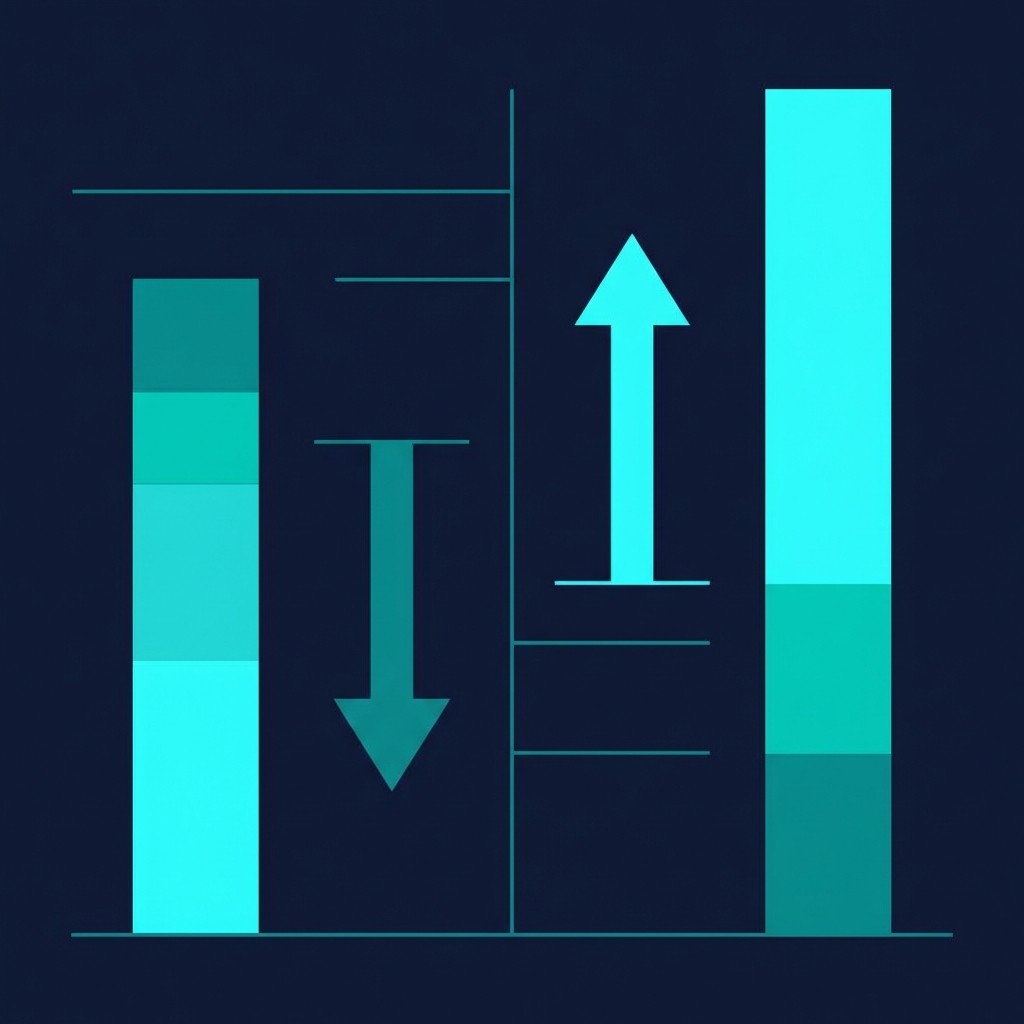
| Factor | Etsy | Shopify |
|---|---|---|
| Fees | $0.20/listing + 6.5% + payment processing | $29–$299/mo + 2.4–2.9% + 30¢ (no listing fees) |
| Built-in Traffic | Yes — 96M active buyers | No — you drive your own traffic |
| Setup Speed | Fast — list and sell same day | Moderate — store setup + marketing needed |
| Brand Control | Limited — Etsy’s marketplace look | Full — custom domain, design, experience |
| Customer Ownership | No — Etsy owns the relationship | Yes — full access to buyer data + email list |
| Scalability | Moderate — fees scale with revenue | High — flat fee structure rewards volume |
| Digital File Delivery | Built-in (Etsy handles it) | Via app (e.g., MyDesigns Digital Products) |
| Best For | Beginners, validation, passive discovery | Established sellers, brand builders, scaling |
The Real Answer: Why the Best Sellers Use Both
Here’s what nobody tells you: the sellers making the most money from digital goods in 2026 aren’t on Etsy or Shopify. They’re on both.
Etsy gets them discovery. Shopify gets them margin and customer ownership. Together, those two things compound into a business that’s both discoverable and defensible.
Think about it this way. Every buyer who finds you on Etsy is a potential long-term customer — but only if you can get them into your own ecosystem. Some sellers do this by including a link to their Shopify store in their digital product files or packaging notes. Others run their full catalog on both platforms simultaneously.
The objection I hear most often is: “Managing two platforms sounds like twice the work.” And honestly, it used to be. Uploading 50 products manually to Etsy AND Shopify meant 100 uploads. Writing separate titles and descriptions for each platform. Keeping inventory and delivery settings in sync. It was a real operational nightmare.
That bottleneck is exactly why we built multi-platform publishing into MyDesigns. Because once you remove the friction, the “use both” strategy isn’t just theoretically better — it’s actually easier than going deep on one platform alone.
Once you know what angle you want to pursue, speed matters more than another hour of hesitation.
If you want this strategy to actually turn into output, the workflow after the idea matters just as much as the idea itself.
How MyDesigns Makes Selling Digital Products on Both Platforms Easy

MyDesigns was built for sellers who want scale without the manual grind. Here’s what the digital products feature actually does:
- Auto-convert files for delivery. Upload your files once. MyDesigns handles the format conversion and packages everything for buyer delivery automatically — no manual setup per product.
- Bundle multiple files into one product. Sell a bundle of 20 SVG files as a single listing. Buyers get everything in one download. You set it up once.
- Automated delivery. The moment a buyer pays, they get their files. No manual sending, no delays, no customer service tickets asking “where’s my download?”
- Bulk publish to Etsy AND Shopify simultaneously. This is the big one. With bulk publishing, you push a product — or 100 products — to both platforms in one action. Shopify and Etsy integrations are both native, not workarounds.
- Vision AI for SEO-optimized listings. Vision AI auto-generates titles and descriptions tuned for each platform’s search algorithm. Your Etsy listings get Etsy-optimized copy. Your Shopify listings get copy built for your store’s SEO.
The result: you set your products up once, publish everywhere, and let automated delivery handle the rest. 200,000+ active sellers have created 50M+ products this way.
If you’re asking where to sell digital products — the answer is both platforms. And if you’re asking how to manage both without burning yourself out — that’s what MyDesigns is for.
Plans start free, with paid tiers at $24.99/mo (Starter), $49.99/mo (Pro), and $99.99/mo (Pro Plus). The time you save on your first batch of bulk uploads pays for it in a single session.
Which Platform Should You Start With?
Here’s my honest decision framework, based on where you actually are right now:
Complete beginner with no audience? Start with Etsy. The built-in marketplace means you don’t need to figure out traffic from day one. Focus on building your catalog, learning what sells, and optimizing your listings. Use it as a testing ground. Once you understand which products convert, take those validated winners to Shopify too.
Already have an audience — email list, social following, YouTube, anything? Go straight to Shopify, or at least launch both at the same time. You have the traffic problem solved. Shopify will give you better margins and customer ownership from your first sale. You don’t need Etsy’s discovery if you already have your own.
Want to scale fast and you’re serious about this as a business? Launch on both from the start, and use MyDesigns to manage both platforms simultaneously. The sellers who are doing $10k+ months aren’t doing it on one platform — they’re running a multi-channel operation with tools that handle the operational load so they can focus on product creation.
The best platform to sell digital products is not a single answer. It’s a strategy. And the strategy almost always ends up at: both, run efficiently.
Frequently Asked Questions
+ Is Shopify or Etsy better for digital products?
Neither is categorically better — they serve different needs. Etsy is better for beginners because it has 96 million built-in buyers. Shopify is better for scaling because you pay a flat monthly fee instead of 6.5% per transaction and you own your customer relationships. The best sellers use both simultaneously, which is exactly what tools like MyDesigns are built to support.
+ How do you sell digital products on Etsy?
To sell digital downloads on Etsy, open an Etsy seller account, create a listing, and upload your digital file directly to Etsy’s listing form. Etsy delivers the file automatically to buyers after purchase — you don’t need a third-party delivery tool. You pay $0.20 per listing plus 6.5% on each sale. Optimize your listing title and tags for Etsy search to drive discovery.
+ How do you sell digital products on Shopify?
Shopify doesn’t have native digital file delivery built in — you need a tool to handle it. MyDesigns integrates directly with Shopify and automates file delivery to buyers, so when someone purchases your digital product, they get the file immediately without any manual action from you. Set up your Shopify store, connect MyDesigns, upload your files, and publish.
+ Can I sell the same digital products on both Shopify and Etsy?
Yes — and you should. Selling the same digital products on both platforms multiplies your exposure with no additional product creation. The challenge used to be managing listings across two different platforms, but MyDesigns lets you bulk publish to Etsy and Shopify simultaneously, so your catalog stays in sync across both without double the work.
+ What are the best digital products to sell in 2026?
The most profitable digital products right now include printable planners and templates, SVG cut files for Cricut and Silhouette users, Canva social media templates, digital art and clipart bundles, fonts, Lightroom presets, and spreadsheet tools. The key is volume and catalog depth — sellers with 100+ listings consistently outperform those with a handful of products.
+ Does MyDesigns work with both Shopify and Etsy?
Yes. MyDesigns has native integrations for Etsy, Shopify, WooCommerce, and TikTok Shop. You can bulk publish digital product listings to multiple platforms in a single action, with automated delivery, AI-generated SEO titles and descriptions, and file bundling all handled for you. It’s specifically designed so that running a multi-platform digital product business doesn’t require twice the work.


Leave a Reply