


Most people overthink their first print on demand product. They chase mugs, t-shirts, phone cases, and whatever everyone else is selling. Meanwhile, the sellers I watch quietly stacking revenue are selling something most beginners ignore completely: wall art.
Print on demand wall art is one of the highest-margin, lowest-competition product categories you can sell right now. The production cost is low, the perceived value is high, and buyers are already conditioned to pay $30 to $80+ for a single piece. If you have even basic design taste (or access to AI tools that do the heavy lifting), you can build a real business around this product type faster than almost anything else in the POD space.
I have watched sellers go from zero to 200+ wall art listings in a weekend using the right tools and workflow. This is exactly how I would do it if I were starting from scratch in 2026.
Key Takeaways
- Wall art has the best margins in POD – Canvas prints and framed posters carry 40-60% margins at standard retail pricing, far higher than apparel.
- AI design tools eliminated the skill barrier – You do not need to be an artist. Tools like Dream AI generate gallery-quality designs in seconds.
- Mockups sell the product – Buyers need to see wall art in a room setting. Product mockups are non-negotiable for conversion rates.
- Volume is the growth lever – The sellers winning in this category have 200+ listings covering multiple styles, sizes, and niches.
Table of Contents
- Why Wall Art Is the Best Print on Demand Product Most Sellers Ignore
- Best Types of Print on Demand Wall Art to Sell
- How to Create Wall Art Designs That Actually Sell
- Setting Up Your Print on Demand Wall Art Shop
- How to Price Print on Demand Wall Art for Real Profit
- Wall Art Listings That Actually Get Clicks
- Scaling from 10 Listings to 500
- Frequently Asked Questions
Why Wall Art Is the Best Print on Demand Product Most Sellers Ignore
Here is a number that should change how you think about your product mix: the average order value for wall art on Etsy is 2-3x higher than the average t-shirt order. A canvas print that costs you $12 to produce sells for $40 to $75 depending on size and style. That is a 60%+ margin before you even optimize your pricing.
Compare that to t-shirts where you are fighting for $5-8 in profit per unit, competing against thousands of sellers in every niche, and dealing with size returns. Wall art has none of those problems.
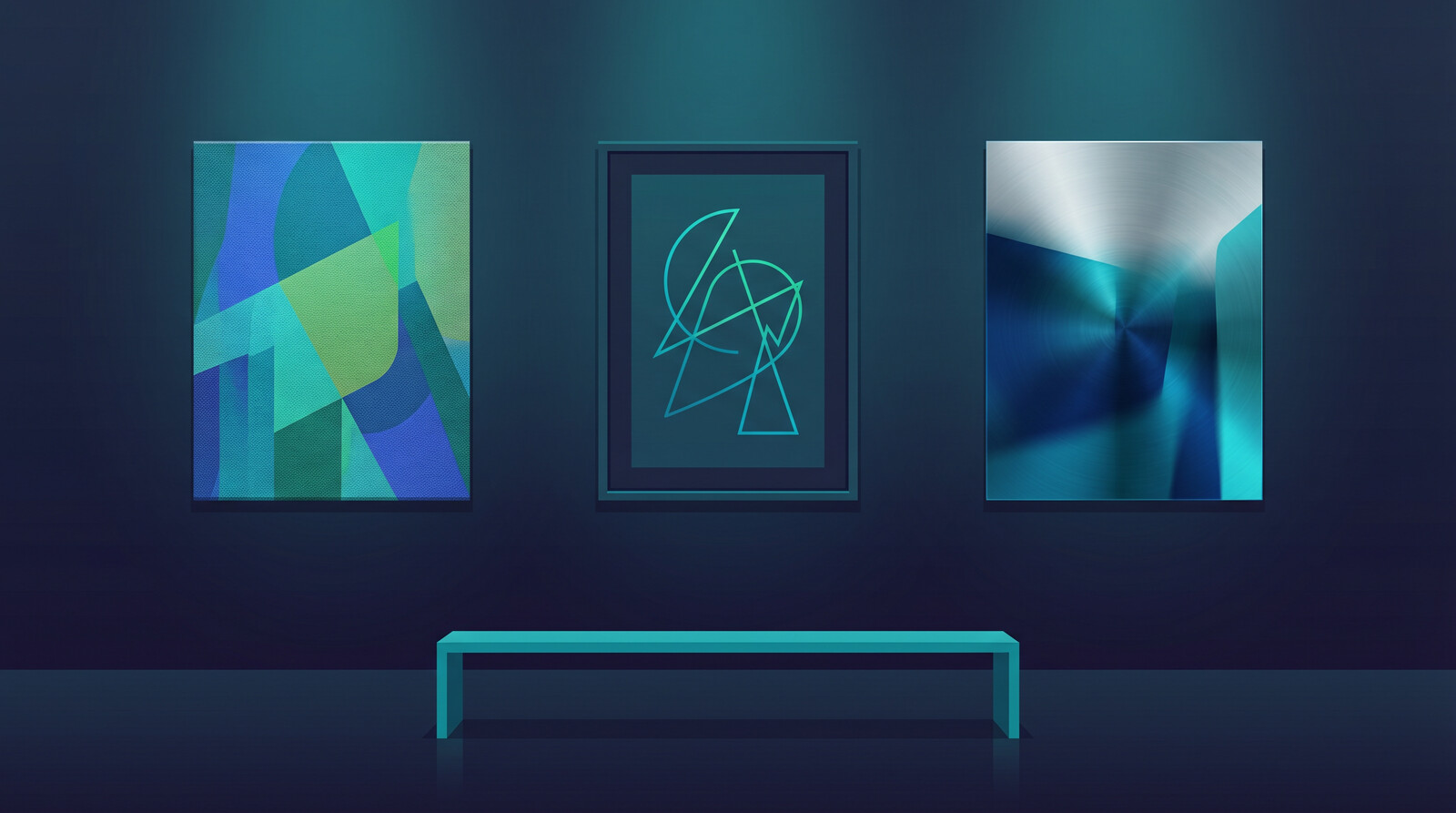
The other thing most sellers miss: wall art buyers are not impulse shoppers. They are decorating a space. They are searching for specific styles, colors, and themes. That means they arrive with purchase intent already built in. Your job is just to match the aesthetic they are looking for.
And the competition? Way thinner than apparel. Go search “minimalist mountain canvas print” on Etsy right now. You will find maybe a few hundred serious results. Search “mountain t-shirt” and you are buried under 50,000 listings. The math is obvious.
Best Types of Print on Demand Wall Art to Sell
Not all wall art is created equal. Each format has different margins, different buyer expectations, and different production considerations. Here is how I would think about the product mix.
Canvas Prints
Canvas is the premium option and my top recommendation for new wall art sellers. The perceived value is high, the production quality from modern print providers is excellent, and buyers expect to pay $40-100+ depending on size. A 16×20 canvas that costs you $14 to produce can sell for $55 all day long. That is a business you can build on.
If you want to go deeper on canvas printing specifically, we have a full guide on that. But for most sellers, canvas should be at least 40% of your wall art catalog.
Framed Posters
Framed posters hit the sweet spot between affordability and perceived quality. They cost less to produce than canvas but look significantly better than an unframed print. Price these at $25-50 depending on size and frame style. Framed posters also ship easier and have lower damage rates than canvas, which means fewer customer service headaches.
Metal and Acrylic Prints
These are your ultra-premium products. Metal prints in particular have a striking visual quality that photographs cannot fully capture, which means your repeat customer rate on these products tends to be higher than anything else. Production costs are higher ($20-35 range), but retail prices of $60-120+ are totally reasonable. I would add a small metal print collection after you have your core canvas and poster lines established.
Digital Wall Art Downloads
Do not sleep on digital downloads. Zero production cost, zero shipping, instant delivery. A set of 4 matching digital wall art prints can sell for $8-15 as a bundle, and your margin is nearly 100% after marketplace fees. This is also the fastest way to test which designs and styles resonate before you invest in physical inventory through POD.
You do not need to be an artist to sell wall art that people actually want to buy.
Dream AI generates gallery-quality abstract art, landscapes, and illustrations in seconds. Describe what you want, pick the best output, and publish it to your shop. That is the entire workflow.
How to Create Wall Art Designs That Actually Sell
This is where the game changed completely in the last 18 months. You used to need real design skills, expensive software, or a freelancer on payroll. Now? AI handles the hard part.

The AI Design Workflow I Would Use
If I were building a wall art catalog from zero today, here is my exact process:
- Pick a niche and mood. “Minimalist botanical prints” or “abstract ocean landscapes” or “retro 70s color block art.” Specificity matters because it defines your brand and attracts a repeat buyer.
- Generate 20-30 variations using Dream AI. Describe the style, color palette, and subject. Generate in batches. Keep the top 10.
- Upscale to print resolution. Wall art needs high-resolution files, typically 300 DPI at the target print size. AI tools output high-res images that work perfectly for canvas and poster printing.
- Create size variants. One design should exist as an 8×10, 11×14, 16×20, and 24×36 at minimum. That is 4 listings from a single design.
- Generate mockups. Every listing needs room-scene mockups showing the art on a real wall. This is non-negotiable.
That workflow produces 40+ publishable listings from 10 base designs. I have watched sellers execute this entire process in a single afternoon.
Wall Art Styles That Sell Best Right Now
Based on what I see moving volume in 2026:
- Abstract minimalism – Clean lines, muted earth tones, organic shapes. This outsells everything else in the wall art category right now.
- Botanical and nature illustrations – Ferns, eucalyptus, wildflowers. Especially in sage green and cream color palettes.
- Oversized typography prints – Single words or short phrases in modern fonts. “Home,” “Gather,” “Be Still.” Simple but extremely popular for living rooms and bedrooms.
- Retro and vintage landscapes – National park style, muted color palettes, nostalgic vibes. These have crossover appeal with the outdoor and travel communities.
- Dark academia and moody art – Rich, dark backgrounds with botanical or architectural subjects. Growing fast, especially on Etsy.
The sellers who do well pick one or two styles and go deep. Do not try to cover every aesthetic. Own a lane.
Setting Up Your Print on Demand Wall Art Shop
Your platform choice matters more for wall art than it does for most products. Here is how I would think about it.
Etsy is the default starting point for wall art sellers, and for good reason. The buyer intent on Etsy is already dialed in. People come to Etsy specifically looking for unique art and home decor. You are not convincing anyone to buy wall art – you are just showing them yours. If you are new, start on Etsy with a print on demand setup and validate your designs before expanding.
Shopify is where you scale. Once you have a proven product line and some organic traffic, a standalone Shopify store lets you control the brand experience and keep more of the margin. But do not launch on Shopify first unless you have an existing audience or paid traffic strategy. The marketplace traffic on Etsy is too valuable to skip.
On the fulfillment side, MyDesigns connects you to multiple print providers and marketplaces so you can list wall art products across Etsy and Shopify from a single dashboard. One design, multiple products, multiple channels. That is how you build real leverage without multiplying your workload.
Wall art without room-scene mockups does not sell. Period.
MyDesigns Product Mockups let you place your designs in realistic living room, bedroom, and office scenes instantly. No Photoshop. No templates. Just drag, drop, and publish.
How to Price Print on Demand Wall Art for Real Profit
Pricing wall art wrong is the fastest way to kill a shop that should be thriving. Here is the framework I use.
| Product Type | Typical Base Cost | Recommended Retail | Profit Margin |
|---|---|---|---|
| Canvas Print (16×20) | $12-16 | $45-65 | 55-65% |
| Framed Poster (18×24) | $10-14 | $30-50 | 50-60% |
| Metal Print (12×16) | $20-30 | $60-95 | 50-60% |
| Digital Download (set of 4) | $0 | $8-15 | ~85% after fees |
A few pricing rules I have learned the hard way:
- Never compete on price in wall art. If you price a canvas print at $19.99, buyers assume the quality is terrible. Price it at $49.99 and they assume it is gallery-worthy. Perceived value is everything in this category.
- Offer 2-3 size options per design. The smaller size anchors the entry price. The larger size is where your real margin lives. Most buyers pick the middle option.
- Bundle digital downloads. A single digital print for $3 feels cheap. A set of 4 coordinated prints for $12 feels like a deal. Same effort, 4x the revenue.
If you want a deeper dive on print on demand profit margins, I break down the math across multiple product types in that guide.
Wall Art Listings That Actually Get Clicks
A beautiful design means nothing if your listing does not get found or does not convert when someone lands on it. This is where most wall art sellers leave money on the table.
Mockup Strategy for Wall Art
I cannot stress this enough: your mockup quality directly determines your click-through rate. A flat image of your design on a white background will get buried. A lifestyle mockup showing your canvas print above a modern sofa in a well-lit living room will stop the scroll.
For every wall art listing, I recommend at least 3-4 mockup images:
- Primary image: close-up of the art in a styled room setting
- Scale reference: the print shown next to furniture so buyers understand the size
- Detail shot: a cropped, close-up view of the print texture or color detail
- Lifestyle context: the art in a different room (bedroom, office, nursery) depending on your target buyer
You can generate all of these using MyDesigns Product Mockups without touching Photoshop. Upload your design, pick the room scene, and export. It takes about 30 seconds per mockup once you have the workflow down.
SEO for Wall Art Listings
Wall art SEO follows a simple formula: style + subject + room + format.
Example: “Minimalist Ocean Sunset Canvas Print, Coastal Living Room Wall Art, Blue Abstract Seascape, Large Beach House Decor”
That title hits multiple search patterns. Someone searching “ocean canvas print” finds you. Someone searching “coastal living room wall art” finds you. Someone searching “beach house decor” finds you. One listing, multiple entry points.
For tags (on Etsy), use variations: “wall art,” “canvas print,” “home decor,” plus your style and subject keywords. If you want a complete breakdown on Etsy SEO, we have a 17-point checklist you can follow. The same principles apply to Shopify product pages, just through meta titles and descriptions instead of tags.
For listing descriptions, Vision AI can analyze your wall art designs and generate keyword-optimized descriptions automatically. That saves you from writing the same type of product copy 200 times.
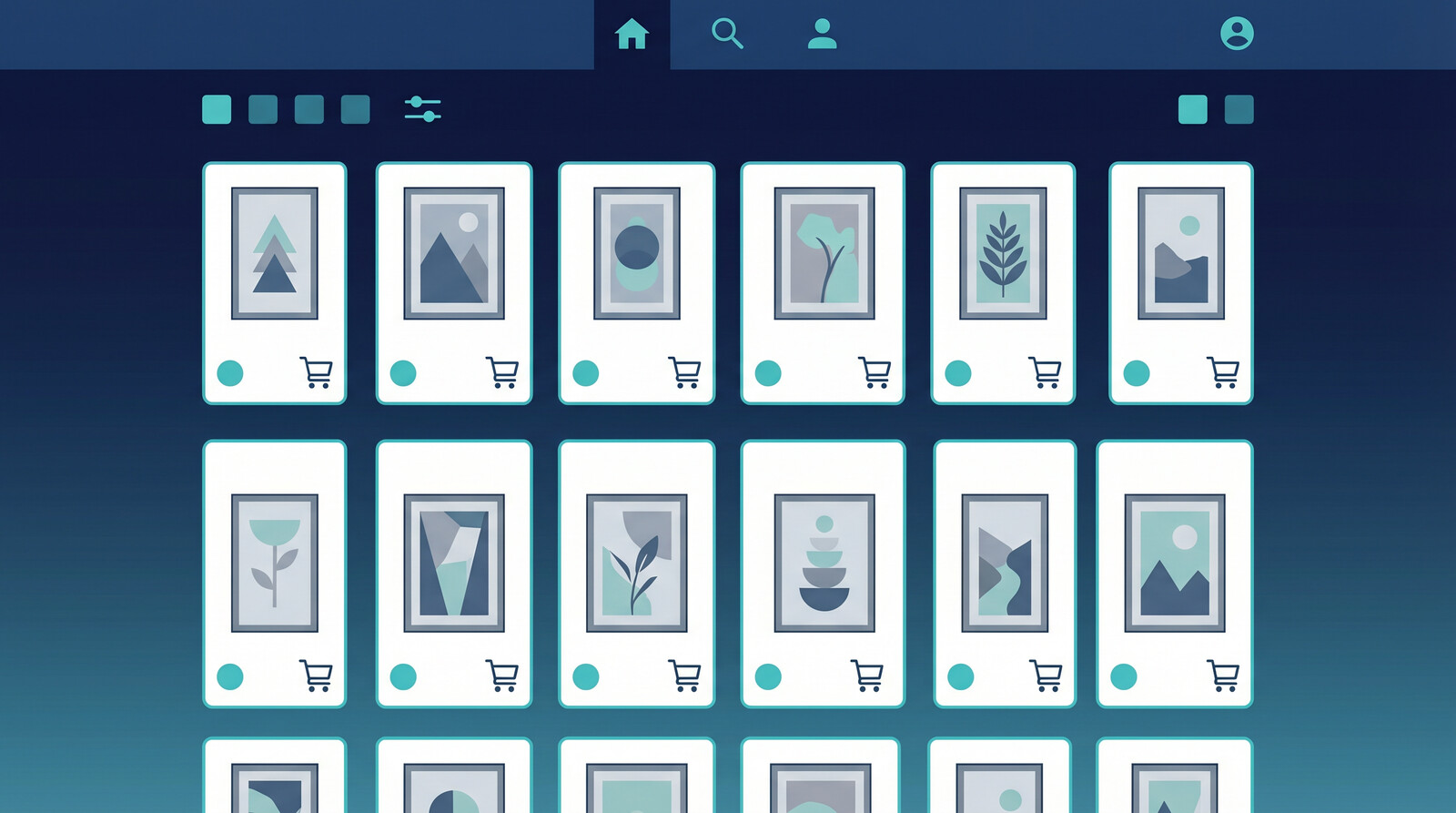
Turn 10 designs into 40+ listings in one afternoon.
MyDesigns Bulk Publish lets you apply one design across multiple product types and sizes, then push everything live to your shop in a single batch. That is how sellers go from 10 listings to 200 in a weekend.
Multi-Product
Multi-Channel
Scaling from 10 Listings to 500
The sellers making real money in wall art are not doing it with 20 carefully curated pieces. They are building catalogs of 200, 300, 500+ listings across multiple styles and product types. Volume is the game.

Here is the scaling playbook I would follow:
Week 1-2: Foundation. Pick your primary style (abstract minimalism, botanical, whatever resonates). Generate 15-20 base designs. Create canvas + framed poster listings for each. That gives you 30-40 listings to start getting data.
Week 3-4: Expand within your niche. Look at which designs get the most views, favorites, and sales. Double down on what works. Generate 20 more designs in that style with variations in color palette, composition, and subject matter. Add digital download bundles for your best sellers. You should be at 80-120 listings.
Month 2-3: Add a second style. Once your first niche is producing consistent sales, launch a second aesthetic. Keep it complementary but distinct. Botanical sellers might add a landscape collection. Abstract sellers might add a typography line. Now you are at 150-250 listings.
Month 3+: Multi-channel expansion. Take your proven top sellers and list them on a second platform. If you started on Etsy, open a Shopify store. If you were on Shopify, add Etsy. Use multi-product publishing to push the same designs across channels without duplicating work.
This is exactly why bulk creation and publishing tools exist. Doing this manually – creating each listing one at a time, uploading images one by one, writing each description from scratch – is a full-time job. With the right workflow, it is an afternoon project.
The old playbook of carefully crafting 10 perfect listings and waiting does not work anymore. The algorithm rewards fresh, consistent content. The sellers who publish frequently and test broadly are the ones the marketplace favors. That is just how it works now.
Frequently Asked Questions
+ Is print on demand wall art profitable?
Yes, print on demand wall art is one of the most profitable POD product categories. Canvas prints typically carry 50-65% margins, framed posters 50-60%, and digital downloads nearly 85% after marketplace fees. The key is pricing at perceived value rather than competing on cost.
+ What is the best platform to sell wall art print on demand?
Etsy is the best starting platform because buyers already come to Etsy looking for unique wall art and home decor. Once you have proven sellers, expand to Shopify for better brand control and margins. Selling on both platforms simultaneously is the ideal long-term strategy.
+ Can you sell AI-generated wall art?
Yes, you can sell AI-generated wall art on Etsy, Shopify, and most other platforms. Etsy requires sellers to disclose AI involvement in the production process. The key is creating curated collections with a consistent style rather than publishing random AI outputs. Buyers care about the final aesthetic, not the tool used to create it.
+ How many wall art listings do I need to start making sales?
Most wall art sellers start seeing consistent sales around 30-50 listings. However, the real growth inflection point is around 100-200 listings, where you have enough variety and keyword coverage for the marketplace algorithm to consistently surface your products. Aim for at least 40 listings in your first two weeks.
+ What resolution do I need for print on demand wall art?
For physical prints, you need at least 300 DPI at the target print size. A 16×20 inch canvas requires an image that is at least 4800×6000 pixels. For digital downloads, provide the highest resolution possible since buyers may print at various sizes. Modern AI design tools generate images at sufficient resolution for most standard print sizes.
Wall art is not a trend. It is a category with built-in demand that keeps growing as more people invest in their living spaces. The sellers who win here are the ones who treat it like a real product business: consistent publishing, strong mockups, smart SEO, and a clear aesthetic identity.
You do not need a design degree. You do not need a warehouse. You need a tool that lets you generate designs, create mockups, and publish listings at speed.


Leave a Reply