


If you think print on demand stickers are a cute side hustle, you are pricing them wrong and probably building them wrong too. I have watched sellers pull $3 to $8 profit per sticker with almost no customer service cost, no sizing returns, and reorder rates that embarrass most apparel shops. Stickers are one of the most underrated product categories in POD right now, and the window to carve out a niche is still wide open.
Here is the honest breakdown of how to actually build a sticker business that scales, which print providers are worth your time, and the design and listing workflow I would run if I were starting from zero this weekend.
Key Takeaways
- Stickers have the best unit economics in POD – low production cost, high perceived value, and almost zero return risk.
- Die-cut vinyl and holographic finishes outsell generic rectangles by a wide margin on Etsy and Shopify.
- Niche beats generic every time – a 50-sticker pack for one tight audience beats 500 random designs.
- Catalog speed is the real moat – the sellers winning with POD stickers are publishing dozens of SKUs per week, not one at a time.
Table of Contents
- Why Stickers Quietly Beat Most POD Products
- The Sticker Types Actually Worth Selling
- How I Rank the Print Providers
- The Design Playbook That Actually Converts
- Pricing Stickers Without Leaving Money on the Table
- Why Catalog Speed Is the Real Unfair Advantage
- Mistakes That Quietly Kill Sticker Shops
- Frequently Asked Questions
Why Stickers Quietly Beat Most POD Products
Stickers are the category POD gurus love to skip because the revenue per unit looks small. That is a lazy analysis.
Here is what actually matters. A sticker costs between $1 and $3 to produce. It retails between $4 and $10 individually, or $12 to $30 as a pack. The customer gets something tactile for the price of a coffee, so the decision to buy takes seconds. No sizing chart, no color match complaints, no international shipping nightmare. The cheapest-to-acquire sale in POD is almost always a sticker.
I have seen sellers who built entire six-figure Etsy shops on nothing but stickers. They are not flashy. They are quietly compounding. And because stickers are so easy to bundle and repurpose, your catalog grows faster per hour of work than any other product type.

The other thing nobody talks about. Stickers turn buyers into walking billboards. A $5 sale today is a laptop, a water bottle, or a car window promoting your brand for the next two years. Try getting that kind of retention from a hoodie sale.
The Sticker Types Actually Worth Selling
Not every sticker product is worth your catalog space. Here is how I sort them.
Die-Cut Vinyl
This is the default winner. Die-cut vinyl stickers are weatherproof, dishwasher safe, and look premium in product photos. If you only sell one format, sell this one. They also photograph beautifully for mockups, which matters more than people realize for conversion.
Holographic and Glitter
Premium finishes let you charge 40 to 60 percent more for essentially the same design. On Etsy, “holographic” in the title reliably lifts CTR. If a provider in your stack offers holographic or glitter finishes, build a duplicate listing for every top design in both finishes. You are leaving money on the table if you do not.
Sticker Sheets and Packs
This is where the real margin lives. A sheet of 8 to 12 small stickers priced at $12 to $18 carries better AOV than any single die-cut. Plus, it feels like a gift. If you are in journaling, planner, mental health, cottagecore, or any fandom niche, sticker sheets should be at least 40 percent of your catalog.
Spin up your first sticker collection without paying a cent to test.
MyDesigns has a free plan so you can generate designs, build mockups, and connect your first store before committing to a paid tier. If stickers hit, upgrade. If not, you lost nothing but a weekend.
How I Rank the Print Providers
I get asked which sticker provider to pick every week. The honest answer is that it depends on where you sell and what margin structure you need. Here is the short version.
For domestic US fulfillment on standard die-cut, the big integrated POD networks win because they plug into Shopify and Etsy natively and ship in 3 to 5 business days. For premium finishes like holographic and glitter, the specialty sticker providers usually outperform the general POD giants on print quality. For anything EU-facing, pick a provider with European facilities or you will bleed margin on shipping.
What matters way more than the specific provider is how consistently they print. Rotate test orders every quarter. Sticker print quality drifts, and the provider that was best last year might have slipped. Do not get loyal to a logo on a dashboard. Get loyal to the one that delivers the best sample today.
Inside MyDesigns, you can connect to our network of print providers, push designs across multiple SKUs at once, and avoid the manual copy-paste nightmare that kills momentum when you are scaling a sticker catalog. That is the whole point of centralizing your POD stack.

The Design Playbook That Actually Converts
Most sticker shops fail on design, not on product. Here is the playbook I would run.
First, pick a tight niche. Not “cute animals.” Something like “anxious introvert plant parents” or “ICU night shift nurses” or “trad climbing belay nerds.” The narrower the audience, the easier your designs convert, because you are speaking directly to something they already identify with.
Second, build in collections, not one-offs. One sticker is an impulse buy. A coordinated set of 12 is a gift and a reorder. Think in themes, palettes, and visual languages that let your shop look curated instead of random.
Third, get your mockups right. A flat PNG on a white background converts like garbage. A mockup of the sticker on a water bottle, laptop, or car window tells the customer exactly how it will look in their life. I have seen identical designs double in sales just from mockup upgrades.
Fourth, test fast. The sellers winning with stickers are launching 10 to 30 new designs a week and letting Etsy and Shopify tell them what works. Not 30 a month. 30 a week. If you are trying to predict which sticker will pop before you publish, you are doing it wrong.
Plain PNG sticker listings leave money on the table. Every single time.
MyDesigns Product Mockups let you drop a design onto realistic sticker scenes in seconds. Water bottles, laptops, notebooks, cars. Pick the angle that sells, then batch it across your whole collection.
Pricing Stickers Without Leaving Money on the Table
Here is the pricing mistake I see constantly. Sellers look at the $1 to $3 production cost, panic, and price everything at $3.99 “to stay competitive.” That is not competitive. That is charity.
Die-cut vinyl stickers should retail between $4.50 and $8 depending on size and finish. Holographic and specialty finishes should start at $6.50 and go up from there. Sticker sheets should land between $9 and $18 based on count and complexity. Multi-sticker packs tied to a theme are $14 to $28.
Now layer in the move almost nobody makes. Offer a “build your own pack” listing that lets the customer pick 3, 5, or 10 stickers at a bundled discount. The average order value on this type of listing is almost always higher than selling individual stickers, because the discount feels like a win even when your per-unit margin is actually better than on singles.
Ship fast and cheap in the US. Free shipping on sticker orders over $15 is one of the single highest-leverage pricing moves on Etsy. It bumps you in search, increases AOV, and keeps your conversion rate honest.
Why Catalog Speed Is the Real Unfair Advantage
Everyone obsesses over design quality. Almost nobody obsesses over catalog speed. That is the bigger lever.
Think about how Etsy search works. The algorithm rewards shops that publish consistently, that get click-through on new listings, and that have enough breadth to match long-tail queries. A shop with 40 stickers will lose to a shop with 400 stickers, holding design quality roughly equal. This is math, not taste.
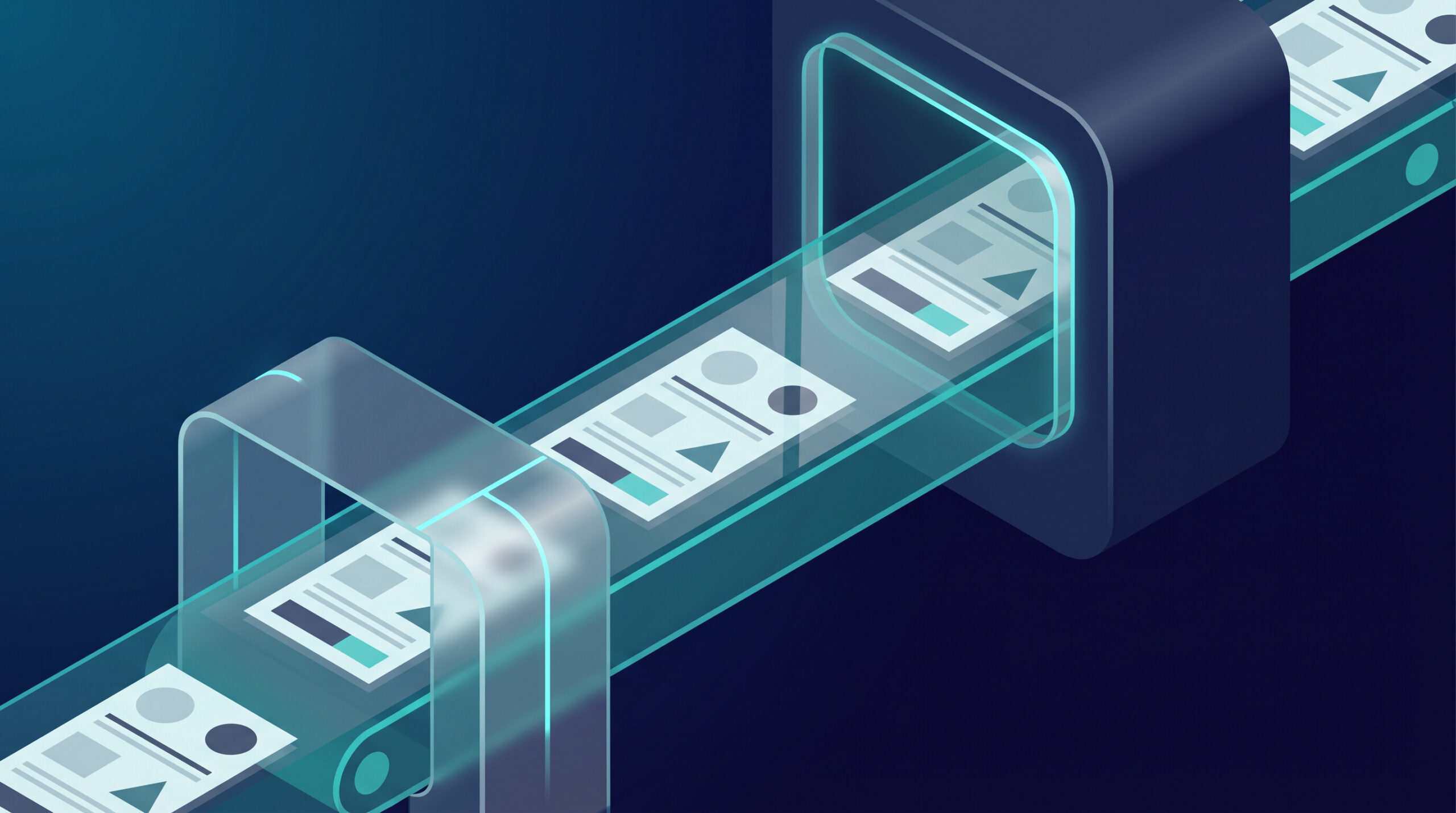
The problem is that publishing 400 stickers manually is a soul-crushing job. Each listing needs a title, tags, description, mockups, variants, and SEO copy. Doing it one at a time burns your weekend without moving the needle.
This is exactly why we built bulk publishing into MyDesigns. You design once, apply to multiple sticker products, generate mockup variations, and push the whole batch live across Etsy and Shopify without rebuilding every listing by hand. The sellers who figure this out go from 40 listings to 400 in a week, and the traffic curve follows.
The problem is not designing one good sticker. It is shipping 40 listings in a day.
With MyDesigns bulk publishing, you push dozens of sticker SKUs live at once instead of spending your weekend copy-pasting tags and titles.
Mistakes That Quietly Kill Sticker Shops
I get why new sellers make these mistakes. I made some of them myself. But every one of these is avoidable if you know what to watch for.
Selling too broad, too early. Your first 50 stickers should be tightly themed. Not a grab-bag of whatever you felt like drawing. Pick one niche and saturate it before jumping categories.
Ignoring mockups. A flat, transparent PNG sticker next to a scale ruler is the kiss of death on Etsy. If your thumbnail does not show the sticker on something real, your CTR will stay underwater no matter how good the design is.
Pricing for race-to-bottom. A $2.99 sticker tells the customer you are cheap, not that you are a deal. It also collapses your unit economics so hard that ad spend becomes impossible.
Not building packs. Single-sticker orders leave 60 to 80 percent of possible AOV on the table. You are almost always better off nudging customers to a pack of 3 or 5.
Treating each listing like a snowflake. Your titles, tags, and descriptions should be templated. Templates save time and they also enforce SEO consistency, which Etsy rewards.
Trusting one print provider forever. Print quality drifts. Audit your fulfillment partners every quarter. The best provider this year is not automatically the best provider next year.

Stickers are not a backup plan. They are one of the most leverage-rich products in POD if you treat them seriously. Tight niche, real mockups, smart pricing, and catalog speed. That is the whole game.
Frequently Asked Questions
+ Are print on demand stickers actually profitable?
Yes, often more profitable per unit than apparel once you factor in zero returns and high reorder rates. Expect $3 to $8 of margin per sticker at retail, with sticker packs pushing $10 to $20 of margin. The trick is volume, not pricing up a single sticker.
+ What is the best sticker type to start with?
Die-cut vinyl. It is weatherproof, looks premium, photographs well for mockups, and is the format buyers expect when they search “custom stickers.” Once you have a die-cut catalog, layer in holographic finishes and sticker packs.
+ Do I need my own designs to sell POD stickers?
You need original work you own the rights to. That can come from your own hand, from a designer you hire, or from AI generators used responsibly with your own creative direction. Never lift designs off Pinterest or steal from other Etsy shops. That is the fastest way to get your shop suspended.
+ How many sticker designs should I launch with?
Aim for 30 to 50 tightly themed designs in your first two weeks. Anything less and Etsy has no signal to rank you. Anything more without validation and you are burning time on designs that may not land.
+ Is Etsy or Shopify better for selling POD stickers?
Start on Etsy because the buyer intent is already there. Once you have 50 to 100 sales on Etsy and know which designs work, spin up a Shopify store to own the customer relationship, push higher AOV packs, and run retargeting ads.


Leave a Reply