


Key Takeaways
- Etsy has 96 million active buyers — the demand is already there. Your job is to show up in search results with optimized listings, not to “build an audience” from scratch.
- Print on demand eliminates the biggest barrier — no inventory, no upfront costs, no shipping headaches. You design it, your print provider handles printing, packing, and shipping.
- Your first 10 listings matter more than your first 100 views — a tight, well-researched product catalog beats a sprawling shop with weak SEO every single time.
- AI tools have changed what’s possible for solo sellers — tools like Dream AI and Vision AI let you produce listings in minutes that used to take hours of manual work.
Table of Contents
- Why Etsy Is Still Worth It in 2026
- What to Sell on Etsy (And What to Avoid)
- How to Set Up Your Etsy Shop
- Creating Listings That Actually Sell
- Etsy SEO: How the Algorithm Works in 2026
- Using Print on Demand to Scale Without Risk
- How MyDesigns Speeds Everything Up
- Promoting Your Shop Beyond Etsy Search
- The Mistakes That Kill New Shops
- Frequently Asked Questions
Most people who fail on Etsy don’t fail because Etsy is too competitive. They fail because they set up a shop the same way people were doing it in 2019 — and then wonder why nothing moves.
I’m Curtis Blackmore, CEO and founder of MyDesigns.io. I’ve spent years working directly with Etsy sellers — from people making their first listing to stores doing six figures a year. I’ve watched the platform change, watched sellers adapt (or not), and built tools specifically to help creators get listings live faster and rank higher.
This guide is the real playbook for 2026. No fluff. No “create a brand identity” advice that sounds smart but doesn’t help you make a single sale. Just what actually works right now.
Why Etsy Is Still Worth It in 2026
96 million active buyers. That’s the number. Etsy isn’t a niche craft market anymore — it’s a global marketplace with serious commercial volume, and it keeps growing.
Here’s the thing most people get wrong: they compare Etsy to building a Shopify store and ask “which is better?” That’s the wrong question. Etsy gives you built-in search traffic from day one. You don’t have to run ads or build an email list to get your first sale. The platform does the discoverability work for you — if your listings are optimized.
For print on demand and digital products especially, Etsy is still the highest-ROI starting point for new sellers in 2026. Low startup cost, low risk, and a search engine with purchase intent baked in.
The sellers struggling right now aren’t struggling because Etsy is dying. They’re struggling because they ignored SEO, uploaded mediocre mockups, and priced themselves out of competitiveness. Those are fixable problems.
The sellers who win on Etsy usually move faster than the ones still polishing drafts.
This is exactly where a cleaner workflow starts to matter more than another round of planning.
What to Sell on Etsy (And What to Avoid)
I strongly advise you to get specific before you open your shop. The biggest time-waster I see from new sellers is spending weeks building a 50-product shop across 6 different niches. Pick one niche. Master it. Then expand.
Here are the three product categories worth your attention in 2026:
Print on Demand Products
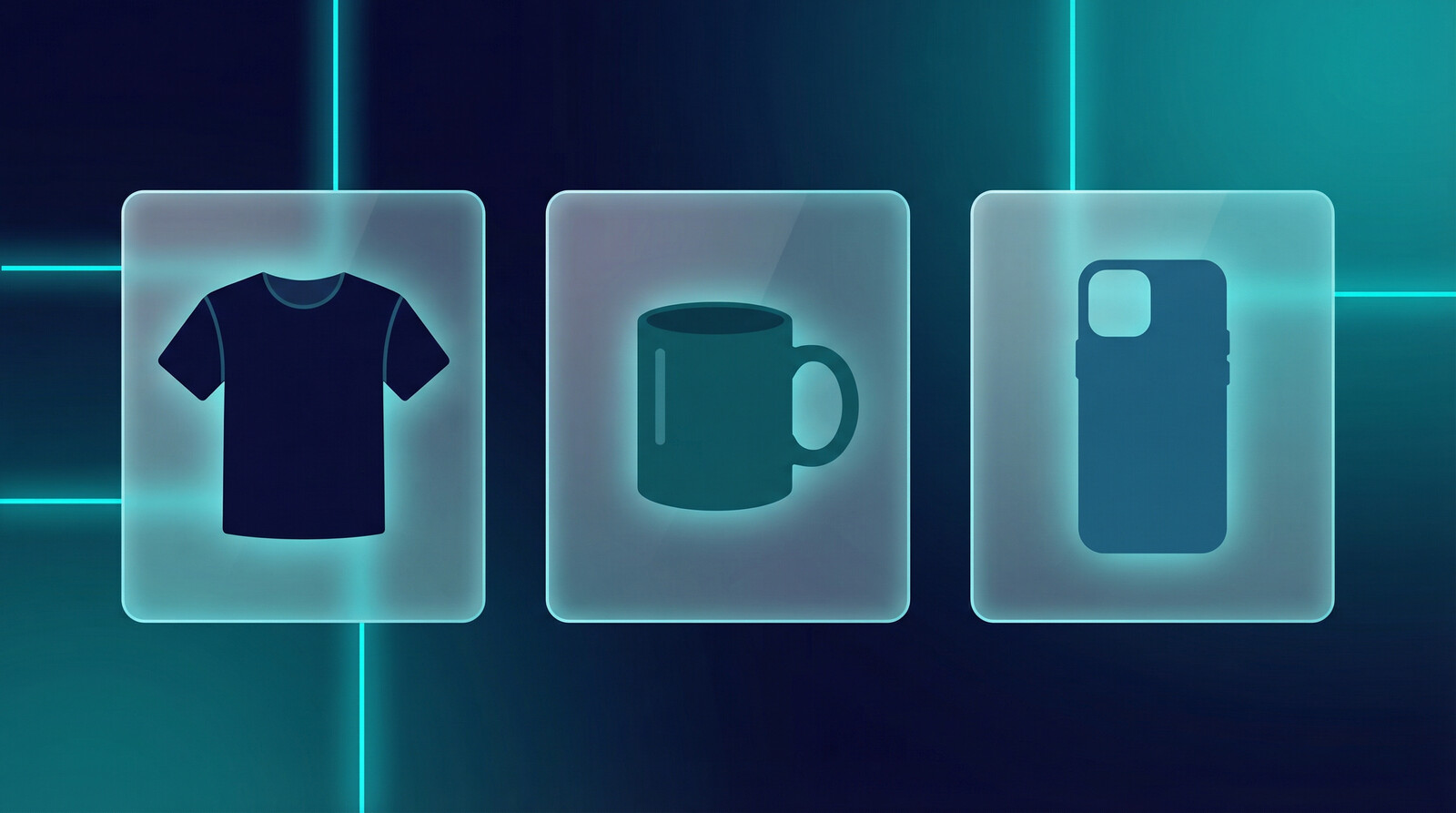
T-shirts, hoodies, mugs, tote bags, phone cases, ornaments, posters. These are the workhorses of Etsy. Print on demand means you upload a design, list it, and a print provider handles printing and shipping every time someone orders. Zero inventory. Zero upfront cost.
The competitive reality: POD is saturated in generic niches (dogs, wine, sarcasm). It’s wide open in specific sub-niches. “Funny nurse mug” is crowded. “Pediatric oncology nurse retirement gift” is not. Specificity wins.
I’ve seen sellers go from zero to $3,000/month in under 90 days by doing exactly this — picking a tight professional niche (think specific job titles, specific hobbies, specific life events) and dominating it with 20–30 listings.
Digital Downloads
SVG files, Canva templates, printable wall art, digital planners, Lightroom presets, patterns. Once you create the file, it sells infinitely with zero fulfillment cost. Your margin is essentially 100% minus Etsy fees.
Digital products are also the fastest path to passive income on the platform. I’ve watched sellers create a set of 15 SVG designs in a weekend and still collect sales from them 18 months later without touching the shop.
Use a tool like EtsyHunt to research what’s actually selling in your chosen digital category before you spend time creating files nobody wants.
Handmade & Physical Goods
Jewelry, ceramics, candles, leather goods, custom portraits. High margin, high perceived value — but also high time investment. Handmade scales differently than POD or digital.
If you’re a maker, Etsy is genuinely the best platform for you. But don’t try to compete on volume. Compete on uniqueness and quality. Price accordingly — buyers on Etsy specifically seek out handmade and are willing to pay a premium.
How to Set Up Your Etsy Shop
The technical setup takes less than an hour. Here’s what to focus on:
Create Your Account
Go to etsy.com, click “Sell on Etsy,” and follow the prompts. You’ll need to verify your identity — this is now required early in the process, not something you can skip. Have your ID ready.
One important detail: set your shop currency to your local currency. If you sell in USD but your bank account is in CAD, Etsy charges a 2.5% currency conversion fee on every transaction. That adds up fast.
Name, Branding & Bio
Your shop name needs to be 4–20 characters, no spaces. Pick something memorable that hints at your niche without being too limiting. You don’t want a name like “SarahsMugs” if you plan to sell shirts next quarter.
Your shop banner and profile photo matter more than most new sellers think. Not because they directly affect search rankings — they don’t — but because they affect conversion rate. A polished shop turns browsers into buyers. Use Canva, or use the mockup generator in MyDesigns to create clean visuals quickly.
Write a genuine shop bio. Buyers on Etsy actually read these. Tell your story in 3–4 sentences. Why you started. What you make. What makes your shop different. Human beats corporate every time.
Payment & Billing Setup
You’ll connect a bank account for deposits and a credit/debit card for billing (Etsy charges fees and ad spend to this card). In the US, Etsy uses Plaid to verify your bank account instantly.
Etsy Payments is the standard payment processor. It accepts credit cards, debit cards, PayPal, Apple Pay, Google Pay, and Etsy gift cards. You don’t need to set up Stripe or anything external.
Payouts happen on a deposit schedule you control — daily, weekly, biweekly, or monthly. I recommend starting with weekly until you understand your cash flow.
Creating Listings That Actually Sell
This is where most sellers either win or lose. The listing is your storefront within a storefront. Get it right and the algorithm pushes you. Get it wrong and you’re invisible.
Titles & Tags
Here’s the old Etsy playbook that doesn’t work anymore: stuff your title with every possible keyword, separated by commas, in no logical order. Buyers hate it, and Etsy’s algorithm has gotten smart enough to penalize it.
The 2026 approach: Write a natural-language title that leads with your primary keyword, then adds 2–3 supporting details. “Funny Dog Mom Coffee Mug — Golden Retriever Gift for Women — 11oz Ceramic” is better than “Mug Coffee Dog Mom Funny Golden Retriever Gift Women Ceramic 11oz Cup.”
Use all 13 tag slots. Every one. Tags are still a major ranking signal. Don’t repeat exact phrases from your title — use variations and synonyms instead. If your title has “Golden Retriever Gift,” your tags should include things like “golden retriever mom,” “dog lover gift,” “pet owner gift,” and “dog mom birthday.”
Tools like Everbee are excellent for tag research — they show you exactly what keywords competing listings use and what search volumes look like.
Photos & Mockups
Photo quality is the single biggest conversion factor on Etsy. Full stop. I’ve seen identical products with completely different sales velocities based purely on mockup quality.
For POD sellers: lifestyle mockups outperform flat product shots by a significant margin. A mug sitting on a cozy desk in morning light sells better than a mug floating on a white background. The MyDesigns Mockup Generator has hundreds of lifestyle templates specifically built for Etsy sellers.
Use all 10 photo slots. Show multiple angles. Show the product in context. Include a size comparison photo if relevant. The more information you give buyers visually, the less hesitation they have at checkout.
Pricing Strategy
Most new sellers underprice. I get why — you’re worried about competing — but underpricing is a trap. On Etsy, low prices often signal low quality. Buyers expect to pay more for handmade and custom items than they would on Amazon.
For POD products, your pricing formula should be: production cost × 3 to 4. If your print provider charges you $12 to make a mug, your listing price should be $35–45. That covers Etsy fees (6.5% transaction fee + $0.20 listing fee + payment processing), gives you room for occasional sales, and still leaves real profit.
For digital downloads, the calculus is different since your marginal cost is zero. Price based on value and competition. Most successful SVG shops price bundles at $4–8 and standalone files at $2–4.
You do not need more theory here. You need a workflow that turns ideas into listings while the opportunity is still alive.
The advantage usually goes to the sellers who can create, organize, and publish without getting buried in manual work.
Etsy SEO: How the Algorithm Works in 2026
Etsy’s search algorithm has two primary goals: relevance and conversion quality. It wants to show buyers listings that match what they searched AND listings that buyers actually click and purchase.
That second part is critical and most guides skip it. Your click-through rate and conversion rate directly affect your search ranking. A listing with a 4% conversion rate will outrank a more keyword-optimized listing with a 1% conversion rate over time. This is why mockup quality and pricing aren’t just “nice to haves” — they’re SEO factors.
The ranking signals Etsy weighs most heavily in 2026:
- Relevance — how well your title, tags, and description match the search query
- Listing quality score — conversion rate, favorites, and purchase history
- Shop score — customer reviews, on-time shipping, response rate
- Recency — newly listed or recently renewed listings get a temporary boost
- Shipping — free shipping (or Etsy’s shipping guarantee) gets a ranking boost in US search
For a deeper dive on SEO strategy specifically, read our dedicated Etsy SEO guide — it covers keyword research, long-tail strategy, and the 2026 algorithm updates in detail.
One tactic that’s still underused: renewing listings strategically. When you renew a listing manually (not through auto-renew), it gets a short-term visibility boost. During slow periods, manually renewing your 5–10 best listings every few days keeps them cycling back into fresh search results.

Using Print on Demand to Scale Without Risk
Print on demand is the model I recommend to almost every new Etsy seller. Here’s why: it removes the two biggest barriers to starting — money and logistics.
No inventory means you’re not gambling $2,000 on products that might not sell. No shipping means you’re not spending your evenings packing boxes. You design, you list, you market. The supply chain runs itself.
MyDesigns connects you to a global network of print providers across the US, UK, and EU — so your shipping times stay competitive without you managing supplier relationships. The workflow is: create your design → publish through MyDesigns → orders route automatically to your print provider for fulfillment. You never touch it.
For more on the full POD workflow, our print on demand on Etsy guide covers supplier selection, product quality comparisons, and the exact steps to set up your print-on-demand workflow.
How MyDesigns Speeds Everything Up
I built MyDesigns because I watched sellers waste enormous amounts of time on tasks that should be automated. Creating mockups one at a time. Writing SEO descriptions from scratch. Uploading listings manually, one by one. It’s brutal if you’re trying to scale.
Here’s what our platform does that changes the math on Etsy selling:
Bulk Upload — Instead of creating listings one at a time in Etsy’s clunky interface, you prepare everything in MyDesigns and push dozens of listings to Etsy in a single batch. Sellers who used to spend 3 hours listing now do it in 20 minutes.
Mockup Generator — Hundreds of lifestyle templates, instant rendering, no Photoshop required. Your designs dropped onto professional mockups in seconds.
Dream AI — Generate original design concepts from text prompts. If you’re not a graphic designer, this is how you compete with sellers who are.
Vision AI — Automatically generates SEO-optimized titles, descriptions, and tags for your listings based on your design. The difference between a listing that ranks and one that doesn’t is often just the copy — and Vision AI handles it without you writing a word.
Multi-Platform Publishing — When you’re ready to expand beyond Etsy to Shopify, Amazon, or other platforms, MyDesigns lets you publish the same listings everywhere from one dashboard.
Plans start free. When you’re ready for volume, paid plans start at $24.99/month (or $18.75/month on annual). See full pricing here.

Once you know what angle you want to pursue, speed matters more than another hour of hesitation.
If you want this strategy to actually turn into output, the workflow after the idea matters just as much as the idea itself.
Promoting Your Shop Beyond Etsy Search
Etsy search should be your primary traffic source when you’re starting out. It’s free and it converts. But once you’re established, diversifying your traffic makes you less vulnerable to algorithm changes.
Pinterest is the highest-ROI external traffic source for most Etsy sellers. Pinterest is a visual search engine with serious buyer intent. Create pins for each of your products, link directly to your listings, and let Pinterest’s algorithm distribute them. Many sellers report Pinterest as their #2 traffic source within 6 months of consistent pinning.
Etsy Ads are worth testing once you have listings with proven organic traction. The key mistake people make is running ads on new, unproven listings. Run ads on listings that already convert organically — you’re paying to get more eyeballs on something you know works.
TikTok and Instagram Reels for handmade sellers are genuinely powerful. Showing your process — the making, the packaging, the unboxing — builds an audience that follows you back to Etsy. It’s not about going viral. It’s about consistent, short-form content that shows real humans making real things.
Email marketing is chronically underused by Etsy sellers. You can’t collect emails directly through Etsy, but you can include a card in your packaging or a PDF download with a digital product that drives buyers to a simple email signup. Even a 200-person email list gives you a direct line to your most interested buyers.
The Mistakes That Kill New Shops
I’ve seen this pattern enough times to call it a law: new sellers fail in predictable ways. Here’s what to avoid:
Mistake #1: Opening a shop before doing niche research. Jumping in before you understand what buyers actually search for and purchase. Use EtsyHunt or Everbee before you design a single thing.
Mistake #2: Uploading 5 listings and waiting. Etsy’s algorithm needs data. 5 listings gives the algorithm almost nothing to work with. You need at minimum 20–30 listings in your niche before you can even begin to evaluate what’s working.
Mistake #3: Ignoring reviews. Your first 10 reviews are your most important. Follow up with buyers (through Etsy’s message system, not spam), make sure they’re happy, and don’t be afraid to address problems proactively. A 4.8-star shop with 12 reviews converts better than a 5-star shop with 2.
Mistake #4: Abandoning ship after 30 days. Most new Etsy shops take 60–90 days to see consistent traffic. The sellers who quit at 30 days never find out whether their shop would have worked. Commit to 90 days of consistent listing and optimization before evaluating.
Mistake #5: Copying what worked 3 years ago. The “dog mom mug” category that was goldmine territory in 2021 is now oversaturated. The niches that work today require more specificity and smarter SEO. Study the current market, not the stories you read from 2022.
Frequently Asked Questions
+ How much does it cost to sell on Etsy?
Opening an Etsy shop is free. You pay $0.20 per listing (valid for 4 months), a 6.5% transaction fee on each sale, and a payment processing fee of 3% + $0.25. For a $30 sale, you’d pay roughly $0.20 + $1.95 + $1.15 = $3.30 in fees. There’s also an optional $10/month Etsy Plus subscription, but I don’t recommend it until you’re already generating consistent sales.
+ How long does it take to make your first sale on Etsy?
Most sellers with well-optimized listings see their first sale within 2–6 weeks. Shops that run Etsy Ads sometimes see first sales within days. The biggest variable is listing quality — great mockups, accurate keywords, and competitive pricing dramatically speed up that first sale. If you’ve been live for 90 days with 20+ listings and still have zero sales, your SEO or pricing needs work.
+ What sells best on Etsy in 2026?
Top-performing categories in 2026 include personalized gifts, digital downloads (SVG files, planners, templates), print on demand apparel and drinkware in specific niches, home décor, and jewelry. The key insight: it’s not the category that matters as much as the specificity of your niche. Hyper-specific products in any category outperform generic products in “hot” categories.
+ Do I need a business license to sell on Etsy?
Etsy itself doesn’t require a business license to open a shop. Whether you need one depends on your local laws and the scale of your sales. In the US, most states don’t require a license for small-scale selling, but you are required to report income on your taxes. If you’re generating consistent revenue, consult a tax professional about whether to register as an LLC or sole proprietor.
+ Can I sell on Etsy and Shopify at the same time?
Absolutely, and I recommend it once you’re established on Etsy. Etsy gives you discoverability; Shopify gives you ownership of your customer relationships and higher margins. Tools like MyDesigns’ multi-platform publishing let you manage listings on both from one place so you’re not duplicating work.


Leave a Reply