


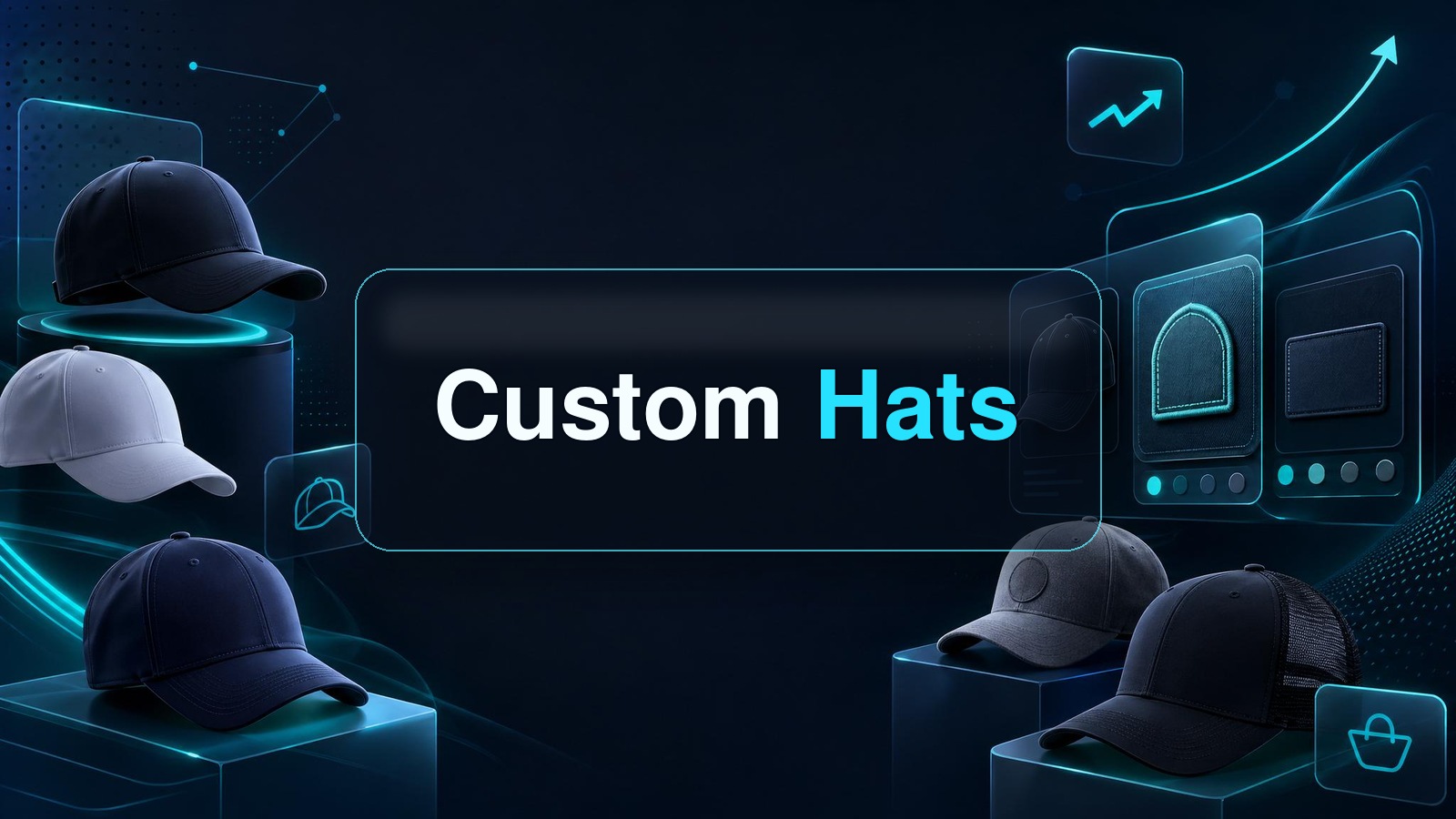
Custom hats are one of the few print on demand products where a tiny design can still carry a premium story.
That sounds simple, but most sellers still get it wrong. They treat hats like small t-shirts. They shrink a graphic, center it, publish one listing, and wonder why nobody cares.
If I were building a custom hats line from zero today, I would not start with art. I would start with the buyer, build a tight design system, make the mockups painfully clear, and publish in batches through MyDesigns so the test gets real data fast.
Key Takeaways
- Custom hats sell when the buyer is specific. Teams, clubs, local businesses, creators, events, and gift buyers give the product a real reason to exist.
- The design has to be simple. Hat artwork lives in a smaller visual area, so readable marks, patches, initials, and clean symbols beat crowded graphics.
- Mockups decide trust. Buyers need to understand placement, color, style, and use case before they pay for a hat online.
- Batch testing beats guessing. I would launch 12 to 24 listings inside one focused hat angle, then expand winners with MyDesigns.
Table of Contents
- Why custom hats still deserve a serious product test
- Pick the buyer before you pick the hat
- My custom hats workflow for print on demand
- Custom hat ideas I would test first
- Pricing custom hats without racing to the bottom
- Mistakes I would avoid before publishing
- The automation shift most sellers are missing
- Frequently Asked Questions
Why custom hats still deserve a serious product test

Custom hats work because hats are public identity products. People wear them to show a team, a place, a joke, a brand, a hobby, a role, or a tiny piece of taste.
That is why I like them as a print on demand test. A hat does not need a huge design to feel intentional. A small mark can do the work if the buyer already understands the meaning.
I have watched sellers overbuild designs for hats because they came from t-shirts. The result is usually messy. The better hat designs are restrained. They look like something a person would actually wear outside the house.
Hats sell identity in a small format
A hat sits near the face. That makes it more personal than a wall print and more visible than a mug sitting on a desk. Buyers notice fit, style, and confidence fast.
For sellers, that means the offer needs a clear reason to buy. A custom hat for a fishing crew, softball team, coffee shop, dog breed club, bachelor trip, or local brand is easier to understand than a generic phrase with no audience.
Small design space forces discipline
The small design area is not a limitation. It is a filter.
If your idea only works when it is huge, complex, and explained in three sentences, it probably is not a strong hat idea. Custom hats reward bold marks, short words, simple icons, initials, patches, and clean personalization.
That is also why I would treat custom hats as their own product line, not a side effect of a t-shirt catalog. If you want the broader hat category playbook, read my guide to print on demand hats. This article is about building a sellable custom hat offer with tighter intent.
Turn one custom hat angle into a real product batch.
Use MyDesigns to organize designs, build listings, and move from idea to publish without rebuilding every product by hand.
Pick the buyer before you pick the hat
The biggest mistake is choosing the blank product first. Trucker hat. Dad hat. Beanie. Snapback. Bucket hat.
Those choices matter, but they come after the buyer. If you do not know who the product is for, the blank choice is just decoration.
My buyer filter for custom hats
Before I design, I want clean answers to five questions:
- Who is proud to wear this? A team, small business, creator, parent group, club, local niche, pet owner, or event buyer.
- Where will they wear it? Work, gym, school, games, markets, festivals, travel, beach, or daily errands.
- What format fits the buyer? Embroidered look, patch look, minimalist logo, name personalization, or a clean front design.
- What would they search? Think custom hats, custom embroidered hats, personalized hats, custom baseball caps, or a niche phrase tied to the buyer.
- What makes the purchase feel safe? Clear mockups, color examples, personalization instructions, and shipping expectations.
That filter sounds basic. It is also the difference between a hat people understand and a hat that sits there doing nothing.
Use research without outsourcing your taste
I use tools like Google Trends for timing and directional interest. I use marketplace search suggestions for language. I read the Etsy Seller Handbook when I want to sanity-check marketplace basics.
But I do not let any tool decide the product for me. Research gives you clues. Taste turns those clues into a hat someone wants to wear.
My custom hats workflow for print on demand

My workflow is deliberately simple: one buyer, one design system, one product family, one batch, then measure.
Most sellers skip the system and jump straight into random designs. That feels fast for a day. It gets slow when you have to manage titles, images, tags, personalization rules, and product data across dozens of listings.
Build a design system
A design system for custom hats means you define the rules before you scale the idea.
- Placement: front center, side mark, patch style, or simple embroidered look.
- Visual language: bold initials, clean icon, mascot shape, location mark, or short phrase.
- Color rules: two or three hat colors that make the design readable.
- Personalization rules: name, year, role, business name, pet name, or team name.
Once the system is clear, you can use Dream AI and the Canvas editor to speed up the parts that should not take all afternoon. Human judgment still matters. The point is to stop doing repetitive setup by hand.
Make mockups that earn trust
Hat buyers need to see shape, placement, color, and scale. A flat graphic does not answer enough questions.
I want at least one clean product mockup, one angle that shows the crown and brim, and one image that makes the use case obvious. If the hat is for a baseball team, the visuals should feel different from a hat for a coffee shop or a dog dad gift.
Use the MyDesigns mockup workflow to keep the product presentation consistent. Bad mockups make even solid custom hats look risky.
Make hat listings buyers can trust at a glance.
Create cleaner mockups, organize product data, and publish a tighter hat batch from one workspace.
Publish in controlled batches
Do not publish one custom hat and wait for the market to give you a clean answer. One listing rarely teaches enough.
I would start with 12 to 24 listings inside one focused angle. Same buyer, same product logic, controlled variation. That gives you a real test without creating a catalog you cannot manage.
This is where bulk publishing and listing management matter. Copying and pasting hat listings manually is not a badge of honor. It is a tax on momentum.
Custom hat ideas I would test first

I would not test every idea. I would test custom hats where the buyer already has a reason to care.
| Hat angle | Why it can work | How I would test it |
|---|---|---|
| Local business hats | Small brands need simple merch for staff, events, and loyal customers. | Build clean logo-style layouts with a few strong color options. |
| Team and club hats | Group identity creates repeat buyers and bulk order potential. | Test mascot marks, initials, roles, year, and location variants. |
| Pet owner hats | Pet niches have emotional language and gift demand. | Test breed, pet name, simple icons, and dog dad or cat mom angles. |
| Event hats | Bachelor trips, family reunions, races, and retreats have deadlines. | Use personalization fields and clear delivery expectations. |
| Creator merch hats | Creators often need lightweight products that fans can wear daily. | Test simple inside jokes, initials, slogans, and limited drops. |
Notice what is missing: random hats for everyone. That is not a strategy. That is a lottery ticket with extra work attached.
If you need more product research inputs, pair this with my guide to Google Trends for print on demand and my Etsy keyword research workflow.
Pricing custom hats without racing to the bottom
Custom hats should not be priced like throwaway accessories if the offer is personal, branded, or event-specific.
The price has to cover production, marketplace fees, shipping expectations, support time, and the extra value of customization. Personalized products carry more trust work. Your margin should reflect that.
I would compare product options inside the MyDesigns product catalog, then decide what role each hat plays. Entry hat. Premium hat. Team hat. Gift hat. Creator drop. Do not make every product do the same job.
For the numbers, use a real profit model instead of vibes. My guide on how to price print on demand products walks through the mindset. The short version: if a product cannot survive fees, shipping, and a normal return or remake rate, it is not priced correctly.
Be careful with claims too. If you say made in USA, locally produced, or officially licensed, you need proof. The FTC Made in USA guidance and the USPTO trademark search are not fun reading, but they can save you from expensive mistakes.
Launch custom hat tests without drowning in listing work.
Create a focused hat batch, keep your product data organized, and publish faster with MyDesigns.
Mockups
Bulk Publish
Mistakes I would avoid before publishing
The expensive custom hat mistakes are not always obvious. They look like small choices until you repeat them across 50 listings.
Ignoring trademark risk
Never build hats around team names, celebrity phrases, protected brands, or anything that looks like someone else’s identity. If you are unsure, check official sources and do not publish until you know.
The SBA marketing and sales resources are a useful reminder that responsible selling is part of building a real business, not just a shop full of products.
Offering too many variants too early
More hat colors, personalization fields, styles, and layouts feel helpful. Early on, they can slow production and create support problems.
Start with the few options that make the offer stronger. Add variants after you see demand.
Writing listing copy that explains nothing
Your listing copy should tell the buyer who the hat is for, how customization works, what the design style is, and what to expect after purchase.
Do not make buyers guess. Confused buyers leave.
The automation shift most sellers are missing
The old playbook was more products at any cost. Upload everything, hope the marketplace sorts it out, then call volume a strategy.
I do not like that playbook anymore.
The better playbook is controlled output. Pick one buyer. Build one design system. Publish one focused batch. Study the data. Expand only what shows signal.
AI and automation do not replace taste. They punish sellers with no taste because now everyone can publish faster. The advantage is not speed alone. The advantage is a better decision loop.
That is why we built MyDesigns around the full workflow, from design creation to mockups, listing management, and bulk publishing. Custom hats are a perfect category for that model because one small idea can become a product line quickly if the system is tight.
Build the hat line buyers can understand in two seconds. Then publish enough of it to learn something real.
Turn your first custom hat idea into a focused product line.
Start with MyDesigns, create the artwork, build better mockups, manage listing data, and publish a custom hat test without manual chaos.
Dream AI
Mockups
Bulk Publish
Want to compare plans first? View pricing.
Frequently Asked Questions
+ Can I sell custom hats with print on demand?
Yes, you can sell custom hats with print on demand without holding inventory. The key is choosing a focused buyer, using clear mockups, and publishing listings that explain design placement, personalization, materials, and shipping expectations.
+ What types of custom hats sell best?
The best custom hats usually serve a specific buyer, such as teams, local businesses, events, pet owners, clubs, or creator communities. Specific identity beats generic decoration because the buyer has a stronger reason to wear it.
+ Are custom hats profitable?
Custom hats can be profitable when the price covers production, fees, shipping, support, and the extra value of personalization. Profit depends on product cost, perceived value, quality of mockups, and how tightly the offer matches the buyer.
+ How many custom hat listings should I launch first?
I would launch 12 to 24 custom hat listings inside one focused niche first. That is enough to test buyer angles, colors, and personalization without creating a messy catalog.
+ Do custom hats need different designs than t-shirts?
Yes, custom hats need simpler designs than most t-shirts because the visual area is smaller. Bold marks, short phrases, initials, patches, and clean personalization usually work better than crowded artwork.


Leave a Reply