


Canvas prints are one of the highest-margin products in print on demand. And most sellers are completely ignoring them.
I’ve watched hundreds of POD sellers pour all their energy into t-shirts and mugs while canvas art sits there with 3-5x the profit margins and a fraction of the competition. The wall art market is projected to hit $75.12 billion by 2030, and canvas printing is driving a massive chunk of that growth. If you’re not selling canvas art online yet, you’re leaving serious money on the table.
This guide breaks down everything you need to know about canvas printing for your print-on-demand business. From choosing the right products and creating designs that actually sell, to listing strategies that drive traffic and convert browsers into buyers. No fluff. Just the playbook I’d follow if I were starting a canvas art shop from zero today.
Key Takeaways
- Canvas prints carry 40-60% profit margins — significantly higher than apparel and accessories, making them one of the most profitable POD product categories.
- You don’t need to be an artist — AI design tools and public domain art let anyone create professional canvas prints worth $50-200+ each.
- Niche selection matters more than design skill — sellers targeting specific aesthetics (minimalist, boho, abstract) consistently outperform generalists.
- Multi-platform listing is the real growth hack — canvas art sells on Etsy, Shopify, Amazon, and your own store simultaneously with the right tools.
Table of Contents
- What Is Canvas Printing (And Why POD Sellers Should Care)
- Why Canvas Prints Are More Profitable Than You Think
- Choosing the Right Canvas Products to Sell
- Creating Canvas Art Designs That Actually Sell
- Setting Up Your Canvas Print Shop
- Pricing Canvas Prints for Maximum Profit
- Marketing Your Canvas Art Store
- Scaling Your Canvas Print Business
- Frequently Asked Questions
What Is Canvas Printing (And Why POD Sellers Should Care)
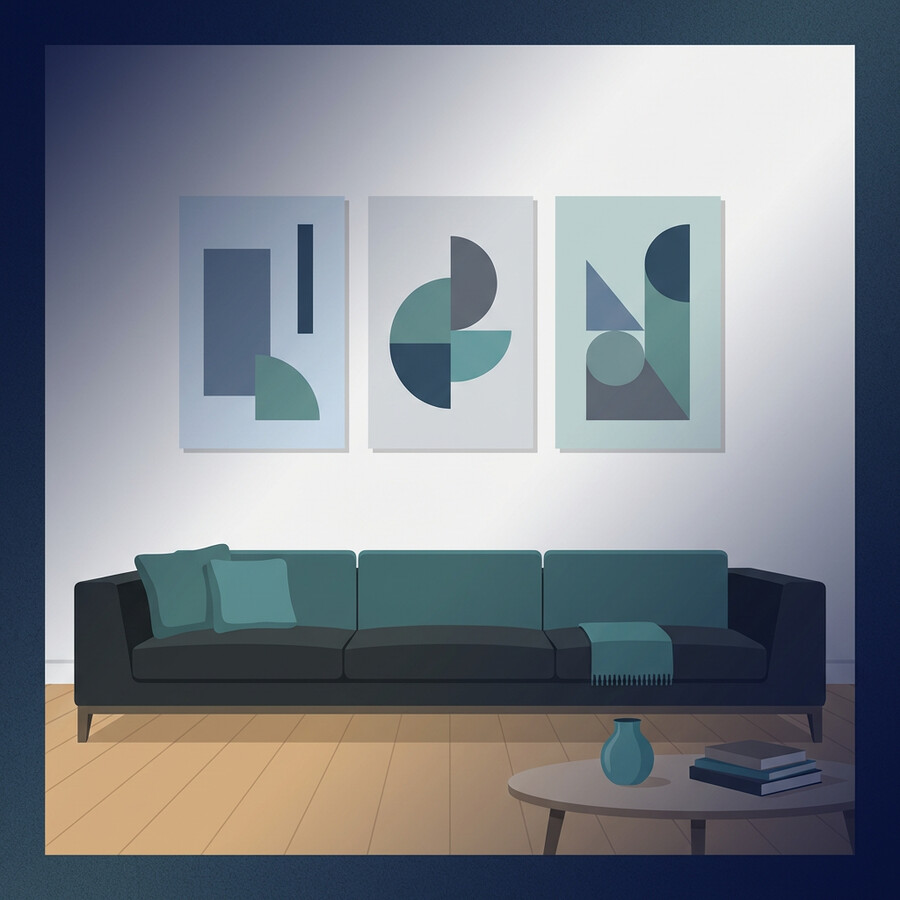
Canvas printing is the process of reproducing images or artwork onto canvas material, which is then stretched over a wooden frame. It’s the same technique galleries have used for decades, except now anyone with a digital design can get museum-quality prints produced on demand through services like Printify.
Here’s why this matters for POD sellers specifically: canvas prints feel premium. When a customer unboxes a canvas, they’re getting wall art that looks and feels like something from a gallery. That perceived value translates directly into what people will pay. A $3 t-shirt markup feels like a deal. A $40 canvas markup feels reasonable. Same effort to create, wildly different outcomes.
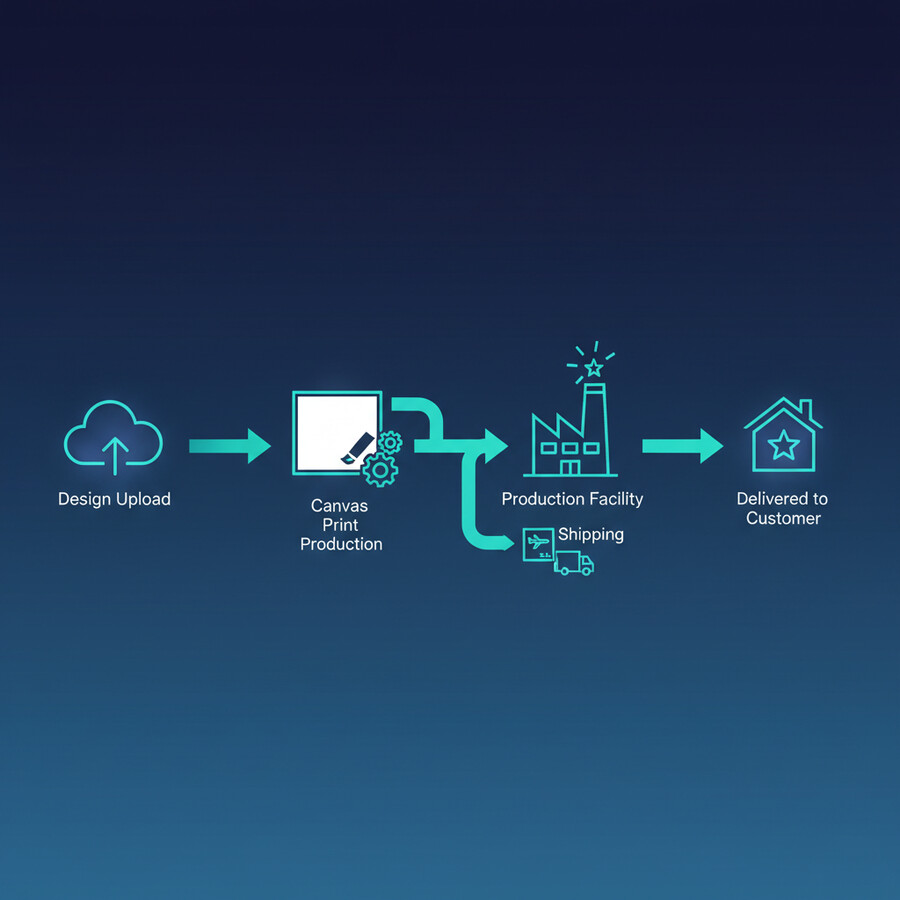
The print-on-demand model means you never touch inventory. Your customer orders, the print provider produces and ships the canvas, and you collect the difference. Zero upfront cost, zero storage, zero risk. The only thing you invest is time building your designs and listings.
Good strategy matters. Fast execution is what turns it into revenue.
This is exactly where a cleaner workflow starts to matter more than another round of planning.
Why Canvas Prints Are More Profitable Than You Think
I talk to POD sellers every week who are grinding away at $2-5 margins on t-shirts. Meanwhile, canvas art sellers in our community are pulling $20-60 per sale on a single canvas. The math isn’t even close.
The Real Margin Breakdown
| Product | Base Cost | Typical Selling Price | Profit Margin |
|---|---|---|---|
| T-shirt | $8-12 | $19-25 | $7-17 (35-50%) |
| Mug | $5-8 | $15-20 | $7-15 (40-55%) |
| Canvas 12×16″ | $12-18 | $45-65 | $27-53 (55-70%) |
| Canvas 24×36″ | $25-35 | $90-150 | $55-125 (60-75%) |
Those aren’t theoretical numbers. That’s what I see sellers actually charging on Etsy and Shopify right now. The larger the canvas, the higher the perceived value, and the bigger your margin gets.
Less Competition, More Opportunity
Search “funny t-shirt” on Etsy and you’ll find millions of listings. Search “abstract canvas wall art” and the numbers drop dramatically. Canvas prints require slightly more design intentionality (you can’t just slap a witty phrase on a white background), which means most lazy sellers never bother. That’s your advantage.
According to Statista, the global wall decoration market continues growing at 4-5% annually. Home décor is one of the few ecommerce categories that stayed strong even as pandemic-era spending normalized. People always want to make their spaces look better.
Choosing the Right Canvas Products to Sell
Not all canvas products are created equal. The choices you make here directly impact your margins, customer satisfaction, and return rates.
Canvas Types and Sizes That Sell Best
Start with the sizes that have the highest demand-to-competition ratio. Based on what I’ve observed across hundreds of sellers:
- 16×20″ and 18×24″ — The sweet spot. Affordable enough for impulse buys, large enough to make a statement. These are your volume sellers.
- 24×36″ and 30×40″ — Higher price point, fewer sales, but massive margins. Perfect for statement pieces.
- Multi-panel sets (2-3 pieces) — Premium pricing. A 3-panel set can sell for $150-300. Not every provider offers this, but it’s worth exploring.
- Square formats (12×12″, 20×20″) — Growing in popularity for modern and minimalist aesthetics.
My advice: start with 2-3 core sizes and expand based on what sells. Don’t list 15 size variations on day one. You’ll spread yourself thin and confuse buyers with too many options.
Framed vs. Gallery Wrapped: What Buyers Prefer
Gallery-wrapped canvas (where the image wraps around the edges of the frame) is the industry standard for print on demand. It looks clean, doesn’t require additional framing, and ships easily. Most POD providers default to this style.
Framed canvas is gaining traction though. It adds a finished, upscale look that justifies a $20-40 price bump. Printify and other major providers now offer framed options. If you’re going after the home décor buyer who wants something ready to hang without any extra effort, framed is a strong upsell.
Creating Canvas Art Designs That Actually Sell
Here’s the part where most guides tell you to “find your artistic voice.” I’m going to be more direct: you need designs that match what buyers are already searching for, in niches where supply is thin.
Using AI to Generate Canvas-Ready Art

You don’t need to be a skilled painter or digital artist. AI image generation has completely changed the game for canvas art. Tools can produce abstract compositions, landscape photography styles, botanical illustrations, and modern art pieces that genuinely look gallery-worthy.
This is exactly why we built Dream AI into MyDesigns. You describe the style you want, and it generates print-ready images at the resolution canvas printing demands. I’ve watched sellers go from zero designs to 50+ canvas-ready artworks in a single afternoon. No Photoshop skills required.
The niches that work best for AI-generated canvas art right now:
- Abstract and geometric art — AI excels at creating unique patterns and compositions
- Nature and botanical prints — Watercolor-style florals, minimalist plant illustrations
- Modern minimalist — Line art, neutral tones, Scandinavian aesthetic
- Retro and vintage styles — Mid-century modern, art deco patterns
- Dark academia and moody aesthetics — Renaissance-style, classical painting reimaginations
Resolution and File Requirements
This is where beginners mess up. Canvas printing demands high-resolution files because the images are being reproduced at large physical sizes. The minimum you should work with:
- 300 DPI at print size — A 24×36″ canvas needs a file that’s 7200×10800 pixels minimum
- File format: PNG for best quality, JPEG at 100% quality as fallback
- Color space: sRGB (most POD providers convert from sRGB to their print profile)
If you’re using MyDesigns Image Utilities, you can upscale lower-resolution AI outputs to canvas-ready dimensions without losing quality. It’s one of those small features that saves a massive amount of time when you’re producing designs in volume.
If you want better output, the workflow has to make launching easier, not harder.
The advantage usually goes to the sellers who can create, organize, and publish without getting buried in manual work.
Setting Up Your Canvas Print Shop
Let’s get tactical. Here’s exactly how to go from designs to a live, selling canvas print shop.
Choosing a Print Provider
Your print provider determines product quality, shipping speed, and your base costs. For canvas prints specifically, I recommend comparing:
- Quality: Order samples from 2-3 providers before committing. Canvas quality varies significantly. Look at color accuracy, canvas texture, and frame construction.
- Shipping times: Canvas prints take longer to produce than apparel. Expect 3-7 business days production plus shipping. Set customer expectations accordingly.
- Size options: Make sure your provider offers the sizes your niche demands. Some providers have limited canvas catalogs.
- Global fulfillment: If you’re selling internationally, providers with fulfillment centers in multiple regions will cut shipping costs and delivery times.
Check the MyDesigns product catalog to browse canvas print options across integrated providers. You can compare base costs, sizes, and production details all in one place.
Listing Across Multiple Platforms
This is where most canvas sellers plateau. They build a beautiful Etsy shop with 20 canvas designs, and then… stop. One platform. One traffic source. One algorithm change away from losing everything.
The sellers I see scaling fastest are listing the same designs across Etsy, Shopify, and Amazon simultaneously. Same designs, different audiences, compounding revenue.
The bottleneck has always been the manual work of creating listings on each platform. Writing titles, descriptions, setting pricing, uploading mockups — doing that for 50 designs across 3 platforms is 150 listings to manage by hand. That’s the exact bottleneck we built bulk publishing to solve. Push dozens of optimized canvas listings live across every connected shop in one session. Once you’ve experienced that, you’ll never go back to doing it one at a time.
Pricing Canvas Prints for Maximum Profit
Pricing canvas art is fundamentally different from pricing t-shirts. Buyers aren’t comparison shopping for the cheapest canvas. They’re looking for art that fits their space and aesthetic. Price signals quality.
Here’s the framework I recommend:
- Small canvas (8×10″ to 12×16″): $29-55 retail. These are your entry-level offerings. Impulse-friendly pricing.
- Medium canvas (16×20″ to 24×36″): $55-120 retail. This is where most of your revenue will come from. Price confidently.
- Large canvas (30×40″+): $120-250+ retail. Statement pieces. Lower volume but exceptional margins.
Don’t price based on a percentage markup over cost. Price based on what the market bears for your niche and design quality. A minimalist line drawing and a detailed abstract composition shouldn’t be priced the same even if they cost the same to produce.
Pro tip: Always offer free shipping and build it into the price. Canvas prints are large items with real shipping costs. Absorbing that cost into a slightly higher retail price converts dramatically better than showing a $45 canvas + $12 shipping at checkout. According to the Digital Commerce 360 report, free shipping remains the single biggest conversion driver in ecommerce.
The difference between reading and publishing is where momentum usually gets lost.
If you want this strategy to actually turn into output, the workflow after the idea matters just as much as the idea itself.
Marketing Your Canvas Art Store

Great designs sitting in a shop with no traffic are worth exactly zero. Here’s how to get eyeballs on your canvas prints.
Etsy SEO for Canvas Prints
Etsy is still the single best marketplace for selling canvas art as a POD seller. The platform’s audience is already primed to buy unique wall art, and the search algorithm rewards sellers who optimize properly.
Focus your canvas print titles on specific, long-tail keywords:
- “Abstract Canvas Wall Art Modern Living Room” beats “Canvas Print”
- “Minimalist Botanical Canvas Art Bedroom Decor” beats “Plant Art”
- “Large Navy Blue Abstract Painting Canvas” beats “Blue Art”
Use all 13 Etsy tags. Every single one. Mix broad terms (canvas wall art, wall decor) with specific ones (boho nursery canvas, mid-century modern art print). The sellers who dominate canvas on Etsy aren’t better artists. They’re better at titles and tags.
If you want a deeper dive on optimizing your Etsy listings, I wrote a full breakdown in our Etsy SEO guide.
Pinterest and Instagram Strategy
Canvas art is inherently visual. That makes Pinterest and Instagram your highest-ROI marketing channels after marketplace SEO.
Pinterest is basically a visual search engine. Create pins showing your canvas prints in styled room settings. Use mockup images that show the canvas on a wall with furniture and décor around it. The MyDesigns mockup generator creates exactly these kinds of lifestyle mockups automatically. Pin consistently, 10-15 pins per week, and optimize pin descriptions with keywords like “canvas wall art,” “living room decor,” and specific style terms.
Instagram works best for building a brand around your art style. Post room styling shots, behind-the-scenes of your design process (even if it’s AI-assisted), and customer photos. Reels showing a design coming to life or a canvas being unboxed consistently outperform static posts.
Scaling Your Canvas Print Business
Once your first 20-30 canvas designs are listed and getting traction, the question becomes: how do I 10x this without 10x the work?
Here’s what I’ve seen work for sellers who’ve scaled past $5K/month in canvas sales:
- Design in collections, not one-offs. Create 5-10 designs in the same aesthetic style as a cohesive collection. Buyers who love one piece often buy 2-3 from the same collection. Gallery walls are a thing.
- Expand to multiple platforms simultaneously. Your Etsy canvas listings should also be on your Shopify store and Amazon Handmade. With multi-product publishing, you can push one design to every connected sales channel at once.
- Test pricing aggressively. Raise prices by $5-10 on your best sellers. You’ll often find sales volume barely dips while profit per sale jumps significantly.
- Seasonal collections. Valentine’s Day, Mother’s Day, holiday season — themed canvas art sells incredibly well as gifts. Plan collections 4-6 weeks before each season.
- Automate your listing workflow. The sellers doing $10K+ months aren’t spending more time. They’re spending less time per listing by using tools that handle mockups, descriptions, and multi-platform publishing in bulk.
The old POD playbook was grind out designs one at a time, list them one at a time, hope for the best. The real advantage today isn’t just creativity. It’s building a system that lets you publish quality at volume without burning out.
Frequently Asked Questions
+ Is canvas printing profitable with print on demand?
Yes, canvas printing is one of the most profitable print-on-demand product categories. Typical profit margins range from 40-70% depending on canvas size, with larger canvases commanding the highest margins. A 24×36″ canvas that costs $25-35 to produce routinely sells for $90-150, making it far more profitable per sale than apparel or accessories.
+ What resolution do I need for canvas prints?
You need a minimum of 300 DPI at the physical print size. For a 24×36″ canvas, that means your file should be at least 7200×10800 pixels. Most print providers will reject or flag files below 150 DPI. Always design or export at the highest resolution possible, and use upscaling tools if your source images fall short.
+ Can I sell canvas prints on Etsy without holding inventory?
Absolutely. Print-on-demand services handle production and shipping for every order. You create the designs, list them on Etsy, and when a customer orders, the print provider produces and ships the canvas directly to the buyer. You never touch inventory, and there’s zero upfront cost beyond your time creating designs and listings.
+ How do I create designs for canvas prints without art skills?
AI image generation tools have made this accessible to everyone. You can use AI art generators to create abstract compositions, botanical illustrations, minimalist designs, and more — all at print-ready quality. Public domain artwork and stock photos are also options. The key is choosing a niche style and being consistent with it rather than trying to create one-off masterpieces.
+ What’s the best platform to sell canvas art online?
Etsy is the strongest starting point because its audience actively searches for unique wall art. However, the most successful canvas sellers list across multiple platforms — Etsy, Shopify, and Amazon — simultaneously. Each platform reaches a different buyer demographic, and multi-platform selling compounds your revenue without requiring entirely new designs.


Leave a Reply