


I think a lot of people overcomplicate this question.
Yes, you can sell on Amazon without inventory. You do not need a garage full of boxes. You do not need to wire thousands of dollars into stock before you know what will sell. And if you are just getting started, I would actually argue that holding inventory too early is one of the fastest ways to burn cash and kill momentum.
The smarter move in 2026 is simple. Start with a model that lets you validate demand first, then scale what works. For most sellers, that means print on demand, made-to-order products, digital products, or fulfillment models where the product is only produced after the sale.
I have watched too many sellers get stuck in “research mode” because they think Amazon requires a warehouse strategy on day one. It does not. What Amazon does require is a clear offer, good listings, clean operations, and a model that does not collapse when your first 20 orders come in.
Key Takeaways
- You can sell on Amazon without inventory – the cleanest path is using print on demand or other made-to-order models so you only pay when a customer buys.
- Print on demand is the lowest-risk option for most beginners – you avoid bulk stock, storage costs, and dead inventory.
- Amazon still rewards strong listings and operations – no-inventory does not mean no work. You still need keyword research, images, pricing, and customer-friendly delivery expectations.
- The real goal is validation first, scale second – prove demand before you add complexity, ad spend, or inventory risk.
Table of Contents
- Can you really sell on Amazon without inventory?
- The best way to sell on Amazon without inventory in 2026
- How print on demand on Amazon actually works
- Step-by-step: how to start selling on Amazon without inventory
- How I would use MyDesigns for this workflow
- The mistakes that kill profit fast
- The old Amazon playbook is dead
- Frequently Asked Questions
Can you really sell on Amazon without inventory?
Yes. That is the short answer.
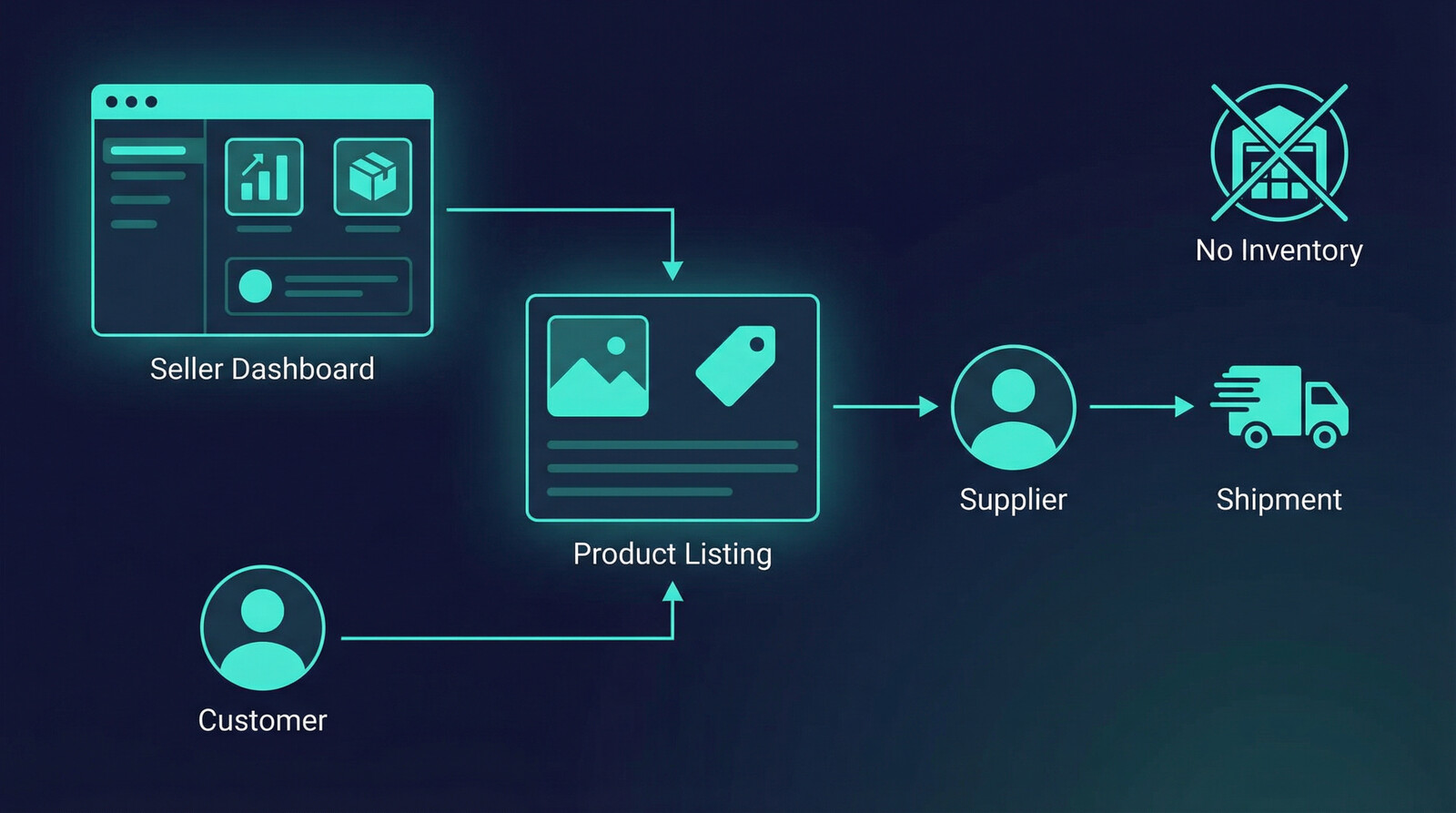
The more useful answer is this: you can absolutely build an Amazon business without buying inventory upfront, but you need to choose the right fulfillment model. Amazon is not paying you for owning stock. Amazon is rewarding you for delivering a product and a customer experience that meets its standards.
What no-inventory actually means
When people search for how to sell on Amazon without inventory, they usually mean one of four things:
- Print on demand – products are created after the order comes in.
- Dropshipping – a supplier ships the product for you.
- Third-party fulfillment – someone else stores and ships inventory, even if you never touch it.
- Digital or low-fulfillment offers – where there is no traditional physical stock at all.
Out of those, print on demand is the cleanest starting point for most new sellers. Less compliance risk. Less cash risk. Less operational chaos.
Why most beginners pick the wrong model
Most beginners think the goal is to find a loophole. It is not.
The goal is to build a business that can survive reality. Refunds. Delays. listing issues. Thin margins. Competition. Amazon policy changes. That is why I generally tell people to avoid chasing the sketchiest version of dropshipping and instead focus on made-to-order products that you can control with better branding, cleaner listings, and better margin discipline.
Because once the first few sales hit, the game changes. This stops being theory very quickly.
Selling without inventory only works well if your workflow stays lean from day one.
This is exactly where a cleaner workflow starts to matter more than another round of planning.
The best way to sell on Amazon without inventory in 2026
If I were starting from zero today, I would begin with print on demand.
Not because it is trendy. Because it is one of the few models that lets you test demand without betting the business on inventory.
Why print on demand wins
Print on demand works because the product is only produced after the customer buys. That means you are not tying up cash in unsold units.
That matters a lot more than people realize.
I have seen sellers waste months designing around products they bought in bulk, only to discover they picked the wrong niche, the wrong design angle, or the wrong price point. With print on demand, you get to learn faster and cheaper.
| Model | Upfront Cash Risk | Operational Complexity | Beginner Friendly? |
|---|---|---|---|
| Print on demand | Low | Low to medium | Yes |
| Dropshipping | Low | Medium to high | Sometimes |
| Bulk inventory + FBA | High | Medium | No |
| Handmade stocked products | Medium to high | High | No |
When other models make sense
There are cases where another path makes sense.
- If you already have a proven product with repeat sales, inventory can improve margin.
- If you have a trusted supplier and tight quality control, dropshipping can work.
- If you have capital and validated demand, FBA can accelerate delivery and conversion.
But that is not where I would start unless you already know exactly what you are doing.
Beginners should optimize for speed of learning, not maximum complexity.

How print on demand on Amazon actually works
The core idea is simple.
You create the product concept. You build the listing. A customer places an order. Then your production partner fulfills the item after the sale. No pre-buying inventory. No storage bill eating your margin while you wait for demand to magically appear.
The simple workflow
- Research a niche with consistent demand.
- Create designs that match buyer intent.
- Map those designs to products with enough margin.
- Publish optimized listings.
- Route fulfillment only after the order comes in.
- Watch conversion, refund risk, and delivery experience like a hawk.
That is the simple version. The real work is in the details.
Where sellers get burned
The biggest mistake I see is assuming no inventory means no systems.
Wrong.
You still need:
- clear product specs
- good mockups
- keyword-rich titles and bullets
- realistic production timelines
- pricing that leaves room for fees and refunds
- a repeatable workflow for publishing multiple listings fast
I have watched sellers launch 50 weak listings and then blame the channel. Usually the problem is not Amazon. The problem is sloppy execution.

The real edge is not just the model. It is how fast you can turn products into clean, publishable listings.
The advantage usually goes to the sellers who can create, organize, and publish without getting buried in manual work.
Step-by-step: how to start selling on Amazon without inventory
If you want the practical version, this is the playbook I would follow.
1. Pick a niche you can repeat
Do not start with a random design you personally like. Start with a niche where you can build a whole system around the buyer.
That means a niche with:
- clear audience identity
- lots of phrase and design variation
- gift potential
- seasonal or evergreen demand
Examples:
- occupation niches
- hobby niches
- family role gifts
- pet owner niches
- humor and identity-based niches
The worst niche is the one that gives you one idea. The best niche gives you 200 listing angles.
2. Choose products with enough margin
This part matters more than people think.
A lot of sellers get excited about selling on Amazon without inventory, then choose products so expensive to produce that there is barely any room left after fees. That is how you end up working for free.
Before you list anything, know these numbers:
- base product cost
- production cost
- shipping cost
- Amazon fees
- your target margin
If the numbers do not work on a spreadsheet, they definitely will not work after customer service issues show up.
3. Create listings that rank and convert
This is where most people sabotage themselves.
They think if they just upload enough products, something will happen. That old marketplace playbook is lazy. Volume only works when the listings are actually searchable and conversion-ready.
Focus on:
- titles that reflect the exact buyer search intent
- bullet points that explain the product clearly
- mockups that make the item feel real
- pricing that is competitive without destroying margin
- variation strategy that lets you multiply proven concepts
One thing I strongly advise: do not confuse keyword stuffing with optimization. You are writing for search visibility and for humans. Both matter.
How I would use MyDesigns for this workflow
This exact kind of operational bottleneck is why we built MyDesigns in the first place.
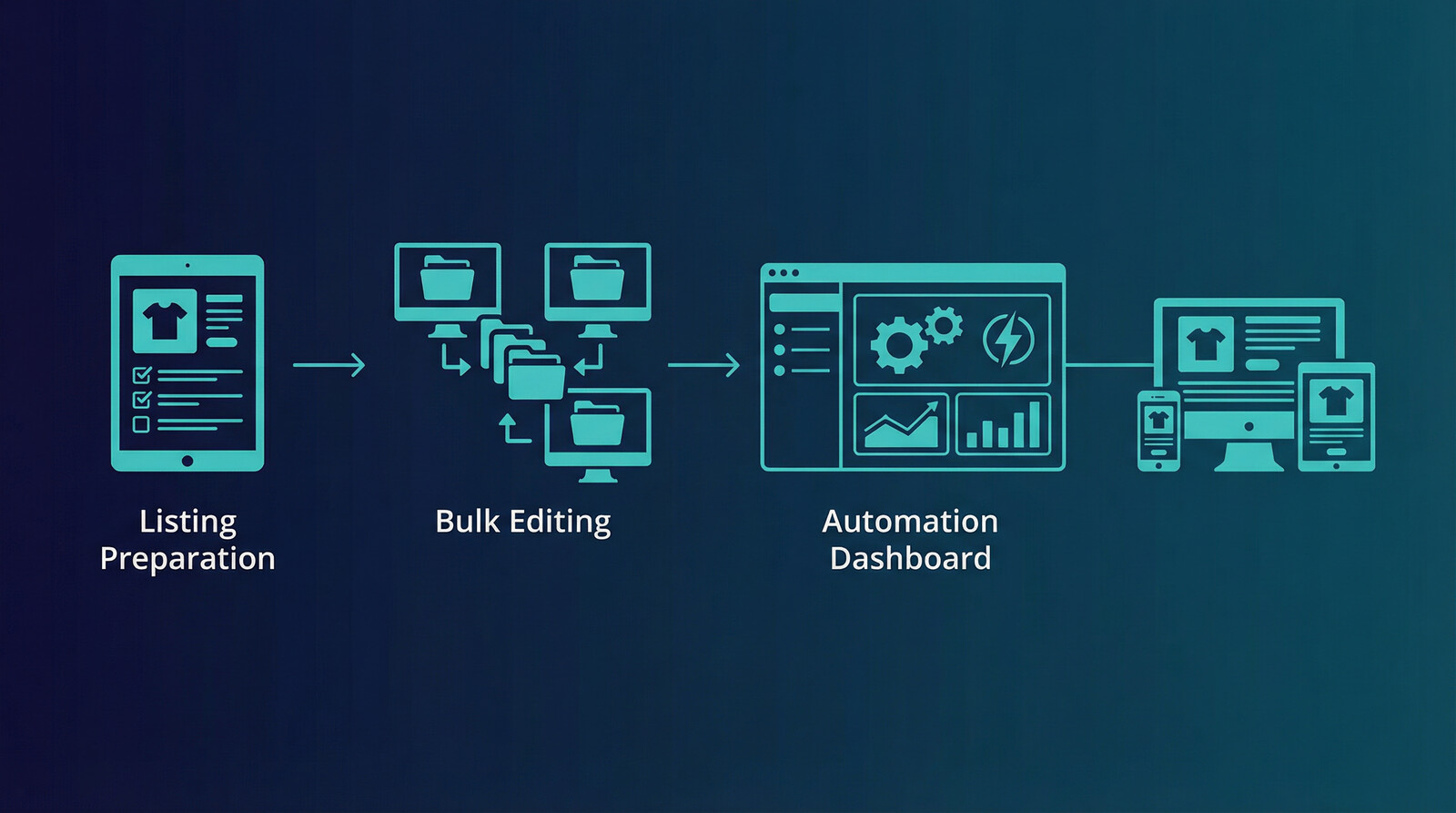
When sellers try to expand into a new marketplace, the real pain is usually not creativity. It is workflow. Product setup. mockups. titles. bulk editing. publishing. keeping your catalog organized while you test dozens of ideas quickly.
What you can do right now
Right now, MyDesigns is already strong for the upstream part of the process.
- create and organize designs
- generate product mockups at scale
- write and optimize listing content faster
- build out repeatable catalog workflows instead of doing everything one listing at a time
If you are serious about selling on Amazon without inventory, you need systems that let you test more ideas per week. That is where the leverage is.
[Insert screenshot of MyDesigns bulk editor here]
Important note on Amazon integration
I want to be very clear here so there is no confusion.
Our Amazon Seller Central integration is currently in development and coming soon. It is not live yet.
So if you are using MyDesigns today, think of it as the engine for design creation, listing preparation, mockup generation, and catalog workflow. The Amazon publishing piece is on the roadmap and actively being built, but I am not going to pretend it is available before it is.
I would rather be precise than hype it.
If you want the no-inventory model to feel simple, your tool stack has to remove friction instead of adding it.
If you want this strategy to actually turn into output, the workflow after the idea matters just as much as the idea itself.
The mistakes that kill profit fast
Here are the mistakes I would avoid immediately:
- Starting with too many product types – pick one or two and get good at them.
- Ignoring margin math – revenue is vanity if fees eat everything.
- Using weak mockups – if the product does not look credible, the listing dies.
- Publishing generic designs – broad, boring ideas usually get crushed.
- Treating Amazon like passive income on day one – it is not passive at the start. It is operationally simple, not magically automatic.
- Trying to be everywhere at once – one profitable process beats five half-built channels.
I get why people want the fantasy version of this business. A few uploads, then money shows up while you sleep.
That is not how real operators win.
Real operators win by tightening the workflow, increasing listing quality, and validating demand before they scale.
The old Amazon playbook is dead
Here is the contrarian take.
In 2026, the edge is not just product access. Everyone has access. The edge is not even design taste by itself. Plenty of people can generate decent-looking assets now.
The real advantage is operational leverage.
How fast can you research a niche, create a product set, generate mockups, optimize listings, and test 20 viable offers without drowning in manual work?
That is the game now.
The old playbook said: find a product, buy inventory, hope demand shows up.
The better playbook now is: find demand signals first, launch with low-risk fulfillment, then scale the winners.
That is why selling on Amazon without inventory is not just possible. In a lot of cases, it is the smartest place to begin.
Frequently Asked Questions
+Can you really sell on Amazon without inventory?
Yes. You can use print on demand, dropshipping, or other fulfillment models where products are only sourced or produced after the order is placed. The cleanest beginner path is usually print on demand.
+What is the best way to sell on Amazon without inventory?
For most new sellers, print on demand is the best option because it keeps upfront risk low and lets you validate products before investing in stock. It is a much safer starting point than bulk inventory.
+Is print on demand allowed for Amazon sellers?
Print on demand can work on Amazon, but you still need to follow Amazon’s marketplace policies, product rules, and customer experience standards. No-inventory does not remove compliance responsibility.
+Can beginners make money selling on Amazon without inventory?
Yes, but only if they treat it like a real business. Strong niche selection, solid listings, realistic margins, and consistent testing matter a lot more than chasing a so-called passive income shortcut.
+Does MyDesigns publish directly to Amazon Seller Central today?
Not yet. Our Amazon Seller Central integration is currently in development and coming soon, but it is not live today. Right now, MyDesigns helps with design creation, listing prep, mockups, and catalog workflow.
If you want to sell on Amazon without inventory, do not wait until you feel fully ready.
Start with a low-risk model. Validate demand. Build a system you can repeat. Then scale the winners like an operator, not like a gambler.


Leave a Reply