


In my experience, one of the most powerful ways to drive traffic and sales on Etsy is through search optimization. When you optimize your shop and listings for Etsy and Google, you give your products the best chance to be discovered by potential buyers.
In this article, I’ll share my insights on how to optimize both your Etsy shop and individual product listings for search. We’ll cover the key actions you can take to boost your shop’s visibility in Etsy search results and Google search, helping you attract more customers and increase sales.
In case you haven’t already read my previous article in the series, Creating Eye-Catching Designs That Sell, I recommend giving it a read so you’re ready for shop and listings optimization.
Optimizing Your Etsy Shop for Search
Here are the critical steps you should take to ensure your shop is optimized for search.
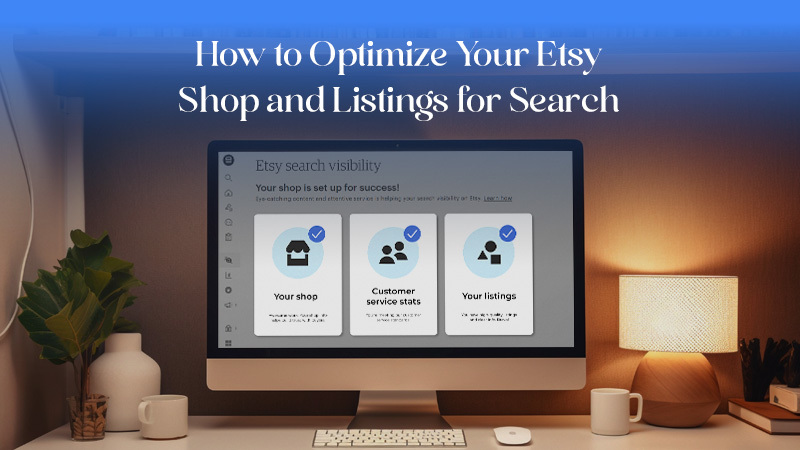
Use Etsy’s Search Visibility Page
Etsy provides sellers with a Search Visibility Page in the Shop Manager, which is an invaluable tool. This page shows how your listings are performing in key areas—your shop, individual listings, and customer service quality. It also offers personalized recommendations to help you improve your rankings.
This is one of the easiest ways to get a clear picture of where your shop stands and what you can do to enhance its search visibility. Be sure to check this page regularly and implement any suggested improvements.
Use All Tags Fields Available
Each product listing allows you to add up to 13 tags, and Etsy search guidelines encourage you to use all of them. Tags are critical in helping your products match with shopper searches, and any unused tags are missed opportunities.
Avoid tags that feel forced or repetitive—Etsy’s algorithm values variety and relevance. Think of tags as a way to describe what your product is, who it’s for, and any unique characteristics.
Add Relevant Attributes
In addition to tags, Etsy allows you to add attributes to your listings. Attributes help Etsy better understand the characteristics of your item. For example, you can specify a product’s primary color, material, or intended use. The more specific you can be with attributes, the better. These attributes act as extra data points for Etsy to match your products with the right shoppers.
Craft Short, Clear Titles
Keep your titles concise and focused on the most important keywords. Think of what your shoppers are likely to be typing in the search bar. You can also take inspiration from competitor listings, and also have a look around Etsy home to see which listings are being recommended.
Use High-Quality Images
Your main listing image is what buyers see first in search results, and it plays a crucial role in whether they click on your product. Make sure your photos are clear, well-lit, and showcase your product in a way that entices buyers. Again, use all 10 photo slots because it provides more visual information for potential customers, which can increase sales.
Have Clear Shop Policies
Etsy values shops with clear and transparent policies. I’ve seen that shops with clear return policies, shipping information, and customer guarantees are often favored by Etsy’s search algorithm. Make sure your policies are up-to-date and easy for customers to understand.
Optimizing Individual Listings for Etsy Search
In addition to optimizing your overall shop, you need to pay close attention to your individual listings. Etsy’s algorithm looks at several factors within each listing to determine where it should appear in search results, and these same elements can impact how your listings perform on Google as well.
Title
Your item title plays a critical role in both Etsy’s and Google’s search algorithms. I strongly recommend that you place the most important keywords at the very beginning of your title. Keep in mind that Google typically displays the first 50–60 characters of your title, so make sure your title reads naturally and conveys what you’re selling.
Avoid keyword stuffing—a practice where sellers repeat the same keyword multiple times in an attempt to manipulate search rankings. It looks spammy to buyers, and can negatively affect your listing’s performance.
Description
It’s essential to describe your product thoroughly. Start with a clear sentence that immediately explains what the item is, then go into detail about its features, materials, personalization options, and other important details.
Images
Images are a powerful search optimization tool. Adding high-quality images and using descriptive alt text is essential. Alt text helps search engines understand what’s in your image and can improve your chances of appearing in image-based searches.
I suggest you take the time to write accurate alt text for each image, including important details like color, texture, or material. This can make a significant difference in how your listings perform on Google.
Videos
Adding videos to your listings is a great way to improve visibility both on Etsy and Google. Not only do videos give potential buyers a better sense of your product, but they can also increase your chances of appearing in Google’s video search results.
Optimizing for Google
While Etsy search optimization is critical, don’t forget about Google. A well-optimized Etsy listing can also rank in Google search results, giving you additional visibility.
Think About Keywords
Just like with Etsy, keyword research is essential for Google. I strongly recommend thinking about what search terms your target customers would use on Google. Incorporate those terms into your titles, descriptions, and tags.
Backlinks Matter
Backlinks—links from other websites to your Etsy shop or listings—can improve your SEO performance on Google. You want to create high-quality content that others will want to share and link to. I advise linking your shop to your personal website, blog, or social media accounts to create more inbound links.
Final Thoughts
Optimizing your Etsy shop and listings for search is one of the most important steps you can take to grow your business. In my experience, sellers who consistently optimize their shops and listings not only see more traffic but also higher sales. I strongly encourage you to take a proactive approach by continually adjusting and experimenting with your SEO strategy.
In the next article, Pricing Your Products on Etsy for Maximum Profit (Part 5 of 6), we’ll explore strategies for pricing your products in a way that maximizes both sales and profits. Stay tuned for more tips on growing your Etsy shop!


Leave a Reply