



Custom mouse pads are boring until you realize almost every buyer has a desk, a hobby, a job, a gaming setup, or a gift reason.
That is why I like this category for print on demand sellers. It is not as glamorous as wall art or apparel, but it has something those categories often lack: daily use. A buyer sees the product every time they sit down to work, study, edit, game, or run their business.
The mistake is treating custom mouse pads like flat rectangles with random art slapped on top. That is the fast path to invisible listings. The better play is to build product lines around specific desk identities: gamers, teachers, nurses, designers, accountants, students, pet owners, fantasy readers, small business teams, and remote workers.
If I were building a mouse pad line from zero in 2026, this is exactly how I would do it.
Key Takeaways
- Custom mouse pads work best when the niche is obvious. Generic patterns are easy to copy, but desk identity, personalization, and gift intent create a stronger reason to buy.
- Desk mats usually create more perceived value than tiny mouse pads. Bigger surface area gives you more visual room and can support higher price points.
- Mockups carry the listing. Buyers need to see the mouse pad in a real desk context before they believe the product belongs in their setup.
- Speed matters more than perfection. I would rather test 40 focused designs in one niche than spend three weeks polishing one idea that never gets clicked.
Table of Contents
Why custom mouse pads still have room
I do not choose a product category because it is empty. Empty usually means there is no demand. I choose categories where demand exists, but most sellers are still approaching the product lazily.
Custom mouse pads fit that pattern. Search Etsy and you will see plenty of listings, but you will also see the same problems over and over: weak mockups, vague titles, low-effort personalization, and designs that feel like they could be on any product.
The desk is now a personal space
Remote work changed how people think about desks. Gaming changed it too. A desk is not just a place to put a laptop anymore. For a lot of buyers, it is a mini identity board.
That is why desk accessories can sell when they speak to a very specific person. A teacher does not just want a mouse pad. She wants her classroom energy on her desk. A gamer does not just want a mat. He wants a setup that feels custom. A small business owner may want a branded desk mat for packaging stations, team gifts, or event booths.
That daily visibility matters. You are not selling a throwaway novelty. You are selling something the buyer looks at hundreds of times per week.
Why the category looks crowded
Most crowded categories are crowded at the bottom, not at the top. The bottom is where sellers dump generic galaxy art, dog paws, flowers, and monograms into the same listings everyone else is using.
The top is different. The top has a sharper buyer, a sharper use case, and a sharper visual promise. That is where I would compete.
A good custom mouse pad listing answers three questions fast:
- Who is this for? A teacher, gamer, nurse, new hire, pet owner, or small business team.
- Why would they want it? Personalization, setup style, work identity, gift intent, or brand presence.
- What makes this design better? Cleaner layout, better mockups, stronger color control, and a product page that feels trustworthy.
That is the opening.

Test custom mouse pads without building a messy workflow
Use MyDesigns to organize ideas, create assets, build listings, and move faster from product concept to published test.
What I would sell first
If you are starting from scratch, I would not begin with every mouse pad size and every possible buyer. That creates a fake sense of progress. You end up organizing a catalog instead of testing demand.
I would pick one product format, one niche, and one personalization angle.
Mouse pads vs desk mats
Small mouse pads are fine, especially for budget gifts. But if I had to choose, I would start with larger desk mats. They create more perceived value, show designs better, and photograph better in mockups.
A larger mat also gives you room for stronger design systems:
- Keyboard zones with subtle pattern work
- Name or monogram placement that does not feel cramped
- Gaming or hobby themes with more visual depth
- Desk setup mockups that look premium
- Corporate or small business branding layouts
That does not mean tiny mouse pads are bad. It means I would use them intentionally. Small pads work best for simple personalized gifts, office humor, teacher gifts, team giveaways, and budget-friendly add-ons.
Personalization is the margin layer
Personalization is where a basic mouse pad becomes harder to compare by price. A buyer can compare one floral pattern against 200 other floral patterns. It is harder to compare a desk mat with their dog name, gamer tag, business logo, class subject, favorite color palette, or inside joke.
I watched this pattern play out with other POD categories too. Sellers often think personalization will slow them down, so they avoid it. Then they wonder why buyers pick the cheapest generic listing.
I get the concern. Manual personalization can become a support nightmare if your workflow is loose. But with a clean template system and a clear product page, it can also be the reason your listing has margin.
The key is to limit the choices. Do not offer 47 options. Offer one or two personalization fields and show examples clearly.
| Product angle | Best buyer | Why it can work |
|---|---|---|
| Personalized gamer tag desk mat | Gamers and streamers | Clear identity, high desk pride, strong gift appeal |
| Teacher name mouse pad | Teachers and classroom gift buyers | Easy personalization, seasonal buying windows, low explanation needed |
| Pet portrait mouse pad | Pet owners | Emotional attachment and strong photo-based customization |
| Small business logo desk mat | Creators, boutiques, makers, service businesses | Useful branding product for packing tables, events, and office desks |
Custom mouse pad niches I would test
My favorite product research question is simple: who would be slightly irrational about this? That is where boring products become interesting.
Here are the niches I would test before trying to sell broad custom mouse pads to everyone:
- Gaming setups: gamer tags, clan-style patterns, fantasy themes, controller-inspired layouts, and color-matched desk mats.
- Teachers: teacher names, grade-level themes, subject-specific desk pads, classroom gift bundles, and back-to-school designs.
- Pet owners: pet names, simple portrait layouts, memorial desk mats, breed themes, and funny work-from-home pet designs.
- Nurses and healthcare workers: badge-style layouts, shift humor, specialty themes, and personalized desk accessories for nurses who also study or chart at home.
- Book lovers: fantasy maps, reading tracker-inspired layouts, dark academia styles, and cozy desk themes.
- Remote workers: clean productivity designs, calendar-style desk mats, motivational but not cheesy phrases, and home office upgrades.
- Small business owners: logo desk mats, packaging station mats, market booth accessories, and branded team gifts.
- Students: dorm desk mats, study motivation, major-specific designs, and graduation gift angles.
Notice what is missing: “funny mouse pad.” That is too broad. Humor works, but only when it is attached to a specific person, job, hobby, or moment.
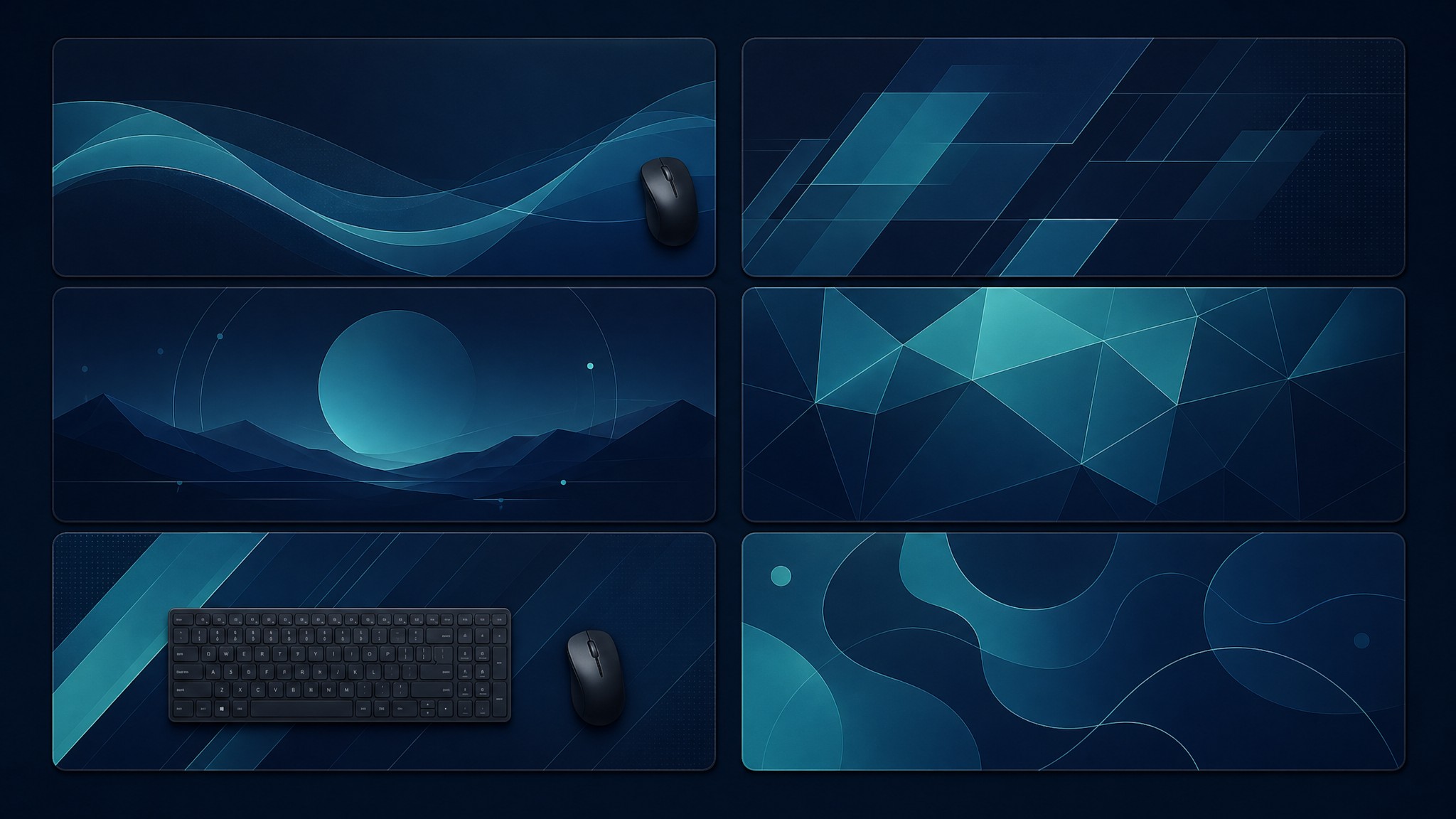
How to design custom mouse pads that click
The product image has to do more work than most sellers admit. A flat design on a white background rarely sells the desk feeling. It may show the artwork, but it does not sell the setup.
Design for the desk, not the file
A mouse pad design is not a poster. It lives under a mouse, keyboard, coffee cup, notebook, and sometimes a hand. If your most important detail sits exactly where the mouse will cover it, the design may look good as a file and still feel bad as a product.
Here is how I would design for real use:
- Keep names and personalization away from the heavy mouse zone.
- Use contrast that still looks good under room lighting, not just on a bright monitor.
- Avoid tiny details that disappear once printed on fabric.
- Build a few colorways for the same design system.
- Use mockups that show scale next to a keyboard, laptop, or desk accessories.
This is also where product mockups matter. The mockup is not decoration. It is the buyer’s proof that the product belongs in their space.
Make one idea work five ways
One good concept should produce a mini line, not one listing. If the idea is “personalized teacher desk mat,” I would turn that into:
- Minimal teacher name layout
- Bright classroom pattern layout
- Subject-specific version for math, reading, science, or art
- Grade-level version for kindergarten, first grade, or middle school
- Gift bundle angle with matching digital card or printable note
That gives you more shots on goal without reinventing the product every time. It also teaches you which sub-angle buyers care about.
Turn one idea into a full product test
MyDesigns helps you create, mock up, and manage product variations so you can test more angles without rebuilding every listing by hand.
How I would validate demand before scaling
The old playbook was to perfect the product before publishing. I think that is backwards for this category. The market tells you what deserves polish.
I would build a small but serious test first.
The 40 listing test
Here is the exact test I would run for custom mouse pads:
- Pick one niche, such as teachers, gamers, pet owners, or small business owners.
- Create 8 core design concepts.
- Make 5 variations of each concept, using different personalization, colors, or use cases.
- Publish 40 listings with clean titles, strong mockups, and clear personalization instructions.
- Let them collect search, favorite, and click data before making emotional decisions.
Why 40? Because 5 listings is not enough signal. One weak thumbnail can make you think the niche is bad. With 40 focused listings, you can start seeing patterns.
That does not mean you need to launch sloppy work. It means you should stop treating every product like a museum piece before the market has shown any interest.
The signals that matter
For early validation, I would look at:
- Impressions: Are the listings getting discovered at all?
- Click-through rate: Are the title and first image doing their job?
- Favorites: Are buyers saving the item for later?
- Personalization questions: Are buyers asking for versions, colors, or names?
- Conversion: Are you priced and presented clearly enough for purchase?
Etsy has its own seller resources on listing quality and shop growth, and tools like Google Trends can help you sanity-check broader demand. But do not outsource your judgment to tools. Your own listing data is the truth.

The MyDesigns workflow I would use
This exact bottleneck is why we built MyDesigns the way we did. Sellers do not fail because they cannot think of one product idea. They fail because turning that idea into 40 decent listings is painfully slow.
When the workflow is slow, you publish less. When you publish less, you learn less. When you learn less, you start guessing.
Batch the repetitive work
For custom mouse pads, I would use a batch workflow:
- Use Dream AI to explore visual directions and niche concepts.
- Organize the strongest assets inside MyDesigns instead of scattering files across folders.
- Create mockups with consistent angles so the shop feels intentional.
- Use listing management to build reusable title, tag, and description patterns.
- Push products through bulk publishing once the batch is ready.
The point is not to automate taste. The point is to automate the repetitive parts so you can spend more energy on taste.
Publish before you overthink
I have seen sellers spend an entire weekend debating whether the background should be dark teal or navy. Meanwhile, another seller publishes 60 tests, finds three winners, and improves from actual buyer behavior.
That is the mindset shift. The advantage is no longer just design skill. It is creative throughput plus judgment.
If your workflow lets you create a niche batch, mock it up, write listings, and publish quickly, you are playing a different game than the seller uploading one product at midnight after resizing images manually for three hours.
Build the batch, then publish the batch
MyDesigns gives POD sellers the workflow to create, manage, and publish product tests faster across marketplaces.
What I would avoid
There are a few custom mouse pad plays I would avoid unless you already have proof they work for your audience.
- Generic AI art dumps: Pretty does not mean sellable. If the buyer is not obvious, the listing is weak.
- Overly detailed designs: Tiny details can get lost on printed fabric, especially if buyers view your listing on mobile.
- Too many personalization choices: More options can reduce confidence and increase support.
- Copyright-adjacent gaming references: Do not build around protected characters, logos, teams, or game brands you do not own.
- Weak first images: If the first image does not make the product feel real, the design barely gets a chance.
The simplest way to think about it: if the product only works because it borrows someone else’s brand, skip it. Build around the buyer’s identity, not someone else’s IP.

Frequently Asked Questions
+ Are custom mouse pads profitable to sell?
Custom mouse pads can be profitable when you use niche targeting, strong mockups, and controlled personalization. The margin usually improves when buyers see the product as a specific gift or desk upgrade, not a generic rectangle.
+ What types of custom mouse pads sell best?
The best custom mouse pads usually target a clear buyer, such as gamers, teachers, pet owners, nurses, remote workers, students, or small business owners. Personalization, desk setup style, and gift intent make the offer stronger.
+ Should I sell mouse pads or desk mats?
I would usually test desk mats first because they have more visual impact and can support a higher perceived value. Standard mouse pads still work for simple gifts, budget products, and add-on items.
+ Can I sell custom mouse pads on Etsy with print on demand?
Yes, you can sell custom mouse pads on Etsy using print on demand if your production partner supports the product and your listings follow Etsy’s policies. The key is to make personalization clear and avoid copyrighted designs.
+ How many custom mouse pad listings should I launch first?
I would launch around 40 focused listings in one niche before judging the category. That gives you enough data to compare angles, mockups, keywords, and personalization styles.
Custom mouse pads are not magic. They are a simple product with a lot of tiny positioning choices. Get the buyer right, get the mockup right, publish enough tests, and the category becomes much more interesting than it looks from the outside.
Ready to build your next POD product test?
Create designs, mockups, listings, and product batches faster with MyDesigns so you can learn from the market instead of guessing.


Leave a Reply