


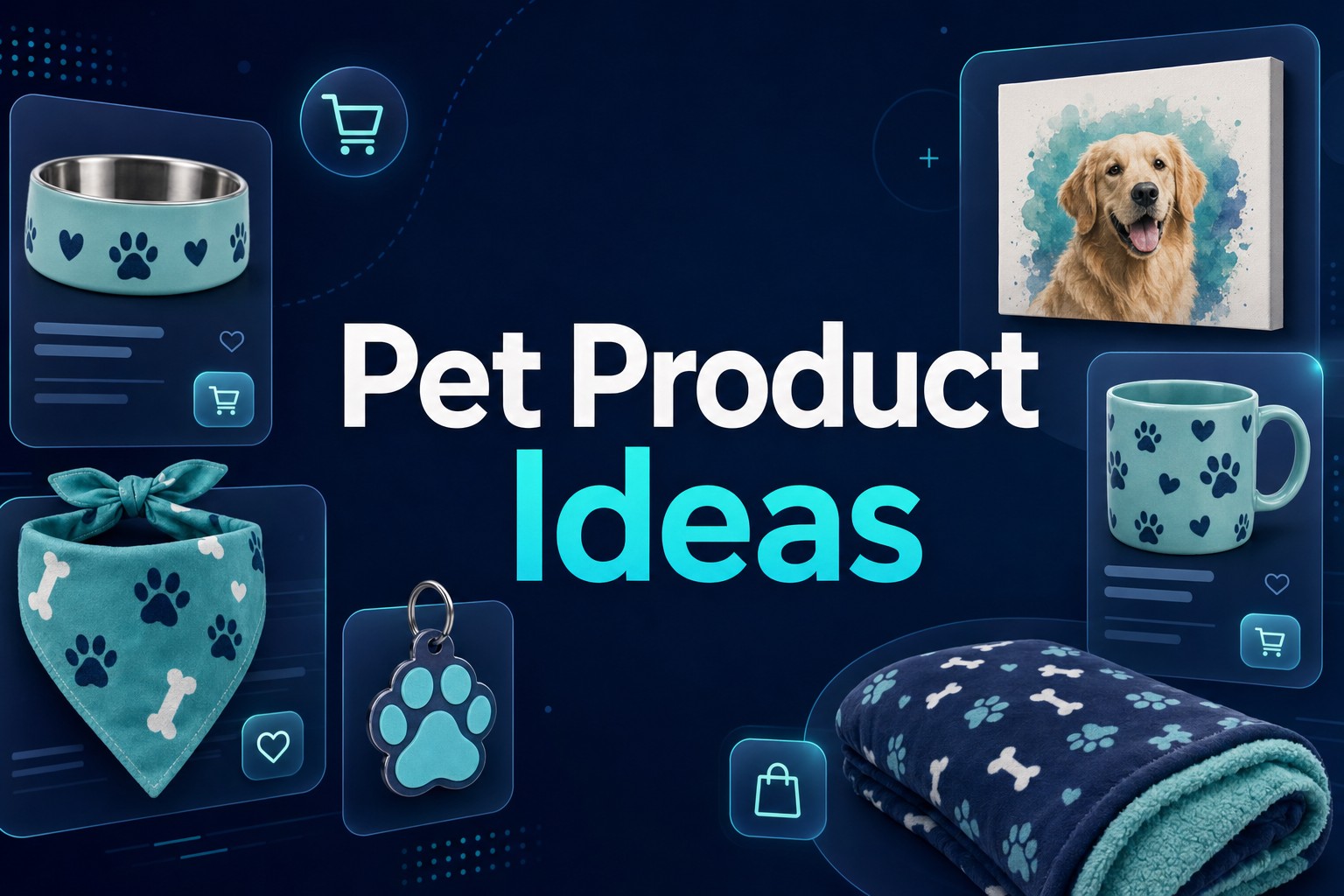
Print on demand pet products are not a cute little side category anymore. They are one of the cleanest examples of where ecommerce is going: emotional products, personalization, low inventory risk, and repeatable creative testing.
I would not tell a new seller to chase every pet trend they see. That is how you end up with 38 random dog designs, no clear customer, and a shop that feels like a flea market. But if you build this category around specific pet owners, specific gifting moments, and a fast product workflow, it can be a very real opportunity.
The pet market has real spending power behind it. The American Pet Products Association reported U.S. pet industry spending at roughly $158 billion in 2025. You do not need a massive slice of that. You need one sharp angle that pet owners instantly recognize as theirs.
Key Takeaways
- Pet products work because they are emotional. Buyers are not just purchasing a bowl, mug, blanket, or shirt. They are buying identity, humor, memory, and pride.
- The best print on demand pet products are personalized or niche-specific. Generic dog mom designs are crowded. Breed, memorial, rescue, profession, and milestone angles have more room.
- Speed matters more than one perfect design. You need to test product types, mockups, titles, and buyer angles quickly before you know what deserves more attention.
- MyDesigns fits this category because pet products need variation. Dream AI, mockups, bulk publishing, and listing management help you create a real product line instead of one-off experiments.
Table of Contents
Why print on demand pet products deserve attention
The best ecommerce categories usually have three ingredients: obvious demand, emotional buying behavior, and enough product surface area to test multiple offers. Pet products have all three.
Pet owners buy practical items, but they also buy identity. A mug that says something specific about a chaotic dachshund household is not competing with every mug on Etsy. It is competing inside one tiny emotional lane. That is exactly where small sellers can win.
Pet buyers are not shopping logically
Here is the thing: nobody needs a custom pet portrait blanket. Nobody needs a matching dog dad shirt. Nobody needs a memorial ornament with a paw print and a name.
They buy anyway.
That is why this category is interesting. The purchase is tied to affection, grief, humor, pride, and gifting. Those are stronger triggers than “this product is useful.” If you can create a product that makes a buyer say, “That is so us,” you have a shot.
The category rewards variation
Pet products are also perfect for variation. You can test breed angles, owner identities, holidays, adoption themes, rescue themes, memorial themes, funny phrases, minimalist portraits, and premium gift positioning.
This is where manual work starts to break. If you have to create every design, mockup, title, tag set, and listing one by one, you will stop before the market gives you useful feedback. I have watched sellers quit at 12 listings when they needed 80 to see the pattern.
Test more pet product angles without building every listing by hand.
MyDesigns helps you create designs, mockups, and listings in batches so you can find the pet niches worth scaling.
Print on demand pet products I would test first
If I were building a pet shop from scratch, I would not start with the weirdest possible product. I would start with products buyers already understand, then add a better angle.
The goal is not to prove that a product can exist. The goal is to prove that a buyer wants your version of it.
Start with products that carry emotion
These are the first product types I would test:
- Custom pet portrait mugs for gifts, office desks, and everyday use.
- Pet memorial ornaments for dog and cat owners who want something simple and meaningful.
- Personalized blankets using a pet name, portrait, or repeating pattern.
- Breed-specific shirts and sweatshirts with humor that feels specific, not recycled.
- Pet parent tote bags for rescue groups, dog walkers, groomers, and breed clubs.
- Custom phone cases with clean portrait styles and strong mockups.
- Canvas prints and wall art for premium gifting and home decor buyers.
- Bandanas, bowls, tags, and accessories if your print provider supports them cleanly.
I would also watch Google Trends around seasonal pet moments. Halloween dog costumes, Christmas pet ornaments, adoption anniversary gifts, and Mother’s Day pet mom gifts all create windows where demand gets more specific.
Skip products that need too much education
One mistake I see is sellers picking products that require too much explanation. If the buyer has to think hard about what it is, how they would use it, or why it costs what it costs, your listing has to work too hard.
For a new shop, I want familiar products with better personalization. Familiar product, specific emotional hook. That combo is easier to sell.
How I would position a pet product line
Most sellers stop at “dog lover gifts.” That is too broad. It gives you no edge, no listing angle, and no reason for someone to choose your product over 2,000 others.
I would build around small identity pockets instead.
Breed is only the first layer
Breed-based products are useful, but they are not enough by themselves. “Golden retriever mom” is a start. “Golden retriever mom who runs on coffee and chaos” is closer. “Golden retriever memorial ornament with name and dates” is a real buyer moment.
The deeper you go, the less your product feels interchangeable.
Use breed as the base layer, then add one of these:
- Owner identity: dog mom, dog dad, cat mom, rescue mom, foster parent.
- Life moment: new puppy, adoption day, loss, birthday, Christmas, moving into a new home.
- Profession or hobby: nurse dog mom, teacher cat mom, camping with dogs, pickleball pet dad.
- Style: minimalist line art, retro mascot, vintage badge, watercolor portrait, bold typography.
Personalization is the margin layer
Personalization gives you a reason to charge more. A generic dog mug is a commodity. A mug with the buyer’s dog name, breed, portrait style, and a funny line is much harder to compare on price.
This is why I like building systems instead of single designs. Create a layout that works across 20 breeds. Create a portrait style that works across mugs, blankets, posters, and ornaments. Create one naming convention so listings stay organized.
If your files and listings are a mess, your shop will feel fast for one week and painful forever after.
Pet products get profitable when your workflow can handle personalization.
Use MyDesigns to organize product files, generate listing content, and manage variations before the catalog gets messy.
The Etsy playbook for pet products
Etsy is still a strong place to test print on demand pet products because shoppers already go there for custom gifts. The mistake is treating Etsy like a place to dump designs. It is not. Etsy is a search and merchandising machine.
The Etsy Seller Handbook has plenty of basics, but here is how I would simplify it for pet products:
- Lead with the buyer moment. “Custom dog memorial ornament” is clearer than “personalized ornament.”
- Use product-specific keywords. Mug, blanket, canvas, shirt, ornament, tote, and phone case should appear naturally where relevant.
- Show personalization clearly in the first image set. Buyers should understand exactly what they can customize without reading a paragraph.
- Build listings around gift intent. Birthday, Christmas, adoption, pet loss, Mother’s Day, Father’s Day, and new puppy moments all matter.
- Do not bury processing expectations. If personalization adds time, say so clearly.
I would also create small collections instead of isolated listings. A “golden retriever memorial gifts” collection is stronger than one ornament floating alone. A “cat mom office gifts” collection gives shoppers more ways to buy and gives your shop better internal relevance.
The MyDesigns workflow I would use
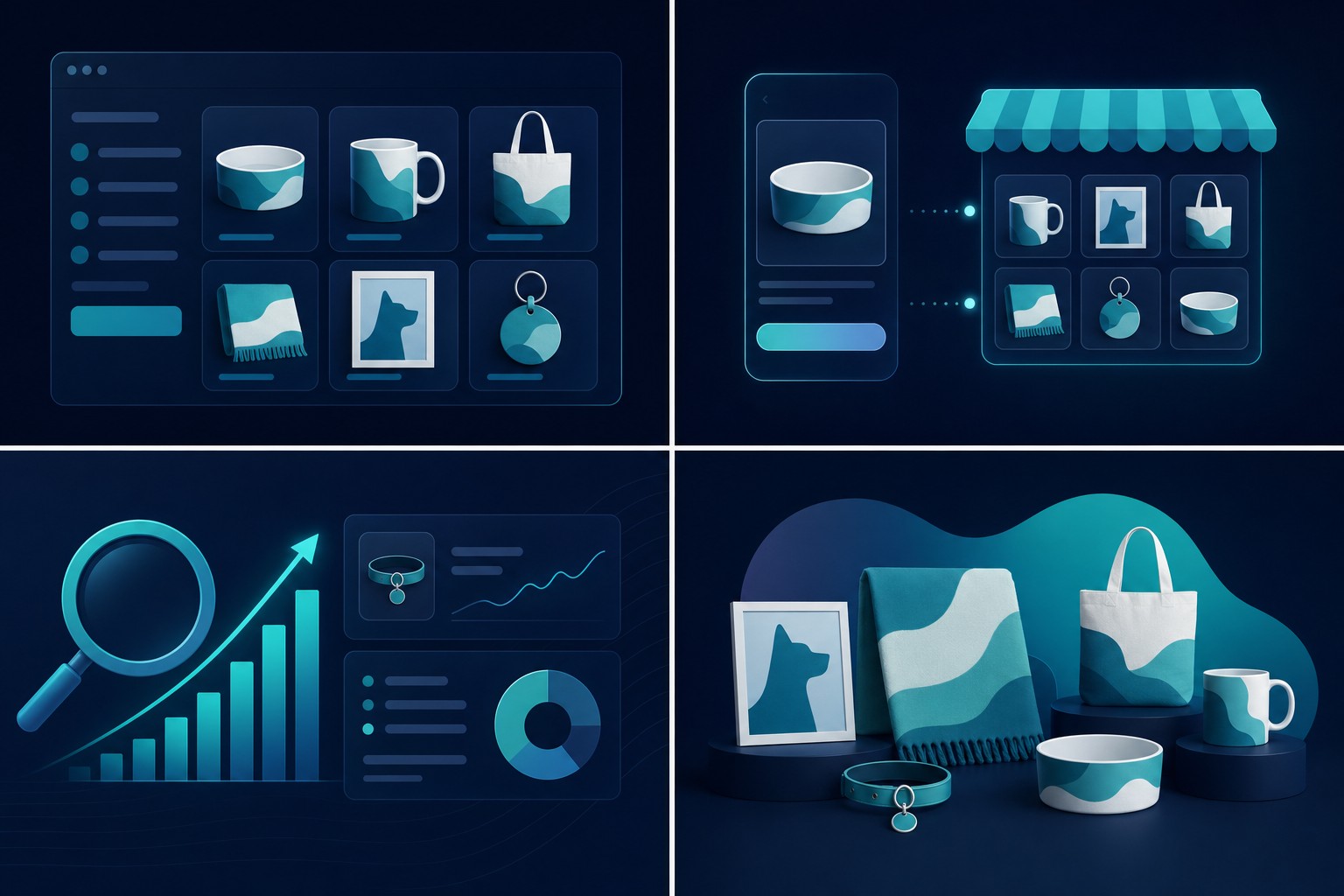
If I were running this myself, I would work in batches. One-off creation feels productive, but it hides whether your idea has legs. A batch lets you compare angles.
Build in batches, not one design at a time
My first batch would be 50 to 100 listings across one tight theme. Not 50 random pet products. One lane.
For example:
- Ten dog breeds.
- Three product types.
- Two style directions.
- Two buyer moments.
That gives you enough coverage to learn. You can use Dream AI for visual concepts, Product Mockups for listing images, Listing Management to keep assets organized, and Bulk Publish to move faster when the set is ready.
Mockups decide whether the test is fair
A weak mockup can make a good product look cheap. That is a bad test. You are not testing the product idea anymore. You are testing whether buyers can survive your bad presentation.
For pet products, I would create mockups that show scale, personalization, and gifting context. A mug on a desk. A blanket folded cleanly. An ornament shown close enough to read the name. A canvas print in a modern room. No clutter. No confusing backgrounds.
Better mockups do not guarantee sales, but they give the listing a fair shot. That matters.
Give every pet product idea a fair test.
Create better visuals, stronger listing copy, and cleaner product batches with MyDesigns before you decide what to scale.
What I would avoid in this category
Not every pet product idea deserves your time. Some are crowded, some are hard to fulfill well, and some are too generic to teach you anything useful.
I would avoid these:
- Generic “dog mom” designs with no twist. Too easy to copy, too hard to differentiate.
- Products where quality varies wildly by supplier. Pet accessories can be great, but bad sizing or cheap materials will create support headaches.
- Designs that depend on copyrighted characters or memes. Fast attention is not worth account risk.
- Overly complex personalization before you have demand. Start with controlled options. Add complexity after sales justify it.
- One-product shops. Pet buyers browse by theme. Give them a collection, not a single bet.
The contrarian take is simple: the pet category is not won by being “more creative.” It is won by being more specific, faster at testing, and better at turning one proven angle into a real catalog.
That is the shift. The old Etsy playbook was upload a clever design and hope. The 2026 playbook is build a system that can test angles faster than manual sellers can react.
Frequently Asked Questions
+ Are print on demand pet products profitable?
Print on demand pet products can be profitable when the offer is specific, the mockups are strong, and personalization supports a higher price. Generic pet designs usually compete on price, while breed, memorial, gift, and custom portrait angles can support better margins.
+ What are the best print on demand pet products to sell first?
The best print on demand pet products to test first are mugs, blankets, ornaments, shirts, sweatshirts, tote bags, phone cases, and canvas prints. These products are familiar to shoppers and work well with personalization, gifting, and breed-specific themes.
+ Can I sell custom pet products on Etsy?
Yes, you can sell custom pet products on Etsy if your listings follow Etsy policies and your production workflow can handle personalization accurately. Etsy shoppers already look for custom gifts, so pet products with names, portraits, breeds, or memorial details can fit the marketplace well.
+ How many pet product listings should I launch to test a niche?
I would launch 50 to 100 focused listings before judging a pet product niche. That sounds like a lot, but a small focused batch across breeds, product types, styles, and buyer moments gives you better data than one or two random listings.
+ Do I need design experience to sell pet products with print on demand?
You do not need advanced design experience, but you do need taste, organization, and good product presentation. Tools like MyDesigns can help with AI design concepts, mockups, listing workflows, and batch publishing so you are not building every asset manually.
If I were starting a pet product shop today, I would not try to be everything to every pet owner. I would pick one tight lane, build a batch, test the buyer moments, and let the data tell me where to go next.
Specific beats cute. Systems beat guessing.
Ready to build a pet product line instead of one random listing?
Use MyDesigns to create designs, mockups, listings, and product batches faster, then scale the angles buyers actually respond to.


Leave a Reply