


Most people searching for shirts with prints want to buy a cool tee. A smaller, smarter group wants to sell them. That second group is who this post is for.
If I were starting a print-on-demand shirt brand from scratch today, with nothing but a laptop and a few hours a week, I would not copy what everyone else is doing on Etsy. I’d build a tight printed shirt line around a narrow audience, with AI-generated designs that actually stand out, and a publishing stack that lets me move ten times faster than the sellers still dragging mockups through Photoshop.
This is the exact playbook I’d use.
Key Takeaways
- Shirts with prints are a real market, not a saturated one – the problem is generic designs, not lack of demand.
- Niche beats trend – picking a specific audience (teachers, nurses, dog parents) outperforms chasing viral themes every single time.
- AI + bulk publishing is the new unfair advantage – one person can now launch 50 polished listings in a weekend.
- Mockups decide the sale, not the shirt – if your thumbnails look flat, your CTR and conversion both tank.
Table of Contents
- Why Printed Shirts Still Work (And Why Most Sellers Fail At Them)
- Pick An Audience, Not A Theme
- Designs That Print Well And Actually Sell
- Mockups Win The Click Before The Shirt Wins The Sale
- Pricing And Margins On Printed Shirts
- Publishing And Scale: Going From One Shirt To Fifty
- Marketing That Actually Moves Printed Shirts
- The Honest Mistakes That Kill Printed Shirt Brands
- Frequently Asked Questions
Why Printed Shirts Still Work (And Why Most Sellers Fail At Them)
Printed shirts have been “oversaturated” for roughly the last decade. Somehow the market keeps paying. Amazon Merch on Demand processes millions of units a year, Etsy’s printed shirt category is one of its biggest, and new sellers still cross five and six figures in a good season.
The trick is understanding why most sellers fail.
They upload generic designs chasing whatever went viral last week. They sell to “everyone.” They price based on what they’d personally pay, not what their buyer will. They treat mockups like an afterthought. Then they blame the market when 30 listings produce three sales.
Here’s the thing. The market isn’t the problem. The approach is.
People will absolutely pay $24 to $35 for a t-shirt with a print that speaks to their identity – their job, their hobby, their family role, their inside joke. That’s the whole game. Shirts with prints are wearable belonging. If your design makes someone in a specific tribe feel seen, you win. If it’s a sunset with a motivational quote slapped on it, you don’t.
I’ve watched this play out with hundreds of sellers inside the MyDesigns community. The ones who niche down and obsess over message-to-audience fit scale. The ones who try to be “a t-shirt brand for cool people” stall out around $500 a month.
Start designing shirts that actually fit a niche, not generic everything tees.
MyDesigns gives you AI-assisted shirt design, built-in mockups, and one-click publishing. Free plan, no card required – you can have your first listing live tonight.
Pick An Audience, Not A Theme
If I were starting from zero today, the first thing I would do is pick a person, not a topic.
“Funny shirts” is a topic. “Sarcastic shirts for night-shift ER nurses in their 30s” is a person. Guess which one converts on Etsy.
When you pick an audience that tight, three things happen. Your designs get specific enough to actually resonate. Your SEO gets easier because the long-tail keywords are less competitive. And your customers start buying in bundles because every shirt you design feels aimed at them.
Niches I Would Target In 2026
Quick list of audiences I’d happily build a shirt line around right now. Each one has proven willingness to pay, steady year-round demand, and enough sub-niches to sustain a catalog of 50-plus designs:
- Specific professions – nurses, teachers, truckers, hairstylists, welders. Each has tribal humor and inside jokes outsiders wouldn’t get.
- Hobby sub-tribes – not “gardening” but “vegetable gardeners over 50.” Not “fishing” but “bass tournament dads.”
- Pet parents by breed – golden retriever moms, French bulldog dads, rescue cat grandmas. Breed specificity outperforms generic “dog mom” by a wide margin.
- Life-stage milestones – grandma shirts announced pregnancy, couple’s anniversary prints, retirement countdown tees.
- Fandom adjacent – not licensed IP (risky), but generic tributes to fandoms: “plant dad energy,” “true crime podcast obsessed,” “Renaissance faire regulars.”
How To Validate A Niche In 30 Minutes
Before I design a single shirt, I run this 30-minute validation loop. Skip it and you’ll spend a weekend designing for an audience that doesn’t spend money.
- Etsy search audit. Type your niche phrase into Etsy. Sort by “Top Customer Reviews.” If the top 10 shirts have 500+ reviews each, demand is real.
- Price range check. Are the bestsellers priced at $18-$22 (race to the bottom) or $27-$36 (healthy niche with loyal buyers)? I’d only enter niches trading in the higher range.
- Design gap scan. Scroll 50 listings. Can you name three specific design angles nobody is doing well? If yes, there’s room for you. If every variation exists, move on.
- Social signal test. Search the niche on Instagram and TikTok. Are there engaged communities, or is it dead? A tribe with 100k+ active followers across creators is a green light.
If the niche passes all four, I build. If it fails on two or more, I pick another.
Designs That Print Well And Actually Sell
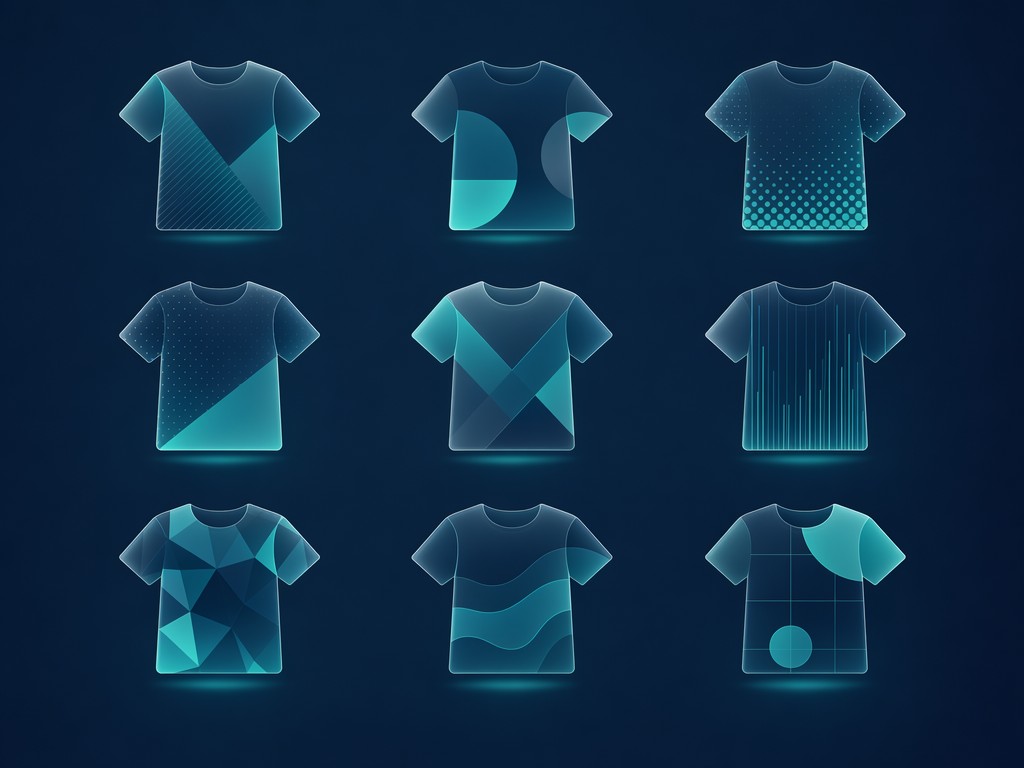
Most sellers treat “design” like a purely creative exercise. That’s a mistake. A shirt design is a commercial product. It has to print cleanly on real fabric, photograph well in mockups, and communicate its punchline in less than two seconds while someone scrolls.
Four Rules I Would Never Break
Rule 1: Make it readable at thumbnail size. Pull up your design on your phone. If you can’t tell what it says or shows at a glance, it won’t convert in Etsy search. Thick typography, high contrast, minimal visual noise.
Rule 2: Respect the print area. Most POD providers give you roughly a 12 inch by 16 inch front print area. Design inside that box, preferably with the core artwork centered at about 10 by 12 inches. Off-center, oversized, or edge-bleeding designs usually print smaller than you expect.
Rule 3: Mind the background color. A design that looks killer on black often looks terrible on heather gray. Plan your color combinations before publishing. I usually design for black first, then adjust for white, navy, and heather gray as separate files.
Rule 4: Keep text punchy. One-liner rules. If your shirt needs three sentences to land the joke, it’s not a shirt joke – it’s a blog post.
My AI Design Workflow For Shirts With Prints
Five years ago, designing 50 shirts meant 50 hours in Photoshop, minimum. Today I can generate, refine, and prep the same 50 designs in an afternoon. Here’s the exact flow I’d use:
- Brainstorm angles – I spend 30 minutes listing 60 specific concepts for my chosen niche. Not shirt slogans. Concepts. “Retro sunset with cactus for desert hikers,” not “cool nature design.”
- Generate base designs with AI – I use MyDesigns Dream AI to turn each concept into 3-4 design variations. I keep the 1-2 strongest per concept.
- Refine and layer – Add typography, clean up edges, adjust contrast for POD print quality. This is the 20% that separates pro designs from obvious AI output.
- Build product variants – One design becomes a tee, sweatshirt, tank, hoodie. That’s four listings from one asset.
- Create mockup sets – Multiple angles, multiple colors, a lifestyle shot if possible.
A 50-shirt catalog in a single weekend is completely achievable with this stack. The bottleneck used to be design time. Now the bottleneck is taste and niche selection.
Dream AI generates on-brand shirt designs in minutes, not hours.
Describe the vibe, the audience, the style. Dream AI turns your ideas into print-ready shirt graphics without needing design chops. Paired with our built-in editor, you go from blank page to shop-ready asset fast.
Mockups Win The Click Before The Shirt Wins The Sale
Here’s the part most new sellers miss entirely. Buyers on Etsy and Amazon don’t see your shirt in person. They see your thumbnail. If that one image isn’t doing the work of a skilled salesperson, nothing else in your listing matters.
I’ve seen identical designs perform 3x to 5x better on one shop versus another purely because of mockup quality. Same shirt, same price, same keywords. Different image. Different revenue.
Here’s my mockup checklist for every shirt I’d launch:
- Image 1: Flat lay or ghost mannequin – Design at maximum clarity, zero distractions. This is the thumbnail.
- Image 2: Lifestyle shot – Model or realistic lifestyle scene in the buyer’s world. Nurse shirt? Model in scrubs. Dog mom shirt? Model at a park with a dog.
- Image 3: Close-up fabric/print detail – Shows print quality, builds trust.
- Image 4: Color variants grid – Lets buyers see all available colors at a glance.
- Image 5: Size chart or sizing note – Reduces returns and answers the most common question before they ask.
Five images, consistent across your catalog, and suddenly every listing feels like a mini-brand instead of a lonely product page.
Pricing And Margins On Printed Shirts
I’m going to say something unpopular. Cheap shirts kill shirt brands.
When I see new sellers pricing their printed shirts at $16.99 on Etsy, I already know how it ends. They’ll make $3 to $5 per sale after fees, burn out trying to hit volume, and quit in 90 days thinking POD doesn’t work. POD works fine. Their pricing didn’t.
Here’s the rough math I’d use on a standard printed tee in 2026:
- Base cost with print provider: $8 to $12
- Target retail: $27 to $34
- Etsy/marketplace fees: ~15%
- Realistic profit per sale: $10 to $16
At $28 retail, one sale a day is roughly $400+ a month in profit. Ten sales a day is a real business. You don’t get to ten a day at $16.99. You get there at $28 with designs and mockups people actually want to pay for.
If your designs are strong, price like your work is worth it. If your designs aren’t strong, discounting them 40% won’t save you – better designs will.
Publishing And Scale: Going From One Shirt To Fifty
Here’s where most solo sellers lose months of momentum. They design a shirt. Open their store dashboard. Manually upload the design, pick products, type the title, write the description, add tags, upload mockups, set pricing, hit publish. Thirty to forty minutes per listing if they’re fast.
Now multiply that by 50 shirts. That’s 25 to 30 hours of pure data entry. Worse, it’s the least creative part of the work, so most people stall out at 15 listings and wonder why their shop isn’t growing.
The unlock is treating publishing like a system, not a task.
- Design in batches. Never design one shirt at a time. Always design a collection of 6-12 around a theme, so your publishing sprint has momentum.
- Standardize your listing structure. One title format. One description template you lightly customize per design. One tag bank you draw from. Decisions compound.
- Use bulk publishing tools. Upload a design once, push it to multiple products and multiple stores in a single flow. This is the single biggest time saver a solo POD seller has available in 2026.
- Schedule, don’t publish instantly. Stagger drops so Etsy sees steady shop activity instead of one giant upload then silence for a month.
This is exactly the bottleneck we built MyDesigns bulk publishing to solve. Once you’ve pushed 20 polished listings live in one session, you will never go back to one-by-one uploading. The time saved compounds every single week you operate.
Publish 50 shirt listings in the time it used to take you to publish 5.
Bulk publishing lets you push designs to multiple product types and stores in one go. Less clicking, more catalog, more sales surface every single week.
Marketing That Actually Moves Printed Shirts
I’ve got opinions here. Loud ones.
Most “marketing tips” for POD shirts are a waste of your time. Writing a daily tweet isn’t going to move shirts. Perfecting your logo won’t either. Neither will paying $200 for an Instagram shoutout.
Here’s what actually moves shirts on POD platforms in 2026, ranked by ROI on your time:
- Listing SEO – Nail your titles and tags for specific long-tail niche searches. A shirt ranking page one for “funny nurse preceptor shirt” will outsell a hundred flashy Instagram posts.
- Catalog breadth – More relevant listings = more surface area in search = more sales. Especially in the first 90 days of a new shop.
- Pinterest – Shockingly underrated for shirt sellers. Long tail, evergreen, skews shopping-intent. Pin every mockup, batch-schedule 5 a day.
- Etsy Ads on winners only – Never advertise a new listing. Wait until it gets 5-10 organic sales, then put $1-3/day behind it. That’s the formula.
- Email list for repeat buyers – Printed shirt buyers buy again. Capture emails after purchase, email them your next niche drop.
Ignore the rest until the above five are dialed. Instagram reels, TikTok lives, complex funnels – those can wait until you’ve got $5k/month organic revenue. The fundamentals always win first.
The Honest Mistakes That Kill Printed Shirt Brands
I’ve seen these over and over. Save yourself.
Designing for yourself. Your taste is not your customer’s taste. If you’re a 34-year-old male software engineer designing nurse shirts, ask an actual nurse what they’d wear. Always.
Copying trending designs one week late. By the time a design is trending on Etsy, the market is already saturated with copycats. Build evergreen designs 90% of the time, ride trends 10%.
Chasing too many niches at once. A shop that sells nurse shirts AND dog mom shirts AND gamer shirts AND anniversary shirts looks amateur. One niche first, then expand.
Skipping mockup quality to save time. This is literally taking food off your table. Better mockups = more clicks = more sales at the exact same ad spend and listing count.
Giving up at 90 days. Etsy takes roughly 60-90 days to really surface new shops in search. Most new shirt brands die right before the growth curve kicks in. Patience is undefeated.
Treating it like a hobby then wondering why it pays like a hobby. Block 10 hours a week. Show up. Ship designs. Track numbers. Iterate. That’s the difference between a store that stalls at $200/mo and one that crosses $5k.

Frequently Asked Questions
+ Is it still profitable to sell shirts with prints in 2026?
Yes, very. Printed shirts remain one of the most reliable print-on-demand categories on Etsy, Amazon Merch, and Shopify. The sellers who fail usually design generic shirts and compete on price. The ones who niche down, build strong mockups, and use AI to scale their catalog still cross $5k to $20k a month regularly.
+ What’s the best print method for shirts with prints: DTG, DTF, or screen printing?
For most POD sellers, DTG (direct-to-garment) is the default – it prints detailed, multi-color designs on demand with no setup cost. DTF (direct-to-film) is gaining popularity for brighter colors on darker garments. Screen printing only makes sense for bulk orders of 100+ units of the exact same design, which most POD sellers aren’t doing.
+ How many printed shirt designs should I launch with?
Aim for 25-40 solid listings before you evaluate performance. Fewer than 20 and you won’t have enough surface area to get consistent search impressions. Don’t flood 200 listings on day one either – that looks spammy and Etsy may throttle your shop. A steady drip of 3-5 new listings a week, all within one tight niche, works beautifully.
+ Can I use AI-generated designs on shirts I sell commercially?
Yes, when you’re using a tool that gives you full commercial rights to the output (MyDesigns Dream AI does). Avoid generating designs in the style of named living artists or recognizable copyrighted IP. Original concepts, specific niche humor, and unique typography are all fair game and absolutely safe to sell.
+ What price should I charge for a printed t-shirt on Etsy?
$27 to $34 is the sweet spot in most printed shirt niches. Below $22 you’ll struggle to clear real profit after fees and ad spend. Above $40 you start needing a stronger brand story to justify the price. If your niche bestsellers are already sitting at $28-$32, anchor near there and test upward.
+ How long until my printed shirt shop starts making real money?
Realistic timeline: first sales in 2-6 weeks, first $1k month somewhere between month 2 and month 4, $5k/month between month 6 and month 12 if you stay consistent with 3-5 new listings per week and solid mockups. The shops that keep going past 90 days are the ones that win. Most quit right before the curve kicks.
That’s the playbook. Pick a tight audience, design with AI, obsess over mockups, publish in bulk, price like your work matters. Shirts with prints isn’t a dying category. It’s a category where most sellers are running the wrong playbook.
If you stop running theirs and start running this one, you’ll be genuinely surprised how fast things move.


Leave a Reply