


Most people approach custom phone cases the wrong way. They treat them like a cute side product when they should be treating them like a high-frequency, low-friction impulse buy that can carry an entire Etsy or Shopify catalog.
I like custom phone cases because the buyer intent is obvious. People already know what they want, they replace them often, and they love products that feel personal. The catch is that generic designs disappear fast. If you want this category to work in 2026, you need sharper angles, faster testing, and a workflow that lets you launch variants before the trend cools off.
I’ve watched sellers waste weeks obsessing over one design when the real game was simple: create more viable offers, show them with better mockups, and publish faster than everyone doing it manually. That is exactly how I would build a custom phone case line today.
Key Takeaways
- Custom phone cases sell best when the offer feels personal fast – names, initials, photo-driven designs, niche humor, and gift angles beat generic art most of the time.
- Mockups decide the click – in crowded search results, cleaner visuals usually matter more than another hour of keyword tweaking.
- Speed beats perfection – the sellers who test 30 viable case concepts usually beat the seller polishing one design for three days.
- The real advantage is workflow leverage – if you can generate visuals, write listings, and publish in bulk, you can cover more demand with less drag.
Table of Contents
- Why custom phone cases still work in 2026
- The best custom phone case angles to test first
- Why most sellers miss the click
- How I would build a custom phone case workflow
- Where to sell custom phone cases
- Custom phone cases profit math that actually matters
- The old playbook is dead, the leverage play is better
- Frequently Asked Questions
Why custom phone cases still work in 2026
There is a reason big brands, Etsy sellers, and creator shops all keep circling back to this category. A phone case is practical, visible, giftable, and emotionally loaded. People carry it everywhere, which means they care about how it looks far more than they care about a random novelty product collecting dust in a drawer.
That combination matters. According to Statista smartphone usage data, the addressable audience is massive, and the upgrade cycle keeps refreshing demand. Meanwhile, buyers increasingly expect some level of personalization in ecommerce. That is exactly why flexible product creation workflows and strong product visuals matter so much here.
Buyers want identity, not just protection
The case is no longer just protection. It is identity. That means your design has to say something quickly. Name cases, initials, pet photos, inside jokes, zodiac themes, sports pride, and clean minimalist personalization all work because the customer can imagine the product as theirs instantly.
I think too many sellers overestimate originality and underestimate relevance. A simple personalized layout that clearly fits the buyer’s identity usually beats an artistic masterpiece that requires interpretation.
The category rewards fast testing
This category changes fast because trends, device models, and gift seasons all shift. If you are still making every image and every listing one by one, you are already late. The sellers who win here are usually the ones with the best testing loop, not the ones with the deepest design theory.
If you have 10 case ideas, do not launch one. Launch all 10.
This is exactly where MyDesigns helps. You can move from idea to product visuals and listing-ready assets without dragging every variation through a manual workflow.
The best custom phone case angles to test first

If I were starting from zero, I would not begin with broad “cute phone cases” territory. That market is noisy and forgettable. I would start with intent-heavy angles where the buyer already knows why the product matters.
Gift-driven case ideas
- Mother and daughter name cases
- Pet photo phone cases
- Anniversary photo collage cases
- Initial plus birth flower cases
- Bridesmaid and maid of honor phone cases
Gift intent raises conversion because the buyer is not casually browsing. They have a job to do. I saw this pattern years ago in other personalized categories, and it keeps showing up. When the use case is obvious, the listing does less heavy lifting.
Niche and identity case ideas
- Nurse, teacher, and therapist themed cases
- Christian and faith-based minimalist line art
- Bookish and dark academia typography-inspired layouts
- Sports mom and team spirit personalization
- Zodiac, birth month, and astrology case templates
This is where Dream AI and Vision AI become useful. Not because AI magically makes you creative, but because it helps you produce more concept directions quickly enough to discover what buyers actually respond to.
You do not need more blank-canvas stress. You need more usable variations.
Use MyDesigns to generate ideas, clean up prompts, and build a deeper test set before your competitors finish their first draft.
Why most sellers miss the click
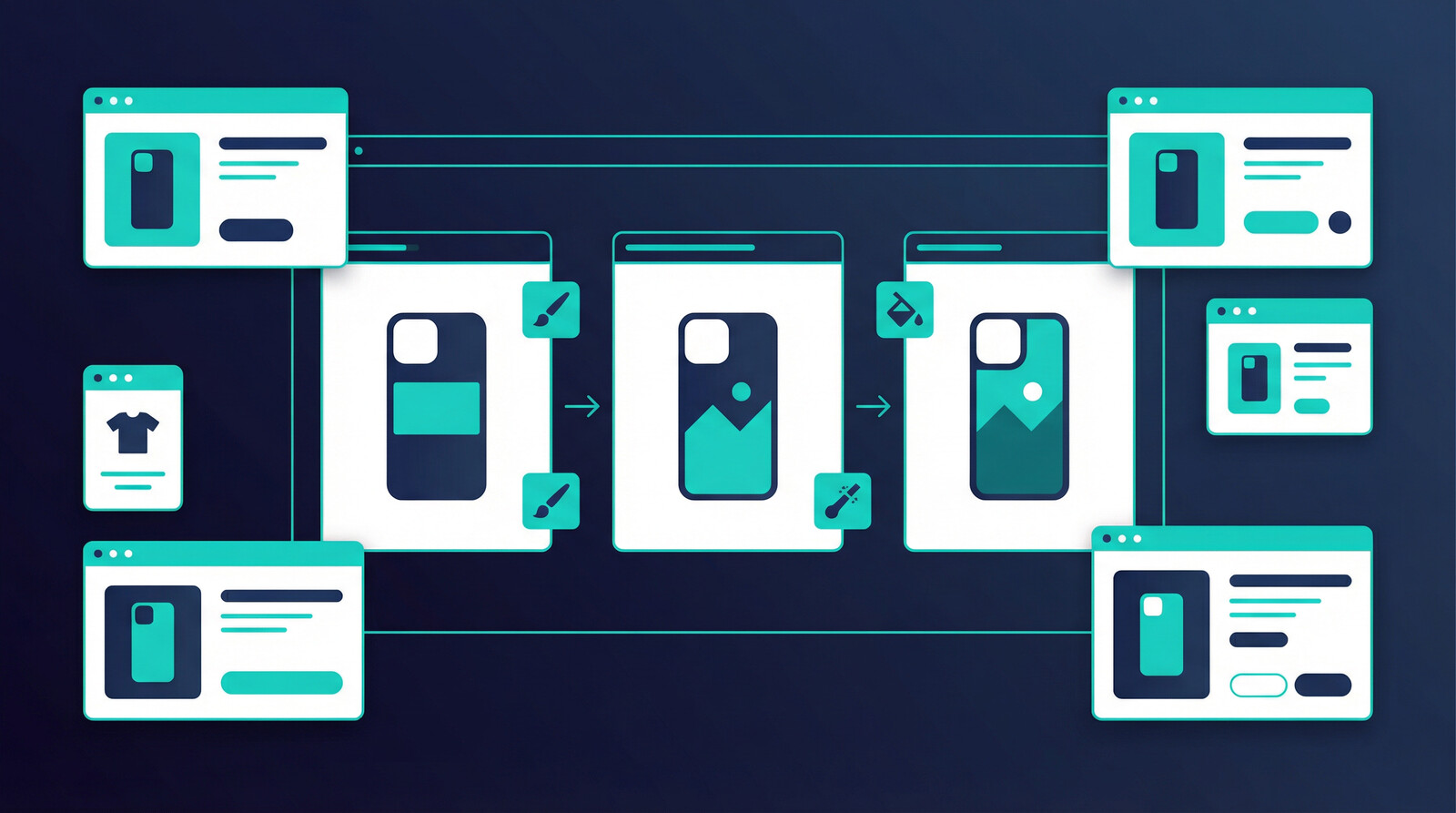
Here is the blunt truth. Most phone case listings do not fail because the idea is terrible. They fail because the presentation is lazy.
Weak thumbnails, poor crop choices, cluttered mockups, too many fonts, and device previews that look fake will quietly kill your click-through rate. Etsy and Shopify buyers move fast. If your first image looks homemade in the wrong way, you lose before the buyer reads a single word.
This is why I keep pushing mockups so hard. The old playbook said “just get more listings up.” I disagree. More listings with mediocre visuals just give you more chances to be ignored. Better visuals first, then scale.
For reference, Etsy’s own seller guidance keeps emphasizing listing photo quality and clarity because presentation affects both conversion and buyer trust. Read their official photography guidance and you will see the same pattern.
How I would build a custom phone case workflow
If I were rebuilding this category from scratch today, this would be my exact move.
Start with variants, not one design
I would build 20 to 50 variants around one clear angle, not obsess over one hero design. For example, if I picked birth flower cases, I would immediately expand into different layout treatments, background styles, name positions, and device-compatible framing. Because one winner is nice. A winner family is better.
This is why multi-product publishing and listing management matter. They let you operate like a catalog business instead of a hobby shop.
Use mockups that look like real products
I would create multiple mockup styles for every design family: clean flat lays, hand-held lifestyle scenes, close-up material shots, and simple color-background product isolates. Different buyers react to different visual contexts, and different platforms reward different first-image styles.
I watched one seller years ago go from dead inventory to steady sales simply by changing the first two images and tightening the personalization preview. Same product. Same market. Different presentation. That happens more than people think.
Phone cases are visual products. Your mockup quality is part of the offer.
Create stronger case mockups, test multiple looks, and stop relying on one weak hero image to do all the selling.
Where to sell custom phone cases
I would start with Etsy if I wanted demand fast and lower setup friction. Etsy is still strong for gift-led personalization, especially when your product angle is obvious and emotionally specific. If I wanted more brand control and repeat customer upside, I would expand to Shopify next.
The mistake is acting like this is an either-or decision. It is not. The smarter move is building a workflow that supports both. That is why I like connecting channels through shops and integrations instead of rebuilding the same catalog twice.
| Channel | What it does well | What to watch out for |
|---|---|---|
| Etsy | Intent-heavy traffic for gifts and personalized products | Search competition is brutal if your thumbnails and keywords are weak |
| Shopify | Better brand control and stronger customer retention upside | You need your own traffic engine |
| Both together | Best mix of discovery plus owned customer relationships | Only works if your workflow stays organized |
If you are still figuring out marketplace demand, read best things to sell on Etsy and compare your phone case angle against proven buyer behavior. Then build your catalog around that demand instead of your personal taste.
Custom phone cases profit math that actually matters

A lot of sellers ask the wrong question here. They ask whether custom phone cases are profitable. That is too vague. The real question is whether your specific design angle, ad spend, conversion rate, and production costs leave enough room for margin.
You need to think in contribution margin, not vanity revenue. A case that sells for $29.99 looks nice until production, marketplace fees, transaction fees, and personalization support time eat the entire spread. This is why I push operational efficiency so hard. Faster production workflows and better listing conversion do not just save time. They protect margin.
If you need a benchmark for listing economics and fee awareness, Shopify’s ecommerce resources and Etsy fee documentation are both worth reading before you price aggressively: Shopify pricing guidance and Etsy fee policy.
The faster you build, test, and publish, the less expensive every learning cycle becomes.
Use MyDesigns to cut drag out of product creation so you can spend more time finding winners and less time babysitting repetitive work.
The old playbook is dead, the leverage play is better
The old ecommerce advice was simple: find one good design, upload it manually, and hope consistency wins. I do not buy that anymore. Not in a category this crowded.
The real edge now is leverage. Better concept generation. Better mockups. Faster listing creation. Faster publishing. More experiments in the same amount of time. That is the shift. Creativity still matters, but workflow is what lets creativity compound.
That is a big reason we built MyDesigns the way we did. We wanted sellers to stop drowning in repetitive catalog work and start behaving more like operators. Because once you can build and test faster, the business gets a lot more fun.
Frequently Asked Questions
+ Are custom phone cases profitable?
Yes, custom phone cases can be profitable when your design angle is strong, your mockups convert, and your costs stay controlled. The sellers who struggle usually have weak presentation or not enough differentiated offers.
+ What type of custom phone cases sell best?
Personalized phone cases tied to identity or gifting usually sell best. Names, initials, photos, pets, birth flowers, and niche community themes tend to outperform generic art.
+ Where should I sell custom phone cases?
Etsy is a great starting point for intent-driven personalized demand, while Shopify gives you more brand control and retention upside. The best long-term setup is usually both.
+ How do I make custom phone case mockups look better?
Use cleaner composition, fewer distracting elements, clearer personalization previews, and multiple image styles. In most cases, a sharper first mockup improves clicks faster than rewriting your whole description.
+ Can MyDesigns help me sell custom phone cases faster?
Yes. MyDesigns helps streamline concept creation, mockups, listing workflows, and publishing so you can test more custom phone case ideas without getting buried in manual work.


Leave a Reply