


Most people who want to start an embroidery business think they need to drop $5,000-$15,000 on commercial embroidery machines before making their first dollar. That’s the old playbook—and it’s exactly why so many aspiring entrepreneurs never get started.
Here’s what I’ve learned watching hundreds of sellers build profitable embroidery businesses: the ones who succeed fastest aren’t the ones with the fanciest equipment. They’re the ones who eliminate upfront risk and validate their market before investing. Print on demand embroidery changes the entire equation.
I’m going to show you how to start an embroidery business in 2026 without buying a single machine—and how to scale it using the same automation tools we’ve built at MyDesigns that let sellers push hundreds of products live in hours instead of weeks.
Key Takeaways
- Skip the $10K machine investment — Print on demand embroidery lets you validate your niche and build revenue before committing to equipment.
- Embroidery commands premium prices — Embroidered products sell for 40-60% more than printed alternatives with higher perceived value.
- Niches win in embroidery — Corporate logos, sports teams, and personalized gifts outperform generic designs every time.
- Automation is your competitive edge — Bulk publishing and multi-channel distribution separate profitable sellers from hobbyists.
Table of Contents
- What Is an Embroidery Business in 2026?
- Traditional Embroidery vs Print on Demand: Which Path?
- Why Embroidered Products Command Premium Prices
- The Most Profitable Embroidery Niches
- How to Start Your Embroidery Business (Step-by-Step)
- Designing for Embroidery: What Actually Works
- Scaling Your Embroidery Business with Automation
- Pricing Your Embroidered Products for Profit
- Frequently Asked Questions
What Is an Embroidery Business in 2026?
An embroidery business creates and sells products featuring stitched designs—logos, text, patterns, and artwork sewn directly into fabric. Unlike screen printing or DTG (direct-to-garment) printing, embroidery creates a textured, three-dimensional effect that looks and feels premium.
The embroidery market has evolved dramatically. Traditional embroidery businesses required significant capital: commercial embroidery machines ($3,000-$20,000), digitizing software ($500-$2,000), thread inventory, blank garments, and physical workspace. That model still works for high-volume contract work, but it’s not the only path anymore.
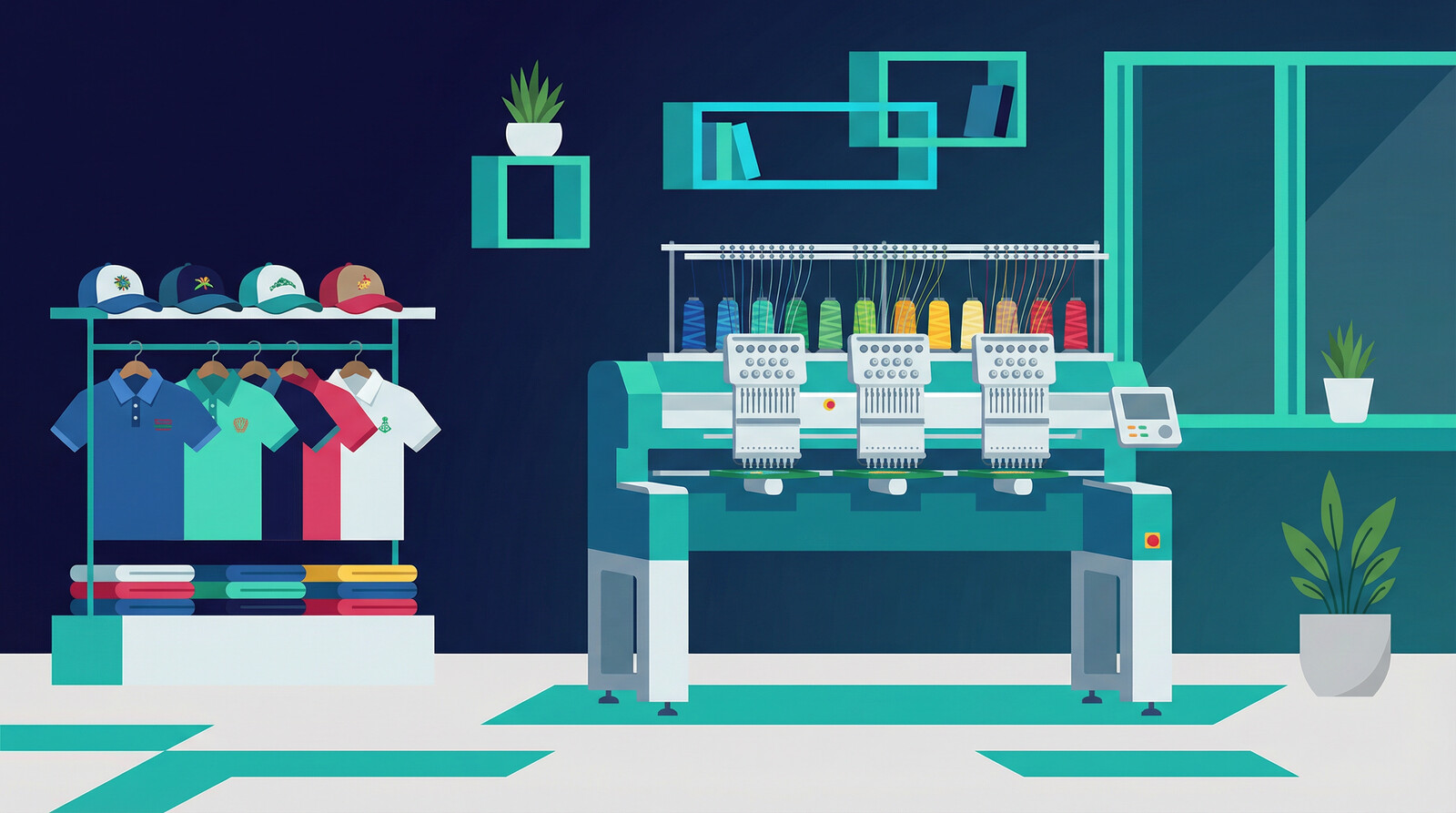
Today, print on demand embroidery services like Printify, Printful, and others handle the actual stitching. You focus on designs, marketing, and customer acquisition. They handle production and shipping. This fundamentally changes the risk profile of starting an embroidery business.
Good strategy matters. Fast execution is what turns it into revenue.
This is exactly where a cleaner workflow starts to matter more than another round of planning.
Traditional Embroidery vs Print on Demand: Which Path?
I’m not going to tell you one approach is universally better. The right choice depends on your situation, capital, and goals. Here’s the honest breakdown:
| Factor | Traditional Embroidery | Print on Demand Embroidery |
|---|---|---|
| Startup Cost | $5,000-$20,000+ | $0-$500 |
| Profit Margin (per item) | 60-80% | 25-45% |
| Time to First Sale | 2-6 months | 1-2 weeks |
| Scalability | Limited by machine capacity | Unlimited (provider scales) |
| Product Range | Limited by equipment | Hundreds of products available |
| Risk Level | High (inventory + equipment) | Low (no inventory) |
When Traditional Makes Sense
Traditional embroidery wins when you have consistent, high-volume orders from repeat customers. Think: local sports leagues ordering 500 jerseys, corporate clients needing 1,000 polos with their logo, or school uniform contracts. The per-unit margins are significantly higher, and the machine pays for itself quickly with volume.
When POD Embroidery Wins
Print on demand embroidery is the smarter starting point for most people. You validate whether customers actually want your designs before investing in equipment. You test multiple niches simultaneously. You build revenue and learn the business while someone else handles production headaches.
My recommendation: start with POD embroidery to prove your concept and build capital. Once you’re consistently doing $5,000+/month and have identified your winning niches, then evaluate whether bringing production in-house makes financial sense.
Why Embroidered Products Command Premium Prices
Embroidery isn’t just another decoration method—it signals quality. Customers pay more for embroidered products because they perceive them as more durable, professional, and premium than printed alternatives.
The numbers back this up. According to the Advertising Specialty Institute, promotional products with embroidered logos have 28% higher retention rates than printed items. People keep embroidered gear longer, which means more impressions and more perceived value.
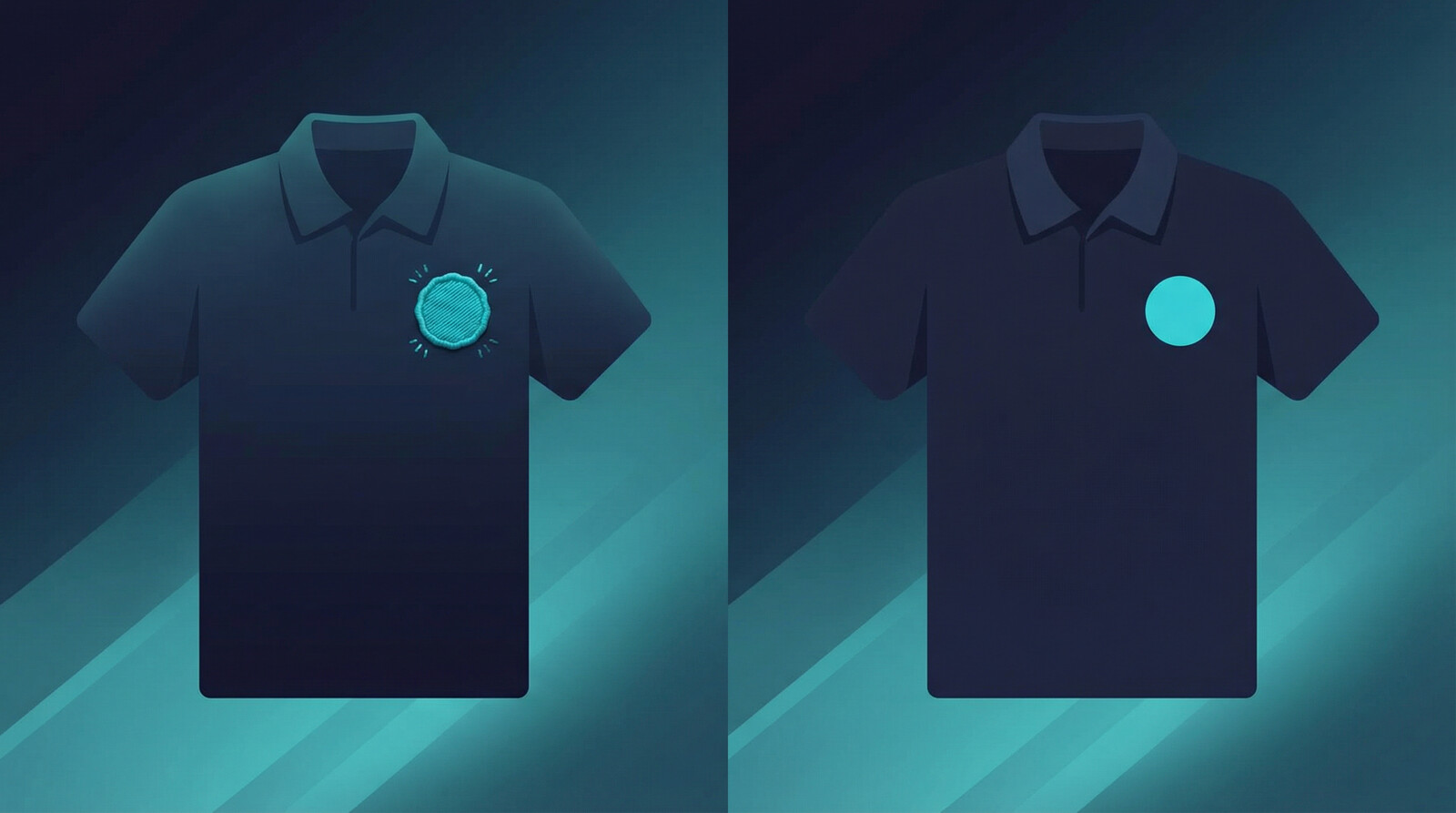
Here’s what this means for your business:
Higher average order values. An embroidered polo sells for $35-$50 where a printed t-shirt sells for $18-$28. Same customer acquisition cost, significantly more revenue per order.
Better repeat customer rates. When products feel premium, customers come back. Embroidered corporate apparel and personalized gifts drive repeat purchases far better than disposable printed merch.
Less price competition. The embroidery market is less saturated than general print on demand because the barrier to entry (traditionally) was higher. This gives you room to compete on quality and niche expertise rather than racing to the bottom on price.
The Most Profitable Embroidery Niches
Generic embroidery is a losing game. The winners in this market own specific niches where they become the obvious choice. Here are the niches I’ve seen generate the most consistent revenue:
Corporate and Small Business Branding
Every business needs branded apparel. Polos, jackets, hats, and bags with company logos are steady, repeat-order opportunities. The key is targeting businesses large enough to need professional branding but small enough that they don’t have enterprise procurement processes. Think: local restaurants, real estate teams, contractors, and professional services firms.
Sports Teams and Leagues
Youth sports, adult recreational leagues, and school teams need embroidered gear constantly. Jerseys, warm-up jackets, bags, and caps. This niche has built-in repeat business (new seasons, new rosters) and word-of-mouth referrals within tight-knit communities.
Personalized Gifts and Monograms
Monogrammed towels, personalized baby blankets, custom robes—these products dominate wedding registries and gift-giving occasions. Product personalization is where embroidery really shines because the stitched lettering looks elegant in ways that printed text can’t match.
Workwear and Uniforms
Medical scrubs, restaurant uniforms, salon aprons, and trades workwear all benefit from embroidered branding. This B2B niche requires more sales effort upfront but delivers predictable, recurring revenue once you land accounts.
Niche Communities and Hobbies
Fishing clubs, car enthusiast groups, gaming communities, pet owners—any passionate niche where people wear their identity is an embroidery opportunity. These customers pay premium prices for products that represent their tribe.
If you want better output, the workflow has to make launching easier, not harder.
The advantage usually goes to the sellers who can create, organize, and publish without getting buried in manual work.
How to Start Your Embroidery Business (Step-by-Step)
Here’s the exact process I’d follow to launch an embroidery business today:
Step 1: Choose Your Niche and Validate Demand
Pick a specific niche from the list above. Don’t try to serve everyone—that’s how you serve no one. Research the niche using Etsy search and Google Trends to confirm demand exists.
Look at existing sellers in your niche. Are they getting reviews? Do their shops show sales velocity? Competition isn’t bad—it proves the market exists. You just need to identify what you’ll do differently.
Step 2: Set Up Your Sales Channels
Start with Etsy for personalized/gift embroidery or Shopify for corporate/wholesale embroidery. Both integrate seamlessly with POD embroidery providers.
Connect your shop to a print on demand service that offers embroidery. Printify has extensive embroidery options across multiple print providers, giving you flexibility on product selection and pricing.
Step 3: Create Your Initial Product Line
Don’t launch with 500 products. Start with 10-15 items that represent your niche well. Focus on:
- 2-3 apparel items (polo, hoodie, cap)
- 2-3 accessories (tote bag, towel, blanket)
- Multiple design variations within your niche theme
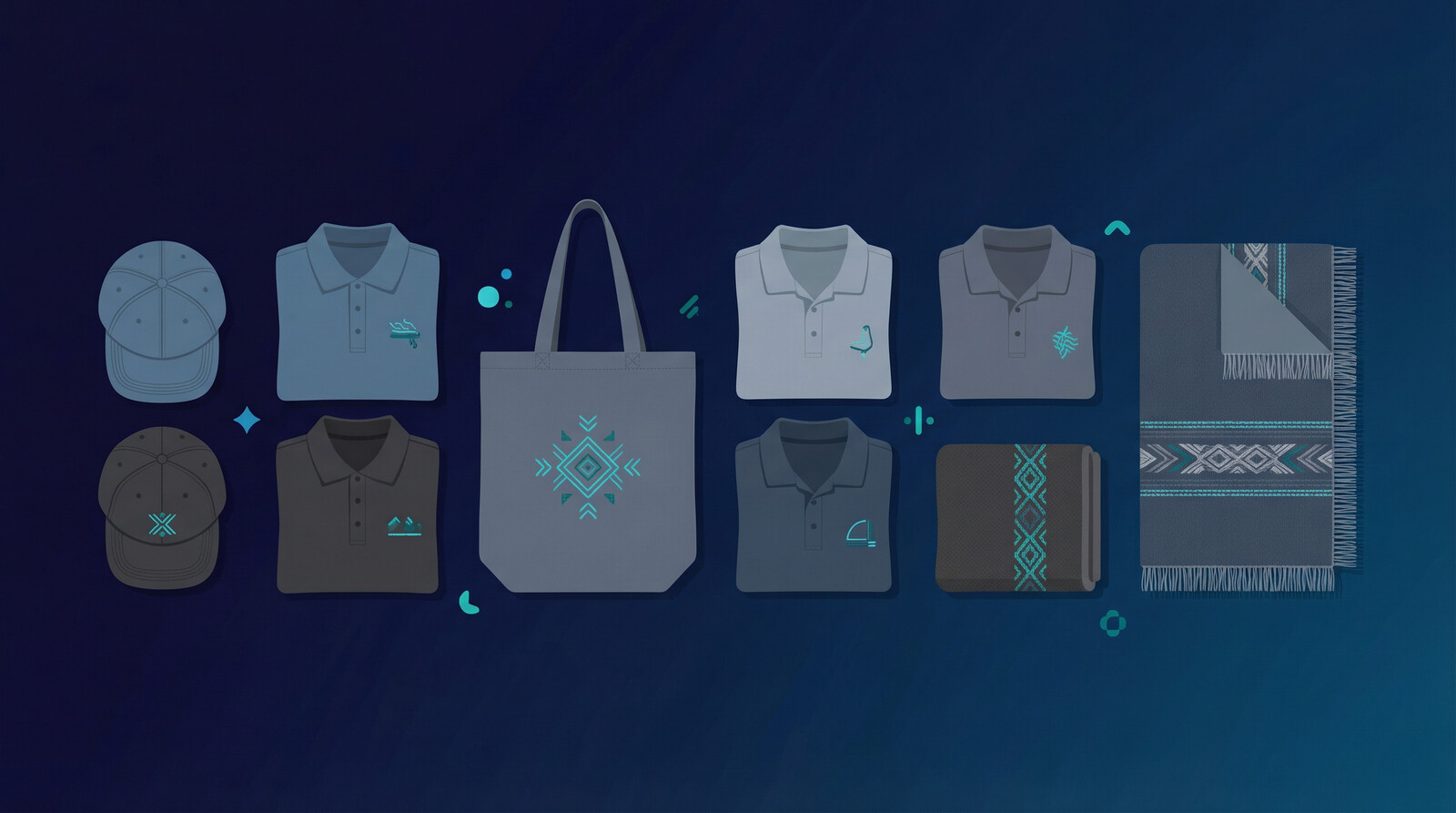
Use mockup generators to create professional product images without ordering samples of everything. Quality mockups are essential—customers can’t feel the embroidery through their screen, so your images need to convey that premium quality.
Step 4: Optimize Your Listings for Search
Whether you’re on Etsy, Shopify, or Amazon, search optimization determines whether customers find you. Include your niche keywords plus embroidery-specific terms: “embroidered,” “custom embroidery,” “personalized,” “monogrammed.”
Write descriptions that address customer concerns: stitch quality, thread colors available, turnaround time, and care instructions. These details build confidence and reduce pre-purchase questions.
Step 5: Launch and Iterate Based on Data
Get your products live. Don’t wait for perfection. The market will tell you what works through actual sales data. Double down on winners, cut losers, and continuously test new designs and products.
Designing for Embroidery: What Actually Works
Embroidery has constraints that printing doesn’t. Understanding these makes the difference between designs that look stunning and designs that turn into muddy messes.
Keep It Simple
Embroidery builds designs stitch by stitch. Complex gradients, photorealistic images, and tiny details don’t translate well. The best embroidery designs use bold shapes, clean lines, and limited color palettes (typically 5-7 colors maximum).
Size Matters
Minimum detail size for embroidery is about 3mm. Anything smaller becomes a blob of thread. Standard embroidery areas are:
- Left chest: 3.5″ x 3.5″
- Full back: 10″ x 10″
- Cap front: 2.5″ x 2″
- Sleeve: 3″ x 3″
Design within these constraints from the start rather than trying to shrink complex artwork later.
Digitization Quality
Your design needs to be converted to a digitized embroidery file that tells machines exactly where to place each stitch. POD providers handle this, but the quality varies. Order samples before committing to a provider to verify their digitization quality matches your standards.
Using AI for Embroidery Designs
AI image generators like Dream AI can create embroidery-ready designs if you prompt correctly. Specify “embroidery design style,” “limited color palette,” “bold outlines,” and “no gradients” in your prompts. Then simplify the output as needed before sending for digitization.
The difference between reading and publishing is where momentum usually gets lost.
If you want this strategy to actually turn into output, the workflow after the idea matters just as much as the idea itself.
Scaling Your Embroidery Business with Automation
Once you’ve validated your niche and have winning products, the game becomes efficiency. How many products can you list? How many channels can you sell on? How fast can you respond to trends?
This is where I’ve seen the biggest gap between sellers who plateau at $2,000/month and those who scale to $20,000+.
Bulk Publishing Changes Everything
Manually creating listings is fine for your first 20 products. It’s a bottleneck at 200. Bulk publishing tools let you take a single design and push it to dozens of products across multiple sales channels simultaneously.
I’ve watched sellers create 100+ embroidery listings in a single afternoon using bulk workflows—work that would take weeks doing one listing at a time. The sellers who figure this out have a fundamental advantage in catalog depth and market coverage.
Multi-Channel Distribution
Don’t limit yourself to one marketplace. Embroidered products sell on Etsy, Shopify, Amazon, eBay, and direct through your own site. Each channel has different customer demographics and search behaviors.

Multi-channel integrations let you manage inventory and orders across platforms from a single dashboard. No more logging into five different seller accounts to update prices or check orders.
Automation for Seasonal Opportunities
Embroidery has strong seasonal patterns: corporate gifting in Q4, wedding season in spring/summer, back-to-school in fall, holiday themes year-round. Automated workflows let you prepare seasonal catalogs in advance and launch them across channels simultaneously when the timing is right.
Pricing Your Embroidered Products for Profit
Pricing embroidery requires understanding both the cost structure and perceived value. Here’s the framework:
Calculate Your True Costs
With POD embroidery, your costs include:
- Base product cost from provider
- Embroidery/decoration fee (typically $3-$8 per item)
- Shipping (either to customer or built into price)
- Platform fees (Etsy: ~12%, Shopify: ~3%, etc.)
- Payment processing (~3%)
Add these up to find your floor—the minimum price where you break even.
Price Based on Value, Not Cost
Your price should reflect what customers are willing to pay, not just your costs plus margin. Research competitors in your niche. What are they charging? Where are you positioned relative to their quality and service?
Embroidered products support premium pricing. A customer paying $45 for a custom embroidered polo isn’t comparing you to the $12 printed tee on Amazon—they’re comparing you to the $60 polo at the mall.
Pricing Tiers
Consider offering good/better/best tiers within your product line:
- Good: Standard embroidery on basic blanks
- Better: Premium blanks or larger embroidery areas
- Best: Premium everything plus extras (gift packaging, rush production)
Tiered pricing captures both budget-conscious and premium customers while anchoring your mid-tier as the obvious choice.
Frequently Asked Questions
+ How much does it cost to start an embroidery business?
With print on demand embroidery, you can start for under $500—just the cost of setting up your store, ordering samples, and initial marketing. Traditional embroidery with your own equipment requires $5,000-$20,000+ for machines, software, supplies, and workspace.
+ Is embroidery business profitable?
Yes, embroidery businesses can be highly profitable. POD embroidery margins typically run 25-45% while traditional embroidery can achieve 60-80% margins on production. The key is finding the right niche and pricing appropriately for the premium nature of embroidered products.
+ What is the best embroidery machine for a small business?
For small businesses starting out, single-head machines like the Brother PR1055X or Janome MB-7 offer good quality in the $5,000-$10,000 range. However, I recommend validating your business with print on demand first before investing in equipment.
+ Can you do embroidery with print on demand?
Absolutely. Services like Printify and Printful offer embroidery on hundreds of products—polos, hats, jackets, bags, blankets, and more. You upload your design, they handle digitization and production, and ship directly to your customers.
+ How long does it take to learn embroidery for business?
If you’re using print on demand, you don’t need to learn machine embroidery at all—you need to learn design principles and marketing. For traditional embroidery, expect 3-6 months to become proficient with equipment and digitization software.
The opportunity in embroidery is real, but it’s not about having the best equipment or the fanciest techniques. It’s about finding a niche where you can become the obvious choice, validating demand before heavy investment, and building systems that let you scale efficiently.
Start with print on demand to prove your market. Use automation to build catalog depth faster than your competition. Price for the premium nature of embroidered products. And treat every customer interaction as an opportunity to build the kind of reputation that drives referrals and repeat business.


Leave a Reply