


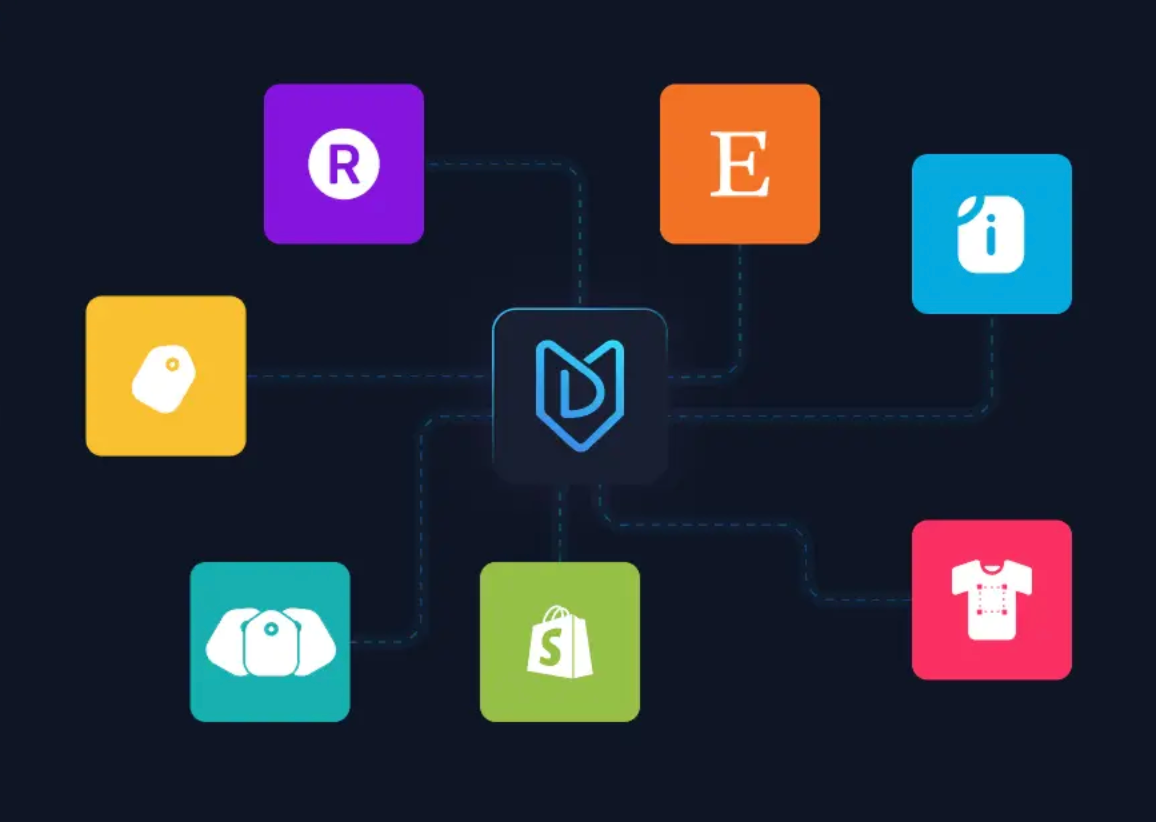
 Selling on multiple e-commerce channels is like casting a wider net – you simply reach more customers. Different people prefer different platforms: some buyers flock to Etsy for unique handmade items, others trust Amazon’s fast shipping, while many love buying directly from a favorite brand’s website. By having a presence on all these channels, you meet customers where they are and dramatically expand your potential audience. It’s a proven recipe for growth.
For example, in the U.S. market, multichannel e-commerce sales were forecasted to reach $575 billion in 2023 (up from $350 billion in 2020), reflecting how much revenue sellers capture by expanding beyond a single site.
Multi-channel selling also makes your business more resilient. If you rely solely on one platform, any change – an algorithm tweak, fee increase, or drop in traffic – can hurt your sales. Spreading out to multiple marketplaces diversifies your income streams and reduces risk. In short, you’re not putting all your eggs in one basket.
Finally, selling on multiple channels boosts your brand visibility and credibility. When shoppers see your products on Etsy, Amazon, Shopify, and social platforms, your brand feels ubiquitous and trustworthy. You’ll often find that a customer’s first exposure to your product might be on a marketplace, but they later visit your website or vice versa. Each channel reinforces the other.
Done right, an omni-present approach creates a seamless shopping experience and keeps customers coming back.
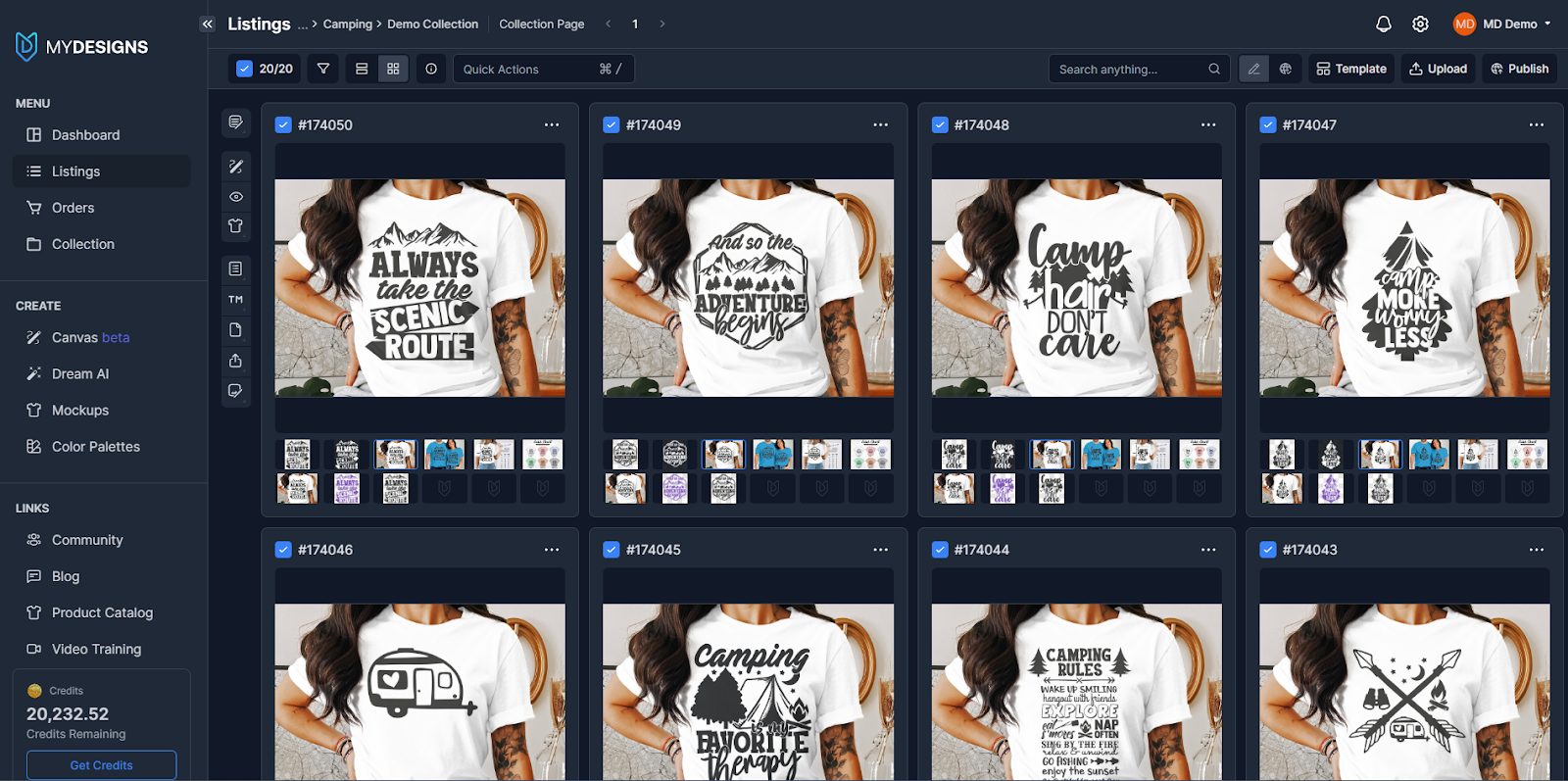 One of the first hurdles in multi-channel selling is creating all the content needed for your product listings across different sites. Think about it – each product might need photos or design files, a title, a description, pricing, tags/keywords, and possibly different image dimensions or formats depending on the platform. Doing all that manually for Etsy, then again for Amazon, and again for your website is exhausting. This is where MyDesigns can save the day.
- Use Canvas to customize your designs with a drag-and-drop editor. Perfect for both digital downloads and print-on-demand items.
- Generate artwork instantly with Dream AI, an AI image generator powered by models like those outlined in the Introduction to Dream AI Image Generation Models blog.
- Craft optimized product listings with Vision AI & Phraser AI. These tools suggest keywords, generate titles, and create engaging product descriptions based on your design.
- Polish your product visuals using Image Utilities such as background removal, upscaling, and vectorization.
- Present your product with realistic Mockups to boost buyer confidence without ordering samples.
By leveraging AI and integrated design tools, you essentially prepare your product listing assets one time in MyDesigns, and then reuse them everywhere. You create a design once, generate all the copy and images you need, and you’re set to tackle every sales channel with consistent, high-quality listings. This upfront streamlining is the foundation for multi-channel success.
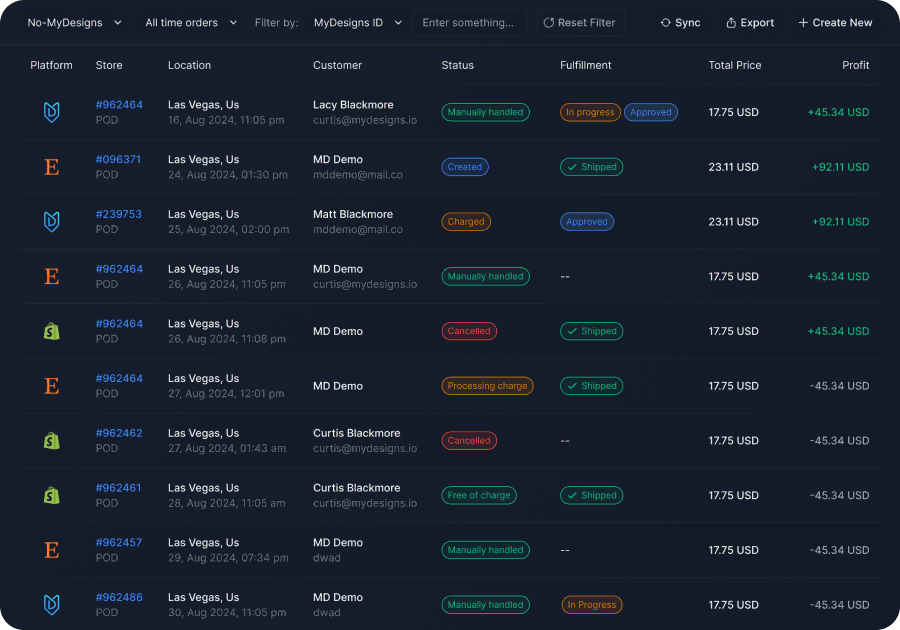 So you’ve listed your products everywhere and the orders start rolling in from multiple sites – congratulations! Now, how do you manage fulfilling all those orders without going crazy? This is where a centralized order management system is worth its weight in gold.
MyDesigns offers an Order Management dashboard that aggregates all your orders from every connected channel into one neat queue. Whether the order came from Etsy, Shopify, Amazon, or elsewhere, you’ll see it in MyDesigns, along with all the details needed to fulfill it.
Imagine waking up to 5 new orders: 2 from Etsy, 1 from Amazon, and 2 from your Shopify store. Instead of logging into three separate accounts to print packing slips or send files, you can handle everything in one place. MyDesigns will show you each order, with the product, customer info, customization details if any, and which channel it came from. You can then process them right there. This unified workflow ensures no order falls through the cracks. It’s easy to miss an order email or notification when you have many dashboards; MyDesigns eliminates that risk by consolidating them.
For print-on-demand sellers, order management gets even sweeter. MyDesigns integrates with various print fulfillment providers so that when an order comes in, you can automatically or manually route it to your chosen print provider for production. Essentially, MyDesigns can act as the middleman between your marketplace and the printer. You get an order for a T-shirt on Amazon, MyDesigns sends the print file and customer address to your print partner, and they print & ship it to the customer – all without you needing to re-enter the data. Tracking numbers and statuses can sync back too. This means you can run a hands-off operation once everything is set up.
All of this is done through one interface, so after you ship an order or send a digital file, MyDesigns can update the status back to the original marketplace (marking it as shipped, providing tracking info, etc.). You won’t need to manually go back into Amazon to input tracking numbers or into Etsy to click “Complete Order” – it’s handled for you. Centralized order management = fewer mistakes and faster fulfillment, which leads to happier customers and better reviews.
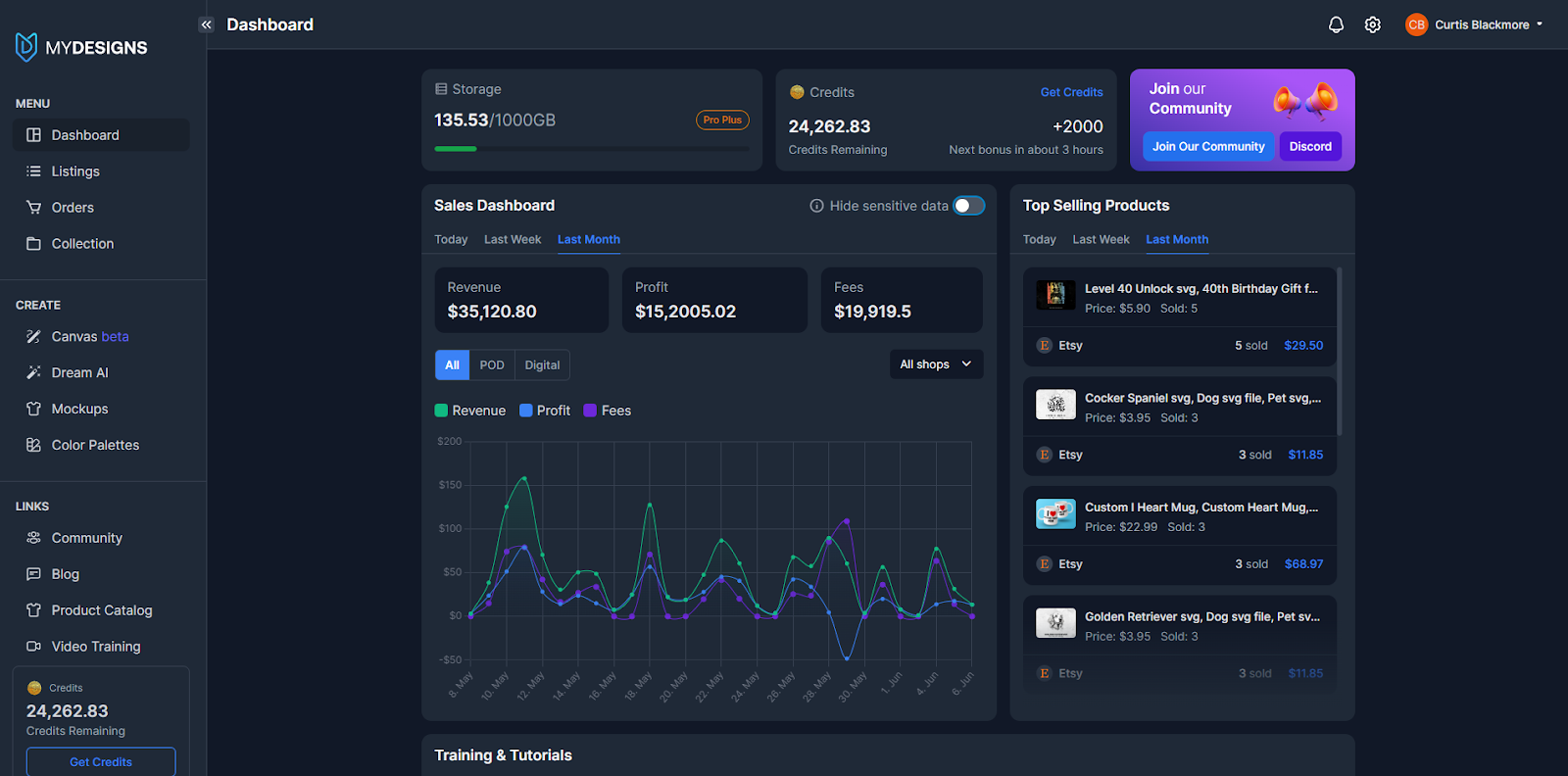 When you’re selling on multiple channels, understanding your overall business performance (and which channels are pulling their weight) is crucial. However, if you rely solely on each platform’s individual analytics, you’ll end up with a fragmented picture. This is why having combined analytics in one place can be a game changer. MyDesigns provides dashboards that compile sales data from all your linked shops, giving you a bird’s-eye view of how your multi-channel strategy is doing.
For example, you can see your total revenue across all channels at a glance, then break it down by platform. Maybe you discover that Etsy accounted for 50% of your sales this month, Shopify 30%, and Amazon 20%. Or perhaps your Shopify store’s sales spiked after a promotion, while Etsy remained steady. Having this insight lets you make informed decisions – you might decide to invest more in advertising your Shopify store, or conversely, realize that Etsy is your powerhouse and deserves more product additions. Without a unified analytics view, you’d be guessing in the dark.
MyDesigns’ analytics also let you drill down to product-level performance across channels. You can identify your best-selling products overall, and also see if a particular item sells better on one platform versus another. For instance, maybe your digital planners sell like hotcakes on Etsy but are slow on Amazon – that might tell you something about where your target audience prefers to shop, or how you should adjust your keywords on Amazon. Or you might find your POD T-shirts do well on your own website where you can brand it fully, compared to a marketplace. These insights help you optimize your listings and marketing efforts for each channel’s strengths.
Another advantage of central order data is analyzing customer trends. Perhaps you notice customers from Amazon tend to buy more in Q4, while Etsy has a springtime rush. Or your average order value on Shopify is higher than on Etsy (maybe because you can do upsells or bundles on your own site). These patterns enable you to tailor promotions accordingly – like running a holiday campaign more aggressively on Amazon, or pushing more bundle deals on Shopify.
Being data-driven is so much easier when all the numbers are in one place. You don’t have to export CSVs from three sites and try to mash them together in Excel. It’s all updating in real time in your MyDesigns dashboard.
In summary, data is your friend in multi-channel selling. The more you can see the full picture, the better you can allocate your time and resources. With centralized analytics, you become a smarter seller who bases decisions on real numbers rather than hunches. It’s like having a control tower for your entire e-commerce operation.
 One of the biggest benefits of integrating and automating your multi-channel workflow is how easily you can scale your business. When you’re doing everything manually on one platform, there’s a natural limit to how many products you can manage or how many orders you can fulfill yourself. But with a platform like MyDesigns handling the repetitive tasks, you unlock the ability to grow your catalog and sales without a matching increase in workload (or hiring a large team).
Think about it: If you can create a new product listing once and publish it to five channels instantly, you’re five times more efficient. Multiply that by dozens or hundreds of products, and you’ve dramatically expanded your reach with minimal extra effort. You could go from 50 SKUs to 500 SKUs listed across marketplaces using bulk creation tools. Many MyDesigns sellers use the bulk features to upload en masse. For instance, you might design a collection of 20 new graphics, upload them all together, have AI generate variations of titles/descriptions for each, and then publish the whole batch across Etsy, Amazon, Shopify in one go. What used to take days or weeks of work can happen in an afternoon.
Automation also cuts down on errors that inevitably creep in when doing things by hand. Fewer typos, fewer forgotten steps, and a more consistent process every time. This consistency is crucial for scaling – customers get the same quality experience on every channel, even as you grow.
From a cost perspective, the efficiencies gained translate to savings. You won’t need to pay for multiple separate tools (one for Etsy listing, one for Amazon listing, etc.) – one platform handles it. You might find you don’t need to outsource as much to freelancers for things like copywriting or design because the AI features cover those. And you likely won’t need to hire extra staff right away to manage additional stores, because MyDesigns acts like your e-commerce assistant. It’s not uncommon for a solopreneur to manage thousands of orders a month alone thanks to automation – something that would be impossible to juggle if done manually.
Perhaps most importantly, automation frees your time to focus on higher-value tasks: designing new products, researching trends, marketing your brand, or engaging with customers. Instead of spending hours each day on clerical work (uploading files, syncing inventory, writing the same description four times), you can let the software handle it and put your energy where it counts. This is how you scale smartly without burnout.
As your business grows, you’ll also appreciate that MyDesigns is cloud-based and continuously improving. New integrations and features roll out, and you benefit automatically. For example, if a new marketplace (like a trending social commerce platform) comes along, MyDesigns can integrate it, and suddenly you have another channel at your fingertips to publish to with very little additional learning curve. It’s future-proofing your operation.
In short, multi-channel selling plus automation = a recipe for rapid growth. You can take on more sales channels and more customers without your operations cracking under pressure. You’ll look like a big operation to your customers – a presence on all these platforms, quick fulfillment, professional listings – but behind the scenes, you’ve just got a savvy setup.


Leave a Reply